


Table of contents
If you sell apparel online, learning how to measure a t-shirt pays off fast. Better product data reduces clothing returns online, improves buyer confidence, and makes your sizing page easier to trust.
This guide breaks down the exact measurements you need for dress shirts and tees alike, how to take them cleanly (get your measuring tape), and how to turn them into clear size charts for your store.
Why accurate t-shirt measurements matter for your business
A strong size guide does real work, that’s why taking measurements is so important. It answers fit questions, cutting down on support tickets, reducing checkout hesitation.
Reducing returns and increasing customer trust
When customers buy a t-shirt online, they’re working with limited information. They can’t touch the fabric, try on the shirt, or feel how the sleeve sits on their arms or wrists. They rely on photos, product copy, and your size charts. If those charts feel vague, shoppers guess, which leads to returns.
Consistent measuring tape work fixes that. When you measure every t-shirt the same way and publish accurate numbers, customers can compare the product against similar clothes they already own.
That makes finding a good fit on the first order a lot more likely.
This matters a lot in eCommerce apparel sizing. Buyers often search things like ‘how are shirts measured?’, ‘how to measure shirt size’, or ‘what does chest width mean?’.
If your chart answers those questions upfront, customers can move from browsing to buying faster.
Navigating variations in brand sizing and the “true to size” problem
One brand’s medium is another’s large. A relaxed streetwear blank, a slim-fit tee, and a dress shirt all follow different rules. Even within the same label, a different size or cut can shift the sleeve length, waist width, or shirt length more than shoppers expect.
That’s why “true to size” falls apart. It sounds reassuring, but it means something different to everyone. One shopper wants room in the chest. Another wants a more tailored shape through the body. A third wants extra length past the waistline. You can’t guess your way to the right answer – you can only publish clear numbers.
That’s the core idea behind body vs garment measurements: your product page shows the garment, customers figure out how it maps to their body. When that translation is simplified, custom t-shirt sizing stops making friction and starts building trust.
Essential tools you need for precision measuring
You don’t need a studio setup – just a repeatable one. For an accurate t-shirt measuring guide, keep these on hand:
-
A measuring tape
-
A large flat surface
-
A notebook, spreadsheet, or phone to record measurement data
-
One unworn sample in each size you carry
-
Good lighting, so you can see seams, collars, and edges clearly
Use the same tape measure and table every time. Start from the same point every time. Those habits matter more than any fancy equipment.
How to measure a t-shirt in 7 simple steps
Most brands publish product specs using measurements lying flat. Place the shirt flat, smooth it, and don’t stretch any part of the fabric before you start.
Step 1: The flat-surface rule
Start with the t-shirt laying flat on a clean surface. Make sure the front and back panels sit naturally – no twist in the side seams, no pull at the collar or hem. If the shirt bunches near the armpit or sleeve, smooth it with your hand.
This part sounds minor. It’s not. Bad setup ruins good data. Taking measurements accurately starts with the shirt fully laying flat: you can’t accurately measure the waist, shoulders, neck, sleeve, collar, and armpits any other way.
If you pull the body or force the sleeve opening into place, your numbers drift.
Keep the shirt relaxed and square before you measure anything.
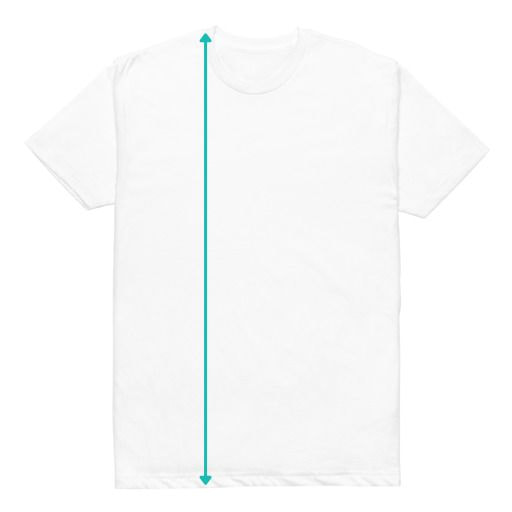
Step 2: Length (high point shoulder to hem)
Source: Printful
Shirt length is the distance from the highest point of the shoulder to the bottom hem. How do you measure the length of a shirt? Place the tape measure at the highest point where the one shoulder meets the collar. Measure straight down to the bottom hem in inches or centimeters.
Keep the tape measure vertical – don’t follow a side curve, don’t start from the front neck. Same shoulder point, every time.
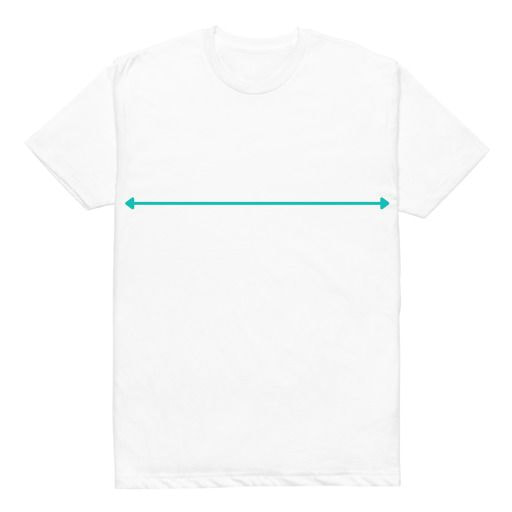
Step 3: Chest width (the armpit-to-armpit measurement)
Source: Printful
Next, measure chest width. Place the measuring tape across the front of the shirt, about one inch below the armpit, from one side to the other side. Keep the line straight.
This is the pit-to-pit measurement – it shows flat width, not full chest circumference. To estimate the circumference, the flat number generally doubles. So a 22-inch chest width is roughly 44 inches around the chest.
Important: Make it clear on your product page whether you show flat measurements or circumference. Shoppers often confuse chest size with garment width. Your size chart should spell out the difference.
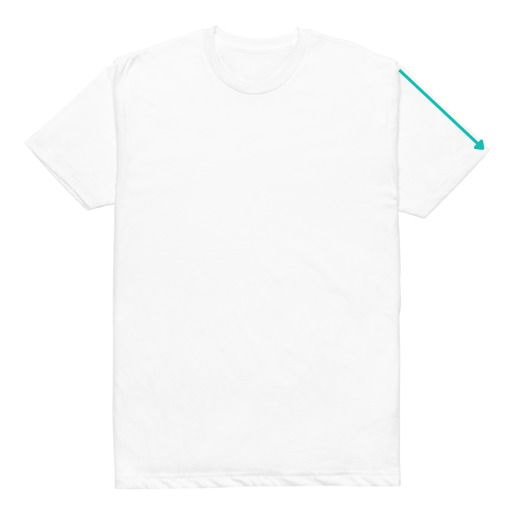
Step 4: Sleeve length (shoulder seam vs center back)
Source: Printful
For standard tees, start at the shoulder seam and measure along the top of the sleeve to the end of the cuff or sleeve opening. That’s your basic sleeve length for tees and dress shirts alike.
Some manufacturers measure center-back sleeve length instead. Start at the back center of the neck, run the tape across one shoulder, and continue down the sleeve to the cuff. Both methods work. The rule is don’t mix them – pick one and stick to it.
Whatever method your supplier uses, label it. Consistency is what makes professional apparel sizing trustworthy.
Step 5: Shoulder width (seam-to-seam)
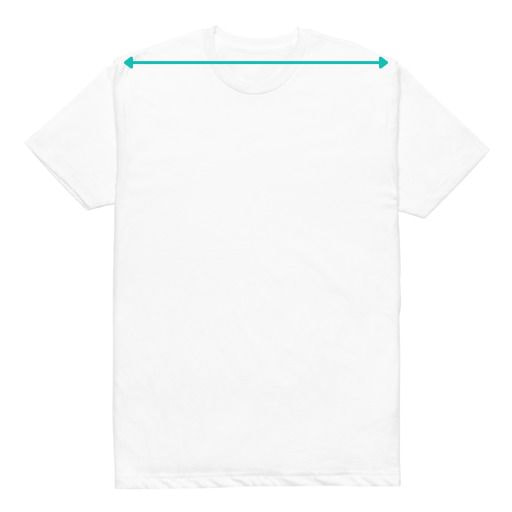
Source: Printful
To measure shoulder width, flip the shirt over and find the back shoulder seams. Then measure from one seam to the other, keeping the line straight across the upper back.
This tells shoppers a lot about how the shirt will actually sit on the body:
-
A narrower shoulder looks more fitted
-
A broader shoulder feels more relaxed and roomy
When buyers pick between a standard fit and a slim fit, this number often explains the difference better than a size label alone.
Step 6: Waist and hem measurements
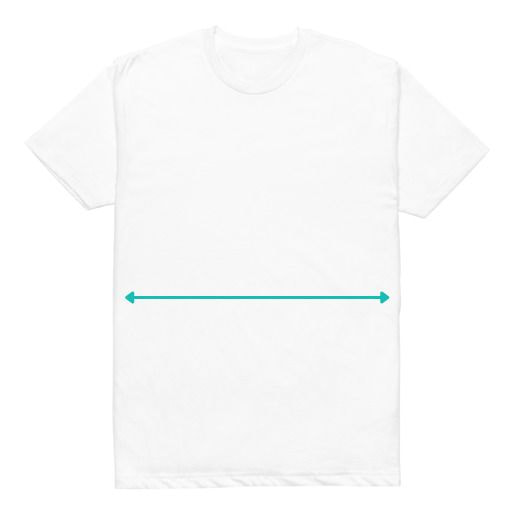
Source: Printful
Still lying flat, measure waist width across the entire waist area – usually around the narrowest part of the torso. Then measure the hem across the bottom opening, from one side seam to the other.
For sellers who record measurement data, this number helps explain taper. A straight-cut tee shows almost no change between chest width, waist width, and hem. More shaped shirts narrow at the waist and open slightly again near the bottom hem.
Keep the shirt flat. Keep the tape straight. And if the side seam pulls inward, smooth it before you read the number.
Step 7: Sleeve cuff and opening
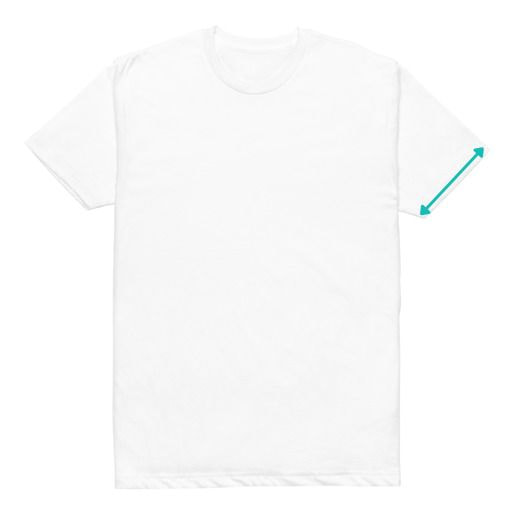
Source: Printful
Finally, measure the cuff or sleeve opening from one edge to the other. Don’t wrap the tape around the opening. Keep it flat and measure across.
This number affects comfort. A tighter opening can feel restrictive on larger arms (or wrists if it’s a long-sleeve). A wider opening gives a more relaxed fit. In oversized styles, the cuff often enhances the overall silhouette.

Understanding how different t-shirt fits affect measurements
Taking measurements is the same across styles, but the numbers tell different stories depending on fit. That’s where many stores lose shoppers.
Regular vs slim fit: Key measurement differences
-
A regular tee gives more room through the chest, waist, and sleeves
-
A slim-fit tee cuts closer to the body – trimmer through the waistline and sleeve opening
Shoulder width often stays similar, but the width through the torso changes the overall feel.
This is why buyers sometimes say a tee “runs small” when the issue is actually the cut, not the size. A medium regular and a medium slim tee can share similar length while feeling completely different in the chest and waist. That’s why you need to take and provide accurate measurements.
For fitted shirts, give shoppers more details – chest width, waist width, sleeve length, and shirt length. That lets them judge shape, not just size.
How to measure oversized and boxy silhouettes
Oversized tees use the same measuring process, but with a different interpretation. The goal is no longer a close body fit – you want a controlled volume.
Lay the t-shirt flat and measure from the same points of reference we discussed earlier. Pay close attention to chest width, shoulder width, and shirt length.
-
Boxy cuts often widen through the chest and shoulder while keeping a shorter or more squared hem
-
Oversized cuts may both widen and lengthen
If you sell these styles, add a note in your chart or product copy. Explain whether the tee drops longer on the body, sits wide through the middle, or leaves extra room around the arms. With accurate clothing dimensions, online customers understand silhouettes before they order.
Accounting for fabric stretch and potential shrinkage
No shirt holds its exact shape forever. Cotton can shrink. Blends can shift after washing. Heavier knits may hold structure better. Soft lightweight tees may relax with wear.
Build a small tolerance into your process. If you sell print-on-demand apparel, be upfront that final measurements can vary slightly due to manufacturing and fabric behavior. It’s more honest, and it reflects real apparel industry size standards better than promising perfect consistency across every unit.
Also, separate fit notes from your measuring tape notes. A shirt can match the chart and still feel tight or roomy depending on stretch, drape, and styling.
Valuable read: Best quality t-shirts for printing
How to create a professional t-shirt size chart
Now that you know how to measure a t-shirt, it’s time to build the chart. A good one is easy to scan, compare, and trust – fewer vague labels, more real numbers.
People buy clothes knowing their own curves and that there are so many different sizes for the same product across various brands and sellers.
Follow these online store size guide best practices:
-
Use one format across your whole catalog
-
Lead with measurements in inches if you sell mainly to US customers
-
Add centimeters for international buyers
-
State clearly that numbers come from measurements lying flat
-
Add a short visual or garment measuring tutorial video if the fit needs more explanation
A good sizing structure across your store supports t-shirt fit consistency strategies and helps you create more converting product pages.
Once you have accurate measurements, the next step is presenting them in a format shoppers can understand quickly. Shopify merchants can build the chart manually or use a sizing tool such as MP Size Chart & Size Guide to create and customize size charts, assign them to relevant products or collections, and display the guidance directly on the storefront. Whichever method you choose, keep the chart simple, clearly label whether the numbers refer to garment or body measurements, and use the same measurement format across similar products.
Converting flat measurements to “to fit” body measurements
Most sellers show flat-surface measurements – and that’s fine. But some shoppers need help translating it.
A flat chest width gets generally doubled to estimate the full circumference. The same goes for waist width when customers use a measuring tape to compare a tee with their own clothes. Still, be careful – a shirt’s finished width isn’t the same as the buyer’s exact body measurements. People need ease for comfort and movement.
That’s why body vs product measurements deserve a short note on your chart when you make your own shirts for selling.
Tell shoppers to compare the tee with a favorite shirt they already own, then compare that result with their own chest size or torso length if needed.
Best practices for international sizing (US vs EU)
International sizing can cause confusion: a US medium may not match an EU medium. Some brands label in letters only. Others include numeric conversions. Some fits run short through the body, while others run longer from collar to hem.
The easiest fix: lead with tape measure data, not letters. Show size names, then list the actual numbers in inches and/or centimeters beside them. Be clear whether your chart reflects flat dimensions of clothes or “to fit” guidance.
If your audience shops across regions, say so directly. A line like “Please compare the chart with a tee you already own” builds trust more than a generic fit promise.
Frequently asked questions about t-shirt measurements
Take your measuring tape, lay the shirt on a flat surface, and start at the shoulder seam – that’s the most reliable starting point for accurate sleeve length.
If your supplier uses a center-back method, start below the collar at the back center, run the tape across the shoulder, and continue to the cuff. Whichever method you use, label it and apply it consistently to every size and style.
No – flat width and circumference are two different numbers. When you tape measure armpit to armpit, you get flat chest width. That number is generally doubled to estimate the circumference.
Your chart should state this clearly so shoppers can compare the product with their own shirt or body.
Some variation is normal. Stitching, finishing, and fabric behavior all affect the final measurements.
Note in your listings that small differences can occur, and keep your process consistent across all products to support accurate measurements and better fit expectations. You can also teach your buyers how to measure shirt length properly to avoid confusion.
Final thoughts
For a cleaner product page and fewer returns, start by buying a measuring tape. Now that you know how to measure t-shirt size in inches or centimeters, document the method and use it across your catalog.
Clearer fit info means more confident buyers and fewer reasons to second-guess the order. Better numbers make better size charts – and better size charts help you sell more with less friction. Put it into practice with Printful and make your own shirt today.

Zane is a sharp-witted writer with a deep interest in eCommerce, branding, and creative entrepreneurship. With a knack for blending humor, insight, and no-nonsense advice, she crafts engaging content that helps merchants learn and businesses grow. When she’s not dissecting industry trends, she's exploring philosophy, music, and the perfect balance between solitude and connection.

