


Table of contents
The biggest embroidery trends for 2026 are 3D puff, tone-on-tone stitching, oversized statement pieces, and mixed media decoration that pairs stitching with print.
Machine embroidery stitches thread into fabric, so it reads as premium and outlasts prints in the wash.
Below are 11 styles clothing brands can put on branded apparel, what each one looks like, and how to launch with zero upfront investment and no inventory risk.
Embroidery trends to watch in 2026
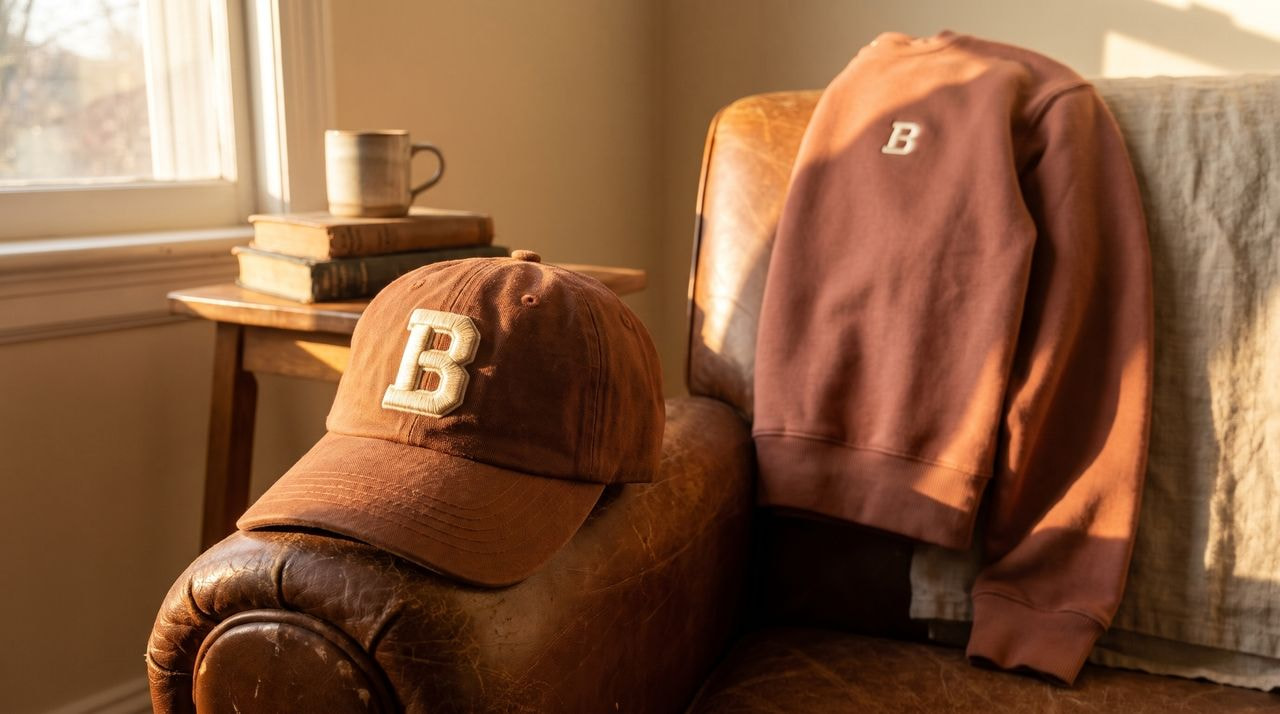
Embroidery has moved from workwear logos into modern fashion, and these styles show where machine embroidery is heading: more texture, fewer flat logos, and more mixing with other decoration methods.
Each trend below explains what it means, what it looks like, and the elements that define it. Traditional embroidery sits behind many of them, with newer threads and techniques layered on top.
1. 3D puff embroidery
3D puff embroidery, also called raised embroidery, stitches thread over a foam layer so the design stands up off the fabric instead of lying flat. Raised embroidery is all the rage in streetwear-style lettering, where the lifted stitch can add depth, a sculpted texture, and a dynamic effect as light moves across it.
The look is bold typography, thick block letters, and simple icons, because the foam needs wide, clean shapes to cover. Machine embroidery can’t hold fine lines and tiny gaps under raised stitches, so creating a puff design means keeping it simple and leaving space around each shape.
2. Tone-on-tone embroidery
Tone-on-tone embroidery stitches threads in a color within a shade or two of the base fabric, so the design reads as texture instead of contrast. It is a quiet way to add a logo or detail without a loud graphic.
The look depends on light: the raised textures of the stitch catch a shadow, and the shape appears, then fades at a distance. Typical elements are small logos, monograms, outlines, and repeated patterns, where textured designs do the work that color usually does. Creating the effect takes threads that match the base closely and a stitch dense enough to show texture.
3. Oversized statement embroidery
Oversized statement embroidery scales one design up to fill a large area, such as the full upper back or a wide front panel, instead of a small mark. The design becomes the focal point rather than a label, and creating it is as much about proportion as detail.
Typical elements are bold shapes, large crests, graphic illustrations, and one line of bold lettering. Large areas need stable, heavier fabric and bold, flat color blocks, because fine detail disappears at scale and a high stitch count adds weight. Clean shapes also help with maintaining durability through repeated washes.
4. Mixed media decoration
Mixed media decoration combines embroidery with another method in one design, such as screen printing, digital printing, appliqué, or heat transfer. This hybrid approach means creating mixed media designs where each technique does what it does best.
The look is flat color or photographic detail from the print, with stitching used to outline, highlight, or raise one element on top. Embroidery combined with screen printing, for example, can pair a bold printed graphic with a stitched logo or border, so the thread can add depth and raised texture against the flat ink. Hybrid decoration keeps one visual theme across techniques, whether a machine or a press does the work.
5. Appliqué and badge-style layers
Appliqué stitches shapes cut from fabric onto a base and finishes the edges with threads, so the design sits in layers. Badge-style appliqué follows the same idea as a patch: a defined shape with a stitched border that looks added on rather than embroidered in.
Its elements are felt or twill shapes, satin-stitch borders, varsity-style letters, and decorative elements such as stars, crests, or simple icons. Appliqué covers large areas with far fewer stitches than a full fill, and creating layers can add depth and texture that flat stitching can’t match.
6. Heritage, folk, and vintage motifs
Heritage embroidery borrows from traditional embroidery: varsity lettering, arch text, founding dates, workwear crests, and folk-inspired borders made of repeating florals, vines, or stars. The look suggests a brand with a history, even a new one, and creating it relies on a slightly worn, vintage texture.
Its elements are bold typography in serif or slab styles, threads in two or three colors, shield or circular layouts, and repeating border lines. Use original wording and shapes, because school, college, and team names and logos are licensed property, and run a trademark check on any slogan.
7. Bold typography and monograms
A monogram is one to three initials stitched as a compact mark. Personalized embroidery goes a step further by changing the lettering for each customer: initials, a name, or a date. It is a common choice for making gifts, wedding parties, and keepsakes.
The look is a clean, centered mark in a single thread color. Creating a monogram means choosing a serif or script typeface, bold lettering with thick enough strokes to stay readable, an optional frame, and even letter spacing. Personalized embroidery depends on a minimum letter height, because small letters close up once stitched.
8. Floral, botanical, and outdoor motifs
Nature-inspired embroidery covers two looks. Botanical line work uses single-color flowers, leaves, and vines, sometimes as small sprigs at a collar or cuff. Outdoor-inspired stitching, often called gorpcore, borrows from hiking gear with mountain outlines, contour lines, and trail markers.
Botanical designs rely on clean lines and a continuous stitch with no shading, because gradients don’t translate into thread. Outdoor designs use geometric patterns, simple peaks, and badge-style crests in earthy threads. Both keep to a few colors and clear outlines, and a place name adds a story to the textured designs, creating a sense of place with very little detail.
9. Micro and minimalist embroidery
Micro embroidery is a very small mark stitched where graphics rarely go, such as under a collar, at a cuff, along a hem, or on a side seam. Minimalist embroidery follows the same restraint: simple shapes, few colors, and plenty of empty space.
The look is understated, with clean lines, a small icon or single word, and often threads close to the base color. Minimalist designs keep the stitch count low, avoid thin strokes, and rely on one or two elements, creating a soft texture instead of a graphic. They also suit small projects, since a tiny test shows how a design stitches before you scale it up.
10. Metallic and iridescent thread accents
Metallic threads and iridescent threads add shine to embroidery. Metallic threads are made from coated film or a metal-wrapped core and read as gold, silver, or copper, while iridescent threads shift color as light and viewing angle change, creating a finish that standard threads can’t.
The look is a small area of shimmer against matte stitching. Metallic accents work best as outlines, highlights, initials, or one stripe in a pattern, while the rest of the design stays in standard thread so the metallic shine reads as detail. A few metallic accents often look richer than a fully metallic design, and metallic threads tend to be more delicate than standard thread, so thread quality and simple shapes matter.
11. Eco-friendly threads
More brands now name the fiber in their embroidery: recycled polyester threads, organic cotton threads, or rayon made from regenerated plant cellulose. Buyers who search for sustainable materials or eco-friendly threads usually mean one of these named fibers, so naming the fiber matters more than the label.
Claims need specifics. Some rayon threads are described as biodegradable, but whether biodegradable rayon actually breaks down depends on the finish and on disposal conditions, so the claim needs a supplier spec behind it. Fiber choice can lower a product’s environmental impact, and the claim should match the material, with the percentage and any certification stated for the thread itself, since quality varies between suppliers.
Ready to put one of these on a product? The next section covers what you can embroider.
Embroidered products printed on demand
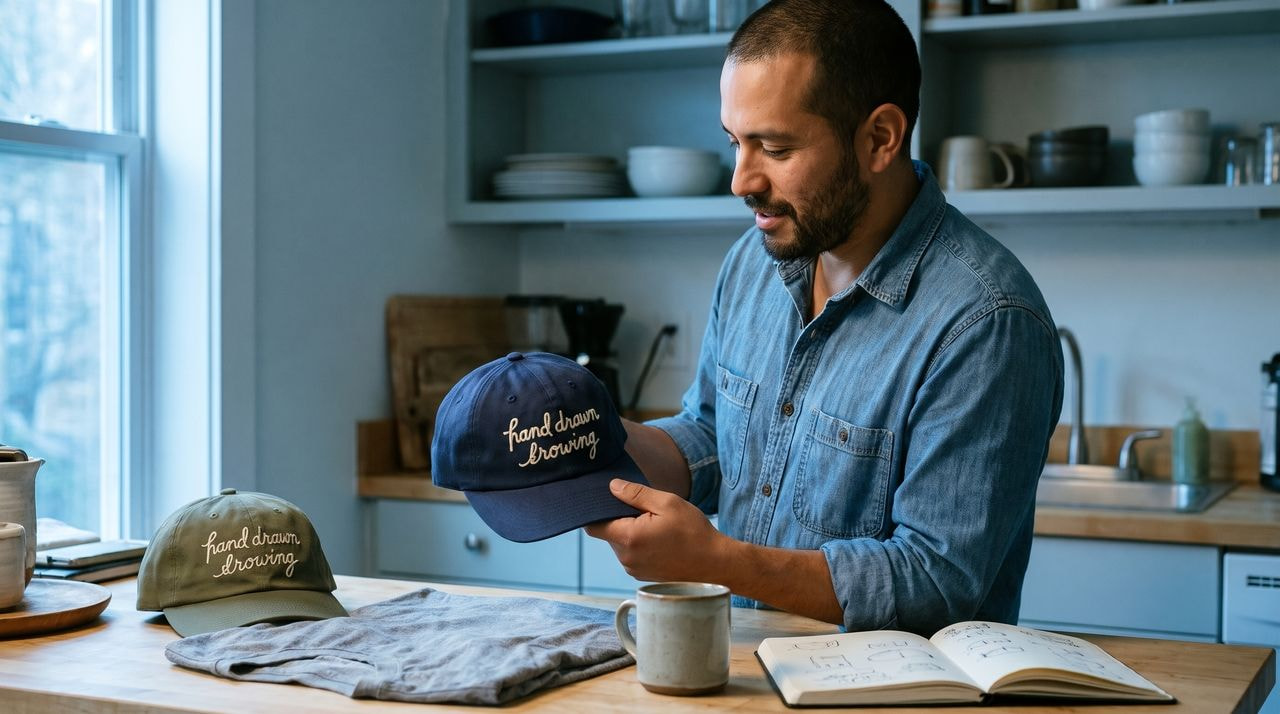
These are the products you can embroider with Printful, grouped by category. Each one takes thread differently, so the product you pick decides how large and how dense the design can go.
Embroidered t-shirts and tops
T-shirts, tank tops, long sleeve shirts, polo shirts, crop tops, embroidered shirts, and baby bodysuits suit small, light designs. Keep the stitch count low on lightweight jersey, and start with a beginner-friendly left-chest mark. Explore women’s shirts or the Organic Crop Top.
Embroidered hoodies, sweatshirts, and jackets
Hoodies, sweatshirts, jackets, and vests are heavier, so they hold dense designs flat and help with maintaining durability through repeated washing. They also take larger designs and raised textures that tees can’t.


Embroidered hats and headwear
Hats are a natural fit for embroidery: 5-panel hats, dad hats and baseball caps, snapbacks, trucker hats, mesh hats, bucket hats, visors, and beanies. A structured cap holds raised stitching best. Explore embroidered hats or bucket hats.
Embroidered bottoms and socks
Shorts, sweatpants, and joggers, and socks take small marks at the leg, hem, or cuff. These everyday items suit minimalist embroidery and a simple wordmark better than a large design, since stretch and seams limit how much thread the material can hold.
Embroidered bags, patches, and accessories
Tote bags, fanny packs, and patches turn everyday items into branded merchandise. Patches are a separate product you can sell in packs or add to other items. Explore embroidered patches or the custom product catalog.
Embroidered aprons, blankets, and towels
Aprons, blankets, and towels carry embroidery into the kitchen, bedroom, and bathroom. Names, monograms, and short phrases suit these pieces, and they work well for making gifts.
Embroidery design tips
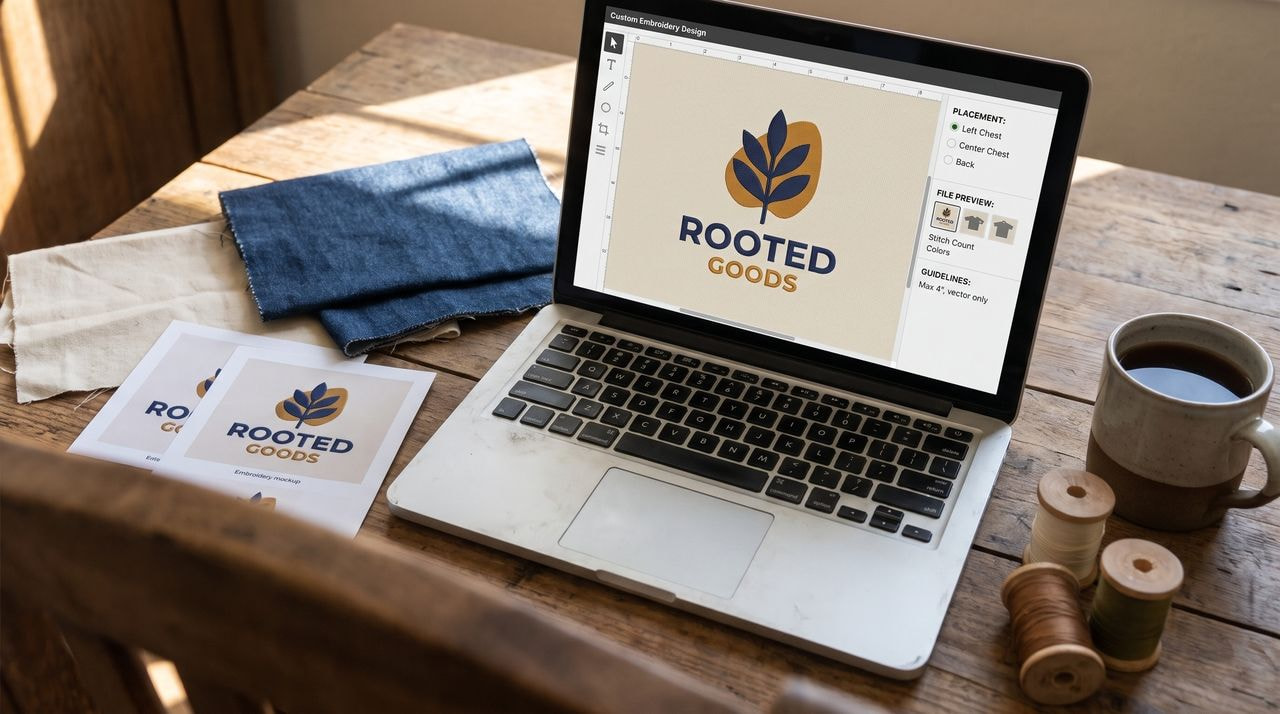
Creating trendy embroidery designs starts with the file. Most of the trends above share one trait: clean shapes and flat color. Get the file right and the trend you picked holds up on any product you put it on.
Read more: 25 Creative embroidery ideas
Choose the fabric
Embroidered logos and designs work on most knits and cotton blends, but pay attention to the fabric and its weight, because machine settings change with both.
Denim is durable and wrinkle-resistant, which makes it a stable base for all kinds of embroidery. Performance material is designed for training and is usually lighter, so these types of fabrics suit small embroidery designs best. The right stabilizer keeps stitching flat on stretchy knits, but lightweight material still limits design size. Many embroiderers keep to solid shapes for the same reason, and it works just as well for brands.
Custom embroidery also works on fabrics and patterns, such as tie-dye or denim, that other decoration methods can’t handle, and it keeps its texture after washing.
Choose the placement
On apparel, choose between left chest and center chest. Hoodies carry a center chest design well, and t-shirts suit the left chest, where a small logo sits closest to how a retail label does it. The back of the collar and the cuff suit micro marks.
For back embroidery, go with the denim jacket, since the material is stable enough for a large design. On hats, the front is the most noticeable placement, while the sides and back are where brands usually put a small wordmark.
Pick the placement before you finalize the file, because the size you draw to changes with it. Order a sample of each placement you plan to sell, so you check the stitch quality at real scale before a customer does.
Follow the embroidery file guidelines
For your embroidered design to come out just right, follow our requirements and guidelines. Machines can’t reproduce small details and gradients well, but solid shapes and color blocking stitch cleanly. Creating the file to our guidelines also means checking the minimum letter height for any lettering and keeping the stitch count low enough to protect quality.
How to sell these embroidery trends with Printful
Four steps take you from a design file to a product a customer can buy. Nothing here needs stock, a machine, or a minimum order, so you test a trend for the cost of one sample.
-
Pick the product – explore the embroidery products collection and choose the product the trend belongs on, so the weight matches the design.
-
Build the file – creating it means drawing solid shapes in flat color and checking them against our file guidelines, because gradients and hairlines won’t stitch.
-
Place the design – add it in Design Maker, set the placement, then preview the colorways you plan to list so buyers see the real thing.
-
Connect your store – link Shopify, Etsy, or explore another integration, order a sample to check the stitch quality, then publish the listing.
Our in-house embroidery production runs from a digitized file our machines can read, so each new design carries a one-time digitization fee per file. Once a file is digitized, you reuse it on every order at no extra cost. Printful offers flat embroidery, puff embroidery, and unlimited color embroidery.
Note that embroidered products are generally a bit more expensive than their printed equivalents. To learn how to market expensive products, read our blog article on how to use smart pricing and selling tactics.
Learn more: How to start an embroidery business: 5 Steps to success
Embroidery trends FAQ
The biggest embroidery trends right now are 3D puff, tone-on-tone stitching, oversized statement pieces, mixed media decoration that pairs thread with print, and metallic thread accents. Appliqué, heritage lettering, monograms, botanical and outdoor motifs, minimalist designs, and recycled threads complete the list.
Yes. Embroidery is making a strong comeback in branded apparel, where raised textures and stitched detail read as premium next to a flat print. Thread survives repeated washing, which is why brands keep using it for logos, lettering, and personalized pieces. A small test order shows quickly whether your buyers respond.
3D puff embroidery, also called raised embroidery, stitches thread over a foam backing so the design rises off the surface instead of sitting flat. It works best with thick block letters and simple icons, because fine detail collapses at that height. Printful offers puff embroidery alongside flat embroidery.
Neither wins outright. Embroidery suits logos, monograms, and small marks on heavier material, and it holds up wash after wash. Printing handles photographic artwork, gradients, and large full-color graphics that thread can’t reproduce. Plenty of brands run both. Our guide to embroidery vs screen printing compares the trade-offs.
Denim, canvas, fleece, and mid-weight cotton knits take stitching best, because they’re stable enough to hold a dense design without puckering. Lightweight performance material suits small designs only. Embroidery also works on tie-dye and textured materials that other decoration methods struggle with, which widens the catalog you sell from.
Start your embroidered line with Printful
Start with the embroidery trends that take the least work to test: 3D puff lettering, a tone-on-tone logo, and one small metallic accent.
We stitch, pack, and ship every order under your brand once a customer buys it, so there’s zero upfront investment and no inventory risk. You build branded merchandise, and we handle production, samples, and shipping.
Create a free account and put your first design on a product today.

Printful is an on-demand printing and fulfillment service that helps businesses create and ship custom products.

