



Table of contents
White label business opportunities are among the easiest ways to launch or scale a brand. Instead of developing new products, entrepreneurs and small businesses can work with trusted white label providers to rebrand proven items – apparel, home decor, or digital services – and sell them under their own brand name.
The white label business model cuts manufacturing costs and time to market, freeing you to focus on branding, marketing, and customer loyalty. With Printful’s print-on-demand services, you can start selling custom products without inventory or fulfillment hassle.
This guide covers the best white label business opportunities, key market trends, and actionable tips to turn your idea into a scalable, long-term venture.
Key takeaways:
-
The most promising white label business opportunities for the end of 2025 and 2026 combine private label with value-added white label solutions like digital marketing and white label social media management.
-
Popular market niches include fitness clothing, children’s clothing, phone gadgets, and branded software solutions.
-
White label content creation allows agencies and graphic designers to sell custom work, such as ad campaigns and graphics, under their client’s business name.
-
Partnering with a reliable manufacturer ensures consistent quality, sustainable materials, and quick fulfillment.
-
Market demand research platforms and white label landing pages get online shops faster sales and quality lead generation.
-
Build trust and recognition through a strong brand identity and a clear unique selling proposition (USP) that sets you apart from other white label businesses.
What is white labeling?
White labeling is when a product is made by one company and then rebranded and sold by other brands under its own brand name. This allows the reseller to concentrate on branding, marketing, and customer service while avoiding the expensive and time-consuming process of product manufacturing.
White label solutions range from physical products, such as apparel, home decor, or phone accessories, to digital offerings such as white label social media packages, SEO services, and content creation.
Main appeal: faster time to market, scalable operations, and the freedom to focus on branding, customer experience, and long-term growth.
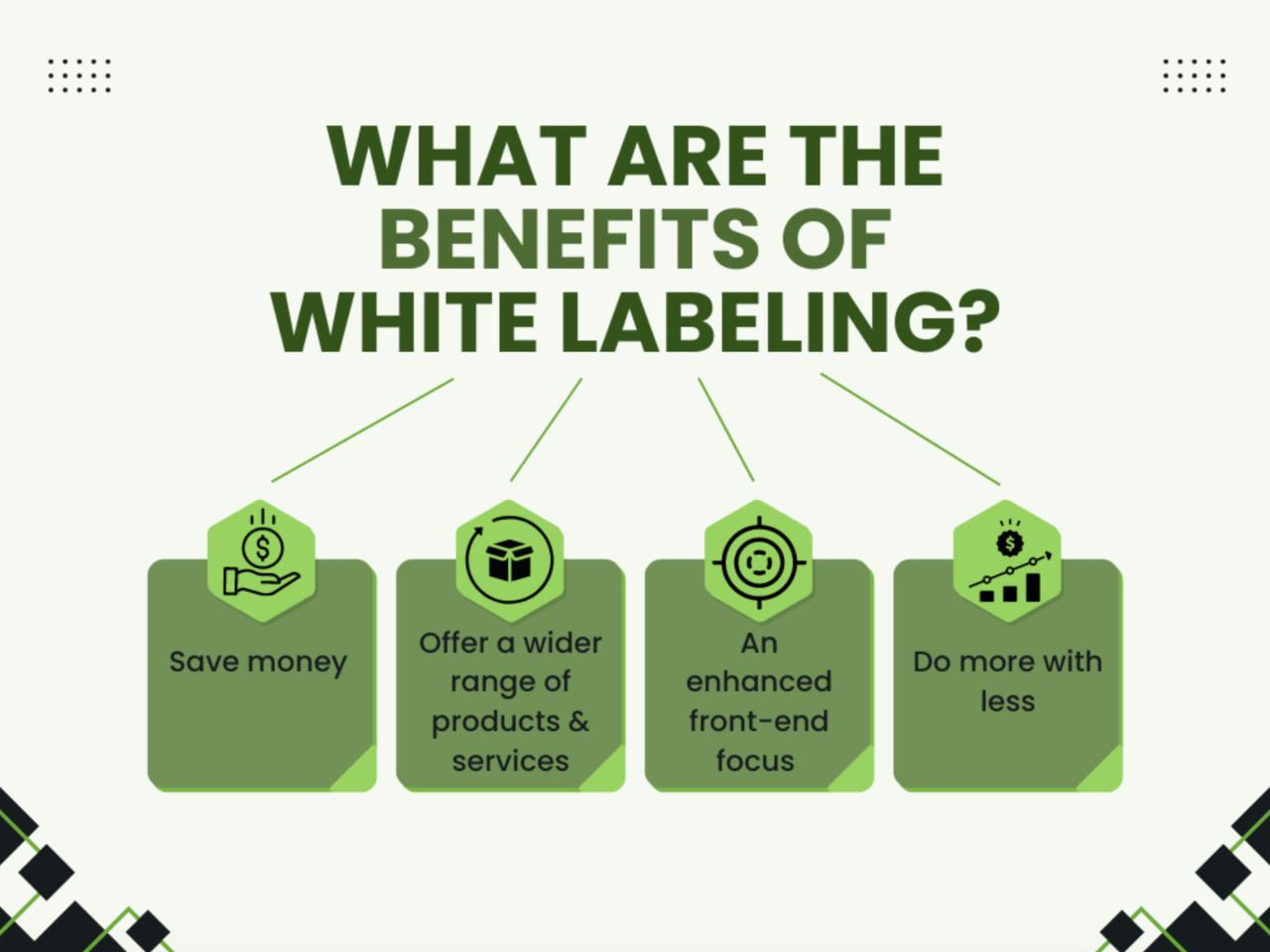
Source: Authority Builders Co.
14 most profitable white label business opportunities
Popular products aren’t enough to launch a successful white label business; you also need a clear competitive edge. Partnering with print-on-demand platforms like Printful lets you offer personalized items without having to manage inventory or production. Meanwhile, dropshipping simplifies fulfillment so you can focus on marketing and expansion.
Below, we explore the top white label business opportunities – across white label services and products – and how to incorporate them into your brand strategy.
1. White label apparel
White label apparel remains one of the best white label business opportunities for 2026. The global apparel market is expected to grow from $1.40 trillion in 2025 to $1.64 trillion by 2030 (CAGR ≈ 3.16%).
Partnering with white label providers and print-on-demand suppliers lets you launch branded clothing lines without keeping inventory.
Ideas and opportunities:
-
Start selling eco-conscious basics like organic cotton tees and joggers to attract sustainability-focused buyers
-
Create a fitness apparel line for specific markets, such as remote workers, yoga moms, or sports teams
-
Differentiate yourself from other online businesses with customized artwork, unique all-over prints, or embroidery
-
Offer blank label options to small businesses that want to sell apparel under their own brand name
-
Promote your apparel with digital advertising and branded visuals


2. White label kidswear
Because of the constant demand for children’s clothes, the kidswear market provides excellent white label business options. Global children’s apparel market is expected to reach $456 billion by 2030. From daily wear and school uniforms to special occasion outfits, variety is key.
Ideas and opportunities:
-
Sell everyday white label products (tees, leggings, hoodies) made from organic or recycled fabrics and non-toxic dyes
-
Stand out from others with personalization (names, monograms) through print-on-demand solutions
-
Create micro-niches (uniform basics, sensory-friendly cuts, and PE kits) based on target market needs and demand
-
Create a landing page with sizing guidelines and parent reviews to increase trust and conversions
-
Leverage social media marketing – especially short try-on videos – to highlight durability, softness, and easy care.
3. White label home decor
The global home decor market is projected to exceed $1.1 trillion by 2032, growing at over 4.5% CAGR. With remote work transforming interiors and consumers investing more in comfort and aesthetics, this is still one of the best business opportunities for creative entrepreneurs.
Ideas and opportunities:
-
Partner with a reputable manufacturer for fast-changing decor lines such as minimalist prints, boho throws, and geometric pillows
-
Offer products like candles, pillows, and blankets using print-on-demand services, which is ideal for an online shop with limited space
-
Combine custom artwork and premium materials to raise perceived value and build a recognizable brand
-
Use social media to show styled interior photos and inspire your audience
-
Bundle small decorative items into seasonal sets (“cozy winter”, “summer refresh”) to increase average order value
4. White label drinkware
Drinkware is a dependable white label business segment, suitable for personal use, retail sales, and corporate gifting. In fact, the global drinkware market is expected to reach $6.9 billion by 2033, growing at a 4.1 % CAGR.
Ideas and opportunities:
-
Offer products such as stainless steel tumblers, glass bottles, or ceramic mugs with unique designs and laser-engraved logos
-
Focus on eco-friendly materials such as bamboo lids, recycled glass, or reusable straws to attract sustainability-driven buyers
-
Create themed sets, such as “Morning motivation” or “Office Essentials,” to encourage gift purchases and increase order values
-
Partner with marketing agencies or small business clients on bulk branded drinkware for events or giveaways
-
Promote user-generated content (UGC) on social media to increase trust and visibility
5. White label wall art
Wall art is a profitable niche in the white label business, thanks to its high profit margins and personalization potential. The global wall decor market is expected to reach $85.2 billion by 2035, growing at a 4.5% CAGR. It’s driven by a demand for affordable home customization and digital printing innovations.
Ideas and opportunities:
-
Use print-on-demand services to sell white label products such as framed posters, canvas prints, and acrylic art panels
-
Choose durable materials, such as eco-friendly inks, premium giclée prints, or sturdy frames, to improve your brand’s reputation
-
Incorporate unique artwork, quotes, or photography collections for specific target markets such as wellness studios, startups, or minimalist home offices
-
Bundle seasonal decor (“spring refresh” or “holiday wall sets”) to increase sales and be relevant year-round
-
Use social media, especially Pinterest and Instagram, to share lifestyle mockups and engage art-loving audiences
6. White label pet accessories
The pet industry is expanding rapidly, with pet accessories market expected to reach $9.97 billion by 2030, growing at 6.9% CAGR.
Ideas and opportunities:
-
Offer products like custom bandanas, pet bowls, leashes, and matching owner-pet sets to increase appeal
-
Use print-on-demand solutions to add names, graphics, or seasonal motifs to your products
-
Target niche audiences (eco-conscious pet owners, premium pet gifting, or pet travel gear) to distinguish yourself from generic product sellers
-
Create an online shop that includes pet lifestyle visuals, UGC (user-generated content) of pets wearing your gear, and loyalty incentives
-
Partner with a reputable manufacturer who provides high-quality materials (non-toxic, long-lasting) and quick fulfillment to encourage repeat purchases
7. White label tech accessories
Tech enthusiasts regularly update their devices, resulting in a consistent need for white label tech accessories. The global mobile accessories market alone is forecast to reach $148.1 billion by 2030, expanding at a 6.8% CAGR.
Ideas and opportunities:
-
Provide personalized phone cases, laptop sleeves, wireless chargers, and AirPods covers featuring your artwork or logo
-
Offer sustainable materials, such as biodegradable cases or recycled silicone, to keep up with the eco-tech trend
-
Collaborate with marketing agencies to provide branded corporate gifts or tech packs for remote teams
-
Use social media management tools and influencer campaigns to reach design- or gadget-savvy audiences
8. Marketing and development services
White label services in marketing and software development are among the most scalable and high-margin opportunities in 2026. The global digital marketing services market is expected to reach $1.2 trillion by 2033, growing at a CAGR of 11.2%.
Ideas and opportunities:
-
Offer white label versions of SEO, PPC, and social media administration to small organizations without in-house teams
-
Resell established frameworks from white label providers by combining content creation, analytics, and automation under your own brand name
-
Collaborate with software developers to create branded dashboards or CRM tools for agencies and eCommerce sites
-
Create subscription-based service offerings to build recurring income and long-term client relationships
9. White label skincare and beauty products
The global skincare market is expected to reach $204 billion by 2030, fueled by demand for clean, sustainable, and cruelty-free formulas. This makes it one of the most profitable white label business possibilities within the lifestyle and wellness fields.
Ideas and opportunities:
-
Offer products such as moisturizers, serums, or lip balms using natural or vegan ingredients
-
Work with suppliers that specialize in eco-friendly packaging and transparent sourcing
-
Offer private label skincare lines for spas, salons, and influencers looking for custom branding
-
Use digital marketing tools such as influencer partnerships and instructional materials to establish credibility
-
Add subscription boxes or bundles to your marketplace to increase customer lifetime value and repeat business
10. White label supplements and wellness products
The global dietary supplement market is predicted to reach $414 billion by 2033 (CAGR 8.9%), fueled by increased focus on longevity, health, and natural nutrition. Due to high margins and brand-driven loyalty, this category is expected to dominate in 2026.
Ideas and opportunities:
-
Offer products for niche markets, such as athletes, vegans, or women’s wellness, such as vitamins, protein powders, or herbal blends
-
Partner with a reliable manufacturer that provides third-party testing and regulatory compliance
-
Bundle supplements with private label items, such as shaker bottles or gym bags, to boost average order value
-
Offer subscription plans through your web store to increase steady revenue and customer retention
11. White label eco-friendly products
Eco-friendly white label products are now a must-have for modern brands, as sustainability drives purchasing decisions worldwide. By 2029, the market for sustainable goods is expected to reach $651 billion (CAGR 10.8%).
Ideas and opportunities:
-
Introduce natural, biodegradable, or recycled materials in your white label brand; for example, bamboo drinkware or organic tote bags
-
Partner with white label suppliers that offer carbon-neutral fulfillment and sustainable packaging
-
Highlight transparency on your online store by showcasing material details, sourcing practices, and certifications
-
Promote your eco-friendly products through social media marketing and storytelling that connects sustainability with your brand values
12. White label fitness and athleisure products
The athleisure market will reach over $662 billion globally by 2030, thanks to consumers embracing activewear for both casual wear and workouts. For eCommerce entrepreneurs, this makes it one of the top-performing white label business ideas for 2026.
Ideas and opportunities:
-
Introduce a line of products like breathable sports bras, workout sets, yoga mats, and gym shorts
-
Offer products with moisture-wicking fabrics, inclusive sizing, and gender-neutral designs to reach wider audiences
-
Use Print on Demand to produce individually personalized gym wear or limited-edition prints without holding stock
-
Target micro-niches such as remote workers, postpartum fitness, or outdoor enthusiasts to differentiate your brand identity
13. White label stationery and office essentials
By 2030, the global stationery market value is expected to reach over $150 billion, driven by trends in personalization, hybrid work, and home offices. For businesses focused on creativity and corporate gifting, this niche has a lot of potential.
Ideas and opportunities:
-
Offer branded calendars, planners, mousepads, and notebooks
-
Provide customization (logos, artwork, or motivational quotes) to attract corporate buyers and event planners
-
Collaborate with suppliers that use recycled paper and eco-friendly packaging to appeal to sustainability-focused clients
-
Use social media to advertise your line, and for a cohesive office look, bundle stationery with items like mugs or tote bags
14. White label smart home devices
The global smart home market is expected to reach $633 billion by 2032, driven by the rise of IoT (Internet of Things) technology – smart speakers, lighting, and plugs that connect through the internet – and connected living spaces.
Ideas and opportunities:
-
Offer popular items like Bluetooth speakers, LED lighting systems, and smart plugs
-
Use energy-saving gadgets to appeal to environmentally conscious consumers and cut down on electricity consumption
-
Offer tech and home décor bundles (like the “Smart Starter Kit”) that appeal to both convenience- and fashion-conscious customers
-
Promote your smart-home products through short TikTok demos, YouTube tutorials, and tech influencer reviews to reach shoppers researching connected devices
Trends for white label in 2026
The white label industry is evolving fast toward 2026. The global print-on-demand market will grow from $12.39 billion in 2025 to $75.3 billion by 2033 (CAGR ~25%).
Meanwhile, demand for private-label products is increasing: in the United States, nearly 7 out of 10 adults say they now prefer store or private labels over major brands.
So what’s going to trend in the white label business model in 2026?
Product trends:
-
Personalized and small-batch items: The print-on-demand market ranks apparel, home décor, drinkware, and accessories as the fastest-growing segments
-
Sustainable and value-driven items: Consumers say they’ll pay ~9.7% more for sustainable products
-
Micro-niches with repeat demand: Children’s clothing is set to grow at a CAGR of nearly 9.8% in online sales through 2029
Service trends:
-
White label social media and digital marketing services are booming, expected to reach $99.2 billion by 2026. Agencies report that white-label offerings help them increase client retention by approximately 42%.
-
Creative professionals and agencies are expanding into white label content creation, offering resellable ad visuals, infographics, and branded templates
-
The brands winning with AI aren’t chasing tools – they’re using it to amplify strategy and creativity
Competitive edge in 2026:
-
Partner with reputable white label retailers who offer eco-friendly materials, quick fulfillment, and scalable software solutions
-
Create a branded white label landing page that highlights your key strengths, such as speed, sustainability, and design quality
-
Explore new niches like the stationery business or phone case business to diversify your catalog
-
Use market research tools to fine-tune your retail price and best-performing offer
-
Maintain lean assortments and use rapid feedback loops to stay ahead of other white label businesses in your niche
5 tips to succeed with your white label business
Growing a white label business takes more than great products – it’s about brand clarity, customer trust, and smart marketing. Here are 5 expert tips to help scale your white label business ideas.
1. Define your niche and target audience
Specialize early. Focus on a specific market segment – fitness apparel, pet accessories, or home decor – to refine your marketing strategies and attract loyal customers in competitive eCommerce markets.
2. Build a strong, consistent brand
Your logo, tone of voice, and design style must be consistent with the values of your company.
Whether you’re selling private label products or promotional white label services, keep your visuals and messaging consistent throughout your eCommerce store, social media marketing, and packaging.
3. Build trust with transparency
Work with trustworthy white label companies that offer quality, reliability, and transparent sourcing. Be honest about product materials, sourcing, and partnerships. Customers want to know where their private label items come from, especially if they’re made by a reputable manufacturer. Transparency builds credibility and repeat purchases.
4. Bundle products and personalize
Bundle generic products to make them more appealing, such as a “Home office starter pack” with branded drinkware, a phone case, and a notebook, or a “Pet owner set” with custom bowls and bandanas. Bundling increases the average order value when selling white label products.
5. Leverage UGC and AI personalization
Feature user-generated content (UGC) in ads and emails to boost authenticity. Use AI-driven personalization tools and analytics to optimize campaigns, conversions, and customer experience.
Real examples of white label success stories
While “white label business opportunities” frequently highlight limitless product ideas, real-world success stories inspire and validate the strategy. Here are three notable white label brands that began with a white label strategy and grew into global names:
Gymshark
Gymshark, founded in 2012, began with a standard white label model of dropshipping supplements without holding stock while keeping the brand front and center. It later expanded into custom fitness apparel, built brand recognition through social media marketing, and is now valued at over $1 billion.
Takeaway: Start lean, test what works, and grow your white label business into a focused, branded experience.
Just Hype
HYPE, also known as Just Hype, started in 2011 as a custom-printed clothing brand that evolved into a global streetwear label. Combining creative design with consistent storytelling turned generic products into fashion statements.
Takeaway: With strong design and brand voice, standard white label products can be transformed into premium lifestyle items.
Trader Joe’s
The grocery chain built its identity around private label products, now accounting for 80% of its inventory. By partnering with trusted white label suppliers, Trader Joe’s offers exclusive, high-quality items, fueling loyalty and repeat purchases.
Takeaway: Collaborate with white label services to keep your catalog premium. Exclusive products are key to repeat sales and brand loyalty.
Final thoughts: Turning white label opportunities into long-term growth
The white label model empowers entrepreneurs and small businesses to scale fast – without the risks of manufacturing or inventory. Build a long-term business from ready-made products by focusing on brand identity, customer experience, and creative marketing.
The best white label business opportunities in 2026 will prioritize personalization, sustainability, and strategic partnerships with suppliers who share your objectives. Whether your niche is apparel, home decor, or tech accessories, success is achieved by creating a brand that customers trust and love.
If you’re just getting started, look into free white label business opportunities to test ideas with minimal investment before scaling up.
FAQs
Yes. The white label business model can be highly profitable for small businesses and marketing agencies because it cuts production costs and accelerates time to market. To succeed, you need a niche with steady market demand, a strong brand identity, and reliable white label manufacturers that ensure consistent quality and fulfillment.
Pick a niche that matches your skills and target audience. Partner with reputable white label companies to get high-quality products or white label services. Then, concentrate on branding, marketing, and launching an online store. Use customer feedback to improve your offerings and expand over time.
The best white label services and products meet consistent consumer demand, such as children’s clothing, phone gadgets, eco-friendly drinkware, and digital marketing services. Choose a category that allows customization and is relevant to your target market for long-term growth.
Examples include private label skincare, fitness apparel, stationery, and white label social media marketing tools.
Many marketing agencies also resell SEO services, content creation, and lead generation software under their clients’ brand names, allowing them to expand their service offerings without hiring new employees.
A white label opportunity allows you to start selling ready-made white label products or software solutions under your brand name without having to handle manufacturing. These include apparel, home decor, and digital services, allowing entrepreneurs to expand rapidly.

Printful is an on-demand printing and fulfillment service that helps businesses create and ship custom products.

