


Table of contents
DTG (direct-to-garment printing) excels at reproducing intricate designs and photography with high-level detail, while embroidery provides a premium, textured feel that’s ideal for professional branding and durable logos.
In this comprehensive DTG vs embroidery guide, we’ll explore the technical processes, costs, and results of both methods to help you determine the right fit for your next collection.
What is direct-to-garment (DTG) printing?
%20printing_.jpg)
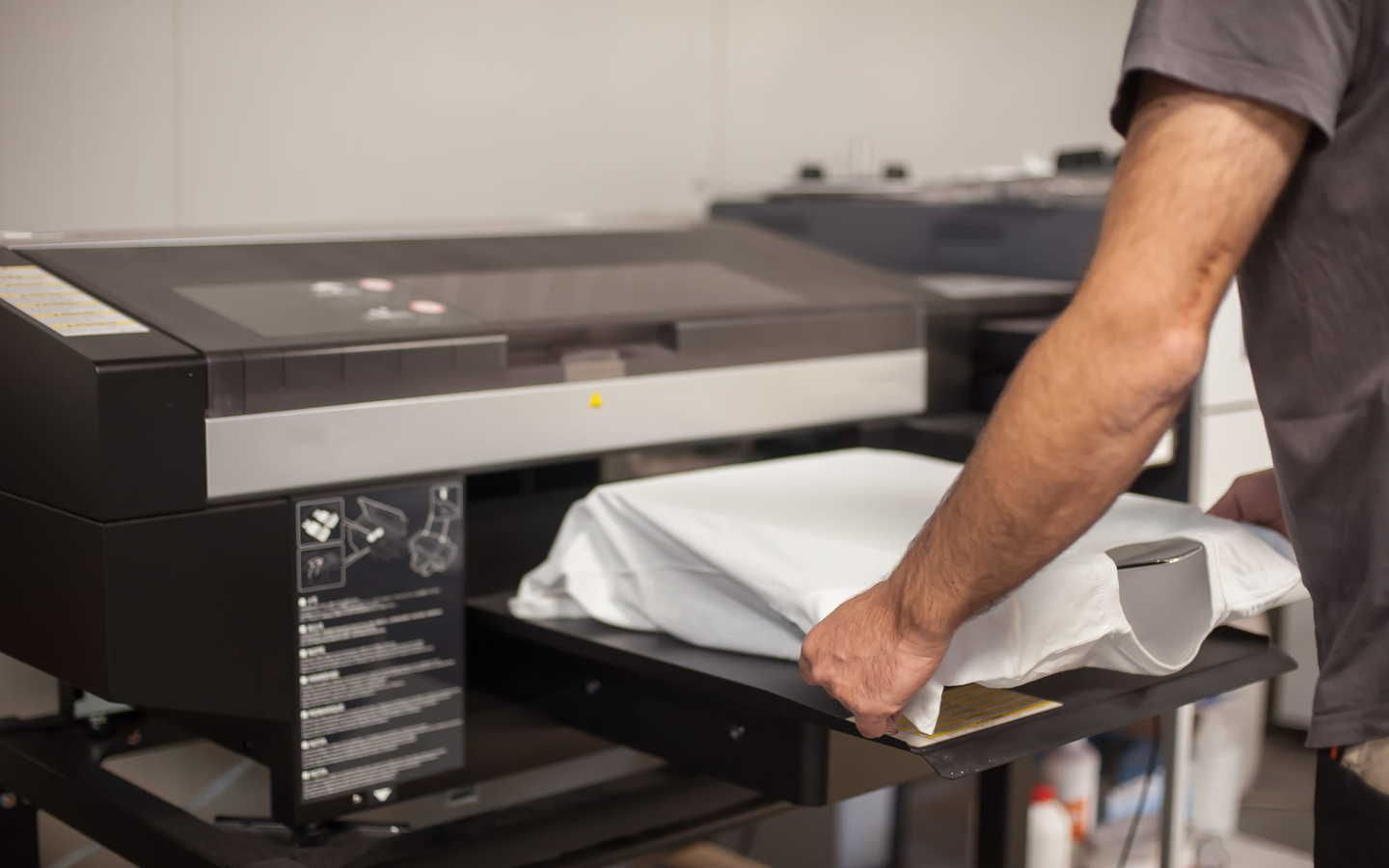
What does DTG mean? Direct-to-garment printing is a digital printing method where specialized inkjet technology applies ink directly onto the fabric of a garment.
How does DTG printing work?
The DTG process functions much like a traditional office printer but is specifically designed for apparel. DTG printers use a print head to spray water-based inks onto the material, which are then absorbed by the fibers.
Before printing, a pretreatment solution is often applied to the clothing to ensure the ink bonds correctly, especially on darker fabrics. Once the image is applied, the garment is heat-cured to set the design, ensuring the artwork remains vibrant and durable through multiple washing cycles.
What are the main advantages of DTG printing?
Here are some DTG benefits that demonstrate why many choose this printing method for colorful designs.
-
Unlimited color options: Because DTG uses the CMYK color model, you can produce multi-color designs without increasing costs. This makes it the perfect choice for photos or artwork with gradients.
-
High precision for fine details: The inkjet technology delivers incredible precision, capturing fine details and complex designs that other methods like screen printing or vinyl simply can’t match.
-
Efficiency for small runs: Since there’s no physical setup like screens or the need to digitize files like with embroidery, DTG is highly suitable for small batch orders and runs.
-
Soft hand feel: Because the ink soaks into the fabric, the finished product has a soft, breathable texture rather than sitting heavily on the shirt.
What are the limitations of DTG printing?
There are some downsides that could make you rethink whether to choose DTG over embroidery.
-
Fabric restrictions: DTG works best on cotton or high-cotton blends. It’s less suited for heavy wool or 100% synthetic materials like polyester, as the ink may not bond as effectively.
-
Shade-matching challenges: While it produces vibrant results, exact Pantone color matching is more difficult with DTG than with screen printing, as the final look is influenced by the base color of the garment.
-
Placement limitations: DTG printers generally require a flat surface, making it difficult to print near seams, zippers, or on oddly shaped items like hats.
What is embroidery?
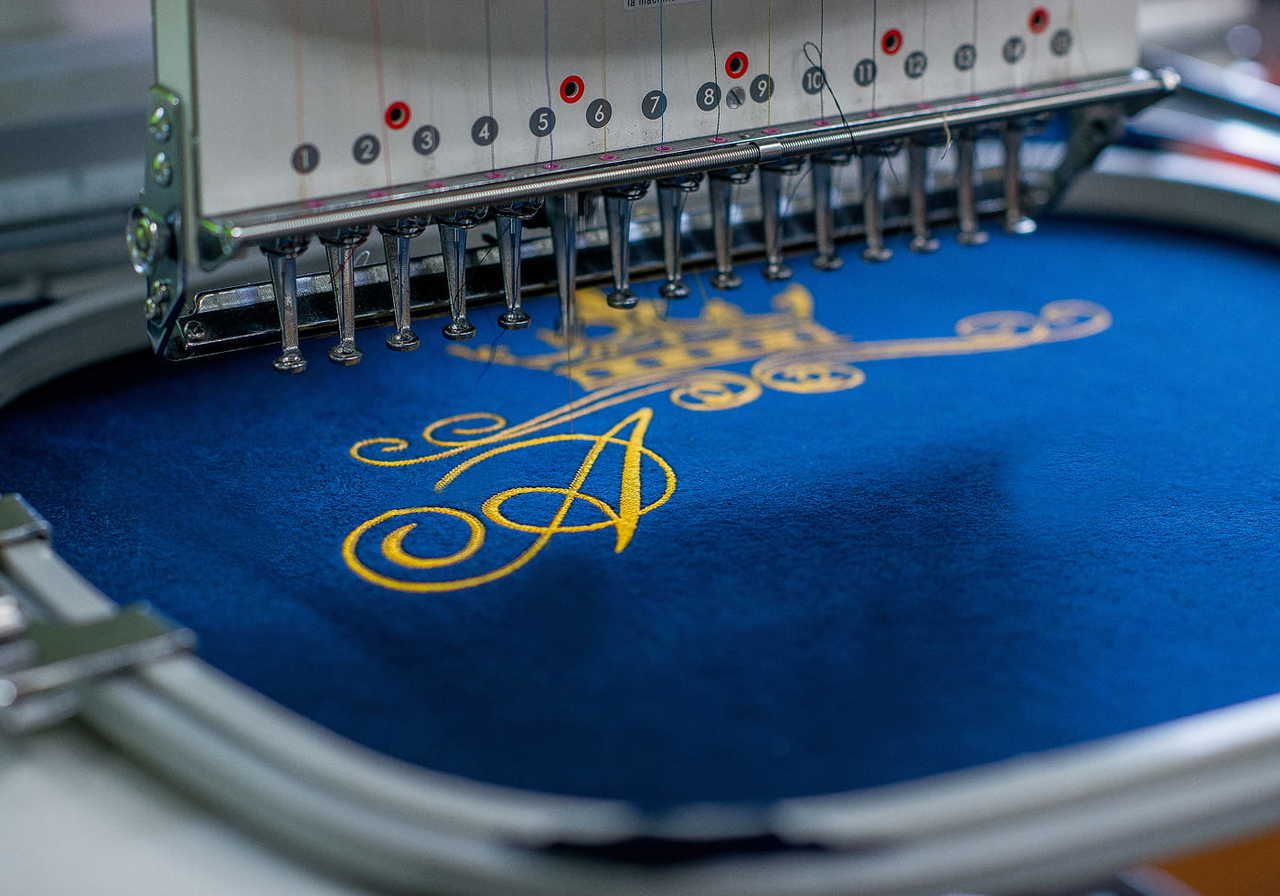
Embroidery is a decoration technique where colorful threads are stitched directly into the fabric to create a raised, three-dimensional design.
How does embroidery work for custom apparel?
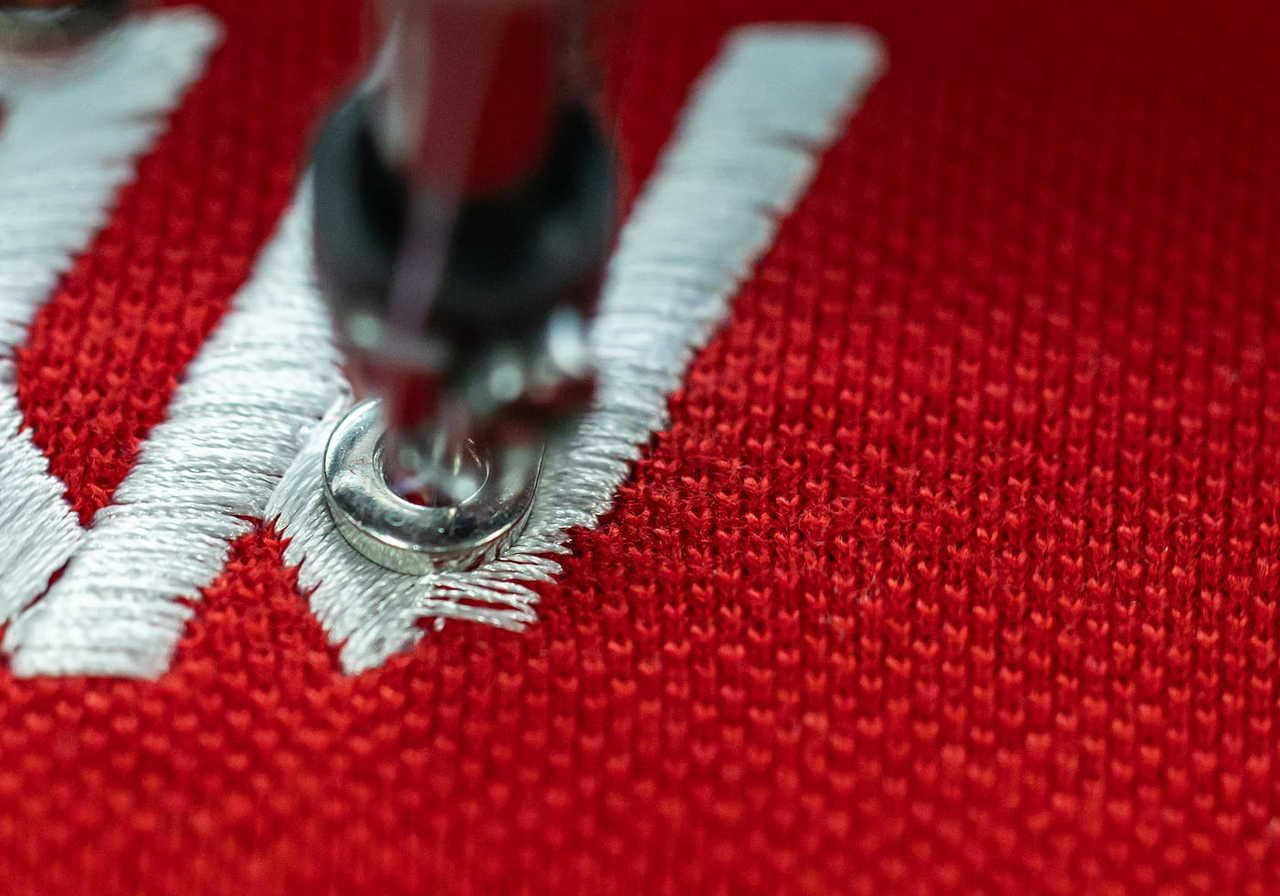
To create embroidered clothing, you must first convert a digital design into a stitch file through digitization. This tells the embroidery machine where to place each stitch and which colored threads to use. The apparel is then hooped to keep the material in place while high-speed industrial needles sew the artwork into the garment.
This method is a staple for corporate apparel and high-end branding due to its professional, retail-ready appearance.
What are the main advantages of embroidery?
Here are some embroidery benefits that make this method a popular choice for custom apparel.
-
Premium perceived value: Embroidery products offer a high-end look that customers often associate with established, professional brands and luxury apparel.
-
High durability: An embroidered design is incredibly durable and can often outlast the garment itself. It handles frequent washing and heavy usage without fading or cracking.
-
Versatile material compatibility: Unlike printing, embroidery works on a vast range of materials, including polyester, wool, thick fleece, and even heavy outerwear.
-
Unique texture: The physical texture of the thread adds a tactile dimension to your branding, making logos literally stand out from the fabric.
What are the limitations of embroidery?
Here’s why you might not choose embroidery over printing techniques.
-
Design complexity limits: You can’t easily reproduce complex designs with photographic detail. Every color requires a different thread, and very small text may become illegible.
-
Stitch count costs: The embroidery cost is often determined by the number of stitches. Larger designs with heavy solid fills can become expensive and may make the fabric feel stiff or heavy.
-
Physical discomfort on light fabrics: On very thin t-shirt fabric, a dense embroidered design can pucker the material or feel scratchy against the skin if not properly backed.
DTG vs embroidery: A direct comparison
Choosing between these two methods means balancing your creative vision with the technical reality. Here’s how DTG printing and embroidery stack up across key categories.
Durability
In terms of longevity, embroidery is the clear winner. Because the design is physically woven into the fabric, it’s resistant to fading, peeling, or cracking.
DTG durability is also high, but like any printed image, it’ll eventually show wear after dozens of washing cycles. To maximize the lifespan of DTG, wearers should follow proper care instructions, such as washing inside out and air drying.
Cost and turnaround time
DTG is the more budget-friendly option for bigger designs with many colors. Costs are generally lower since there’s no digitizing fee. However, embroidery can be competitive for small runs of simple logos.
At Printful, both methods are optimized for speed, but complex embroidered designs may take slightly longer to digitize initially.
Design complexity and color vibrancy
DTG reigns supreme for design complexity, acting as a high-resolution canvas for your most intricate designs. Because it uses inkjet technology, it can reproduce tons of colors, smooth gradients, and photographic fine details that other methods can't match.
However, embroidery has seen a massive technological shift. At Printful, we offer unlimited color embroidery, which uses thread dyeing to go beyond the traditional limit of 15 colors. This means you can create stunning multicolor designs and even gradient stitches.
While DTG captures every pixel of your artwork, embroidery adds a literal glow. The sheen of the colored threads reflects light, giving even simple logos a vibrant and premium pop that flat ink cannot replicate.
Fabrics
The material you choose dictates which decoration method will succeed. DTG printing is highly specialized for cotton and cotton blends, as the water-based inks need those natural fibers to absorb and bond correctly.
Embroidery works across a much broader spectrum of apparel. It’s the superior choice for synthetic materials like performance polyester, moisture-wicking athletic wear, and heavy wool blends found in premium outerwear.
While DTG printers require a flat, smooth surface to avoid blurring, embroidery is the go-to for structured items like custom hats, beanies, and heavy hoodies. This versatility makes it a go-to for businesses looking to expand their branding beyond the standard t-shirt.
Finished product texture
With DTG, the ink eventually sinks into the fabric, resulting in a soft-hand feel that’s breathable and flat – perfect for vintage-style shirts or large-scale back prints.
Embroidery offers a tactile, three-dimensional, high-quality finish that customers can actually feel. Beyond standard flat stitching, Printful offers 3D puff embroidery, which uses a foam insert to make your design literally stand out from the material for a bold, retail-ready look.
Whether you want the seamlessness of a digital print or the professional texture of heavy stitching, the choice between DTG vs embroidery significantly impacts the perceived value of your custom apparel.
Valuable read: Best printing methods for t-shirts
When to use DTG printing for your custom products?
DTG is the best choice for complex, detailed artwork. If your brand relies on graphic-heavy designs, artistic illustrations, or photographic elements, direct-to-garment is the best way to maintain precision.
-
Streetwear brands: Perfect for large designs on the front or back of shirts.
-
Merchandise for artists: Captures the fine details of digital paintings or sketches.
-
Event t-shirts: Great for colorful designs that need to be produced quickly in small runs.
-
Niche hobbyist gear: Ideal for complex graphics that require a wide color palette.
Using DTG allows you to experiment with trends without a high upfront cost, as you can upload a new design and have it ready for sale in minutes – no digitization fees required.
Valuable read: DTG vs DTF printing: A comprehensive guide
When to use embroidery for your custom products?
Choose embroidery when you want to convey credibility, longevity, and professionalism. It’s less about the artwork and more about the brand.
-
Corporate apparel and uniforms: Embroidered logos and monograms on polos or jackets look professional and last for years.
-
Headwear: Hats and beanies have a higher perceived value with embroidery than with printing.
-
Athleisure: Use embroidery for small, subtle branding on synthetic hoodies or joggers.
-
High-end fashion: Smaller, intricate embroidered elements can make a basic garment feel like a luxury item.
Embroidery transforms a simple t-shirt into a garment that feels substantial and premium.
Read more: 28 Embroidery ideas to explore when starting an embroidery business.
DTG vs embroidery: An overview
|
DTG |
Embroidery |
|
|
Durability |
High (50+ washes with proper care) |
Exceptional (often lasts longer than the garment) |
|
Cost and turnaround |
Best for multi-color designs and small runs |
Competitive for logos, digitizing fee may apply |
|
Complexity and color |
Unlimited colors and intricate detail |
Limited to thread colors (unless using unlimited color embroidery), best for solid shapes |
|
Fabrics |
Best on cotton and cotton blends |
Works on cotton, synthetics, wool, and more |
|
Finished texture |
Soft, flat, and breathable |
Raised, textured, and premium feel |
|
Best for |
Photos, graphics, and large designs |
Logos, branding, and corporate apparel |
Key takeaways: Embroidery vs DTG printing
-
Prioritize DTG for visual detail: If your design has gradients, shading, or photographic elements, choose DTG printing to ensure every detail is captured.
-
Choose embroidery for professional branding: For durable uniforms, monograms, and logos, embroidery provides a high-quality, tactile finish.
-
Consider the fabric: Remember that cotton is king for DTG printing, while embroidery is more versatile across synthetic garments.
-
Think about the budget: DTG printing is often more budget-friendly for bigger designs with many colors. Embroidered designs generally cost more with digitization and stitch count.
-
Durability matters: While both are durable, embroidery is the most resilient option for apparel that will face heavy wear and tear, making it especially suitable for uniforms and team-based custom apparel.
Ready to create? Explore custom DTG and embroidery with Printful

At Printful, we provide high-end in-house fulfillment for both direct-to-garment printing and embroidery. Our state-of-the-art DTG printers and industrial embroidery machines ensure your custom apparel meets the highest quality standards.
Whether you’re building a streetwear empire with colorful designs or outfitting a team with professional corporate apparel, our global fulfillment facilities ensure fast, reliable shipping to you or your customers.
Get started for free and see why millions of merchants trust Printful to grow their brands.
- Sign up for free
- 589 custom products
- Sell without inventory
DTG printing vs embroidery: FAQ
DTG printing is usually the lower-cost option for intricate designs with many colors, since it doesn’t involve digitizing fees. While embroidery prices depend on stitch count, direct-to-garment stays affordable for bigger designs.
The direct-to-garment process is less suited for synthetic fabrics, as ink bonds best to cotton. This means that the garment options are limited compared to embroidery. Prints might also fade after extensive washing. Additionally, DTG cannot match the textured quality of vinyl or stitches.
Neither technique is objectively better – it depends on your design. DTG printing is ideal for creating intricate photographic imagery on a garment. Meanwhile, embroidery is superior for professional custom apparel.
While printing handles complex designs perfectly, embroidery offers unmatched durability and a premium feel for any garment, including hats and jackets.
Yes, you can combine direct printing and embroidery to create authentic, mixed-media custom apparel. Always perform the direct-to-garment process first, ensuring the ink is fully heat-cured before stitching. Avoid placing embroidery over very intricate designs with heavy ink layers to prevent needle breakage.
For the best results, use a garment with high cotton content and ensure the design placement allows for stable hooping without distorting the underlying printing.

By Baiba Blain
With 7+ years of experience in translation and creative writing, Baiba now leads a squad of talented writers, balancing research-backed storytelling with team guidance, quality assurance, and SEO processes. Outside of work, she enjoys exploring old castles, spontaneous road trips, and talking back to her cats. 10/10 arguments won so far.

