



Table of contents
Gelato offers print-on-demand (POD) services, connecting sellers with a global network of local print partners. Like any POD platform, it may not be the right fit for everyone.
Whether you’re comparing options before choosing a POD provider or considering a switch, this guide covers nine Gelato alternatives worth checking out.
Why sellers look for a Gelato alternative
Print quality, shipping costs, delivery times, and catalog size are some of the factors that may lead sellers to look for a Gelato alternative.
Gelato doesn’t own its printing facilities, so local partners handle production. As with any distributed fulfillment network, the production partner can affect the final product, so sellers may see differences between providers.
The same local partners also handle shipping, so shipping times and costs can vary depending on the fulfillment location and destination. This can be especially relevant when the print partner fulfilling an order is far from the customer, a concern some sellers have raised.
Gelato’s product catalog is also worth a look, though it can cut both ways. With over 400 items, the catalog may still feel limited for businesses looking to expand into a wider range of products. For a brand-new seller, though, that same number of choices can feel overwhelming when you’re still narrowing down what to sell.
Gelato alternatives at a glance
Short on time? The table below covers the basics: fulfillment model, pricing, product count, and the best alternative for different needs. Spot the right alternative before reading further.
|
Company |
Fulfillment model |
Product count |
Pricing structure |
Best for |
|
Printful |
Hybrid: in-house + vetted partners |
589 |
Free plan; Growth $24.99/month |
Reliable fulfillment with major platform integrations |
|
Spreadshirt |
In-house (US and Europe) |
350+ |
Free, no paid plan |
US and EU-focused sellers |
|
Printify |
Marketplace, 90+ print providers |
2,000+ |
Free plan Premium $24.99/month (annual) |
Massive catalog and provider choice |
|
PrintAura |
Marketplace, US-based providers |
100+ |
Free, no paid plan |
Beginners wanting a simple setup |
|
Teelaunch |
Marketplace, global partner facilities |
300+ |
Free, pay-per-sale |
Variety beyond apparel at competitive prices |
|
Zazzle |
Marketplace, standalone |
1,000+ |
Free; royalty 5%-50% plus platform fees |
Artists and print shops selling event and gift-driven products |
|
Redbubble |
Marketplace, global production |
70+ |
Free; tiered fees (0%, 20%, or 50%) |
Artists wanting diverse products, no upfront cost |
|
TeePublic |
Marketplace, third-party global |
75+ |
Free; flat $4 or $2 royalty, no platform fees |
Predictable, fee-free earnings |
|
Threadless |
In-house |
200+ |
Free; retail price minus cost, or 10% marketplace royalty |
Artists wanting in-house quality plus cause-based selling |
Best Gelato alternatives with in-house fulfillment
Some Gelato alternatives use in-house production rather than relying primarily on local partner networks. These print-on-demand companies handle printing and shipping from start to finish, which can give sellers more control over production and fulfillment.
Printful and Spreadshirt belong to this category, using local production and in-house fulfillment centers to give sellers more control over the finished product.
Printful: Reliable fulfillment with major platform integrations
-
Product count: 589
-
Best-selling categories: T-shirts, sweatshirts, stickers, hats, phone cases, mugs
-
Decoration method: DTG, all-over cotton, all-over synthetic, sublimation, embroidery, DTFlex printing, knitting
Printful is a print-on-demand company that uses a hybrid fulfillment model. It runs seven in-house production facilities across Europe and North America, and works with vetted partner facilities in Brazil, Japan, and Australia to support local fulfillment for select products.
Regardless of who fulfills the order, every product goes through a three-step quality check before it ships. This commitment shows in the numbers: most orders are fulfilled within two to five business days, backed by a reshipment rate of just 0.24%.
The product catalog spans popular categories – apparel, accessories, home and living, and more. You can start for free, with the option to upgrade to Printful Growth for $24.99/month. The paid plan includes discounts on products and branding, plus free digitization for sample orders, among other perks.
Selling is easy with built-in integrations for major eCommerce platforms and marketplaces. Simply upload your designs or make a new one using the free Design Maker, connect your account to your chosen platform like Etsy, Amazon, or Shopify, then push your products live in a few clicks.
MerchShare also makes group orders hassle-free. Ordering 25 or more of the same items qualifies for bulk discounts of up to 55%.
Spreadshirt: In-house fulfillment on both sides of the Atlantic

Source: Spreadshirt
-
Product count: 350+
-
Best-selling categories: Custom hoodies, sweatshirts, hats, tote bags, mugs, and water bottles
-
Decoration method: Digital direct, thermo sublimation, polyester print, DTF, flex and flock printing
Spreadshirt runs its own in-house facilities in the US and Europe, with fulfillment locations in the US, Germany, the Czech Republic, and Poland. Orders ship globally, but this mix of locations can make it a strong option for stores targeting those regions.
This print-on-demand provider is free to use, with no paid subscription plan to worry about. Spreadconnect offers easy integration with popular eCommerce platforms like Shopify, Etsy, WooCommerce, Squarespace, and TikTok Shop. Alternatively, create a free storefront with Spreadshop and start selling without building a full online store.
Read more: Print-on-demand comparison: Printful vs Spreadshirt
Best Gelato alternatives with marketplace-style fulfillment
Not every Gelato alternative owns its production facilities. Some work more like marketplaces, connecting sellers to a large network of independent print providers rather than running their own facilities. This setup gives sellers more choice over who fulfills each order, including local producers and specialized manufacturers.
Printify, PrintAura, and Teelaunch all follow this marketplace-style model.
Printify: A massive catalog backed by a global provider network
-
Product count: 2,000+
-
Best-selling categories: T-shirts, blankets, mugs, wall art, stickers, phone cases, and tote bags
-
Decoration method: DTG, all-over printing (sublimation), DTF, embroidery, puff print, metallic and glitter print, and laser engraving
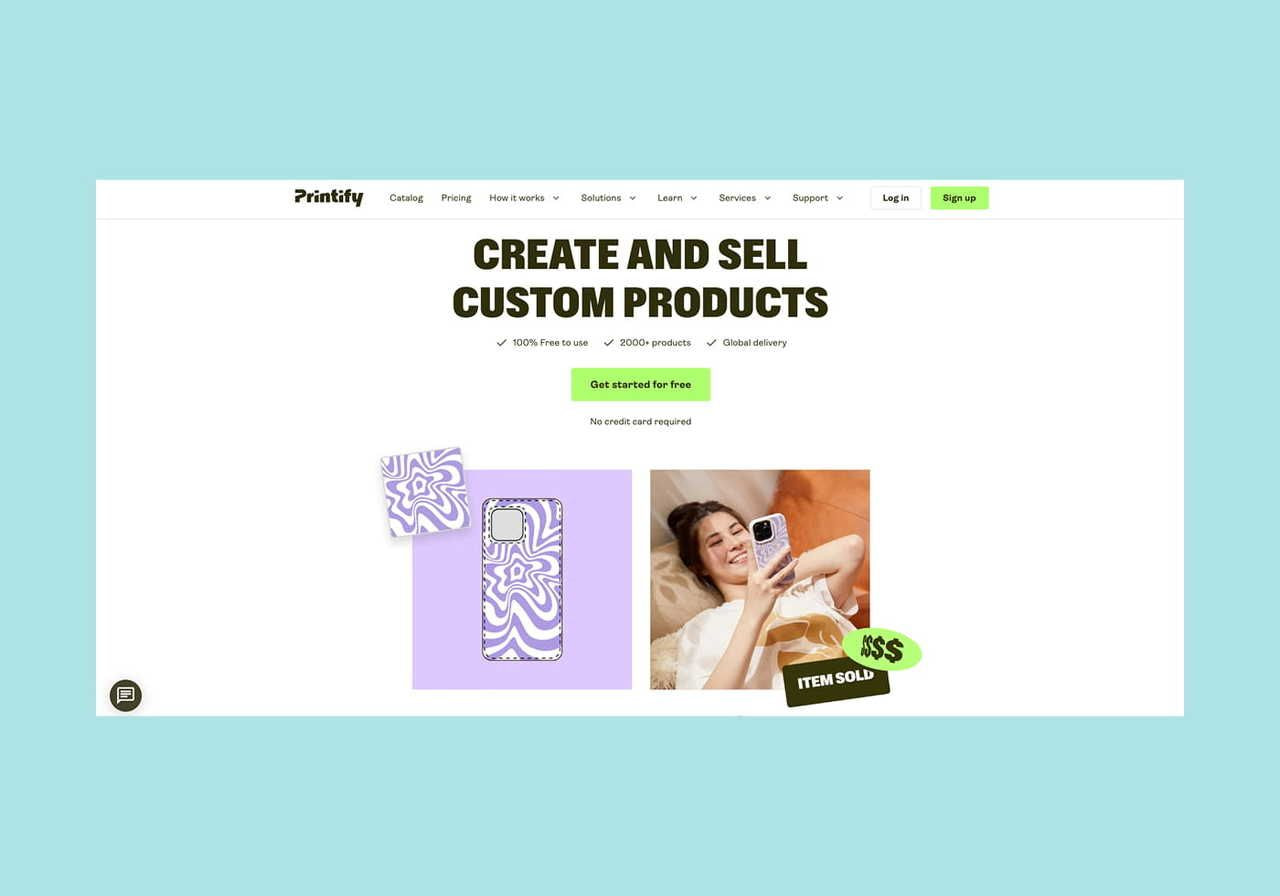
Printify has one of the widest product ranges on this list, backed by a global network of more than 90 Print Providers that automatically routes each order to the nearest facility for fast fulfillment. Most orders are produced and shipped within two to seven business days after submission. Sellers can manually pick providers or rely on Performance Scores, which are updated weekly based on quality, speed, and feedback.
Bulk discounts are also available for orders of more than 20 items from the same Print Provider, which works well for brands, events, or company merch runs.
You can start right away with the free plan. Upgrading to Premium runs $24.99/month billed annually, unlocking up to 33% off new products, up to 20% off the rest of the Catalog, and access to premium mockups through its AI Mockups tool.
Integrate with popular eCommerce platforms and marketplaces, or start selling right away with Printify’s free Pop-Up Store. Customize designs with the free Product Creator, which also lets you preview products and generate professional mockups before they go live.
PrintAura: Simple by design

Source: PrintAura
-
Product count: 100+
-
Best-selling categories: T-shirts, sweatshirts, tank tops, mugs, tote bags, and accessories
-
Decoration method: DTG
Like POD companies we covered earlier, PrintAura has no minimum order requirement. Its catalog is dominated by apparel, and production runs through US-based facilities – similar in structure to Printify’s outsourced model, just on a smaller scale.
PrintAura is free to use and doesn’t have any paid plans to upgrade to. Integration is limited to Shopify and Etsy, keeping the setup simple.
The small catalog and straightforward integrations make PrintAura a solid starting point for sellers and small businesses who want something simple rather than a large, feature-heavy platform.
Teelaunch: More than apparel, priced to compete
Source: Teelaunch
-
Product count: 300+
-
Best-selling categories: Apparel, wall art, tech accessories, journals, and drinkware
-
Decoration method: DTG, dye sublimation, laser engraving, and digital printing
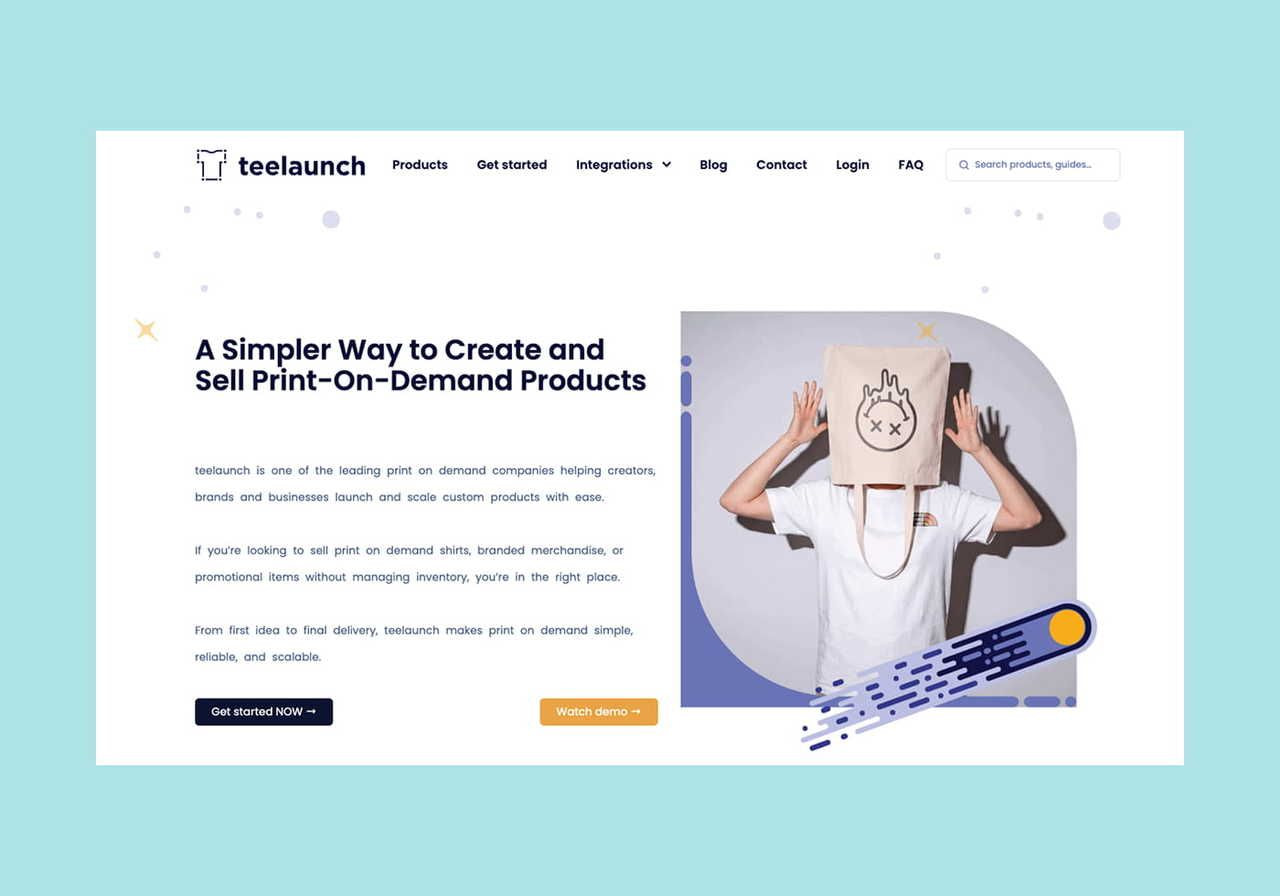
Teelaunch offers competitive prices across the catalog, and even price-matches select District Photo products if a competitor advertises the same item for less. Sellers pay only for what they sell, and that’s the whole pricing model.
While the catalog leans toward apparel, as its name suggests, it also includes a decent selection of accessories, kitchenware, wall art, jewelry, and more.
Teelaunch’s partner facilities span North America, Europe, and Australia. Depending on the product, orders can ship internationally.
Shopify, Etsy, WooCommerce, and TikTok Shop all connect directly. Order Desk integration or Teelaunch’s API cover anything more custom.
Best Gelato alternatives for artists and creators
The following Gelato print-on-demand alternatives bring their own shopper traffic, with customers skewing artsy and design-focused. Independent artists set their own markup on top of a base price, and the marketplace keeps the rest. They’re useful for turning personalized products and customized products into a sales channel while still not dealing with inventory management.
Zazzle: Paper goods and party supplies specialist
Source: Zazzle
-
Product count: 1,000+
-
Best-selling categories: Invitations, greeting cards, wedding stationery, crafts, party supplies, home goods, and apparel
-
Printing method: DTG, screen printing, foil, digital printing, sublimation, embroidery, engraving, and letterpress
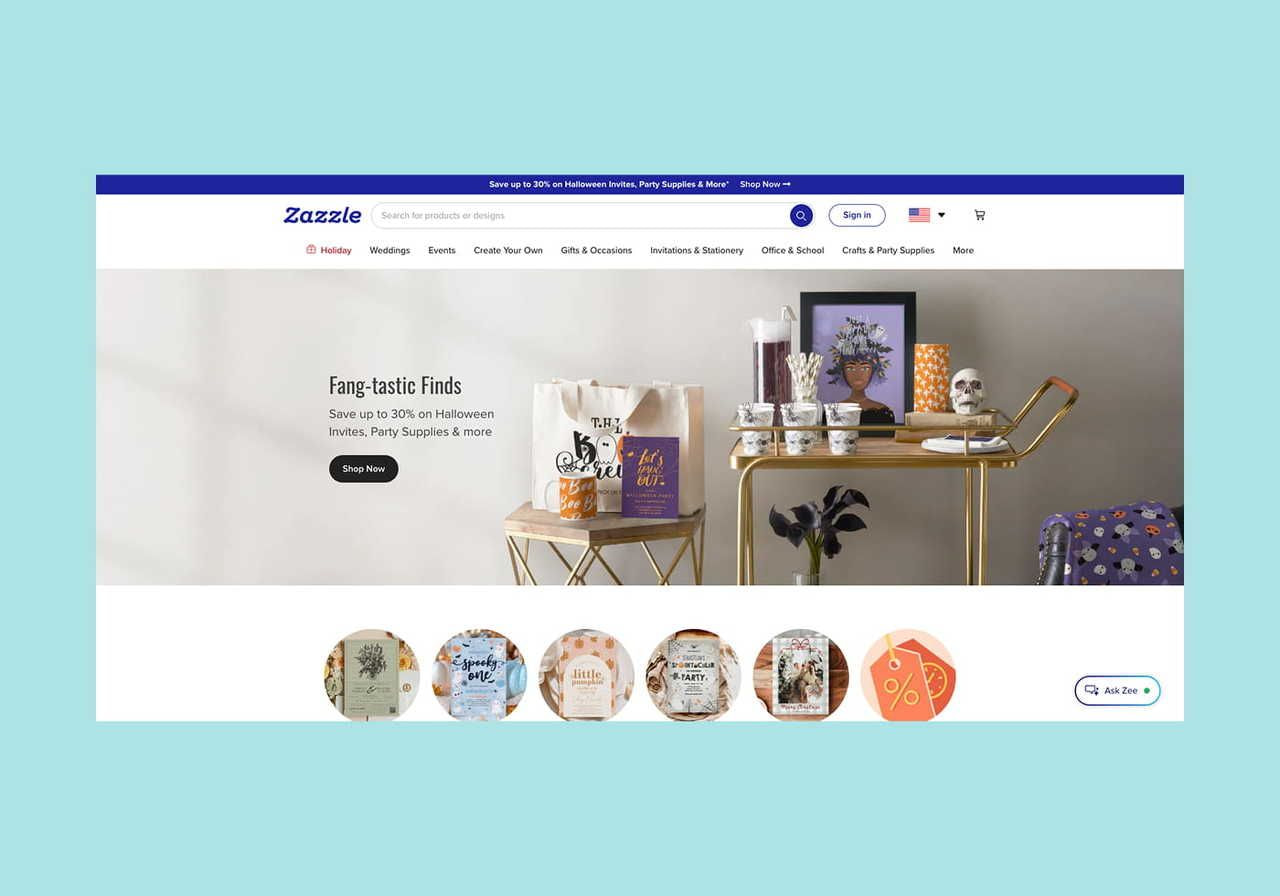
Zazzle covers a diverse range of products, but it’s especially strong for event and gift-driven items like invitations and wedding stationery.
Independent artists set their own royalty rate on top of the base price, between 5% and 50% for physical products. Worth noting: Zazzle also applies a Marketing Royalty Fee of 35%-50% on sales driven by its own marketing, plus a 5% Excess Royalty Fee if a seller sets an unusually high markup. Factor these into your retail price to make sure the take-home rate matches your actual earnings.
Zazzle runs as a standalone marketplace with no outside integrations, though sellers can connect Google Analytics to track traffic and customer behavior directly. Most domestic orders arrive within four to seven business days.
Redbubble: A ready-made marketplace for your art
Source: Redbubble
-
Product count: 70+
-
Best-selling categories: T-shirts, journals, stickers, posters, and laptop sleeves
-
Decoration methods: DTG, sublimation printing, kiss-cut vinyl cutting
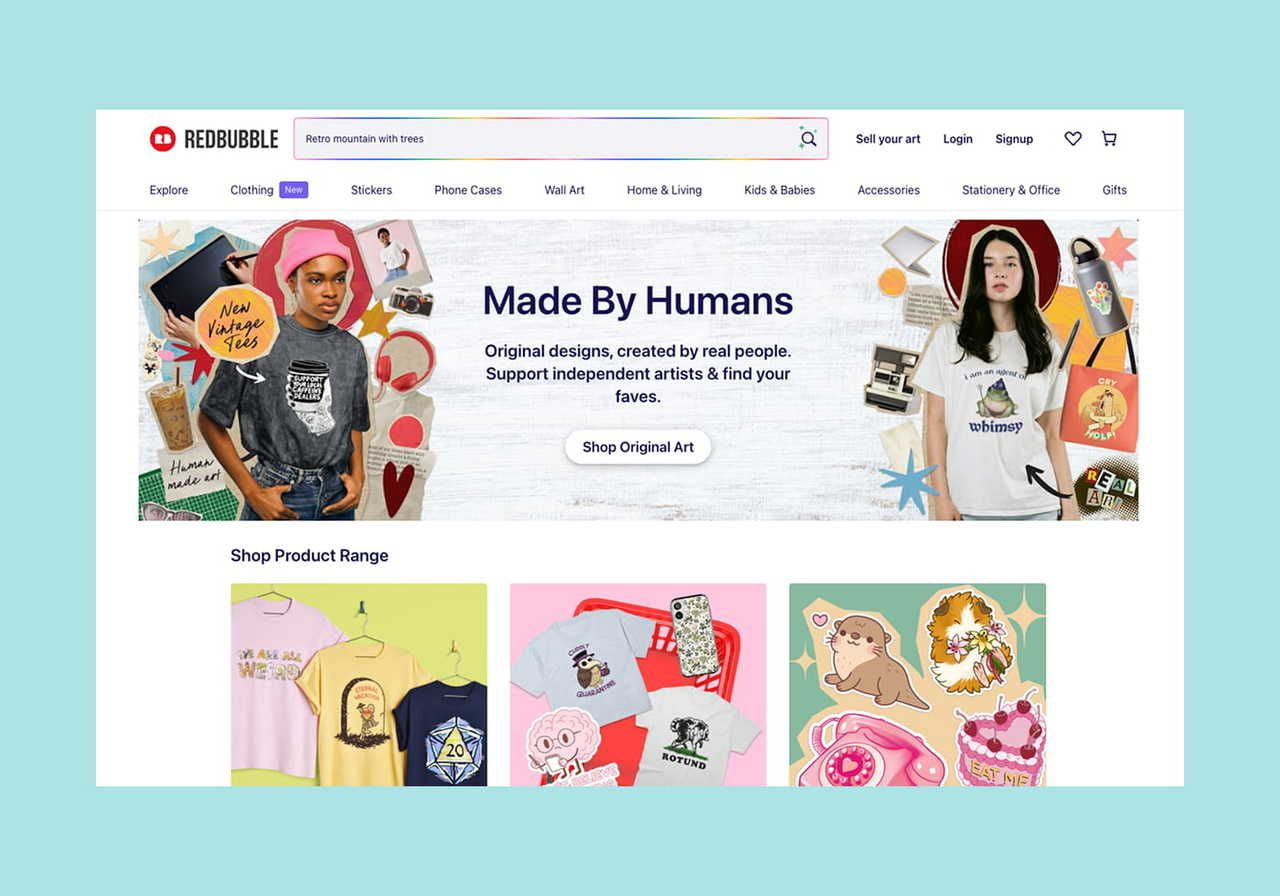
Redbubble is a good fit for artists seeking a marketplace with diverse products and no upfront costs to join. Upload artwork once, and Redbubble automatically applies your custom designs across dozens of product types.
Fees are structured on a tiered system with two parts. Standard and Premium sellers pay platform fees of 50% and 20% of monthly earnings, respectively, and both also pay an excess markup fee of 50% on any earnings from pricing above a 20% markup.
Sellers move up by growing their brand, uploading unique work, and building sales over time. Redbubble rewards that growth – Pro accounts skip both fees entirely, along with extra perks like priority access to fan art programs and a dedicated account manager.
Redbubble operates as a standalone marketplace, so there’s no way to connect it to an outside store. Mockup tools are built into the upload process to preview designs on each product, though branding options are limited since there’s no custom packaging or labeling. Production runs through facilities in the US, UK, Canada, Europe, and Australia.
Read more: Print-on-demand comparison: Printful vs Redbubble
TeePublic: Straightforward earnings for artists
Source: TeePublic
-
Product count: 75+
-
Best-selling categories: Hats, socks, t-shirts, hoodies, sweatshirts, stickers
-
Decoration method: DTG, vacuum form printing
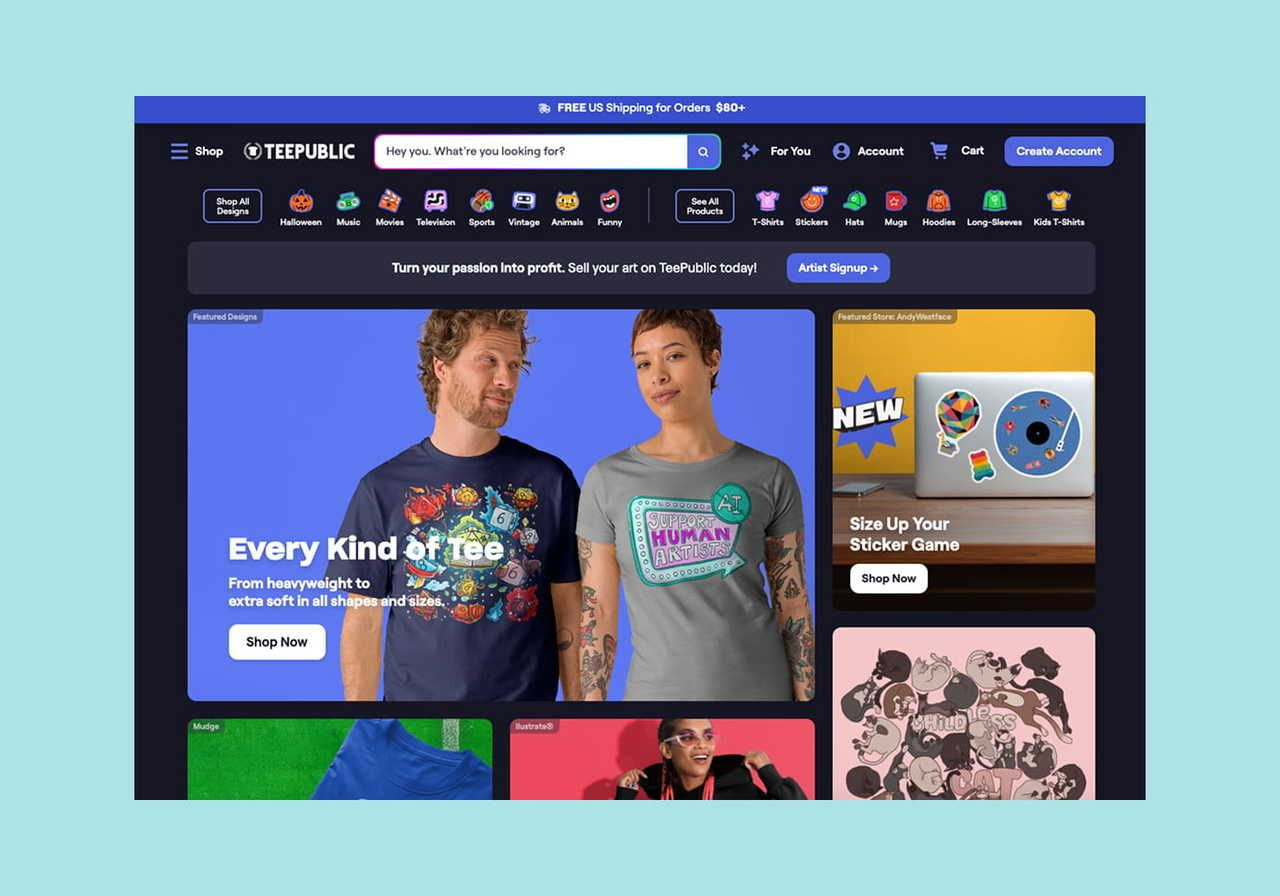
If you’re not a fan of platforms taking a percentage-based cut, consider this print-on-demand marketplace. TeePublic pays a flat-rate royalty per item, with most apparel and accessories earning $4 at regular price and $2 during a sale. There’s no platform fee or seller fee, so the royalty artists see is what they keep.
The trade-off is less control over pricing, since TeePublic sets the retail price rather than the seller, which can limit profit margins for sellers used to pricing their own work.
Apparel orders are produced by third-party fulfillment centers around the world, including facilities in the United Kingdom, Australia, and the United States. US orders typically arrive within five to ten business days. Customer support is available during normal business hours, with text messages available for US customers.
Threadless: Made in-house, with a give-back option
Source: Threadless
-
Product count: 200+
-
Best-selling categories: T-shirts, headwear, and wall art
-
Decoration method: DTG
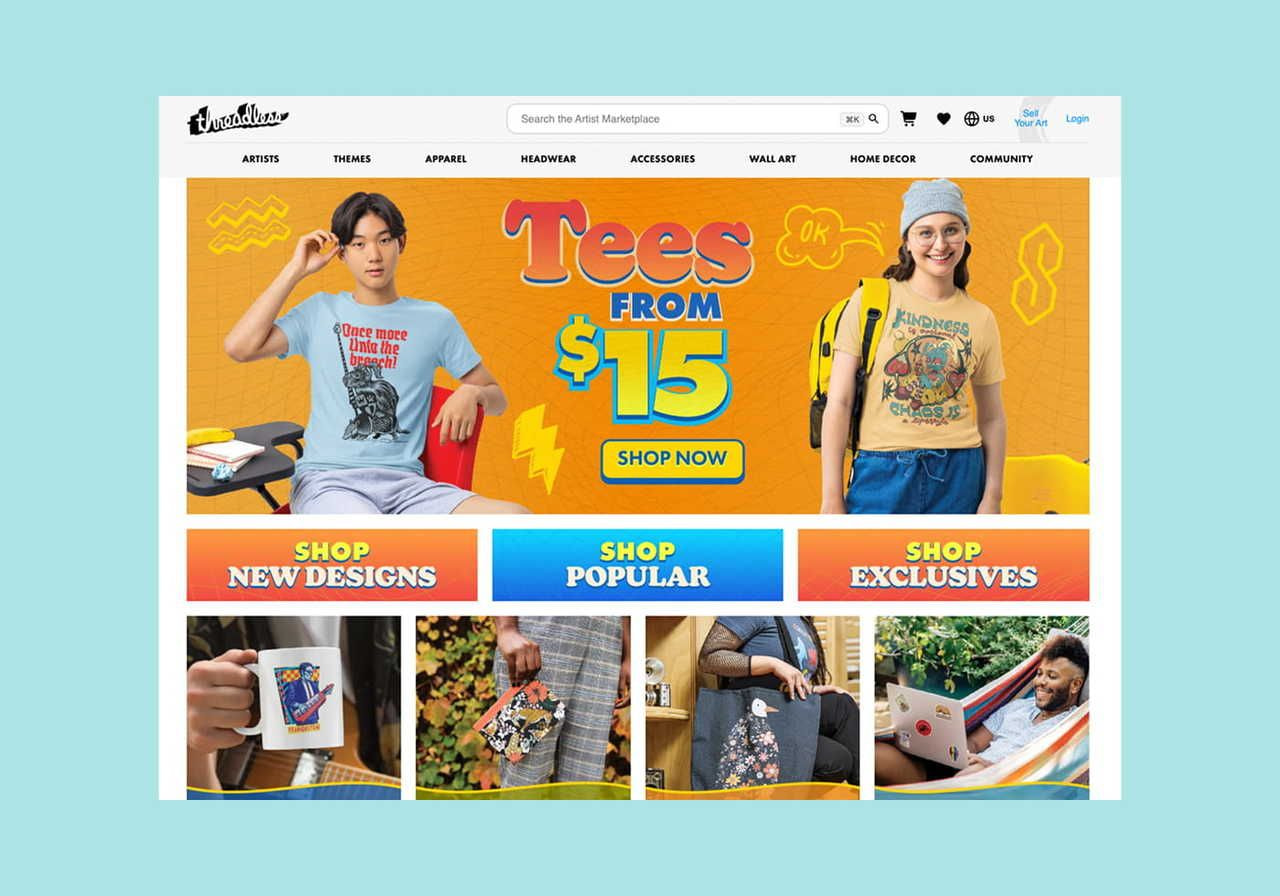
Unlike other Gelato alternatives in this category, Threadless handles most of its own production in-house. This helps keep quality consistent across a catalog of 200+ products.
Sellers earn in one of two ways. In an Artist Shop, revenue comes from the retail price minus the product cost, giving sellers room for better margins as they raise the final price. On the Threadless Marketplace, sales pay a flat 10% royalty instead, a simpler payout for designs discovered organically outside a personal shop.
Sellers who want to make a positive impact can participate in Threadless Causes. Sales of tagged designs, covering human rights, mental health awareness, the environment, and more, put a portion of profits toward related charities.
Switching from Gelato: What to check before you commit
Changing print-on-demand providers takes more than a quick signup, especially if your online store is already up and running. Start by identifying what your store needs: delivery speed for your target market, how hands-off inventory management should be, and which features matter most for your eCommerce business.
From there, research a few alternatives and compare features against that list. Reviews are worth checking too, both from sellers and independent buyers. Real feedback often reveals gaps that a features page won’t show, like inconsistent delivery times or slow support.
Weigh cost against what you’re actually getting. A lower base price doesn’t help much if it comes with hidden fees or leads to a worse overall experience. If a free plan is available, test it before committing so you can see how it handles orders in practice.
Finally, check what support looks like: live chat, response times, and available resources. You’ll want quick answers if something goes wrong during the transition.
Once you’ve confirmed the new provider is a fit, you can start migrating. Here’s what switching from Gelato to Printful looks like as an example:
-
Connect your store to Printful. Sign up and link your account to your eCommerce platform so new orders sync automatically.
-
Recreate your products using the Design Maker. Rebuild your Gelato listings by uploading your designs and adjusting placement with built-in design tools to match your current products.
-
Disable Gelato fulfillment. This avoids duplicate orders and unnecessary costs once your new setup is live.
-
Start selling with Printful. From here, new orders can be printed, packed, and shipped automatically.


Frequently asked questions
Yes. Several alternatives to Gelato offer different approaches to POD fulfillment. Printful and Spreadshirt run their own facilities for more consistent print quality, while Printify offers a much larger catalog through its global print provider network. The right alternative depends on what matters most: consistency, product range, or price.
Print consistency can vary depending on the production partner fulfilling an order. Since Gelato doesn’t own its printing facilities, local partners handle production instead, so quality can vary depending on which partner fulfills an order. This fulfillment model can also affect shipping, as delivery times and costs may vary by production partner and destination.
Yes. Your store, whether on Shopify, Etsy, or another platform, isn’t tied to Gelato. Switching only changes who handles production and fulfillment behind the scenes. For example, moving from Gelato to Printful means connecting your existing platform, recreating your product listings, then disabling Gelato fulfillment so new orders route to Printful instead. Everything else about your store stays as is.
Switching itself typically costs nothing. With Printful, for example, there’s no upfront cost to start selling. Signing up is free, and you only pay for products as customers order them. The paid plan, Printful Growth, is available if you want better value for money through product and branding discounts.
Find the right fit and grow from there
Gelato can be a good starting point, but it isn’t the only option. Whether you want in-house production for greater control over production consistency, a marketplace with a larger catalog, or a platform that lets artists set their own markup, there’s a Gelato alternative built for it.
Pick the one that matches your priorities, and you can start selling today.

Jordana is a content writer with over 6 years of experience in content writing and technical writing. Her not-so-secret passion is breaking down complex ideas into clear, straightforward content, whether it's explaining tech concepts or crafting stories that connect. When she's not writing, you'll find her enjoying good sushi or falling down movie trivia rabbit holes.

