


Table of contents
Thousands of fashion brands compete for the same buyers, and the ones that pull ahead run marketing as a consistent, adaptable system across several channels.
This guide covers how to market a clothing brand online with 17 strategies for building brand awareness, attracting new customers, and turning one-time buyers into a loyal customer base.
Key takeaways
-
Successful fashion brands treat marketing as an ongoing system. Marketing clothes online means combining SEO, social media marketing, email marketing, and paid advertising across multiple channels.
-
Brand identity anchors brand marketing. A clear brand story, visual identity, and defined brand values give clothing marketing strategies a consistent point of reference.
-
Digital marketing works best when channels reinforce each other. Influencer marketing, user-generated content, and paid ads on Google and Meta all build the same brand’s presence across the platforms that target audiences already use.
-
Consistency drives long-term growth more than chasing every trend. Running a few marketing campaigns well and tracking key performance indicators (KPIs) along the way builds brand loyalty faster than spreading a marketing budget across all 17 strategies at once.
-
Print on Demand lowers the risk for new clothing brands entering the competitive fashion industry. It lets clothing companies test a new line, a promotion, or a fashion trend without upfront inventory costs – a real advantage in a clothing industry where trends move fast.
Is it worth marketing a clothing brand online in 2026?
Yes. Most shoppers discover a clothing brand online before they ever see it in person, and marketing budgets have followed that shift. TikTok, Instagram, and YouTube collectively account for over 60% of product discovery, ahead of Google, and Pinterest shoppers spend 40% more per month than people who don’t use the platform, across a base of 631 million monthly active users. Clothing brands that skip a presence on the channels where customers already research and buy lose that ground to competitors.
None of this requires a massive marketing budget. It requires a clear brand vision, a marketing plan built around a defined target audience, and consistent execution across a few marketing channels rather than a thin effort spread across all of them.
Build the foundation before you spend a dollar

Every clothing marketing strategy in this guide works better once four fundamentals are in place.
1. Brand identity and brand story
Visual identity, tone, and brand values shape every photo, caption, and ad shoppers see. Brands with a clear, consistent aesthetic build brand recognition faster than brands that change their look with every collection. Write down the brand story once and reference it when briefing designers, photographers, or ad copy.
2. Target audience and market research
Thorough market research identifies who buys, why they buy, and where they spend time online. Survey existing customers, study comment sections on competitor accounts, and pull demographic data from Instagram Insights or TikTok Analytics before building a marketing strategy for a clothing business. Defining a target market lets ad platforms aim campaigns at specific age groups, locations, and interests, which reduces wasted spend on impressions that never lead to a purchase.
3. Business model and pricing strategy
Your pricing strategy needs to account for production costs, marketing spend, and margin, beyond simply matching what other clothing brands charge. Print on Demand removes inventory risk from this equation entirely. Clothing brands design and list products without paying for stock upfront, which keeps the business model flexible while a pricing strategy gets tested against real sales data.
4. Know the competition
The fashion industry is competitive, and studying other brands – their product pages, their social feeds, their email flows – shows which gaps other brands have left open for a new clothing brand to fill.
17 Strategies to market a clothing brand online

1.Use high-quality images that show your aesthetic
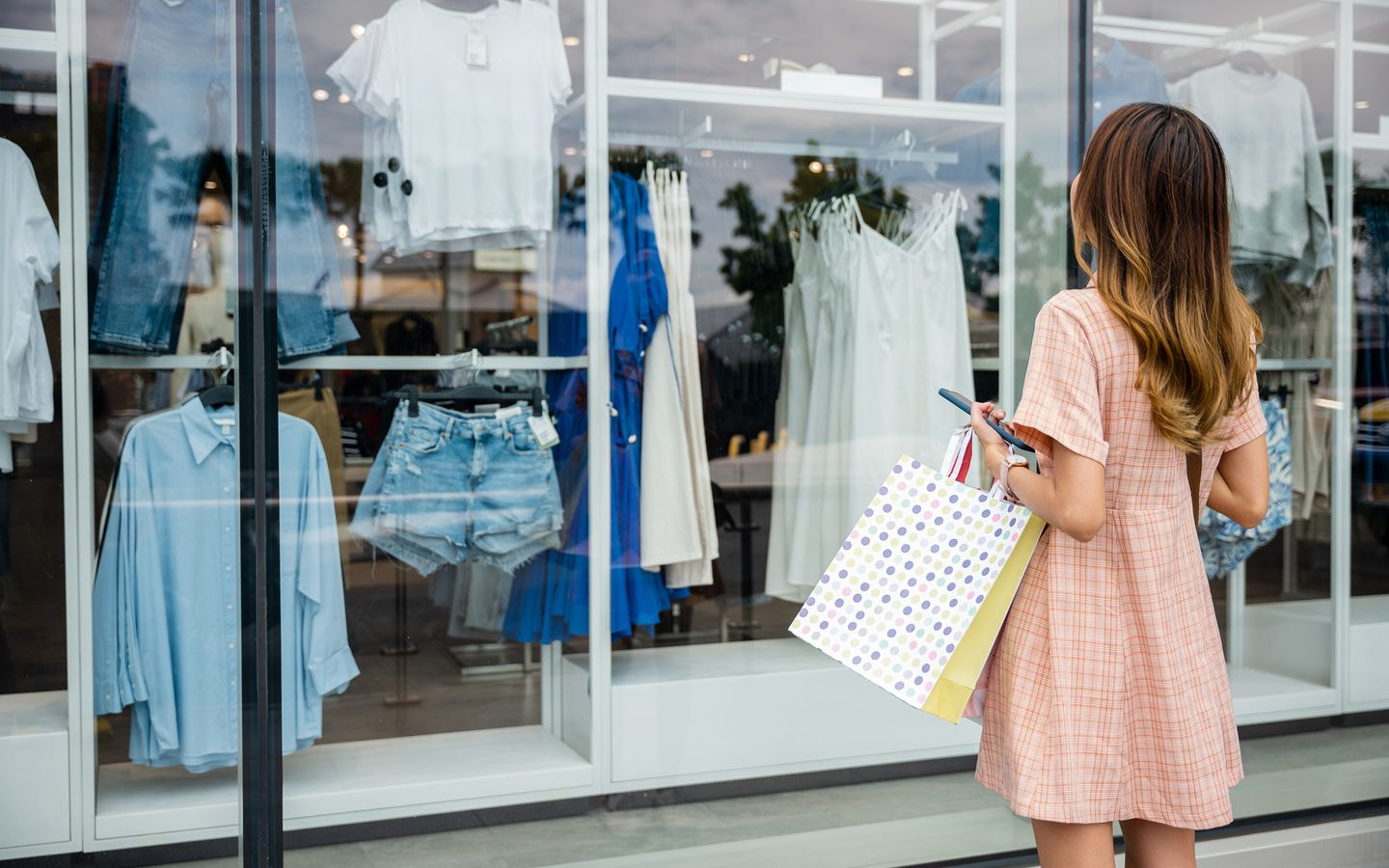
High-quality images across a website and social accounts help shoppers picture themselves wearing a product. Clean lighting, multiple angles, and a consistent backdrop build the baseline trust a new fashion business needs before it earns repeat customers.
Beyond the studio shot, location matters. A streetwear brand’s photos read differently on a city block than a minimalist brand’s would in natural light. Match the shoot location to the brand’s aesthetic, and use models of different sizes and appearances so more of the target market sees themselves reflected in the product pages.
A basic setup works. A tripod, one or two continuous lights or reflectors, and a plain backdrop cover most product shots without a studio rental. Shoot each item from at least three angles (front, back, and a close-up on fabric or print detail) so product pages give shoppers the same information they’d get from handling the item in a store.
2. Create short-form videos showing the product in motion
Short-form video now outperforms static images across nearly every platform. Reels, TikToks, and video Pins let a target audience see how fabric moves, how a product fits, and how it looks outside a studio setting, which static photography can’t replicate.
Keep clips under 60 seconds, lead with the product in motion, and add captions with relevant keywords to support SEO on platforms that now function as search engines.
A single filming session covers more ground than it looks like it should. Shoot a model walking, sitting, and turning in the same outfit, then cut that footage into three or four separate videos with different hooks and captions. Testing several openings against the same core clip shows which angle a target audience responds to without multiplying the production workload.
3. Follow TikTok trends and use TikTok Shop

TikTok remains one of the strongest channels for reaching younger shoppers. 42% of Gen Z consumers turn to TikTok for product discovery, and TikTok Shop’s LIVE shopping format converts noticeably higher than a standard product listing.
Post consistently, use trending sounds and formats only when they fit your brand’s values, and reply to comments, stitches, and duets to build the kind of back-and-forth that turns viewers into a loyal customer base. A trend used a week late reads as an afterthought rather than a genuine reaction, so stay tuned in to what’s current.
4. Turn Instagram into a storefront with Reels, Stories, and shopping tags
Instagram still functions as a hybrid of media outlet and store for most clothing brands. Reels reach both followers and non-followers, which makes them the format most likely to bring in new customers, while Stories with polls, quizzes, and countdown stickers build a tighter connection with existing customers.
Product tags in Reels and Stories link straight to product pages, shortening the path from discovery to checkout. Two to three specific hashtags per post support discoverability without looking like keyword stuffing, and shopping tags drive website traffic more than a long list of hashtags ever will.
5. Build a visual identity on Pinterest
Pinterest works less like a social feed and more like a visual search engine, and it rewards fashion brands with a clear visual identity. Pinterest users are nearly 90% more likely than users on other platforms to say they’re ready to shop, which makes the platform worthy of a dedicated content calendar rather than an afterthought.
Use portrait-mode images, organize boards by style or occasion, and add relevant keywords to Pin descriptions. Cost per click on Pinterest is also lower than on Meta platforms, stretching a modest marketing budget further.
6. Optimize your online store for search engines
Search engine optimization (SEO) builds visibility that doesn’t disappear the moment your ad budget runs dry. Start with market research into what a target customer actually searches for using a tool such as Ahrefs, Google Keyword Planner, or Ubersuggest, then work those terms into product pages, page titles, meta descriptions, and image alt text.
Run regular technical audits with Google Search Console to catch broken links, slow load times, or pages that aren’t indexed. SEO takes longer to show results than paid ads, but it keeps generating website traffic long after a single campaign ends.
Shopify’s built-in SEO settings and plugins, or Yoast for WooCommerce and WordPress, handle most on-page basics, such as metadata, keyword density checks, and alerts for missing tags.
A blog covering styling tips, care guides, or market trends gives a clothing brand additional pages to rank for search terms a product page alone wouldn’t capture, and each post becomes another entry point for new customers researching before they buy.
7. Turn customers into marketers with user-generated content
User-generated content (UGC), including reviews, unboxing videos, and customer photos, builds trust faster than brand-produced content because it comes from someone with no stake in the sale. Encourage customers to tag the brand, then repost the strongest submissions (with permission) across your website, email, and social accounts.
Branded hashtags or a simple photo challenge give customers an easy way to participate. Featuring real customers on product pages also gives new visitors social proof at the exact moment they’re deciding whether to buy.
8. Run giveaways to build brand visibility and awareness

Giveaways cost far less than a paid ad campaign and still generate real brand awareness. Ask entrants to tag a friend, share a Story, or comment on a post, and tie the prize to a current product or a seasonal drop, so entrants see the exact item they’d be buying anyway.
Announce winners publicly (with their permission) to turn a single follower into an advocate who talks about the brand without being asked.
9. Sell in pop-up shops, fashion events, and local markets
Online marketing shouldn’t be the only channel for advertising clothing. Pop-up shops, local markets, and fashion events put a clothing line in front of people who might never see a paid ad, and they let shoppers touch fabric and try sizes before buying, which builds confidence for future online orders.
Pop-ups don’t require a permanent retail footprint. Weekend booths at local markets, timed around a product drop, generate content for social media and a direct sales channel in the same afternoon.
Treat the booth itself as a photo set. A branded backdrop, a rack organized by color or collection, and a QR code linking straight to the online store turn foot traffic into both immediate sales and a list of new customers to follow up with by email afterward.
Local markets also put a brand in front of other small business owners, which often leads to cross-promotion or joint pop-ups down the line.
10. Time promotions around seasonal shopping and fashion trends
Seasonal shopping spikes give a clothing company a natural reason to run a promotion, and shoppers a reason to buy sooner rather than later. Beyond Black Friday and Cyber Monday, plan smaller promotions around spring refreshes or trend-driven drops that tie directly to what’s happening in the fashion industry that month.
Flash sales, mystery discounts, and theme-based drops all work as promotion formats. Each one also tends to generate a fresh wave of user-generated content as customers post their orders.
11. Boost sales with email marketing
Email marketing reaches people who already know the brand, which makes it one of the highest-return channels available. Marketers report an average return of $36 for every $1 spent on email, a figure that consistently outperforms paid social and paid search.
Segment a list by purchase history or browsing behavior, keep subject lines specific, and use email to promote restocks, drops, and loyalty program perks. A strong call to action, paired with a clean design, turns browsers into buyers more consistently than a generic blast.
12. Partner with micro-influencers

Micro-influencers bring smaller but more engaged audiences than macro-influencers or celebrities, and their recommendations read as more credible because the relationship feels closer to a friend’s opinion than an ad. Reach out with a specific, personalized pitch rather than a generic template, and offer either product or a paid collaboration depending on the creator’s audience size.
Influencer partnerships built around shared brand values usually lead to more engagement and more user-generated content than one-off transactional deals.
A direct message works better than a formal media kit for a first outreach. State the product, the ask, and the timeline in three or four sentences, and attach one or two example posts from creators the brand already admires so the pitch is easy to say yes to.
Track each partnership’s performance separately (unique discount code, tagged link, or a dedicated landing page) so the results decide which creators get a repeat collaboration.
13. React to pop culture and market trends quickly
Print on Demand removes the inventory risk that used to make trend-chasing dangerous for a clothing brand. Fashion brands can design, list, and sell trend-driven products within days, and pull the listing when interest fades, without leftover stock sitting in a warehouse.
Reacting fast only works when the trend genuinely fits the brand’s values. A viral moment that doesn’t connect to the brand’s identity reads as opportunistic rather than authentic, and audiences notice the difference.
Tip:
Explore how to design a clothing line built for this kind of fast turnaround.
14. Invest in paid ads
Organic reach alone rarely moves fast enough for a launch or a seasonal push. Paid ads on Google put a brand in front of people actively searching for a product, and Google’s economic impact data points to a return as high as $8 for every $1 spent on well-optimized search campaigns.
Meta’s ad platforms add a layer of precision that search ads can’t match, letting fashion brands target the right audience by age, interest, and past behavior. That precision makes social media ads more efficient per dollar than a broad campaign aimed at everyone.
15. Track key performance indicators and adjust the plan

Every major platform reports the key performance indicators needed to know whether a marketing strategy is working: impressions, engagement, click-through rate, and conversion. Reviewing customer insights regularly, rather than guessing, shows which content format, product category, or posting time actually drives results.
Facebook Audience Insights and TikTok Analytics both surface data on age, location, and interests that can reshape targeting mid-campaign. Customer feedback collected through reviews or direct messages adds context that platform analytics alone won’t show, and both sources should feed back into your next round of content.
Set a short review cadence rather than checking numbers only when a campaign ends. A weekly look at impressions versus engagement flags underperforming content early enough to adjust the following week’s posting plan, while a monthly review across all marketing channels shows which one is actually driving sales rather than just driving traffic.
16. Offer product personalization
Letting customers personalize text or graphics on a product adds a layer of emotional connection that mass-produced items can’t match. Personalized products increase perceived value, and they tend to generate their own wave of user-generated content once customers receive and photograph a one-of-a-kind item.
On Etsy specifically, personalization can be enabled directly through the Shop Manager, with each customized order reviewed and approved manually through Printful’s order dashboard once a buyer submits their input.
To turn it on, go to the Shop Manager, select the listing, and scroll to the personalization field. Set a character limit and give buyers a clear example of what to enter, since vague instructions lead to unusable submissions. Once an order comes in, check your Printful order dashboard, apply the buyer’s text or image to the design, and confirm the order manually to send it to production.
17. Build a loyalty program around customer lifetime value
A loyalty program rewards repeat purchases and strengthens customer relationships in a way that a single transaction never can. It also raises customer lifetime value, since shoppers enrolled in a rewards structure have a built-in reason to come back rather than compare prices elsewhere.
Keep the structure simple – a point system or tiered rewards, sign-up through the website or an email pop-up, and regular reminders about balance and perks through email or SMS. Reward milestones such as a first purchase anniversary or a spending threshold, and adjust the program based on which tiers customers reach.
A loyalty program also doubles as a research tool. Redemption patterns show which rewards customers actually value, and purchase history tied to a loyalty account reveals customer preferences that inform which products to restock or retire next season.
Tip:
The fashion industry rewards brands that show up with a clear brand vision and follow through consistently over time. For a deeper look at building the brand itself before marketing it, read how to start a clothing brand.
Master the marketing plan, then execute
Clothing lines grow through consistent execution of a few channels used well. Trying to run all seventeen strategies at once usually spreads effort too thin to see results. Pick three or four that fit the brand’s current stage, resources, and target audience, then measure results before adding more.

FAQ
Learn how to promote a clothing brand on social media and across the internet by combining SEO, engaging content, and paid ads with a consistent visual identity. Optimize product pages and blog content for search engines to drive free, ongoing website traffic, then layer in Instagram, TikTok, and Pinterest content to reach a target audience where they already spend time.
Advertise a clothing brand on social media by pairing organic content, such as Reels and TikToks that show products in motion, with paid social media ads targeted by age, interest, and past behavior. User-generated content and influencer partnerships add credibility that a purely paid campaign can’t generate on its own.
The best way to market a new line of clothing combines a teaser campaign on social media, an email announcement to existing customers, and a limited-time promotion at launch. Print on Demand lets fashion brands test a new line’s demand before committing to a large marketing spend around it.
Clothing brands stand out through a consistent brand identity, high-quality images, and genuine engagement with their target audience, more than through the size of the marketing budget. Fashion brands that respond to customer feedback, personalize the shopping experience, and stay authentic to their values build more loyalty than clothing brands chasing every trend.

Published author, scholar, and musician, Andris draws on over 11 years of experience in and outside academia to make complex topics accessible – from SEO and website building to AI and monetizing art. Devoted to his family and self-confessed introvert, he loves creating things, playing musical instruments, and walking around forests.

