



Table of contents
Society6 removed artist-set markups in March 2025, reduced its artist community twice that year, and dropped all apparel from its catalog in October 2025. This guide compares the best Society6 alternatives for artists and independent shop owners who want more control over pricing, branding, and where their artwork sells.
Key takeaways
-
Since March 18, 2025, Society6 sets every retail price and pays artists a fixed 10% on wall art, throw pillows, and tapestries, and 5% on all other products.
-
Printful suits artists who want their own brand. Sellers connect a Shopify store or Etsy shop, set their own markup, and Printful fulfills most orders in 2-5 business days.
-
Etsy brings built-in buyer demand for a $0.20 listing fee, a 6.5% transaction fee, and payment processing fees.
-
INPRNT pays Gallery artists 50% of the sale price on fine art prints, with no base fee deducted.
-
Redbubble, Displate, Spoonflower, and Zazzle supply marketplace traffic, and their platform fees or fixed commissions cap what artists earn per sale.
-
Threadless artist shops let artists set retail prices, and the Threadless Marketplace pays a flat 10% royalty.


What is Society6?
Society6 runs a print-on-demand marketplace where artists upload designs and Society6 prints, ships, and markets products featuring that artwork. Its catalog centers on wall art, home decor, and lifestyle products, and artists pay nothing to list. Since 2025, Society6 has operated as a curated marketplace with fixed artist earnings.
How Society6 works for artists
Society6 builds each retail price from a base price it sets, plus a fixed markup that becomes the artist’s earnings. On March 18, 2025, Society6 standardized its pricing and removed the option for artists to set their own markup percentages.
Artists now earn 10% on throw pillows, wall tapestries, art prints, framed art prints, recessed framed prints, and posters. Every other product pays 5%, and so do trade, wholesale, and third-party marketplace orders. Society6 calculates earnings after customer discounts, so a 16" x 16" throw pillow with a $35 base price earns the artist $3.50 at full price and $2.80 during a 20% sale.
Society6 produces orders in 2-4 business days and currently ships within the US only. It has paused international shipping, including to Canada and Mexico.
Society6 pros and cons
Pros:
-
Society6 handles production, shipping, and customer service, so artists only upload art.
-
Wall art, throw pillows, and tapestries earn 10%, double the rate on other products.
-
Approved artists can keep submitting new designs through Artist Studio.
Cons:
-
Earnings stay fixed at 5%-10%, and artists have no pricing control.
-
Sitewide discounts reduce artist earnings on every discounted order.
-
New artists need approval, and removed accounts can’t appeal.
-
The catalog dropped apparel in 2025, and orders ship only to US addresses.
What are the best Society6 alternatives?
Sites like Society6 fall into two groups. Print-on-demand websites like Printful let artists sell from their own storefront at their own pricing. Marketplaces and stores like Society6, including Redbubble, INPRNT, and Displate, bring customers to the artwork. This platform comparison shows how each option pays artists.
|
Platform |
Type |
How artists earn |
Pricing control |
Best for |
|
Printful |
Fulfillment for your own store |
Retail price minus base cost |
Full |
Building your own brand |
|
Etsy (with Printful) |
Marketplace with Printful fulfillment |
Retail price minus base cost and Etsy fees |
Full |
Reaching Etsy shoppers |
|
Redbubble |
Marketplace |
Markup minus account tier fees |
Partial |
Marketplace traffic |
|
Fine Art America |
Marketplace |
Markup over the base price |
Full |
Fine art and photography prints |
|
INPRNT |
Curated marketplace |
Up to 50% of the sale price |
Partial |
Gallery-grade art prints |
|
Displate |
Marketplace |
$4.50-$14.50 per sale |
None |
Metal prints |
|
Spoonflower |
Marketplace |
10%-15% royalty |
None |
Fabric and wallpaper patterns |
|
Zazzle |
Marketplace |
5%-50% royalty |
Partial |
Stationery and gifts |
|
Threadless |
Artist shops and marketplace |
Retail price minus base fee, or 10% royalty |
Full in Artist Shops |
Community-curated designs |
Tip:
Compare more marketplaces in our guide to the best Redbubble alternatives.
1. Printful
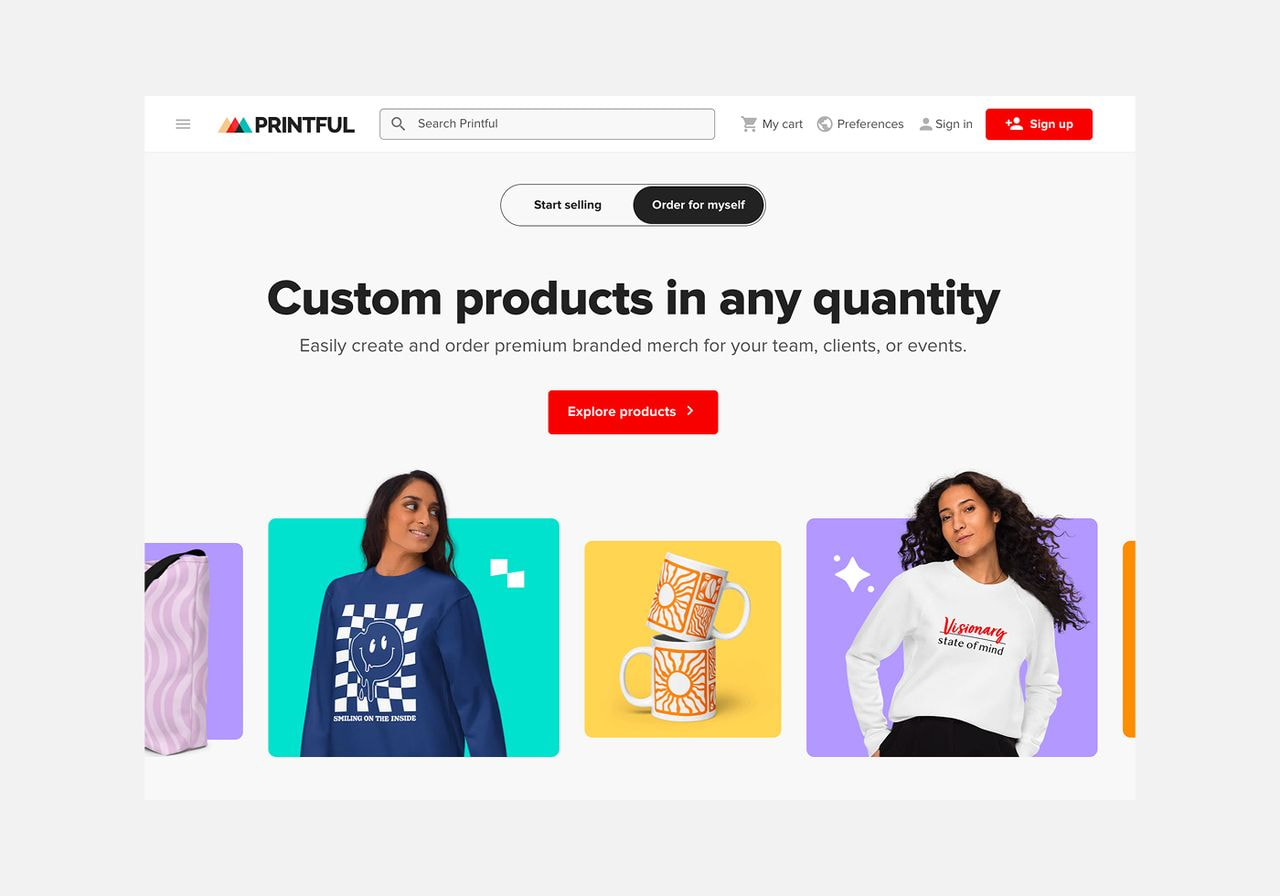
Printful prints, packs, and ships custom products for artists who sell through their own storefront.
Best for: Artists who want their own brand, their own pricing, and a broad range of products.
Sellers connect a Shopify store, an Etsy shop, or another sales channel through Printful integrations. Each order routes to Printful automatically. Artists set retail prices on top of each product’s base cost, and Printful charges only the base cost when a customer orders.
The catalog includes more than 602 products across apparel, accessories, and home decor. The wall art range covers canvas prints, framed posters, metal prints, and acrylic prints, and posters start at $6.75.
Printful prints wall art in-house on Epson printers, runs a three-step quality check on every order, and reships just 0.24% of orders. Fulfillment takes 2-5 business days on average, and more than 97% of orders ship within five business days. Printful ships each order from the fulfillment center closest to the customer to shorten delivery times and lower shipping costs on global shipping.
No Printful branding appears on printed products. Sellers can add custom packaging and branded inserts, and customer support runs around the clock.
Fees and pricing: The Free plan has no monthly fee. Printful Growth costs $24.99 per month, takes up to 33% off product prices, and becomes free for a year once yearly sales reach $12,000.
Pros:
-
In-house production with a documented quality check process
-
Custom branding options, from packaging to inserts
-
No upfront investment to start a brand
Cons:
-
Printful has no built-in marketplace, so artists bring their own traffic.
-
Base prices are higher than those of budget providers.
2. Etsy (with Printful)
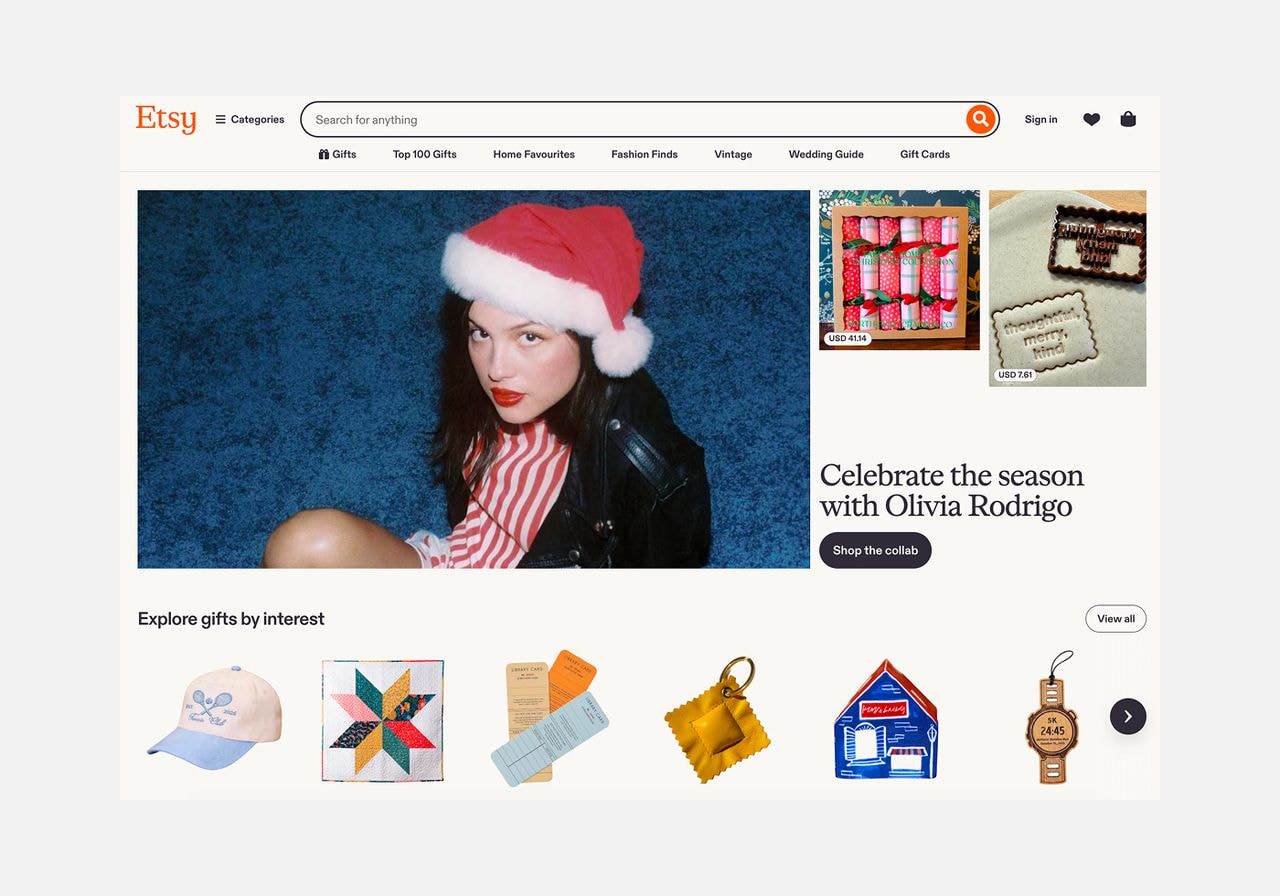
Etsy gives artists a storefront inside a marketplace that shoppers already search.
Best for: Artists who want marketplace traffic and full pricing control.
Etsy accepts items that sellers make, design, handpick, or source. Artists who design their own products can list them on Etsy and use Printful as one of their production partners.
Artists who prefer platforms with existing buyer demand can open a shop with a fast setup and connect it to Printful through the Etsy integration. Printful then fulfills each order, and the artist keeps the retail price minus the base cost and Etsy’s fees.
Fees and pricing: Each listing costs $0.20 and stays active for four months or until it sells. Etsy charges a 6.5% transaction fee on the sale price, including shipping, plus 3% + $0.25 in payment processing in the US. Sales from Offsite Ads carry a 15% advertising fee.
Pros:
-
Organic traffic from Etsy search
-
Own pricing on every listing
-
Printful handles production and shipping
Cons:
-
Marketplace fees apply to every sale.
-
Shop branding stays inside Etsy’s layout.
3. Redbubble
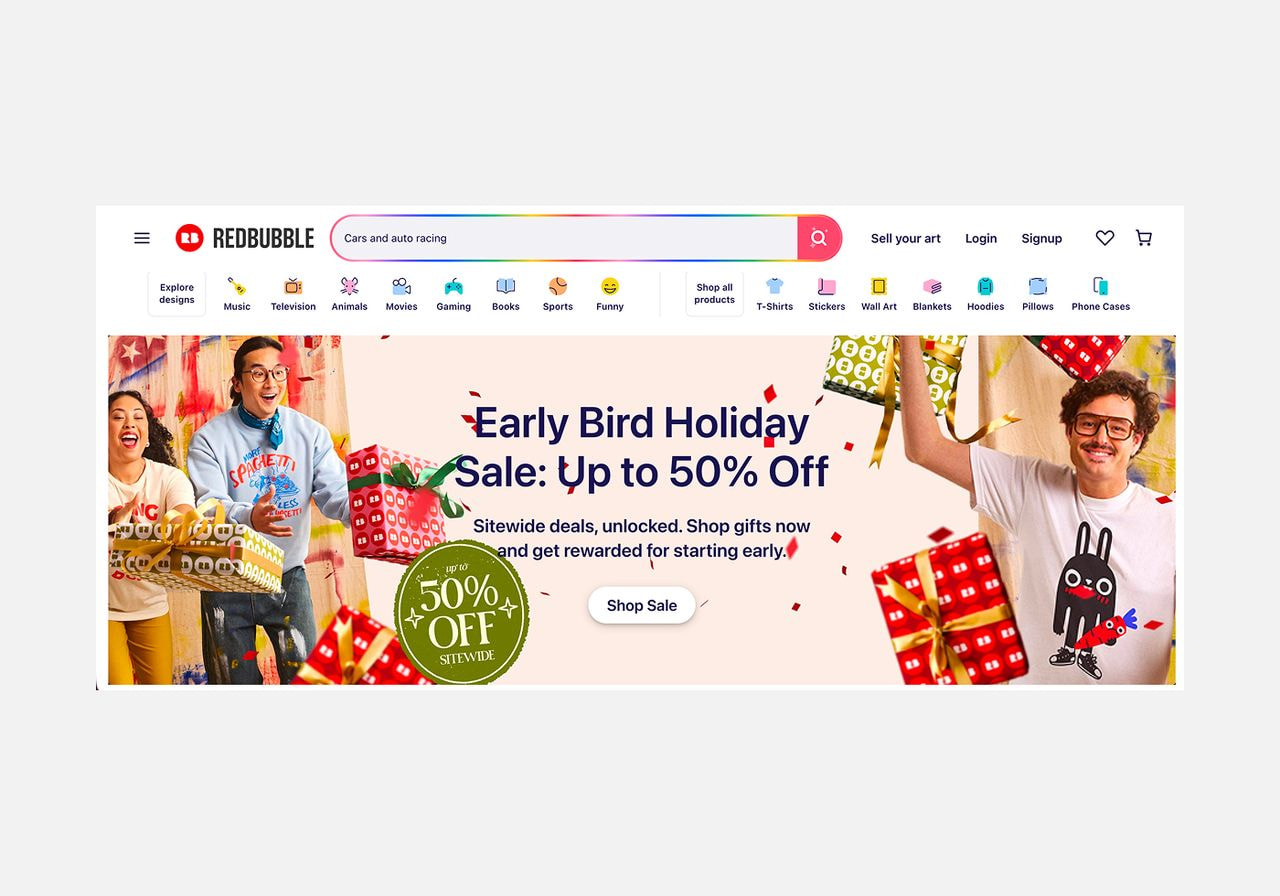
Redbubble adds an artist markup to the base price, which covers manufacturing and Redbubble’s service fee.
Best for: Artists who want marketplace traffic and some pricing control.
Fees and pricing: Markups default to 10%, and artists can change them on the Product Pricing page. A Classic T-Shirt shipped to the US has a $20 base price, so a 20% markup earns the artist $4 before account fees.
Those account fees depend on the artist’s tier. Standard accounts pay a 50% platform fee on monthly earnings, Premium accounts pay 20%, and Pro accounts pay none. Standard and Premium artists also pay an excess markup fee on markups above 20%, and all account fees stop at $150 per month.
Redbubble pros include a global customer base and fees that apply only after a sale. When comparing Redbubble and Society6, Redbubble keeps artist pricing control, which Society6 removed in 2025, but tier fees can halve earnings on Standard accounts.
Pros:
-
Artists set their own markup
-
Redbubble handles printing, shipping, and customer service
-
Fees never exceed $150 per month
Cons:
-
Standard accounts lose 50% of monthly earnings to platform fees
-
Markups above 20% trigger an extra fee
4. Fine Art America
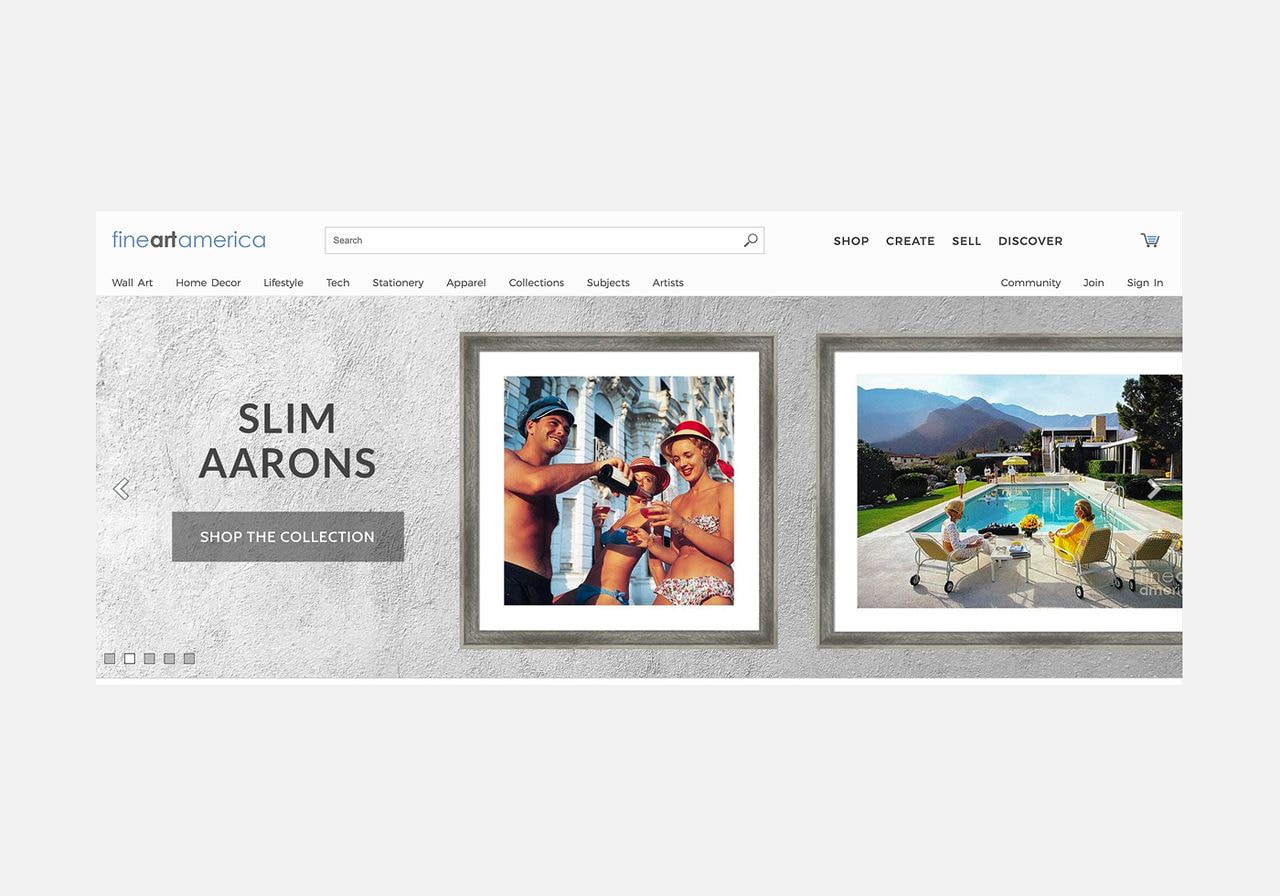
Fine Art America sells fine art prints, framed prints, canvas prints, and metal prints, plus home decor and phone cases.
Best for: Painters and photographers selling framed art and fine art reproductions.
Artists set their own markup on top of Fine Art America’s base price for each product, either per image or as one default markup across a portfolio. The platform produces giclée prints on archival paper and offers custom framing, so framed pieces arrive ready to hang.
Fees and pricing: Free accounts can sell up to 25 images. Premium membership costs $30 per year and adds unlimited uploads, an artist website, and marketing tools.
Pros:
-
Full control over markups
-
Wide range of wall art formats
-
Low yearly cost for Premium
Cons:
-
The free plan limits artists to 25 images
-
Artists compete with a large catalog of other work
Tip:
See how base prices and profit margins compare in our Fine Art America vs Printful breakdown.
5. INPRNT
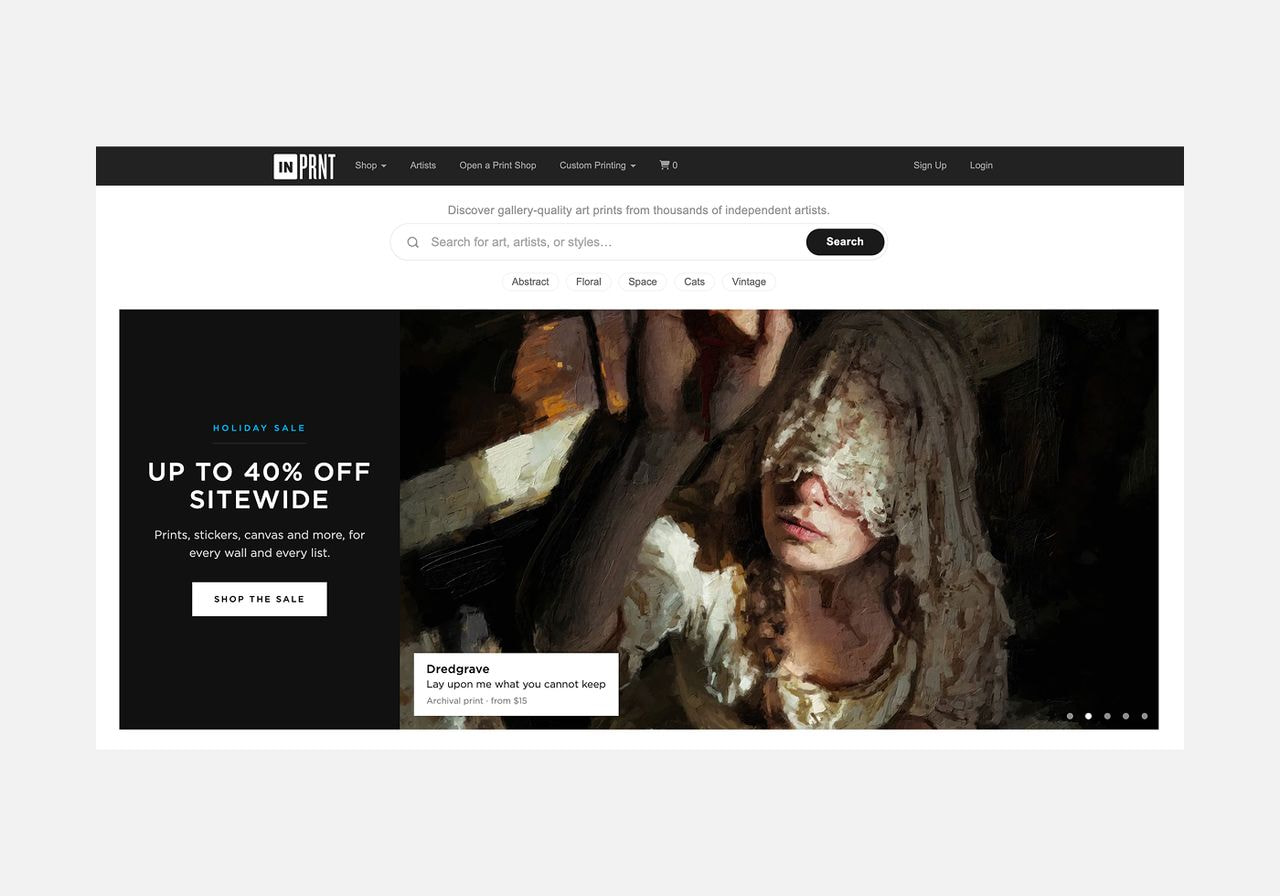
INPRNT produces gallery-quality art prints at its own studio and invites artists selected by its members.
Best for: Illustrators and fine artists who want high print quality and a high percentage per sale.
INPRNT prints on 330 gsm paper with archival ink and covers materials, shipping, customer service, and payment processing.
Fees and pricing: Gallery accounts earn 50% of the sale price on fine art prints and 30% on canvas prints, metal prints, posters, phone cases, and stickers. Studio accounts earn 25% and 15% on the same products, and frames pay a flat $5. Artists can raise prices above INPRNT’s default minimums.
Pros:
-
The highest percentage rate on fine art prints on this list
-
No base fee or processing costs deducted from earnings
Cons:
-
Shops open by invitation only
-
A smaller catalog focused on prints and paper goods
6. Displate
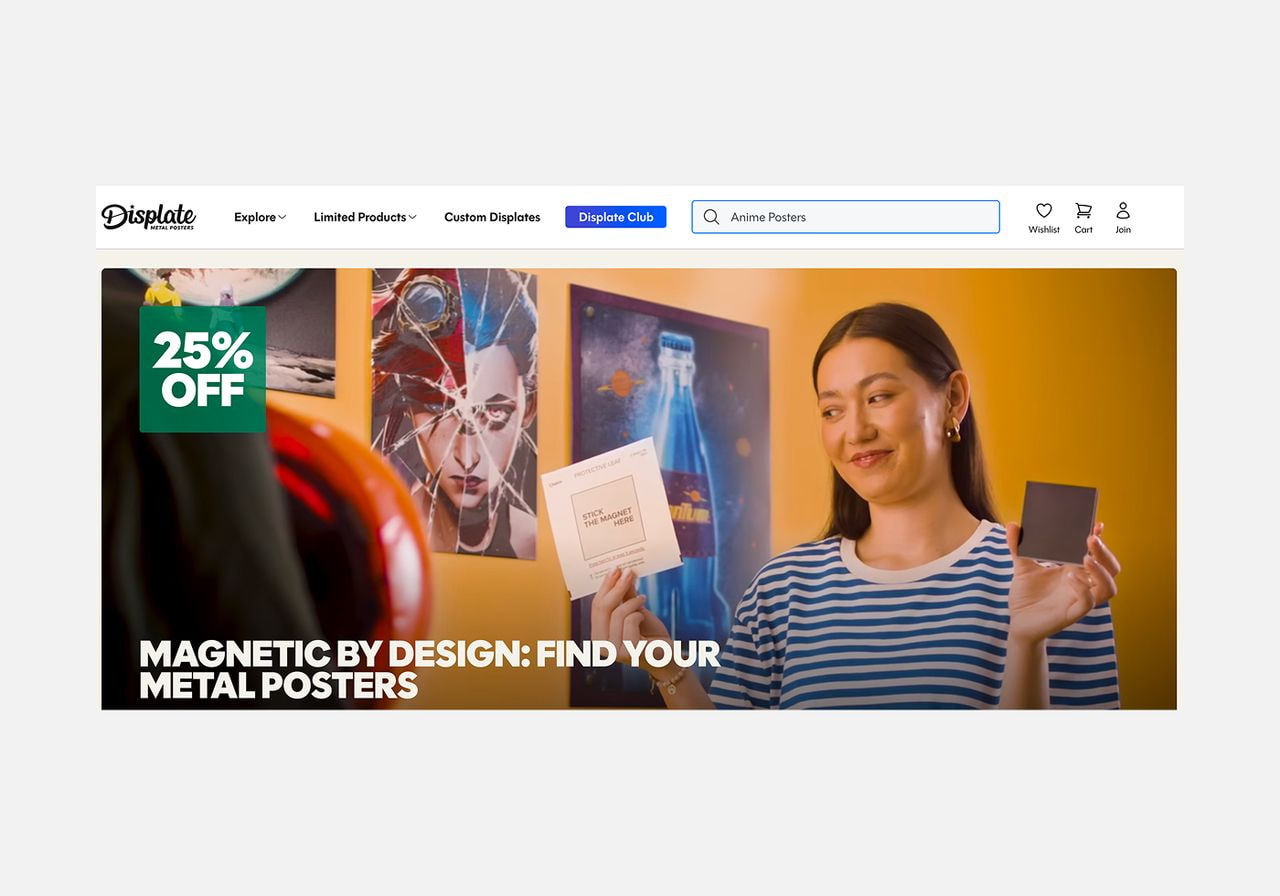
Displate sells artwork exclusively as metal posters with a magnet mounting system.
Best for: Artists with bold, poster-style designs for gaming, pop culture, and fantasy fans.
Each Displate carries a giclée print on a metal plate, signed off with a hologram by the production team.
Fees and pricing: Artists earn a fixed commission of $4.50 for size M, $9 for size L, and $14.50 for size XL, and Displate sets all retail prices. Displate reports more than 60,000 artists, more than $51 million in paid commissions, and delivery to more than 50 countries.
Pros:
-
Share and Earn links pay extra commission on sales artists refer
-
Displate handles marketing, production, and shipping
Cons:
-
No pricing control
-
Metal posters only
Tip:
Compare metal print options in our list of Displate alternatives.
7. Spoonflower
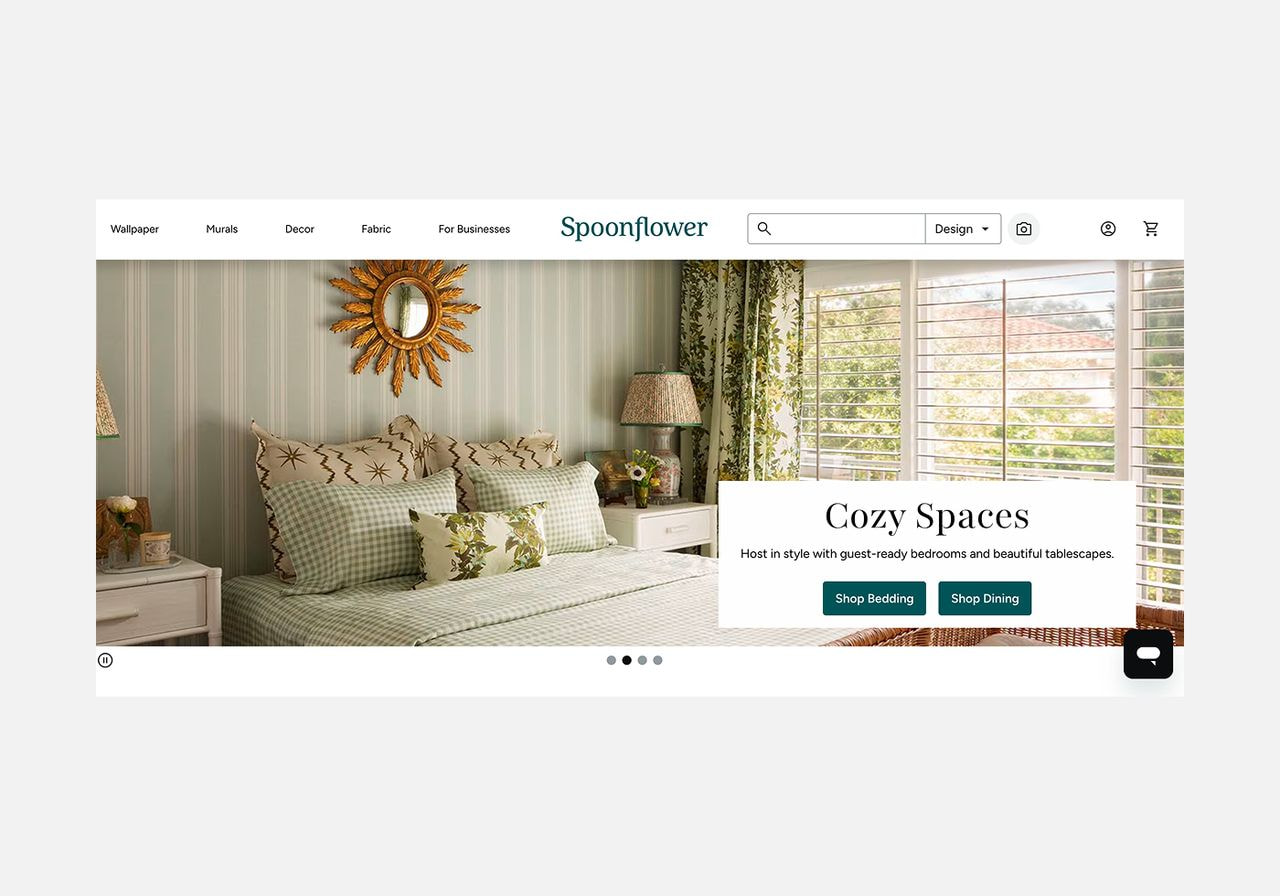
Spoonflower prints artists’ patterns on fabric, wallpaper, and home decor.
Best for: Surface pattern designers.
Fees and pricing: Artists earn a 10% royalty on what the customer pays, after discounts. Bonus thresholds count sales within the same period of one calendar month. Sales above $3,000 raise the rate to 11%, above $10,000 to 13%, and above $15,000 to 15%. Spoonflower never applies a discount of more than 50% to the royalty calculation, and payouts are processed every 14 days once balances exceed $10.
Pros:
-
Bonus royalties for high-volume sellers
-
Specialized audience for fabric and wallpaper
Cons:
-
A 10% base royalty
-
Limited to textiles, wallpaper, and home decor
8. Zazzle
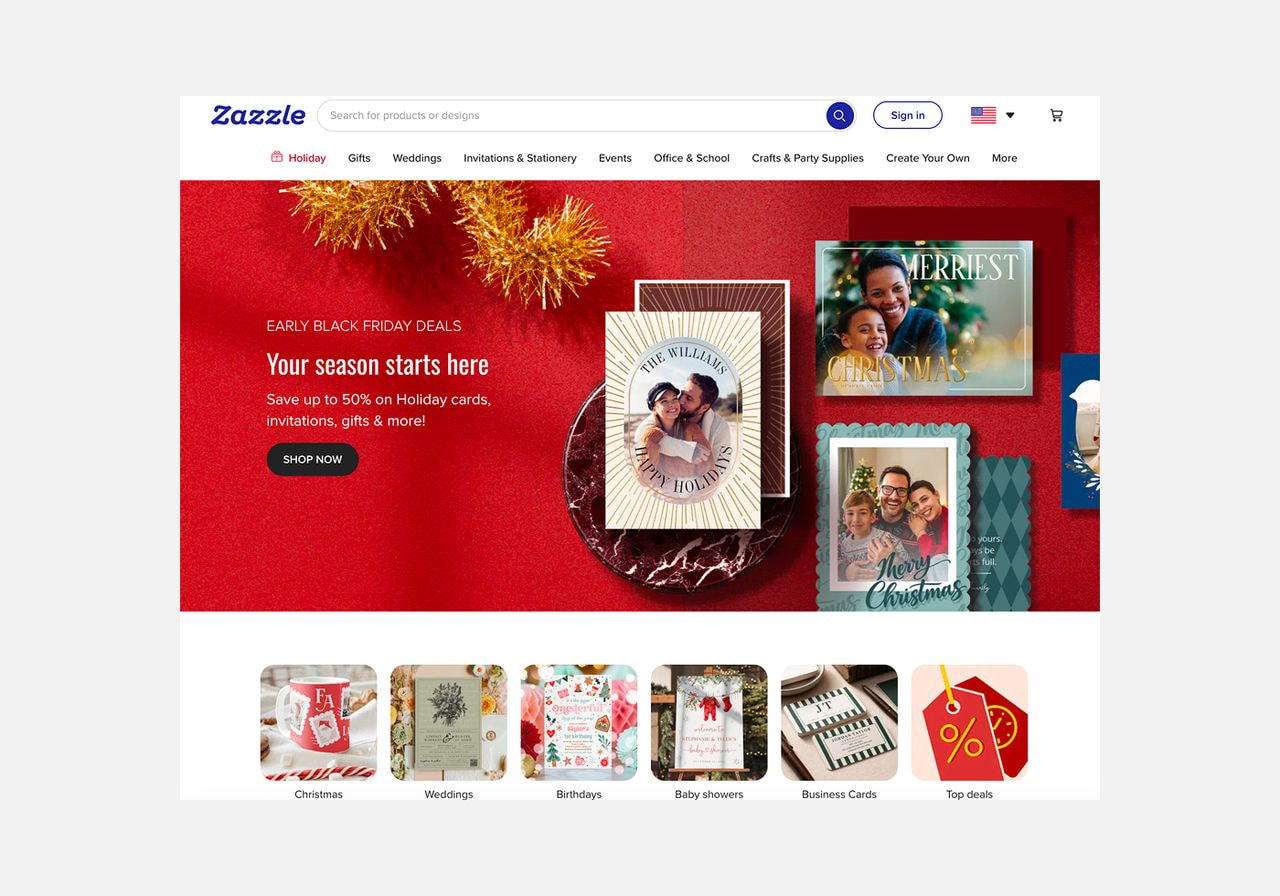
Zazzle lets creators set their own royalty rate for each product.
Best for: Designers of stationery, invitations, and gifts.
Fees and pricing: Creators set a royalty between 5% and 50% on physical products. Royalties above 10% trigger a 5% excess royalty fee, and sales that Zazzle or an ambassador refers carry a marketing royalty fee of 35%-50% of the gross royalty, depending on the product department.
Pros:
-
Artist-set royalty rates
-
Royalties of up to 99% on instant downloads
Cons:
-
A layered fee structure that reduces net royalties
-
Higher royalties raise retail prices for customers
9. Threadless
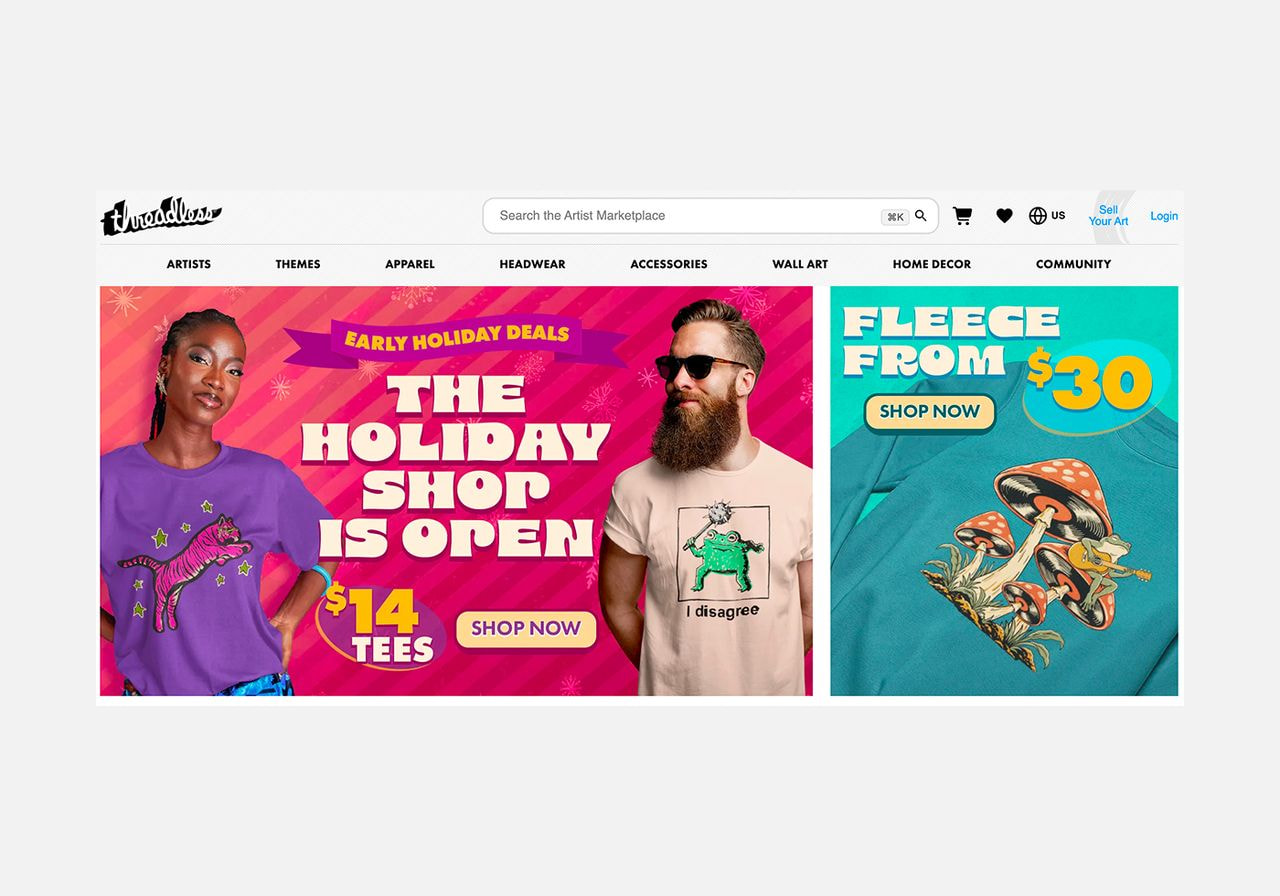
Threadless artist shops give artists a free storefront and the option to appear in the curated Threadless Marketplace.
Best for: Artists who sell apparel and want a design-focused community.
Fees and pricing: In an Artist Shop, artists set the retail price and earn the difference between that price and a base fee. The base fee covers the product cost plus a 5% processing fee. Sales through the Threadless Marketplace pay a flat 10% royalty. Threadless curates the Marketplace by design quality and commercial viability, so opting in doesn’t guarantee placement.
Pros:
-
Free Artist Shops with full pricing control
-
Managed pricing guarantees at least 10% during promotions
Cons:
-
Marketplace placement depends on curation
-
The Marketplace royalty stays fixed at 10%
How to choose the right Society6 alternative
Compare platforms on print quality, product range, earnings, fulfillment, and audience before moving existing work.
Art print and wall decor quality
Quality artwork needs matching print specifications, so check the printer, paper, and inks each platform names. Printful produces wall art in-house on Epson printers and uses giclée printing for fine art reproductions.
Order samples before listing. Printful takes 20% off sample orders on the Free plan and 25% on Growth, so artists can check color accuracy and framing on the exact products they plan to sell.
Product range
Society6 cut apparel, wall clocks, stickers, backpacks, and several outdoor items in October 2025, so artists who sold those products need a new source. Printful covers wall art, home decor, drinkware, apparel, and accessories in one catalog. Spoonflower covers fabric and wallpaper, and Displate covers metal prints only.
A wide product range lets artists place the same design on art prints, throw pillows, and phone cases, and test which format sells in each market.
Artist earnings and pricing control
Marketplaces set or limit retail prices, while own-storefront models let artists add their own markup. These examples use each platform’s published figures.
|
Platform |
Example |
Artist earnings |
|
Society6 |
Throw pillow, $35 base price, 10% markup |
|
|
Redbubble (Standard) |
Classic T-Shirt, $20 base price, 20% markup |
$4, or $2 after the 50% platform fee |
|
Displate |
M-size metal poster |
|
|
INPRNT (Gallery) |
Fine art print |
50% of the sale price |
|
Printful with your own store |
Poster with a $6.75 base price, sold at $25 |
$18.25 before shipping and payment fees |
Own pricing raises profit margins, and it also moves marketing costs to the artist. Etsy’s fees, Shopify’s subscription, and paid ads all come out of the same margin, so calculate each fee structure before setting retail prices.
Fulfillment time and international shipping
Fulfillment time decides how fast customers receive orders. Society6 produces orders in 2-4 business days and ships within the US only. Printful fulfills most orders in 2-5 business days through in-house and partner facilities.
Other fulfillment services use partner networks. Printify ships most orders within 2-7 business days and connects sellers with multiple Print Providers, and its Premium plan costs $39 per month on top of product charges. Gelato routes orders to print partners in 32 countries and produces about 90% of orders locally. merchOne specializes in home decor and runs in-house production in the US and Europe.
Built-in audience vs building your own
Marketplaces supply demand from day one and can turn uploaded designs into passive income. Redbubble, Displate, and Zazzle promote artwork to their own customers, which suits new artists without an audience.
Running your own storefront requires artists to build organic traffic through search, social media, and email. In return, they own customer data, set their own pricing, and keep their brand when a marketplace changes its terms. Artists can combine both: an Etsy shop for discovery and a Shopify store for repeat customers, both fulfilled by Printful.
How to sell your art on your own terms
Selling through your own storefront gives artists more control over pricing, branding, and the products they offer.
Best products for artists to sell
These products work well for artwork and appear in most print-on-demand catalogs:
-
Art prints and posters: The lowest base cost on the list, with Printful posters starting at $6.75.
-
Framed prints: Ready-to-hang framed art that sells at higher retail prices than unframed prints.
-
Canvas prints: Stretched over wooden frames for a gallery finish.
-
Metal prints: Durable aluminum wall art for modern interiors.
-
Throw pillows: Home decor that carries the same artwork as your prints.
-
Phone cases and accessories: Lower-priced options that suit gift buyers.
-
T-shirts and apparel: Products Society6 no longer sells, so artists need other platforms for them.
Moving your portfolio from Society6 to your own store
Artists can move existing work from Society6 in seven steps:
-
Download your earnings report from Society6 to see which designs and products sold best.
-
Gather the original files for each design. Printful recommends PNG or JPEG files at 300 DPI for posters.
-
Choose where to sell: a Shopify store, an Etsy shop, or both.
-
Connect the store through Printful integrations, then upload designs and create products.
-
Order samples of your bestsellers to check print quality before launch.
-
Set prices by adding your own markup to each base cost.
-
Update the link in your social media bios so customers can start buying from your new shop.
Start selling your art with Printful
Society6’s 2025 changes fixed artist earnings at 5%-10%, ended apparel sales, and limited orders to US addresses. Artists who want marketplace traffic can use INPRNT, Fine Art America, Displate, Spoonflower, Zazzle, Threadless, or Redbubble, depending on their products and fee tolerance. Artists who want more money per sale and their own brand can sell through Shopify or Etsy with Printful, which prints and ships orders from facilities worldwide.
FAQ
Printful with a Shopify store or Etsy shop pays more per sale than Society6, because artists set their own retail prices on top of base costs. Among websites like Society6, INPRNT pays Gallery artists 50% on fine art prints, and Fine Art America lets artists set their own markup. Both give artists more room to earn than Society6’s fixed 5%-10%.
In 2025, Society6 switched to a curated model. From March 18, it removed artist-set markups and fixed earnings at 5%-10%. In October, it closed more artist accounts without an appeals process and stopped selling apparel. Society6 has also paused international shipping, so it currently delivers to US addresses only.
Redbubble suits artists who want pricing control, because they can adjust their own markup. Society6 suits artists who want fixed earnings without fee tiers. Redbubble’s Standard accounts pay a 50% platform fee on monthly earnings, so artists on that tier can keep less than Society6’s 10% rate on wall art and pillows.
Yes, unless a platform’s artist agreement grants it exclusive rights to your designs. Print on Demand works from digital files you own, so the same design can appear on Society6, Etsy, and a Shopify store at once. Read each platform’s terms before uploading, and track which channel sells each design best.
Society6 artists earn 10% of the price on throw pillows, wall tapestries, art prints, framed prints, and posters, and 5% on all other products. Earnings drop with customer discounts. A throw pillow with a $35 base price earns $3.50 at full price and $2.80 during a 20% sale.
Society6 works for approved artists who want hands-off sales and accept fixed 5-10% earnings. It suits fewer artists than before, since it sells no apparel, ships only within the US, and requires approval for new artists. Most artists add a second channel, such as Etsy or their own store, to protect their income.
The most profitable print-on-demand sites let artists set their own markup. With Printful and your own Shopify store or Etsy shop, you keep the full markup after base costs and fees. Among marketplaces, INPRNT pays 50% on fine art prints, and Fine Art America and Threadless Artist Shops let artists set their own prices.
The best marketplace depends on the format. INPRNT suits illustrators who want gallery-quality prints and a 50% earnings rate. Fine Art America suits painters and photographers selling framed prints. Displate suits poster-style designs on metal. Artists who want full control can sell through their own store with Printful.

Published author, scholar, and musician, Andris draws on over 11 years of experience in and outside academia to make complex topics accessible – from SEO and website building to AI and monetizing art. Devoted to his family and self-confessed introvert, he loves creating things, playing musical instruments, and walking around forests.

