



Table of contents
Print-on-demand profit margins usually range from 20% to 40% for most sellers. That’s enough to cover expenses like printing, shipping, and platform fees, while still leaving room for profit. Where you fall within that range depends on your niche, pricing strategy, and the perceived value you build into your print-on-demand products.
Keep reading to see what shapes that number and how to push yours higher.
What is a good profit margin for Print on Demand?
While there’s no fixed number, 20%-40% is the range most print-on-demand sellers fall into. Some sellers pull in as little as 10% on competitive basics like plain t-shirts, while others clear 50% or more on premium, personalized, or niche products. Product type, niche, and perceived value all play into the final tally.
Valuable read: What is a good profit margin for Print on Demand?
How is the profit margin calculated in Print on Demand?

The math itself is simple: subtract your costs from your selling price, then divide by the selling price. The tricky part is knowing what to include as a cost.
The profit margin formula
Here’s how to calculate your eCommerce business’s profit margin:
Profit margin = (Retail price − Total cost) / Retail price × 100
Say you sell a t-shirt for $25, and your total cost, including the blank shirt, printing, and shipping, comes out to $15. Your calculation would look like ($25 − $15) / $25 × 100, which equals 40% – a healthy profit margin by most standards.
What counts as “production cost”
How much profit should you make on a product? You can’t answer that until you know your actual production cost. Three things go into it:
-
Base product cost: The blank item itself, like a t-shirt or mug, before anything gets added to it.
-
Printing or decoration cost: The fee for adding your design, which changes depending on the method.
-
Shipping: If you’re covering shipping instead of passing it to the customer, it comes out of your margin rather than being added separately.


What affects your print-on-demand profit margin
Your margin changes based on a handful of factors – some you control directly, others you can only influence. Here’s what actually moves the needle.
Product type and printing method
Not all products carry the same margin potential. If you sell t-shirts, for example, embroidery usually supports higher margins than a basic screen print due to its perceived quality. Direct-to-garment (DTG) printing sits somewhere in the middle, offering more detail than a basic print without the premium price tag of embroidery.
Product type matters, too. All-over print items and accessories like mugs or phone cases are considered high margin print-on-demand products. Their base costs are low relative to what customers are willing to pay, allowing higher profit margins when combined with the right customization method.
Read more: DTG vs DTF: Closer look at Printful’s premium DTFlex method
Niche and perceived value
A design that speaks directly to someone’s interests or lifestyle carries higher perceived value, and that translates into what they’re willing to pay. It’s why personalized, identity-driven, or niche-specific products can charge more than generic designs.
Some print-on-demand niches do especially well here. Remote work creates market demand for practical items that also serve as home decor. Side hustle culture craves uniqueness that big brands often lack. Wellness-first workspaces are trending as people are willing to pay to improve their mood and their space. The list goes on.
Pricing strategy
When it comes to pricing print-on-demand products, you generally have two options: compete on price, or price for value.
Competing on price means staying close to what similar sellers charge to remain competitive, which can attract more buyers but leave you with thin margins per sale. With value-based pricing, your product’s design, niche, or marketing efforts do the convincing, which can justify higher prices.
The goal is to give customers a reason to pick your products when comparing you to the cheapest option in the market.
Neither pricing strategy is wrong, but they lead to different outcomes. Low retail prices rely on volume to add up to real profit, and pricing too aggressively can leave you with lower margins. Higher prices let you hit the same number with fewer sales, but you need a real reason for someone to choose you over a competitor.
Provider and production costs
Print on Demand lets you sell custom products by printing and shipping them only after a customer orders them, so you never carry your own inventory. That’s why picking a reliable supplier matters so much – they directly affect your base costs, products, and print quality.
Printful, for example, helps increase profit margin by offering free registration and a global network of in-house fulfillment centers that keep shipping times and costs down. Sellers who want extra cost savings can subscribe to Printful Growth for discounts on custom products, branding, and sample orders, plus free digitization for sample orders.
Print-on-demand profit margins by product type
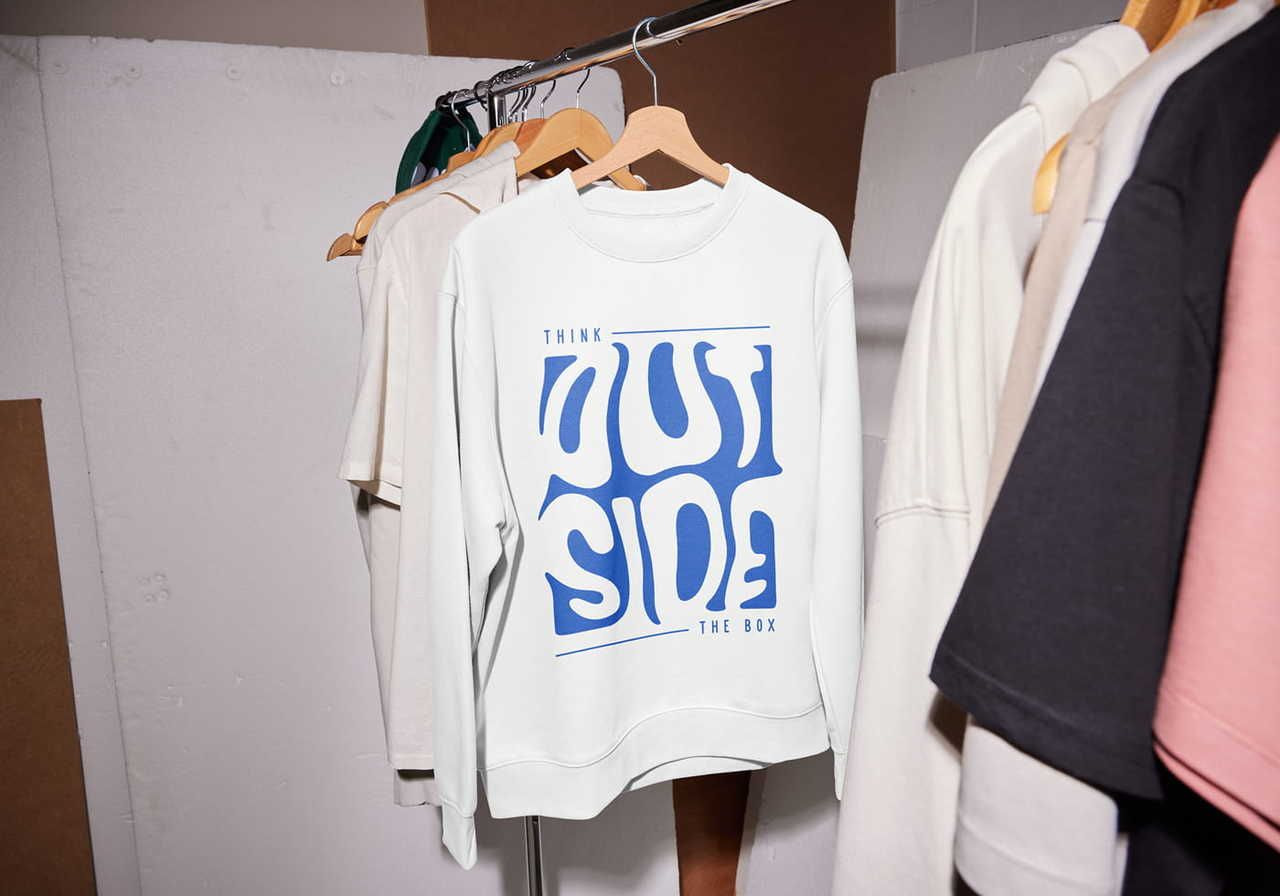
Got a product you want to sell but not sure if it meets your margin goal? Here’s how best-selling print-on-demand products compare.
|
Product type |
Typical margin range |
Why |
|
Basic tees (screen print/DTG) |
10%-50% |
Inexpensive to produce, but the wide range comes down to niche, quality, and how much competition you’re up against. |
|
Hoodies and sweatshirts |
20%-45% |
The higher price point covers extra fabric and printing costs while still leaving room for profit. |
|
Embroidered apparel |
30%-60% |
Looks premium, so customers accept higher prices despite the added stitching cost. |
|
Drinkware (mugs, tumblers) |
10%-40% |
Low production cost, pricing varies by design and platform. |
|
Personalized/photo gifts |
40%-55% |
Customers pay extra for something made just for them. |
|
Home decor and wall art |
20%-90% |
Some pieces sell as basic prints, others as premium art, hence the huge spread. |
|
Stationery (journals, notebooks) |
40%-60% |
Inexpensive materials, high markup potential. |
How to increase your print-on-demand profit margins
Now that you know what to expect, let’s see what you can do to push your POD business toward the higher end.
Raise perceived value, not just price
Three common ways to increase your products’ value are offering personalization, using premium materials, and releasing limited-edition lineups.
A name, date, or custom message turns a generic product into something that feels made for one person, not mass-produced. That connection is worth paying for.
Premium materials shift the whole conversation around a product. Switching from a basic tee to a heavier fabric, or from a standard print to embroidery, signals quality from the first look and justifies competitive pricing.
Limited editions rely on scarcity and FOMO. When a design is only available for a short time or in a capped quantity, it stops being just another shirt and becomes something people don’t want to miss out on.
Did you know?
Etsy’s personalization feature works directly with Printful. Enable it on your Etsy listings to let shoppers request custom details at checkout. Their order syncs to your Printful dashboard as a draft, so you can review and adjust it before it goes into production.
Bundle products to increase average order value

Pairing smaller items, like a mug with a matching tote or a sticker pack with a t-shirt, raises your average order value without putting extra margin pressure on any single product. Each item keeps its own price and cost structure. You’re just giving customers a reason to add one more thing to their cart.
Bundling also means fewer separate shipments. One package for three items costs less in packaging and shipping than three separate orders, which adds a little more to your net profit on top of the higher order value. The savings can even give you room to offer free shipping on bundles, which makes the deal feel even better to customers.
Reduce production costs at higher volumes
Volume discounts are one of the simplest ways to lower your per-unit cost, since ordering more of the same item usually unlocks a better price.
Your printing method matters. DTG works well for detailed designs in small runs, but screen printing tends to cost less per piece once you’re ordering in bulk. Matching the method to the order size keeps production costs down without cutting quality.
Both of these factors, among others, depend on the print provider you choose. Total costs vary between them, so it’s worth comparing before committing to one for the long run.
Reduce returns and reprints
Every return or reprint eats into your online store’s margin, so preventing them matters as much as getting your pricing right. Ordering a sample before launch helps catch sizing, color, and print quality issues early – pick a provider that makes this easy to do.
Clear sizing charts and accurate product descriptions also cut down on returns, since buyers know what to expect. Pair that with high-quality mockups so customers can see exactly what they’re getting, which goes a long way toward customer satisfaction.
Paying attention to customer preferences and feedback over time also helps you address problems before they turn into returns.
Did you know?
Printful’s free Custom Mockup Maker comes with 300+ built-in backgrounds and layouts plus 100+ design elements to customize your mockups.
How much money can you make with Print on Demand?

Your average monthly income with Print on Demand usually depends on how long you’ve been at it. POD is a profitable business model when you stick with it, and income typically grows in stages as sellers build their store, brand, and customer base.
New sellers (0-6 months): $0-$100+ per month
This stage is about finding the right niche, testing products without investing in inventory, and learning how to use your eCommerce platform for your store. You’re building the foundation, not chasing income yet.
Growing stores (6-18 months): $1,000-$3,000+ per month
By now, you’ve found what sells. The focus shifts to using sales data and ad spend more efficiently to lower your customer acquisition costs and attract customers, while delivering exceptional customer service that keeps them coming back.
Top sellers (18+ months): $10,000-$80,000+ per month
These sellers have built recognizable, profitable print-on-demand businesses with repeat purchases and the potential for huge profits. Growth comes from launching new collections and expanding to multiple sales channels.
Frequently asked questions
A good profit margin for a print-on-demand business is between 20%-40%. That said, the average profit margin depends on your product, niche, and pricing strategy. Basic items like t-shirts can have margins as low as 10%, while premium or personalized products often reach 50% or more.
Aim for at least a 20% profit margin per product, with 30%-40% considered a healthy target once you factor in all expenses, from production and platform fees to shipping and marketing costs. The ideal number varies based on your pricing strategy and the perceived value your product offers.
Home decor and wall art (20%-90%) and embroidered apparel (30%-60%) tend to carry the highest profit margins, since both support a wide range of pricing based on design quality and perceived value. Don't overlook lower-cost items, either. T-shirts (10%-50%) and stationery (40%-60%) have low production costs, leaving plenty of room for profit.
Yes. The print-on-demand market was worth $10.8 billion in 2025 and is projected to reach $57.5 billion by 2033, more than five times its size. That kind of growth means demand for custom products isn't slowing down, so profitability comes down to your niche, pricing, and execution rather than the business model itself.
Final thoughts
Print-on-demand profit margins aren't fixed, but they're yours to shape. Set profitable prices, raise perceived value where it counts, and keep an eye on what's actually cutting into your numbers.
Printful lets you focus on designing and marketing while we handle inventory management for you. Since there's nothing to stock, you don't risk losing money if a design doesn't sell. Sign up free and see how easy it is to start an online business.

Jordana is a content writer with over 6 years of experience in content writing and technical writing. Her not-so-secret passion is breaking down complex ideas into clear, straightforward content, whether it's explaining tech concepts or crafting stories that connect. When she's not writing, you'll find her enjoying good sushi or falling down movie trivia rabbit holes.

