


Table of contents
The best-selling t-shirt designs are art and text combos, art-only graphics, statement and cause tees, animal illustrations, Y2K throwbacks, and typography-only slogans. Shoppers buy them because the graphic says something about who they are.
Below you’ll find 11 styles worth printing in 2026, the shirt graphics that have sold for decades, where each one sells, and the print method that suits it. With Print on Demand, you start with no inventory and no upfront investment.
What makes a t-shirt design sell
The best-selling t-shirt designs share the same handful of traits. Run your own ideas for best-selling graphic tees through this checklist before you print anything.
-
Proven demand – people already search for the theme, so you design into an audience that exists
-
A clear niche – one group recognizes the shirt as theirs, which beats a design aimed at everyone
-
Print quality – the artwork holds up as a small chest print and at full width
-
Reorder potential – the style supports new colorways, new wording, and a second drop
-
Room for your brand – you add your own drawing, phrase, or palette instead of reusing stock art
11 Top-selling t-shirt design styles in 2026

Want to know what styles really get customers interested? Below, you’ll find this year’s top t-shirt design ideas, along with tips on how to create a successful t-shirt line with Print on Demand.
1. Art and text combos as t-shirt designs
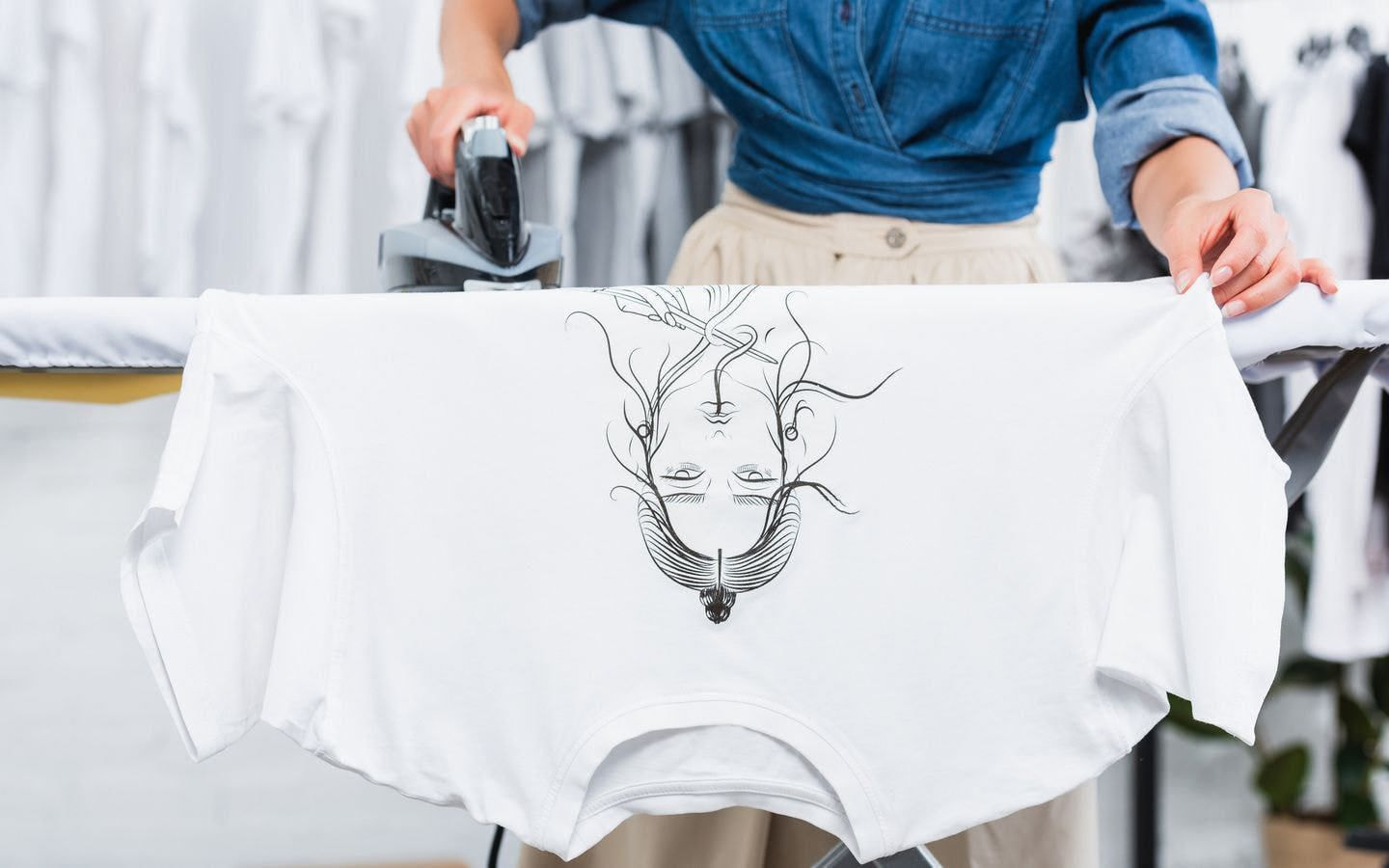
This style pairs an illustration with a short line of text. The image pulls the eye from across a room, and the words deliver the joke or the meaning.
It sells to shoppers who want their shirt to speak for them. Classic art memes are the easy entry point, like a Renaissance portrait captioned in modern slang. Pair the visual with a twist rather than repeating what the picture already shows.
Rich detail and color print best with direct-to-garment (DTG) printing, which lays down full-color artwork one shirt at a time.
2. Art-only t-shirt designs
Here the artwork carries the whole shirt, with no caption underneath it.
The buyers pick a tee the way they’d pick a print for a wall: for the drawing, the palette, or the reference. Build one strong image instead of three competing ones, and scale it to sit between the shoulder seams.
DTG or all-over printing delivers the best result for detailed or full-coverage art. Check the design at thumbnail size, and read our guide to custom t-shirt printing for techniques and placements.
3. Statement and cause t-shirt designs
These t-shirts carry visuals tied to identity, beliefs, or causes, from pride flags to national flags to awareness ribbons. They let wearers show their values and find people who share them.
Focus on what your audience already cares about, using recognizable symbols or short wording. Draw your own version of any symbol rather than copying an organization’s logo, and run slogans past our guide to copyright and trademark infringement before listing.
Embroidery suits simple icons like flags. For detailed or photo-based designs, choose DTG printing.
4. Animal-inspired t-shirt designs
Animal graphics never leave the rail, from hand-drawn pets to wildlife illustrations in heavy linework.
Pet owners buy for their own breed, which is why sub-niches work harder than a generic cat. Draw a dachshund in hiking gear, a border collie with a farming joke, or a cat tied to one career field. A punchline underneath does the rest.
Use DTG for colorful, detailed art with soft edges. For clean, single-color icons, embroidery adds texture, especially on a small left-chest or sleeve placement where the stitching catches the light.
5. Y2K and ’90s nostalgia t-shirt designs
Y2K graphics mean chunky display type, chrome and bubble lettering, butterflies, flames, and checkerboard, usually in loud colors.
Two layouts are worth copying. One is a baby tee with a small chrome-lettered chest print. The other is an oversized tee with a faux-vintage concert layout in a flame font. Both suit shoppers who style tees, cropped or boxy, for photos.
Write your own phrases rather than lifting a lyric. DTG handles the bright colors and gradients this style depends on. For a print that runs past the seams, use all-over printing.
6. Sustainability-themed t-shirts
These shirts carry nature-inspired artwork and low-waste wording, printed on 100% organic cotton or recycled blanks.
They sell to shoppers who read the label before the graphic, so the garment matters as much as the design. Keep the artwork minimal: leaf line art, earth tones, and short phrases such as “planet over plastic.”
DTG printing keeps fine botanical lines crisp. Soft greens and neutrals keep the shirt wearable, and printing on an eco-friendly t-shirt backs up the message on the front.
7. Hand-drawn and sketch-style t-shirts
Hand-drawn designs keep the marks of the pen, from quick doodles to dense ink work, with visible pressure.
They appeal to shoppers who want a shirt that doesn’t look mass-produced. Draw notebook-style illustrations, abstract lines, or odd little characters, then pair them with handwritten text in the same pen weight.
DTG captures fine lines and paper texture best, so leave the background empty and let the drawing sit directly on the fabric. For small, simple line work on a chest or cuff, embroidery gives the sketch a raised, tactile finish.
8. Typography-only statement t-shirts
These shirts carry no illustration at all. One phrase does the work, set in condensed sans caps, a heavy serif, or a script with a long tail.
They sell to people who want to be read from the next table, and they’re the fastest design to produce. Write your own line instead of reusing a popular saying, and run a trademark check before listing.
Flat text prints sharply with DTG at any size. A single line across the left chest or down a sleeve also stitches well in embroidery.
9. Personalized name and milestone t-shirts
These shirts print one name, date, or event across the chest, like a birth year, a new job, or a first marathon.
Buyers purchase their own name and their own date, never the full set, so build the listing around one editable line of text. Keep the layout balanced, whether the name runs four letters or 12.
DTG prints personalized text cleanly in any color, including on dark blanks. Keep the typeface simple so long names stay legible at full width, and order a sample to confirm your character limit.
10. Sports and fandom graphics
This group covers varsity lettering, arch text, jersey numbers, ticket-stub layouts, and two-color outlines.
The buyers are clubs, league parents, and fan groups who want something wearable that marks them out. Use your own club name and original wording. A school, college, or team logo is licensed property, so stick with what you own to avoid legal issues.
Oversized fits across men’s shirts suit back prints with a small front crest. DTG holds the thick color blocks that varsity type needs, and a single number looks sharp in embroidery.
11. Food and drink art t-shirts
This style runs to illustrated hot sauce labels, espresso brewing diagrams, retro diner logos, and vintage produce-crate graphics.
They sell as gifts for one habit, so name the habit precisely. A labeled cortado diagram beats “coffee lover,” and a fictional hot sauce brand beats a chili pepper clipart. Put your own brand name on the label, and the design doubles as merch.
DTG reproduces full-color label artwork with its small print and fake barcodes. For a repeat pattern of food icons across the whole garment, use all-over printing.

Best-selling t-shirt designs of all time
Trends move, and a handful of graphics have sold in every decade since they appeared. The most popular shirt designs share simple shapes, a message that reads from across a street, and enough room for you to draw your own version.
The smiley face
The smiley is a yellow circle, two dots, and one curved line. It has stayed on tees for decades because it reads at any size, on any blank color, and needs no explanation.
Draw your own version by changing the proportions, melting the mouth, or rendering it in your brand’s accent color.
A one-color smiley on a dark blank prints with a clean edge in DTG, and stitches well as a small chest icon in embroidery.
Souvenir city tees
The block-letter city tee and the “I love somewhere” layout have been on souvenir racks for decades, bought by travelers and by locals who live there.
Use your own city, neighborhood, trail, or venue, with original wording and a typeface licensed for commercial use. Heavy block letters print cleanly in DTG at full chest width, and a stacked two-line version works as a small left-chest print.
Band tour graphics
The tour tee puts a logo on the front and a stack of dates and cities on the back. The layout outlives any individual tour, and shoppers read it as music-adjacent even when the band doesn’t exist.
Build a fictional tour for your own brand, a book club, or a hometown, and never reuse a real band’s logo or artwork. Full-width back prints with lots of small text are a DTG job, since the lines stay legible.
Slogan tees
A slogan tee is one line of heavy type across the chest. The wearer says something before they open their mouth, and that is the entire product.
Write your own line, keep it short, and run a trademark check before you list it, because popular sayings are often registered. Flat text prints sharply with DTG on light and dark blanks alike.
Varsity and collegiate lettering
Varsity lettering sets arch text over a number, in two colors with a thin outline. The look reads as team spirit without naming a team.
Use your own words, an invented club, or your brand name and founding year. Skip any school or university name or logo, since those are licensed property. Two-color varsity type prints cleanly in DTG, and a single number suits embroidery on a sleeve.
Where best-selling t-shirt designs sell
The same artwork performs differently depending on where you list it, so match the design to the channel before you upload it.
Best-selling t-shirt designs on Etsy
Etsy shoppers usually arrive with one person in mind, so personalized names, dates, and narrow hobby jokes fit the way people search there. Write titles in plain words buyers type: the breed, the hobby, the occasion.
Connect your shop through the Etsy integration so orders reach us automatically, and read our walkthrough on how to sell t-shirts on Etsy before you open.
Best-selling t-shirt designs on Amazon
Amazon buyers scan a grid of thumbnails on a phone, so the design has to read small and the title has to use the words people type. Keep one design per listing and cover the full size range.
Connect through the Amazon integration, then follow our guide to selling t-shirts on Amazon for listing setup.
Best-selling t-shirt designs in your own store
Your own store is where your brand grows, because you keep the customer and the email address. You set the product photos, the page layout, and the voice.
Build it on Shopify, Wix, or WooCommerce, and read our guide to selling t-shirts online for pricing and launch steps.
7 T-shirt design mistakes to avoid
Even strong ideas fall flat if the execution is off. Whether you’re designing your first tee or expanding a range, these are the mistakes that cost sales.
1. Poor font choice
Your font sets the tone for the entire design, beyond spelling out the words. Type that’s too thin, overly stylized, or hard to read loses a shopper in a second, and a font that looks sharp on screen can disappear on fabric.
Test your typography on real product mockups, and pick legible styles that match your brand look.
2. Too many colors or overly complex designs
Overcrowded artwork with too many colors and elements reads as chaos on a rail. Stick to a limited palette and prioritize clarity.
Shoppers reach for a bold, focused design over one that uses every color, font, and shape available.
3. Unflattering contrast
Contrast makes a design pop, and when it’s off, the whole shirt suffers. Pale text on a light background or clashing colors makes the graphic hard to read on your product page.
Preview every design on each shirt color you plan to sell, then ask whether you’d wear it yourself. Good contrast is balance and clarity, not bright color.
4. Plain photos on a t-shirt
Photos work on tees when they’re handled deliberately. Generic or low-resolution images print pixelated and look unconsidered.
Apply filters, crop tightly, or layer the photo with hand-drawn elements and bold text. Design around the story in the image, test it on different shirt colors, and avoid anything that reads as stock. Mixed-media designs combine photography with illustration to add depth.
5. Wonky placements
Prints that sit too low, off-center, or at the wrong scale make a good design look sloppy. Always preview the placement across sizes, because artwork positioned for a small tee shifts on a 2XL.
Align the design with seams, collars, and sleeves. Center chest and upper-left prints are the dependable options, and creative placements work when they look intentional. Order a sample before listing to confirm the print lands where you expect.
6. Overused clipart
Free clipart is a fine starting point when you make it yours. Generic icons and recycled phrases look dated, especially when shoppers have seen the same asset in three other stores.
Tweak the colors, add texture, or pair it with original typography so it matches your brand. When everyone works from the same assets, your own edits are what set the shirt apart.
7. Inaccurate mockups
Mockups sell the product only when they’re honest. Over-edited previews set expectations the printed shirt can’t meet, which brings returns and lost trust.
Use clean, true-to-life mockups that match the real print and shirt color. Show your designs on diverse models, in real settings, and from several angles.
5 Tips for creating fantastic t-shirt designs
Trending shirt designs lift short-term sales, and evergreen styles keep earning long after the trend passes. Here are five tips for designs that sell either way.
1. Understand your target audience
Great design starts with knowing who you’re designing for. Your audience’s interests shape everything, from the message and palette to the placement and print method. Are they into bold statements, clean minimalism, or one specific lifestyle theme?
Your taste matters, and what your customers want to wear matters more. Use Etsy, TikTok, and Google Trends to see what moves in your corner of the market, then browse our list of 15 t-shirt niches to target.
2. Choose the right decoration technique
The decoration method changes the final product more than most sellers expect. For complex, detailed, or full-color artwork, choose DTG printing, DTFlex, or all-over printing, which all deliver rich color and clarity.
Embroidery gives a raised, textured finish that flatters simple, minimal designs. Match the artwork to the technique so the print looks sharp, survives washing, and meets what the customer pictured.
3. Follow print file requirements
Follow the file requirements for your chosen method, whether that’s DTG, DTFlex, all-over printing, or embroidery. Use the resolution, file size, and color profile listed for that product, and simplify embroidery artwork to suit the stitch limits.
You’ll find detailed file guidelines on each product page, plus setup walkthroughs in our Help Center.
4. Make trends work for you
Keeping an eye on current design trends gives your t-shirt business an edge. For trending t-shirt designs in 2026, start with the themes your own audience already wears: vintage-style basketball layouts, concert-poster fonts, or breed-specific pet jokes.
Chasing every trend isn’t the job. Blend your own style with what sells in your niche, and pull fresh directions from our roundup of 56 next-level t-shirt design ideas.
5. Experiment
Start with a few designs and test them with a small audience or a limited-time promotion. It’s a cheap way to gauge interest before you spend on ads.
Print on Demand lets you order a sample of your own design and adjust it before anything goes live. That’s useful while you’re still working out how to start a clothing brand and want evidence instead of guesses.
Turn your designs into t-shirts with Printful
1. Sign up and choose a shirt
Create a free Printful account and browse our tees. Filter by printing technique, price, and branding options to find the blank that fits your design, then click Start designing to open it.
2. Customize the design
Use our free Design Maker to build the product. It carries text, clipart, and layout tools for shaping a tee for any niche, taste, and occasion, with no separate design software.
3. Order for yourself or start selling
Place an order, or connect Printful to your online store and list your t-shirts so shoppers find them. Once a customer orders, we print and ship it under your brand, and you keep the profit.
Will your design be a hit or a miss?
You find out once a design is live, and that’s the advantage of Print on Demand. Print one shirt, list it, and let real orders tell you which of your best-selling t-shirt designs deserves a second colorway.
We print, pack, and ship every order for you. You design and sell, we handle production, and there’s no inventory to buy and no upfront investment to make.
Create a free account and build a brand that means business.
FAQ
Simple graphics, bold text statements, and niche-focused ideas are the most popular t-shirt designs. Buyers reach for shirts that reflect their personality, values, or sense of humor, which keeps animal art, music references, and cause slogans selling. Narrow the theme to one group, and the design works harder.
Direct-to-garment (DTG) printing is the go-to for most sellers. It handles full-color, detailed artwork at small order quantities, so you print one shirt at a time. Embroidery suits simple icons and small chest placements, and all-over printing covers the garment from seam to seam.
Only if you hold the legal right to use that character. Using copyrighted material without permission gets your listings or your store taken down. Stick to original artwork or properly licensed designs, and read our guide to copyright and trademark infringement before you publish any fan-style design.
Plain cotton crew-neck tees in black, white, gray, and navy sell the most, because those colors layer with anything. Put your graphic on one of those four blanks first, then add a brighter colorway once the design proves itself with real orders.
No public sales ranking lists a single most-sold t-shirt design of all time. The graphics that have sold across decades are the smiley face, the souvenir city tee, the band tour layout, the slogan tee, and varsity lettering. Draw your own version of any of them.
Across independent apparel shops, you’ll see art and text combos, anime-style illustration, Y2K graphics, personalized names and dates, and typography-only slogans, mostly on oversized cotton crew necks. Print one sample, list it, and let your own order data decide which design earns more sizes and colors.

Printful is an on-demand printing and fulfillment service that helps businesses create and ship custom products.

