



Table of contents
If you’re wondering how to create sustainable bulk apparel, you’re in the right place. It comes down to three controllable variables: the materials you source, the factories you contract, and the amount of inventory you order against confirmed demand.
This guide is for sustainable business owners, ethical fashion designers, and merchants planning a volume line. It covers all three variables, plus the certifications, packaging, and messaging that hold up beyond small-batch production.
Build your apparel line with a production partner that offers in-house quality control from day one.


What makes bulk apparel sustainable
Sustainable apparel comes from environmentally responsible design and production decisions made throughout the manufacturing process.
At the bulk level, a clothing line earns that description based on the use of sustainable materials, the conditions under which the garments are made, and whether the brand produces only what it can sell.
Sustainable fabrics and materials
-
Certified organic cotton grows without synthetic pesticides and cuts blue water consumption by up to 91% compared to conventional cotton.
-
Organic linen and organic hemp offer similar advantages, growing with less irrigation and fewer chemical inputs.
-
Recycled polyester, made from plastic bottles and other post-consumer plastic waste, requires 59% less energy to produce than first-use polyester (often called “virgin” in the apparel industry). It still sheds microplastics during washing, so pair it with other sustainable fibers in a bulk apparel line.
-
Sustainable man-made cellulosics, such as Tencel and Lyocell, come from wood pulp processed in closed-loop systems that recover and reuse solvents, cutting chemical waste compared to conventional viscose.
-
Waterless dyeing, now used by an increasing number of mills, removes a major source of wastewater from fabric production.
-
Deadstock and leftover fabrics, unused rolls from other brands’ production runs, give existing material a new life without adding to the demand for virgin fibers. Recycled fabrics made from garment offcuts or post-consumer textiles reduce textile waste in the same way.
Ethical manufacturing and labor practices
Ethical production depends on:
-
How and where garments are sewn
-
Fair wages for clothing industry workers
-
Safe working conditions
-
Freedom from child labor
These factors are the baseline for ethical manufacturing, and customers increasingly ask brands for documented proof of those conditions.
Look for production partners that publish environmental performance data and submit to third-party social compliance audits. Certifications such as Fair Trade Certified or WRAP (Worldwide Responsible Accredited Production) confirm that a factory meets specific, externally verified standards for labor conditions.
Routine, recurring evaluations of manufacturing partners keep those standards in place as order volume grows.
Energy-efficient processes and a shift toward renewable energy sources at the factory level also reduce a garment’s environmental footprint. A production partner willing to share energy sourcing details signals a level of transparency worth prioritizing over a marginally lower per-unit price.
Reducing overproduction and inventory waste
Bulk apparel businesses inherit the risk of overproduction the moment they order more units than they can sell. Every unsold garment eventually becomes landfill waste, regardless of how sustainable its fabric was.
Merchants reduce this risk with smaller initial runs validated by presales, private-label pilots tested with a limited SKU range, or phased reorders based on sell-through data.
Zero-waste or minimal-waste pattern-cutting techniques reduce fabric scraps at the cutting stage itself, which matters at scale, since even a 5% reduction in cutting waste compounds across thousands of units.
Designing garments for durability and limiting the use of mixed-fiber blends that are hard to recycle later extends how long each piece stays in use before disposal.
See a full range of eco-conscious apparel ready for custom printing.
How to start a sustainable clothing brand
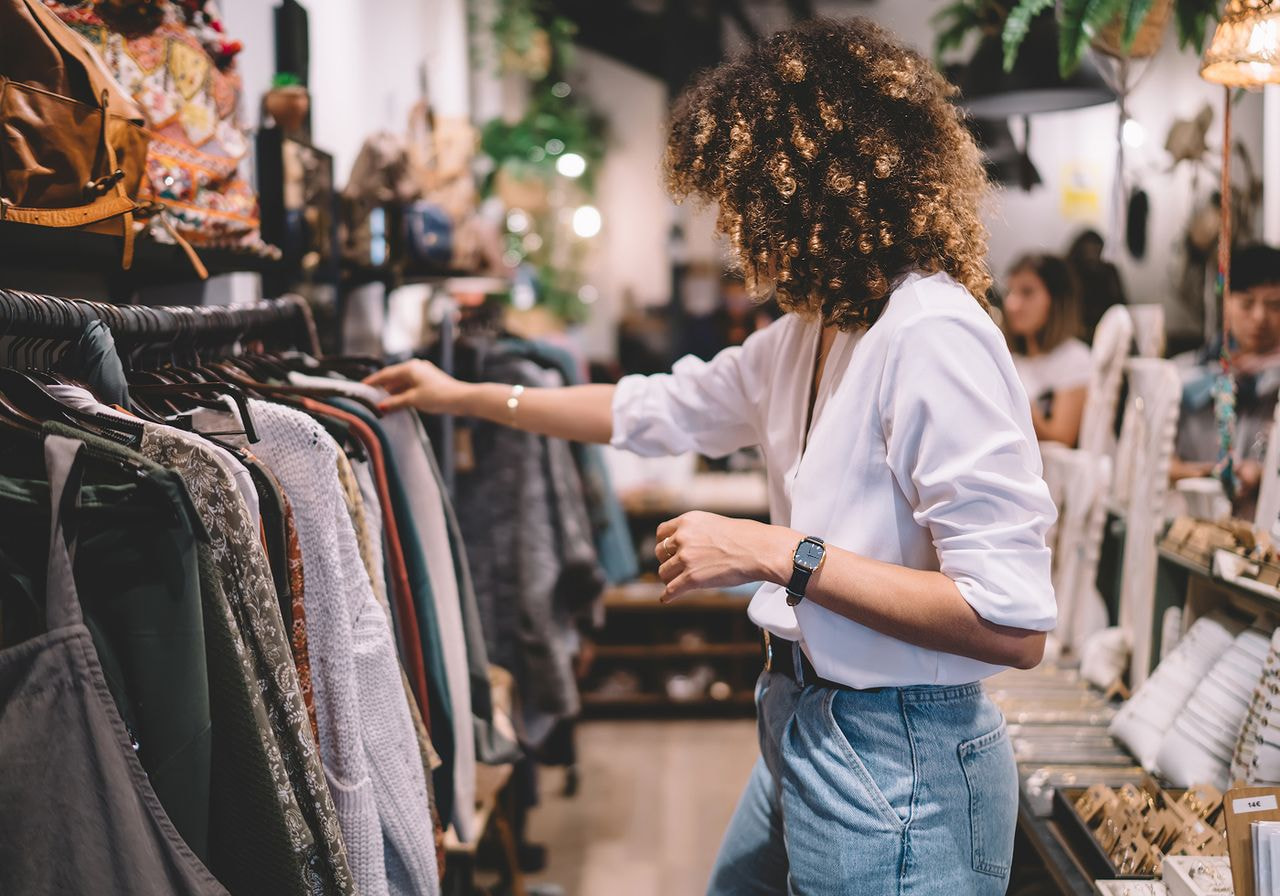
Starting a sustainable clothing brand means making deliberate choices at every stage of the supply chain, from material selection and sourcing through packaging.
Define your brand’s sustainability values
Sustainability priorities vary by brand. Organic cotton basics, recycled activewear, and upcycled one-of-a-kind pieces each call for different sourcing decisions. Write down measurable sustainability goals, like a target percentage of certified organic or recycled materials, a maximum number of production partners, or a commitment to biodegradable packaging within a set timeframe.
These brand values guide every sourcing decision that follows, and they give you language to use later when customers ask what “sustainable” actually means for your products. Vague claims like “eco-friendly” invite skepticism. Specific, verifiable commitments build trust.
Choose your materials
Your fabric choice drives most of your product’s environmental footprint, so decide on materials before you shortlist partners.
-
Organic cotton uses no synthetic pesticides or fertilizers and pairs with GOTS certification.
-
Recycled polyester repurposes plastic waste and should be GRS-certified.
-
Lyocell fibers such as TENCEL™ are made in a closed-loop process that recovers most of the solvents used.
Consider the full garment, not just the main fabric. Thread, labels, trims, and hang tags all count toward your sustainability story.
Choose a decoration method
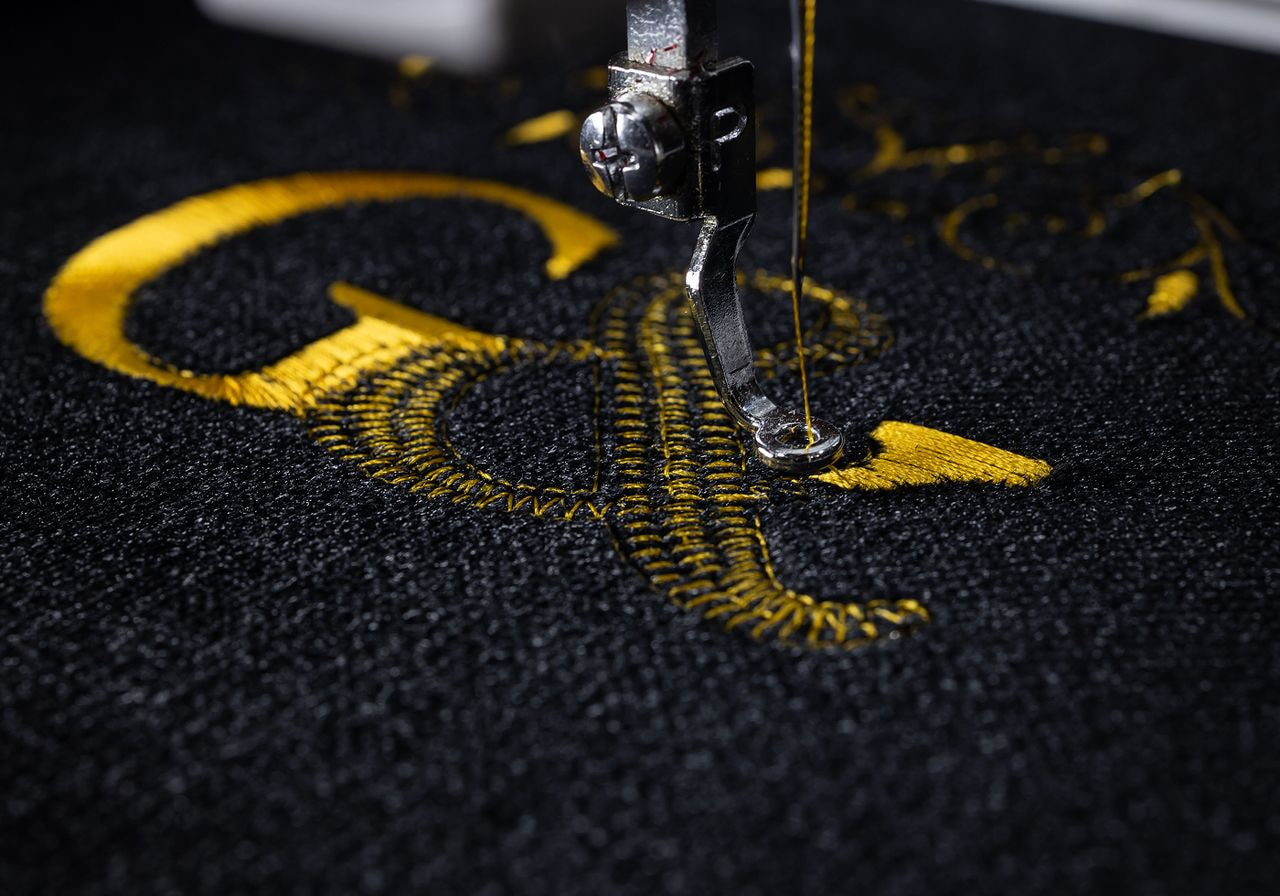
Screen printing suits bold designs and large, solid-color runs at bulk volume.
Digital printing handles detailed prints and multi-color designs without the setup costs screen printing requires for short runs.
Ask prospective production partners what inks each method uses. Water-based and PVC-free inks reduce environmental impact. If you plan to market a finished garment as GOTS-certified, the inks and processes used to produce it must also meet GOTS requirements.
Partner with sustainable suppliers
Once your values are defined and you know which materials you’d like to use, pick a few suppliers to vet.
Check the following:
-
Certifications: Request certificates in writing before finalizing an order: GOTS, GRS, OEKO-TEX® STANDARD 100, or Fair Trade Certified. Check that they’re current and cover the specific facility producing your order, not just the parent company.
-
Transparency: Ask whether they disclose factory locations and share environmental performance data such as water use, energy sources, and waste handling.
-
Labor conditions: Confirm that factory workers receive fair wages and work under documented safety standards. Ask for recent third-party social audits.
-
Minimum order quantities: Make sure their MOQs fit your launch volume and cash flow. A partner that requires more units than you can sell creates waste, not savings.
-
Lead times and capacity: Confirm they can handle reorders at your expected volume without long delays.
-
Communication: Notice how quickly and clearly they answer your questions during vetting. It’s a good preview of how they’ll handle problems during production.
Working through a production partner with its own certified, eco-conscious product range reduces sourcing risk for a bulk apparel business. Printful’s expert team sources sustainable materials, including certified organic cotton, recycled polyester, and blank products certified according to OEKO-TEX® STANDARD 100, so brands can build a private-label line around eco-friendly materials without vetting individual mills themselves.
Important:
Certification applies to the fabric or blank product, not the brand printed on it. Confirm certification at the product level; it does not extend across an entire supplier catalog.
Sample before you scale
Order samples before committing to a bulk run. Get at least one garment of each type you plan to sell to check fabric feel, print durability, and construction quality against your standards. Wash-test samples to see how the print and fabric hold up over time, because a garment that lasts is one of the most meaningful sustainability claims you can make.
Build a transparent supply chain
Traceability, the ability to track raw materials back through every stage of production, allows a brand to confirm that its suppliers actually adhere to the environmental and ethical practices they claim to uphold.
92% of consumers trust brands more when they’re environmentally and socially conscious, and nearly 90% of consumers worldwide believe businesses should use their resources to improve society and the environment.
Publish supplier certifications, fiber sourcing details, and factory locations where possible.
Plan packaging and inventory

Choose recycled, recyclable, or compostable packaging, and skip individual poly bags where your partner allows it. Ship in consolidated bulk shipments to reduce transport emissions.
Have a plan for unsold stock before it exists, such as discounting, donating, or a take-back program. Sending excess inventory to landfill undercuts the story you’re telling customers.
Marketing your sustainability story
State specific, verifiable details instead of vague claims:
-
The fiber content.
-
The certification a product carries.
-
The concrete outcome that certification represents: water saved, energy reduced, or chemicals excluded.
Link directly to certification bodies or third-party audit summaries so customers can verify the claim themselves.
Avoid broad terms like “eco-friendly” or “green” unless you can back them up. Regulators in the EU and the US (under the FTC’s Green Guides) are increasingly strict about environmental claims, and unsupported ones can pose legal risks as well as erode trust.
Share what actually sets your clothing apart from standard brands: a specific mill, a certification, or a measurable reduction in waste. Include care instructions that extend the garment’s lifespan, such as cold washing and line drying. They help customers reduce the product’s footprint after purchase.
How can a clothing brand be sustainable at scale?

Bulk apparel introduces a tension that a small-batch brand never faces: the efficiencies that make large orders affordable, consolidated shipments, bulk wholesale prices, and standardized cutting can work against eco-conscious sourcing if a brand isn’t deliberate about it.
Optimize the packaging and shipping process
There are several ways to minimize packaging waste and be more eco-conscious about shipping logistics.
-
Optimizing shipping box dimensions to match the actual garments inside reduces waste, both material and the empty space that drives up transportation emissions per unit.
-
Recycled and biodegradable packaging, mailers made from recycled paper or compostable poly bags, further reduce the environmental impact of a bulk shipment without adding high extra costs.
-
Be aware of shipping distances. Sourcing materials and production from the same continent as your target market cuts transportation emissions compared to shipping raw materials and finished goods across oceans multiple times during production.
-
When international shipping is unavoidable, choose the smartest mode of transport. Ocean freight and rail generate a fraction of the greenhouse gas emissions per ton-mile that trucking and air freight do, making them the more sustainable choice for long-distance bulk shipments whenever transit time allows.
-
Design garments for circularity. Mono-material construction, like a cotton t-shirt free of polyester blending in the seams and labels, makes a garment much easier to recycle than a mixed-fiber piece.
-
Energy-efficient warehouse operations, from lighting to climate control, reduce the operational footprint of a bulk apparel business beyond the garments themselves.
Choose production partners with the right certifications
Certifications provide independent, third-party verification of sustainability claims that a brand can’t simply assert on its own.
Four stand out for bulk sustainable apparel sourcing:
-
Global Organic Textile Standard (GOTS): A product labeled “organic” under GOTS must contain at least 95% certified organic fibers, while the “made with organic” label requires at least 70%. GOTS certification also covers the entire supply chain, including chemical inputs and labor conditions.
-
USDA organic: Land used to grow USDA-certified organic fiber must go three full years without prohibited synthetic substances before the harvest can carry the organic label.
-
Global Recycled Standard (GRS): Maintained by Textile Exchange, GRS applies to products containing at least 20% recycled material. At least 50% recycled content is required to carry the GRS logo, with verification through chain-of-custody documentation at every stage.
-
OEKO-TEX® STANDARD 100: This certification tests textiles against more than 1,000 substances that could harm human health. It applies to specific eco-friendly fabrics and blank products rather than to a brand as a whole, so look for the certificate number and issuing institute on the product itself instead of assuming an entire supplier catalog qualifies. A related certification, OEKO-TEX® ECO PASSPORT, covers inputs used later in production, such as inks for direct-to-garment and sublimation printing and embroidery threads.
Certifications enhance credibility because they’re independently audited rather than self-reported. Sustainable apparel brands sourcing from certified facilities point customers to a verifiable, third-party standard.
Conclusion
Sustainable bulk apparel comes down to choosing certified materials, audited manufacturing partners, and production volumes that match real demand.
Consumers increasingly expect brands to demonstrate their environmental practices and have a real positive impact, and certifications like GOTS, GRS, and OEKO-TEX® STANDARD 100 provide a bulk apparel business with the documentation to prove they’re doing so.
Build the supply chain first, and the marketing story will follow naturally.
Ready to build your sustainable apparel line?
FAQ
To make clothes in bulk, start by selecting base products or fabric, finding a production partner who has the certifications and sustainable materials you want to use, and confirming they offer the decoration methods you prefer. Most bulk manufacturers require a minimum order quantity per style or color, so check this before committing to a full production run.
A sustainable clothing brand sources certified organic or recycled materials, partners with factories that pay fair wages and disclose environmental performance, and avoids overproduction by matching output to actual demand. Certifications such as GOTS, GRS, and OEKO-TEX® STANDARD 100 provide independent verification of these sustainable practices rather than relying on unverified marketing claims.
Bulk ordering can reduce per-unit packaging and transportation emissions through consolidated shipping, but it increases the risk of overproduction if volumes exceed demand. The environmental impact depends on the materials sourced, the shipping method used, and whether the ordered variants are based on validated sales data rather than estimates.
Define specific sustainability values, then source certified organic or recycled fabrics from an audited production partner. Request certification documentation, order samples to confirm quality, and build transparent, traceable sourcing into your supply chain from the first production run rather than adding it later.

Published author, scholar, and musician, Andris draws on over 11 years of experience in and outside academia to make complex topics accessible – from SEO and website building to AI and monetizing art. Devoted to his family and self-confessed introvert, he loves creating things, playing musical instruments, and walking around forests.

