



Table of contents
Learning how to start a dropshipping clothing business starts with one decision: what buyer will your store serve better than a generic marketplace? This guide covers clothing dropshipping, supplier checks, store setup, marketing, legal basics, and Print on Demand.
Use it to build a dropshipping clothing business with clearer products, stronger margins, and fewer fulfillment surprises.
Here’s the short version: pick a niche, vet your suppliers, set up your store, build a lean catalog, handle the legal basics, market to the right buyer, and keep orders running smoothly. We’ll walk through each step below.
What is clothing dropshipping?

Clothing dropshipping lets you sell apparel without buying inventory upfront. You add clothing products to an online store, a customer places an order, and your dropshipping supplier sends the item to the buyer.
Dropshipping is a retail model in which a store sells a product and a third-party supplier ships it to the customer. That means you run the storefront and customer relationship, while the supplier handles stock and shipping.
This business model reduces cash risk, but it doesn’t remove responsibility. A dropshipping business still needs pricing discipline, supplier checks, and clear customer policies. Your clothing business still owns pricing, product pages, support, refunds, and customer trust.
How a dropshipping clothing store actually works
A dropshipping clothing store runs through four moving parts: your storefront, your supplier, your payment system, and your customer support.
Here’s the usual order flow:
-
Choose products – pick apparel from a supplier catalog, marketplace, or product database.
-
Publish listings – add photos, sizing, materials, shipping details, and accurate product descriptions to your online store. Always order samples to check the product and, ideally, take your own photos.
-
Collect the order – a customer buys from your dropshipping store through your checkout.
-
Route the order – either a dropshipping app sends it to the supplier, or you place it manually.
-
Fulfill the order – the supplier ships the item directly to your customer.
-
Handle support – you answer questions, process returns, and ensure customer satisfaction.
The customer never sees the back-end setup. They judge your clothing business by delivery speed, fit, product quality, packaging, and how quickly you respond when something goes wrong.
Dropshipping vs Print on Demand – What’s the difference?
Traditional dropshipping clothing means reselling ready-made apparel from a supplier. You choose existing clothing items, set your price, and rely on the supplier’s stock, photos, and fulfillment process.
Print on Demand also avoids inventory, but it gives you control over the design. You add original artwork, embroidery, patterns, or branding to blank apparel. The provider creates the product only after someone orders it.
| Model | What you sell | Main advantage | Main trade-off |
|---|---|---|---|
| Traditional dropshipping clothing | Ready-made apparel from a supplier | Fast catalog setup and broad product variety | Less product control and weaker differentiation |
| Print on Demand | Custom apparel made after purchase | Stronger brand control and original collections | Requires design work, samples, and product testing |
Use traditional clothing dropshipping when speed and catalog range matter most. Use Print on Demand when your goals are original apparel, a stronger visual identity, and products that competitors can’t copy.

Dropshipping clothing products – Is it worth the hassle?
The short answer: yes, when you treat it as a dropshipping business, not a product dump. The business model works best when your store solves a specific apparel problem for a clear target audience.
A dropshipping clothing business can work in 2026, but the easy version of the model has faded. A generic store with copied photos, thin descriptions, and slow shipping doesn’t earn trust.
A focused dropshipping clothing business can still compete by targeting a specific buyer, working with reliable suppliers, and building a stronger customer experience.
The market still gives sellers room. The global dropshipping market is projected to reach $583.5B in 2026. Those numbers show demand, but not a guaranteed profit. The clothing market rewards clear positioning because the fashion industry gives shoppers endless alternatives.
Pros of starting a dropshipping business
The biggest advantage: test a clothing business without filling a room with unsold sizes.
-
Lower startup risk – a low-risk business model helps you test demand before buying bulk stock
-
Minimal upfront investment – launch with store software, a domain, samples, and basic visuals, then improve the business model after real orders
-
No warehouse work – supplier-side inventory management reduces storage, packing, and shipping, making the dropshipping business simpler to operate
-
Flexible product testing – add or remove dropshipping clothing products based on sales data and customer preferences
-
Broad product range – test dresses, hoodies, activewear, jackets, accessories, and seasonal clothing items
-
Niche brand potential – a focused fashion niche helps your clothing business build repeat recognition
-
Room for expansion – once one collection works, add related product categories and bundles
A clothing dropshipping business makes sense when you want data before committing to inventory. It also helps sellers test profitable products before investing in custom photography, wholesale orders, or a larger team.
Cons and challenges of this business model
The model reduces inventory risk but increases supplier risk. Your store depends on someone else’s supply chain, stock accuracy, quality control, and delivery speed.
Expect these challenges in any clothing dropshipping setup:
-
Tighter margins – apparel competition, returns, shipping, and ads can quickly shrink profit margins, especially when competitors offer similar clothing at low prices
-
Quality variation – weak suppliers create sizing issues, poor fabric feel, and inconsistent colors
-
Generic products – many clothing dropshippers sell identical items at competitive prices
-
Slow or unclear shipping – long delivery windows lead to more refund requests and support tickets
-
Sizing disputes – apparel buyers return items when fit notes and size charts lack detail
-
Brand limits – supplier photos and generic packaging make it harder to build a premium brand
-
Paid traffic risk – paid advertising can drain cash before the offer proves demand.
The fix: Choose the right supplier, order samples, write clear listings, and keep your first catalog narrow. That gives your dropshipping store stronger controls before it starts scaling. A successful business usually starts with operational control, not a huge product list.

How to start a dropshipping clothing business in 7 steps

Now that you know the basics, let’s learn how to start a dropshipping clothing business from research to daily operations. Don’t move forward until the current step proves the idea deserves more time, money, or product expansion.
Step 1: Choose your clothing niche
A niche defines who you serve. Without one, your dropshipping business competes with every store chasing the same broad customer base.
Start with a buyer group, not a product. In clothing dropshipping, a specific audience makes product selection, pricing, and copy easier. Your target audience could be:
-
Yoga teachers who want studio merch
-
New parents buying milestone outfits
-
Dog owners who want breed-specific sweatshirts
-
Remote workers who want minimalist desk-to-coffee-shop basics
-
Gamers who want subtle streetwear, not obvious costume merch
-
Shoppers looking for eco-friendly clothing with product-page evidence
-
Beginners who need t-shirts or hoodies for small clubs, teams, or creator merch
Use Google Trends to compare market demand over time, seasonal peaks, and regional interest. Google Trends lets you study search interest by time period, location, and popularity, and compare up to five groups of terms at once.
Then use Google Keyword Planner to check search volume and related ideas. The Keyword Planner helps you discover keywords and view search estimates for those terms.
Add competitor analysis before choosing a niche. It shows how similar stores sell products, price bundles, and talk to potential customers.
Note what:
-
Products rank or sell repeatedly
-
Prices customers accept
-
Buyers praise in reviews
-
Complaints appear across brands
-
Product photos and descriptions that competitors use
A strong niche connects customer preferences with a product gap. It also gives the target audience a reason to choose your store instead of another dropshipping store.
“Gym clothes” serves a broad customer base, but “oversized lifting shirts for women who train heavy” gives your online store clearer language and sharper product choices.
Step 2: Find dropshipping clothing suppliers
The supplier controls product availability, delivery speed, and customer experience. Choose carefully. In clothing dropshipping, your supplier controls the fabric, fit, packaging, and shipping speed – the exact details that shape reviews, refunds, and repeat purchases.
Here’s what to check to vet your dropshipping supplier:
-
Sample quality – order several items and inspect fabric, stitching, color, print, and fit
-
Catalog depth – confirm whether the supplier carries the styles, sizes, and colors your niche needs
-
Shipping logic – match fulfillment locations with your main customer market
-
Order routing – check whether the supplier connects to your eCommerce platform through a dropshipping app
-
Support speed – ask test questions about lost parcels, damaged products, and returns
-
Branding options – look for custom labels, branded packing slips, or print-on-demand options
-
Data quality – require materials, care instructions, size charts, photos, and stock updates
Many sellers start with marketplaces, directories, dropshipping platforms, private suppliers, or wholesale dropshipping accounts. Common routes include AliExpress, Alibaba, SaleHoo, Spocket, Modalyst, apparel wholesalers, and print-on-demand providers like Printful.
A dropshipping supplier with low prices but poor quality creates refunds – which cost you potential customers who won’t come back. The right suppliers keep you stocked with high-quality products and protect your profit margins through fewer replacements and support tickets.
Choose reliable suppliers that prove consistent product quality. If two suppliers offer similar dropshipping products, pick the one with better shipping transparency, stronger support, and more complete product details.
Step 3: Set up your dropshipping clothing store
Your store should make buying simple. The best online store setup makes the product, sizing, price, and delivery promise clear within seconds. Pick an eCommerce platform that supports apparel variants, mobile checkout, payment processing, analytics, apps, and shipping rules.
A standalone eCommerce store gives you more control than a marketplace. You control collection pages, copy, reviews, email capture, branding, and checkout flow. Marketplaces can drive traffic, but they also put your products next to cheaper alternatives.
Set up these pages before launch:
-
Homepage – tell visitors who the store serves and why the products fit them
-
Collection pages – group products by style, use case, season, or niche
-
Product pages – include sizing, materials, care, shipping windows, and returns
-
About page – explain your brand identity and why the store exists
-
FAQ page – answer sizing, shipping, exchanges, refunds, and tracking questions
-
Contact page – give customers a clear way to reach support
Install only the tools you need. A basic stack includes:
-
Dropshipping app for supplier order routing
-
Email tool for welcome and abandoned-cart flows
-
Reviews app for social proof
-
Analytics for conversion and product tracking
-
Tax tool if your platform doesn’t cover your needs
Before you launch the dropshipping store, place a test order. A test order checks whether the business model works outside the admin dashboard. Review checkout, payment confirmation, supplier routing, tracking emails, and mobile speed.
Step 4: Build your clothing catalog
Your first product catalog should guide shoppers, not overwhelm them. Start with 10-25 products for one audience and one style direction.
A new dropshipping store doesn’t need 100 products. In clothing dropshipping, too many choices can hide the products customers actually want.
Use this simple custom clothing catalog structure:
-
Core products – t-shirts, hoodies, sweatshirts, leggings, jackets, or dresses
-
Supporting products – hats, tote bags, socks, bags, shoes, or small accessories
-
Seasonal products – swimwear, fleece, holiday designs, festival outfits, or back-to-school pieces
-
Bundles – matching sets, outfit kits, family products, or gift combinations
Every product needs a reason to exist. Ask:
-
Does this product fit the niche?
-
Can the retail price protect profit margins?
-
Did the sample meet your quality standards?
-
Does shipping time match buyer expectations?
-
Does the item match what your target audience expects from this niche?
-
Does the product photo explain fit, length, texture, and use?
Product pages decide whether traffic converts. Add:
-
Fabric composition
-
Fit notes
-
Size chart
-
Care instructions
-
Shipping estimate
-
Return policy
-
Lifestyle photos or strong mockups
-
Accurate product description with buyer-specific language
A catalog with 15 well-explained products often beats 100 random items. It helps the dropshipping business understand which products deserve more content, photos, and ads.
Step 5: Sort out the legal and business basics
Legal setup depends on location, sales volume, product type, and tax rules. This is a practical checklist, not legal advice.
Start with these tasks:
-
Choose a business structure – many beginners start as sole proprietors. Others form a limited liability company (LLC) to separate personal and business liability. An LLC is a state-created business structure, and rules vary by state.
-
Register your business name – the SBA recommends registering based on location and structure.
-
Check your business license requirements – most small businesses need some combination of licenses and permits from federal and state agencies.
-
Understand sales tax – every state with a sales tax has economic nexus requirements for remote sellers.
-
Create store policies – add shipping, returns, privacy, terms, and refund pages.
-
Review apparel rules – be extra careful with children’s products, fiber claims, country-of-origin requirements, and sustainability wording.
-
Track expenses – record supplier costs, shipping, refunds, apps, platform fees, paid advertising, and tax payments.
A business license won’t create sales, but missing legal basics can slow you down later. Handle the paperwork before your new business starts receiving orders from multiple regions.
Step 6: Market your dropshipping clothing store
Good marketing helps you attract customers who actually want what you’re selling – not just anyone who clicks an ad. Marketing clothing means selling fit, identity, styling, and trust.
The fashion industry moves fast, so your message needs a clearer buyer angle than “new arrivals.” Your dropshipping business needs more than product uploads.
Use channels that match your buyer:
-
Search engine optimization – build pages around buyer intent, such as “matching dog mom sweatshirts,” “minimalist travel outfits,” or “Pilates studio hoodies.”
-
Content marketing – publish styling guides, size guides, fabric explainers, gift guides, and comparison posts. Professional content marketing gives shoppers reasons to trust the store before they buy.
-
Short-form video – show outfits on real bodies, packing clips, styling transitions, and product closeups.
-
Influencer marketing – work with creators who already speak to your target customers.
-
Social media ads – test creative angles, not just products. Compare styling videos, user-generated content, product demos, and offer-led ads.
-
Paid advertising – start small, track cost per add-to-cart, and scale only after sales prove the offer.
-
Email marketing – use welcome flows, cart reminders, product education, review requests, and post-purchase offers.
-
Customer engagement – ask shoppers for photos, fit notes, reviews, and product ideas.
Good advertising strategies depend on good product pages. If buyers click but don’t buy, fix the page before increasing ad spend.
Content is what attracts customers before you ever spend on ads, and email marketing is what brings them back. Once orders start coming in, customer feedback and reviews tell you exactly where to fix the product page, catalog, and sizing info.
Step 7: Process orders and handle customer service
After launch, the work moves to your dropshipping business operations. Skip this step, and you’ll know it fast – a missed order, an angry review, a refund you didn’t see coming.
A dropshipping business succeeds when customers receive the right product, at the expected time, with clear communication.
Build a daily workflow:
-
Check new orders – confirm product, size, color, address, and payment status
-
Watch supplier status – ensure the supplier ships on time and updates the tracking
-
Send tracking – customers shouldn’t need to ask where their order is
-
Reply quickly – answer fit, delivery, return, and exchange questions
-
Track problems – log delays, wrong items, damaged products, and refund reasons
-
Update pages – turn repeated questions into better product copy and FAQs
-
Review margins – compare revenue with product cost, shipping, returns, app fees, and ads
This step also improves inventory management. You don’t hold stock, but you still need to watch supplier availability, variant changes, and discontinued items.
When problems happen, don’t blame the supplier in front of the customer. Explain the fix, give a timeline, and follow through. That’s how a small clothing business protects trust.
Want more control over your brand? Consider Print on Demand
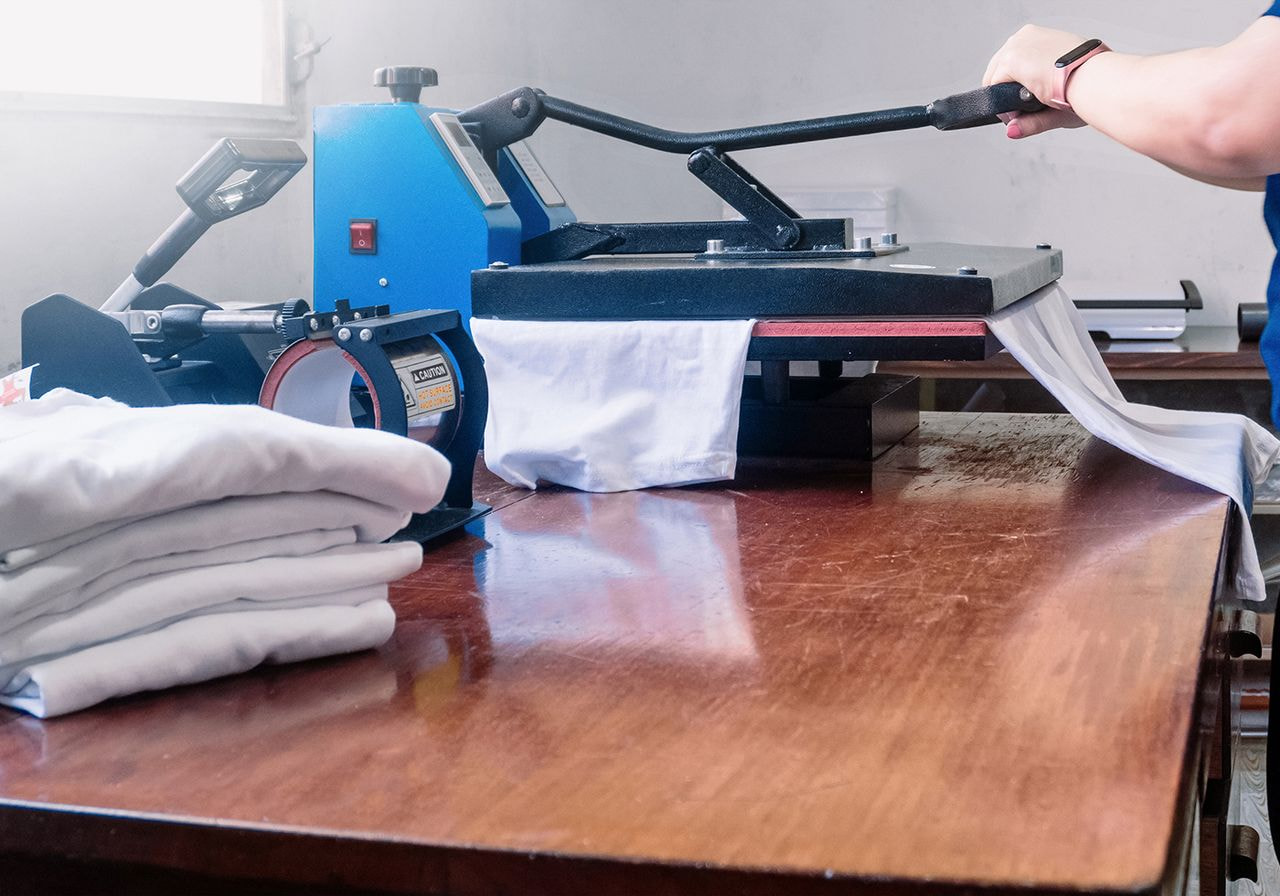
Traditional dropshipping clothing helps you launch quickly, but many stores end up selling the same supplier catalog. Print on Demand gives you more control, and it’s more sustainable because you sell custom apparel that’s made only after the order comes in.
For a clothing dropshipping business, that shift changes both product strategy and customer perception.
Printful offers 589 print-on-demand products with worldwide shipping and no order minimums. Its product flow lets sellers add designs, set up a store, add products, and sell online without inventory.
How Print on Demand differs from traditional dropshipping
Print on Demand changes the product source.
With a traditional clothing dropshipping business model, you select ready-made apparel. With Print on Demand, you create custom products using your own artwork, graphics, text, embroidery, or patterns.
-
Product control – choose what appears on each item
-
Brand control – unique visuals strengthen your brand identity
-
Testing – publish designs without a bulk inventory
-
Margins – custom products support a stronger perceived value
-
Competition – avoid selling identical supplier listings
-
Fulfillment – the provider makes the product after the customer orders
With Printful, design and sell custom products online with print-on-demand dropshipping, connect a store, and sell without inventory. Our native free Design Maker makes the entire process a breeze.
When Print on Demand makes more sense than dropshipping generic clothes
Print on Demand makes more sense when your clothing business needs originality, not just product variety.
Choose Print on Demand when:
-
You want your own designs – apparel carries your art, slogans, embroidery, patterns, or niche references
-
You serve a tight community – fitness studios, creators, book clubs, pet owners, gamers, teachers, and local groups respond to identity-based products
-
You want a stronger brand – matching design systems across shirts, hoodies, hats, and bags makes the store easier to remember
-
You need safe product testing – launch a small collection, order samples, and expand winners
-
You want less direct comparison – shoppers can’t compare your original design with the same item from ten stores
Traditional dropshipping suits trend-led resale, especially when buyers want fast access to familiar styles. Print on Demand suits sellers building a long-term clothing business around original products.
Is dropshipping clothing profitable?
Dropshipping can become profitable when your store protects margins, serves a clear buyer, and uses reliable fulfillment. It becomes difficult when sellers chase random trends, use weak suppliers, or spend heavily on ads before proving demand.
Use this formula to judge the business model:
Profit before tax = retail price – product cost – shipping – platform fees – returns – marketing
Example:
-
Retail price – $49
-
Product and shipping cost – $27
-
Platform and payment fees – $3
-
Ad cost per order – $10
-
Estimated profit before tax – $9
That same order turns weak if a return costs $8 or ads rise to $18 per sale.
To build a profitable business, track profit margins by product and channel:
-
Gross margin by product
-
Return rate by size and style
-
Ad cost per purchase
-
Conversion rate
-
Repeat purchase rate
-
Average order value
-
Support tickets by product
A dropshipping clothing business doesn’t need hundreds of items to make a decent profit. It needs a niche, a supplier that delivers, a catalog people understand, and marketing that reaches the right buyer.
Read more: How to price your products
Start your clothing dropshipping business with a focused plan
The safest way to start a dropshipping clothing business is to keep the first version narrow. Pick one audience, choose a small catalog, order samples, build product pages with clear sizing, and test one or two marketing channels.
If you want more control over product design and brand identity, use Print on Demand instead of generic resale. Sign up for Printful for free and create custom apparel, connect a store, and fulfill orders without holding inventory.
FAQs
Yes, it can be profitable to dropship clothes when the store has a clear niche, quality products, strong product pages, and disciplined pricing.
Choose quality products before scaling ads. Profit depends on supplier cost, shipping, platform fees, returns, and marketing. Track net profit, not revenue screenshots.
Most sellers source apparel through marketplaces, private suppliers, directories, dropshipping platforms, print-on-demand providers, and wholesale dropshipping accounts. Use supplier directories and sample orders to find suppliers that match your niche.
Before choosing, compare samples, shipping speed, return rules, product data, integrations, and supplier support.
You can research niches, study competitors, make product lists, and create organic content with no budget. To sell, you’ll still need some money for a domain, samples, an eCommerce platform, or a dropshipping app. Avoid launching without samples if apparel quality matters (and it should).
Yes, some sellers reach $10,000 per month in revenue, but revenue is not profit. A store can sell that much and still earn little after product costs, shipping, returns, software, and paid advertising. Focus on margin, not gross sales.
$100 can cover early validation, but it limits testing. Use it for a domain, one or two samples, and a basic store trial. You can build research and content first, then add paid tools when the offer shows demand.
With Printful, you can start testing custom products with no upfront costs, no order minimums, and sample orders available, and 99.81% customer satisfaction. Our over 7,000 public Trustpilot reviews also give new sellers more external proof before choosing a fulfillment partner.
Yes. The clearest route is Print on Demand, where you sell custom apparel without holding stock. You can also use private-label suppliers, but those often require higher setup costs, minimum orders, or more complex fulfillment rules.
Start by choosing a niche, finding suppliers, setting up a store, adding products, testing samples, and marketing to a single audience. Keep the first catalog small, monitor fulfillment, collect reviews, and improve listings from customer questions.

Zane is a sharp-witted writer with a deep interest in eCommerce, branding, and creative entrepreneurship. With a knack for blending humor, insight, and no-nonsense advice, she crafts engaging content that helps merchants learn and businesses grow. When she’s not dissecting industry trends, she's exploring philosophy, music, and the perfect balance between solitude and connection.

