


Table of contents
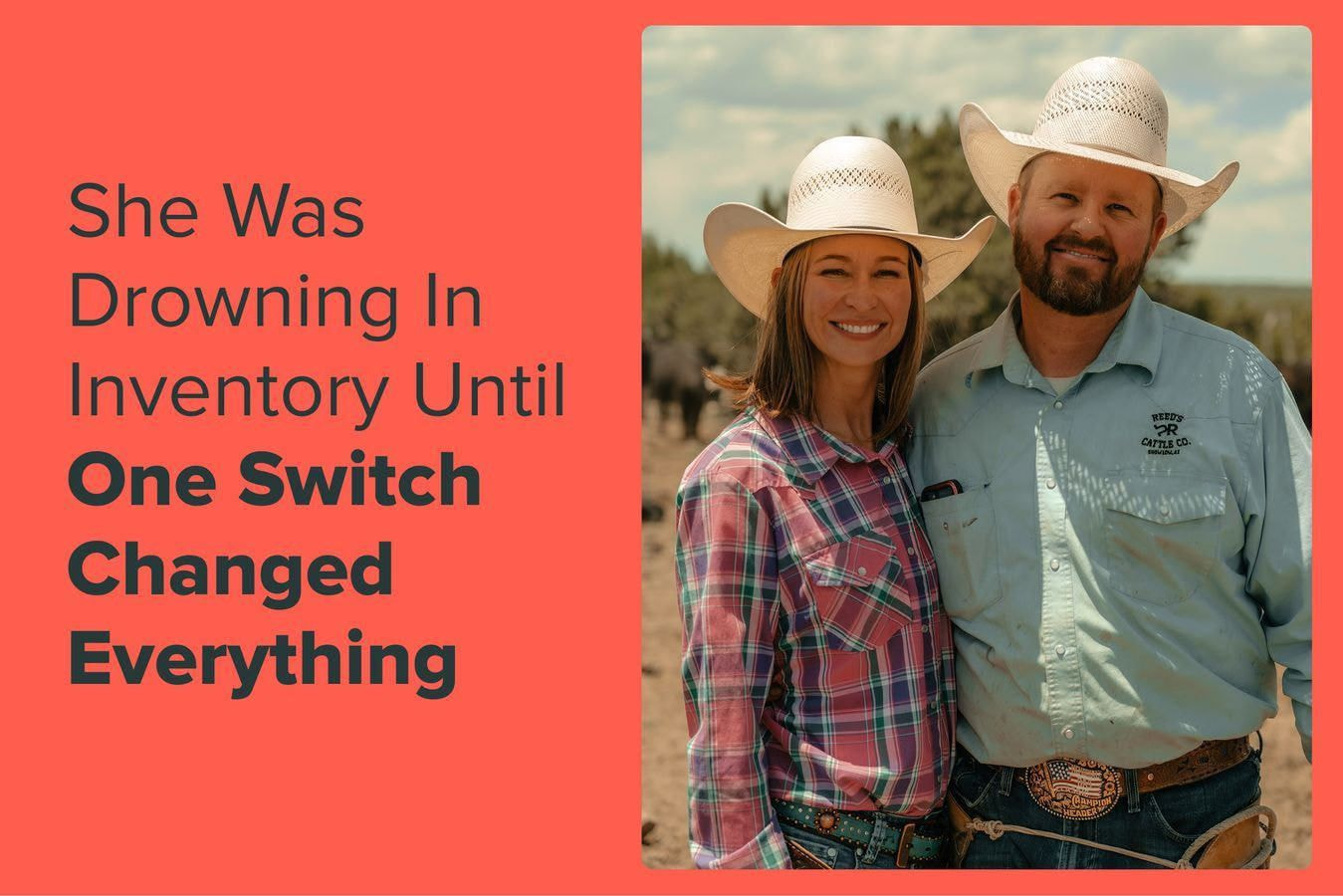
Larissa Reed spent two years risking thousands of dollars on t-shirts she hadn't sold yet. She was trying to solve a practical problem: how to support a ranch without outside money, investors, or a safety net.
What started with a few risky decisions and a lot of manual work slowly grew into something bigger, without following the usual playbook.
Her story isn’t about overnight success or clever hacks. It’s about learning through pressure, changing course when something breaks, and finding a system that finally fits real life.
The long road to owning a ranch
Larissa Reed and her husband were raised around cattle and horses, but ownership always felt out of reach. Ranching is expensive, and without capital, the path is narrow.
“We didn’t have money or an inheritance,” Larissa said. “All we really had was a dream, a strong work ethic, and the ability to set goals and keep reaching the next one.”
They spent years working for other ranches, gaining hands-on experience while knowing it still wasn’t theirs. In 2018, they started a separate business with one purpose: to save enough money to buy land. It meant tight budgeting, constant work, and long stretches of uncertainty.
When a ranch in Arizona came up for sale in 2020, they were finally ready, knowledge in hand, savings scraped together, and no safety net. The timing couldn’t have been stranger. The pandemic was in full swing, but they moved anyway.
Raffles, t-shirts, and thousands of dollars on a credit card
Once the ranch was theirs, Larissa and her husband needed a way to bring in extra income without pulling focus from daily ranch work. They noticed a growing trend online: businesses funding large giveaways by selling merchandise. They couldn’t start with trucks or trailers, but they could start smaller.
“At the beginning, all we could afford to give away was a four-wheeler,” she said. To fund it, Larissa printed t-shirts in bulk and sold them as raffle entries. Every sale pushed them closer to covering the cost of the prize. It worked, but just barely.
She paid for inventory upfront, often putting thousands of dollars on a credit card. Shirts were sold at county fairs, local events, and through Facebook ads. Orders started coming in from other states, which raised the stakes even more.

Running a business from boxes in the living room
As the giveaways gained traction, Larissa’s home slowly turned into the center of the business. Printed shirts arrived in bulk and stacked up in boxes around the living room. Every order meant pulling the right size, packing it by hand, printing labels, and making trips to the post office.
At the same time, the ranch still needed daily attention. Animals had to be fed and checked, the house had to run, and her children needed her. The workload wasn’t split across a team. It was one person handling inventory, fulfillment, customer emails, ads, and website updates.
“I was doing everything from my living room,” Larissa said. “Boxes everywhere, printing labels, shipping orders, and still trying to keep up with the ranch and my kids.”
The workdays were long and tightly packed. When her children were at school, she worked straight through. When they came home, work stopped. There was no buffer and no flexibility.
“It was fun at first,” she said. “Then it got stressful really fast.”
A casual conversation that changed everything
By the time the business outgrew her living room, Larissa knew something had to change. She didn’t have the budget for employees, a warehouse, or professional equipment. Buying a printing machine felt risky, and scaling the current setup felt impossible.
The breakthrough came through a conversation with another small business owner she had met online. The photographer mentioned she was using a print-on-demand service for her own merchandise.
“I didn’t even know Print on Demand was an option,” Larissa said. “When she explained it, something just clicked.”
She started watching videos, reading forums, and studying how other store owners handled fulfillment without holding inventory.
“If this was real,” she said, “I knew it would change everything.”

Taking the leap with Printful
After learning how Print on Demand worked, Larissa compared a few platforms before settling on Printful. She can't remember exactly why she picked Printful. Maybe it was a discount offer, maybe it was the reviews, but she decided to try it. If it didn't work, she'd drop them and try another company. She had nothing to lose and everything to gain.
Before switching fully, she ordered samples for herself. She wanted to see the fabric, the print quality, and how the finished products compared to what her customers were already receiving. The results matched her expectations.
“I cared about quality and customer service,” Larissa said. “If I could still stand behind the product, everything else could be figured out.”
She didn’t shut down her existing operation overnight. While selling through Printful, she discounted the remaining inventory stacked in her living room and sold it off gradually. Once the boxes were gone, it was 100% Printful.

What actually changed after switching
The relief was immediate. "I don't spend time packaging and shipping and taking things to the post offices. I don't buy shipping boxes or print labels, and that took hours out of my day," she said.
Now her work involved checking emails, answering customer questions, and clicking a button labeled Request Fulfillment. That was it.
She estimates that only about 10% of her work now involves Printful, mostly just fulfillment requests and the occasional customer service issue. The other 90% goes toward what she actually enjoys: talking to people, building relationships, and creating content.
She gets to do life while Printful handles the logistics. That shift let her focus on being a mom, a rancher, and the face of a brand people connect with.
Why her customers keep coming back
With fulfillment handled elsewhere, Larissa’s attention shifted almost entirely to people. That was something she had leaned on from the beginning, but now she had the time to do it well. Emails, messages, comments, and questions became the core of her day.
“My customers don’t care how good I am at packing a shirt,” she said. “They care about the brand, the values, and whether I actually care about them.”
That mindset shaped how she handled problems. If an order arrived damaged or incorrect, she didn’t argue. She fixed it. Printful’s response time made that easier, but the philosophy was already there.
“I’ll take care of one unhappy customer if it means keeping a hundred happy ones,” she said.
Many of her customers were reconnecting with a lifestyle they missed or grew up around. Some followed the ranch story closely. Others supported the giveaways. Over time, trust built naturally.

The real math behind Print on Demand
One of the most common questions Larissa gets is whether Print on Demand actually makes financial sense. On paper, producing items individually costs more than printing in bulk. She doesn’t deny that. What she looks at instead is everything the price replaces.
“Yes, I pay more per product,” she said. “But for me, it’s worth it.”
Before switching, she was paying upfront for hundreds of shirts, guessing sizes, and carrying inventory that might sit for months. If the wrong size sold out, she had to reorder. If another size didn’t move, the money stayed tied up. That risk disappeared with Print on Demand.
“I only fulfill what I sell,” she said. “If I sell five shirts, I fulfill five shirts.”
What she gained was predictability. She could plan giveaways, pricing, and promotions, knowing she wouldn’t be carrying leftover stock.
Meta ads drive sales, social media proves you're real
Larissa has a complicated relationship with Meta ads. “Meta ads have been huge for us,” she said. She loves that they've expanded her reach and now target people who are actually interested in ranching, the Western lifestyle, and rural living.
She hates how much they cost. But they work, especially for giveaways, and she's learned that running effective giveaway ads requires specialized expertise.
Social media, on the other hand, doesn't directly make her money. It builds trust. When someone sees a Meta ad and suspects it's fake, they search for her brand on Instagram or Facebook. They see 100,000 followers and 2,000 posts, scroll through, and realize she's legitimate.
"Social media builds the brand that makes people realize that my Meta ads are legitimate," she said.
She also uses SMS and email marketing to stay connected with customers in a more personal way. Those channels let her get into people's phones, into their daily lives, and maintain one-on-one relationships at scale. It's not flashy, but it works.
Sweatpants, coffee mugs, and zero inventory risk
Before Printful, Larissa had to be extremely careful about what products she invested in. She stuck to t-shirts, hoodies, and a few drinkware options because buying in bulk meant committing serious money upfront.
Print on Demand opened up her entire product catalog. She added multiple hat styles, different shirt cuts and colors, and size ranges she never could have stocked on her own. Some items surprised her completely. Sweatpants became top sellers, which she hadn't anticipated until customers started ordering them consistently.
"Apparently, farmers and ranchers also love to be very comfortable around the house and lounge around," she said. Coffee mugs also took off, another product she'd never invested in before because the upfront cost and breakage risk weren't worth it.
The ability to test products without financial risk changed how she ran her store. If something didn't sell, it simply didn't get ordered. If it took off, she kept it in the lineup.

The one thing she'd do differently
When asked what she'd change if she could go back, Larissa's answer was immediate and definitive. "Start Printful immediately," she said.
She doesn’t regret the two years she spent doing everything manually. She didn't know Print on Demand existed, so she can't fault herself for not choosing it earlier. But if she had known it was an option, everything would have been different.
Her advice to anyone starting out is simple: don't do it the hard way if you don't have to.
What she tells people who want to follow her path
Now that the business is established, Larissa hears from people who want to know how to do something similar. Her advice doesn’t start with tools or tactics.
She’s open about the fact that her path wasn’t efficient or polished. It involved debt, long hours, and a lot of figuring things out in real time. What mattered more than the model was being willing to ask for help and adapt when something stopped working.
“A business reflects the mental and emotional ability of its owner,” Larissa said. “You can’t build something healthy if you’re burned out and afraid to ask questions.”
Larissa believes that when you have a dream that won't go away, it's there for a reason. And you don't have to figure it out alone. There are people, technologies, and businesses already in place to help you succeed; you just have to find them and be willing to use them.
"When God puts a dream in your heart, it means he's also prepared a way for you to accomplish that, and you don't do it alone," she said.
If you’re exploring Print on Demand as a way to sell without inventory risk, starting with a setup like Larissa’s is a practical place to begin.

By Anita Njoki
Anita is a dynamic content operations manager with a proven record of transforming innovative ideas into impactful digital strategies. She leverages data-driven insights, expertise in case studies and brand building, and UX digital marketing to fuel growth. A former advertising copywriter, she infuses neuromarketing insights into every project with passion, creativity, and collaboration.

