


Table of contents
The best print-on-demand sites for artists differ in print quality, product range, and how much control artists have over branding and pricing.
Independent artists selling limited editions need a print-on-demand (POD) company that maintains consistent color accuracy and print detail across every order. This guide compares ten POD platforms across production models, product ranges, and pricing.


How Print on Demand for artists works
Print on Demand removes two upfront expenses for artists: inventory and production costs. A POD company produces, packs, and ships each product only after a customer orders it, so the artist doesn't have to hold stock.
Artists can list one drawing across a t-shirt, a canvas print, and a phone case, then use customer orders to decide which format to keep selling. Selling art online through Print on Demand shifts an artist's work toward design and marketing, since printing partners handle production and delivery.
10 Best print-on-demand sites for artists in 2026
Each platform below uses a different production model: in-house, a small set of partner facilities, or a large network of printing partners. That choice affects product range, print quality, and branding options. The comparison starts with Printful, which prints in-house.
1. Printful
Source: Printful
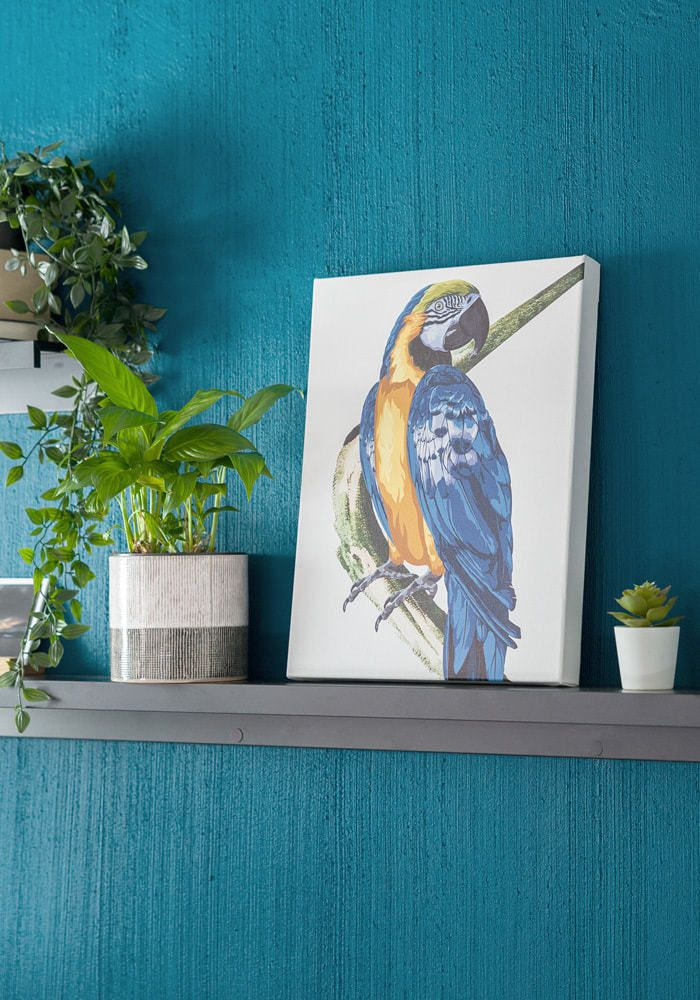
Printful produces framed posters, canvas prints, home decor, and apparel in-house or through a small set of partner facilities, which helps keep print quality consistent across an order rather than making it dependent on a wide network of third-party plants.
Printful’s catalog has over 549 products, and the company has delivered more than 143 million items since 2013, with only 0.24% of orders needing a reshipment.
The Design Maker lets artists preview how a piece looks across different products before committing to a print run, testing techniques like embroidery against a straightforward digital print. Custom labels and packing inserts add branding to the unboxing experience for artists building a brand without holding inventory.
Printful integrates directly with Shopify, Etsy, and other major eCommerce platforms, syncing incoming orders for automatic fulfillment, and its Support Team helps merchants troubleshoot integration and fulfillment issues. Merchants who cross $12,000 in annual sales unlock the Growth plan for free, which cuts product costs by up to 33%; below that threshold, the plan costs $24.99 a month. See the full print-on-demand catalog for the current range of products.
Pros:
-
In-house production keeps print quality consistent
-
Branding options, including custom labels and packing inserts
-
Integrates directly with Shopify, Etsy, and other major eCommerce platforms
Cons:
-
Base prices run higher than some competitors
-
No built-in marketplace, so traffic has to come from your own store
-
Fulfillment location affects shipping times on some orders
2. Printify

Source: Printify
Printify connects sellers to a large network of more than 90 print providers worldwide, rather than printing in-house, which gives artists access to a catalog of over 2,000 products spanning wall art, apparel, and less common items like window curtains. Competition among those providers keeps base prices lower, leaving more room for artists to set higher profit margins.
Since different providers fulfill different products, print quality can vary between two items in the same order. The free Product Creator lets artists preview paintings, drawings, or photo prints on any product before publishing a listing, and the platform integrates with Shopify, Etsy, and eBay.
Pros:
-
A large network of 90+ print providers keeps base pricing competitive
-
Wide product selection, including uncommon items
-
Integrates easily with Shopify, Etsy, eBay, and other platforms
Cons:
-
Quality varies depending on which print provider fulfills an order
-
Shipping times and costs shift depending on the provider handling an order
Important: Printify and Printful merged in November 2024 and now operate under the parent group FYUL, though each platform keeps a separate catalog, pricing, and dashboard. Artists who encounter provider-to-provider quality variation for a specific product can move that product to Printful’s in-house production without switching companies, since both platforms are part of the same group.
3. Gelato

Source: Gelato
Gelato works with more than 140 production partners across 32 countries, offering products beyond the standard poster or canvas print, including unique items such as photo books and foam prints.
That same distributed network means product quality can shift depending on which local partner fulfills an order, so checking customer reviews for a specific product matters more here than with an in-house printer.
The production network also shortens shipping times because Gelato routes orders to the partner closest to the customer rather than shipping internationally from a single warehouse. Gelato integrates with Shopify, Etsy, and WooCommerce, though some advanced features are available only on paid plans.
Pros:
-
Local production network shortens shipping times
-
Catalog includes unusual products, like foam prints and photo books
-
Integrates with Shopify, Etsy, and WooCommerce
Cons:
-
Limited branding options compared to Printful
-
Quality can differ between fulfillment partners
-
Some advanced features require a paid plan
4. Redbubble

Source: Redbubble
Redbubble runs as a marketplace rather than a storefront builder. Artists upload a design, choose which products it appears on, set a profit margin on top of Redbubble’s base price, and the platform handles printing, shipping, and customer support from there. The site draws roughly 18.3 million visits a month, giving new artists built-in traffic they would otherwise have to build from zero.
That audience also means competition: every artist competes on price with other artists selling similar products on the platform. Margins tend to run lower than on your own store because prices have to stay close to Redbubble’s base cost to remain competitive.
Pros:
-
Built-in marketplace traffic without running separate ads
-
No upfront costs beyond uploading a design
-
Handles printing, shipping, and customer service directly
Cons:
-
Lower profit margins than platforms without marketplace pricing pressure
-
High competition among artists selling similar work
-
Limited branding or customization options
5. Zazzle

Source: Zazzle
Zazzle positions itself more as a custom gift platform, which suits artists whose art prints make great personalized presents. Like Redbubble, artists set their own profit margins on top of Zazzle’s base pricing, and the platform manages printing, shipping, and customer care.
Zazzle lets customers edit a design by default, so a buyer can recolor or resize a piece before checkout unless the artist turns that setting off.
Pros:
-
Wide range of products with flexible customization options
-
Built-in marketplace with strong organic traffic
-
Global fulfillment network supports fast, affordable shipping
Cons:
-
A saturated marketplace with heavy competition
-
Less control over store branding than with one’s own shop
-
Customers can edit a design unless the artist disables that option
6. Spring

Source: Spring
Spring, formerly TeeSpring, targets artists who already sell through social media, integrating directly with Instagram, YouTube, and TikTok. Built-in marketing tools let artists promote designs directly to followers without first setting up a separate storefront.
The product range is smaller than most competitors on this list, covering t-shirts, hoodies, posters, and phone cases, with limited branding options. Spring also features its own marketplace, though it lacks a search bar and offers few filters, limiting how easily new customers can discover an artist’s work there.
Pros:
-
No upfront costs beyond uploading designs
-
Built-in marketing tools for social media sales
-
Handles fulfillment, shipping, and customer support
Cons:
-
Limited product range compared to other platforms
-
International orders can take longer to arrive
-
Fewer eCommerce integrations than competitors
7. Fine Art America

Source: Fine Art America
Fine Art America specializes in high-quality prints and fine art paper, positioning itself as a Print on Demand platform for art prints rather than novelty apparel. The marketplace highlights the artist behind each piece, showing additional works by the same creator alongside any product a shopper views, which can help drive repeat sales once a piece catches someone’s eye.
That art-first audience also means fiercer competition, since shoppers browsing Fine Art America already expect gallery-level quality. Base prices are higher than on general POD marketplaces, which can make undercutting other artists on price difficult.
Pros:
-
Specializes in high-quality printing on fine art paper
-
Marketing and sales tools built for professional artists
-
An active marketplace and community of other artists
Cons:
-
High competition among artists for buyer attention
-
High base prices make aggressive pricing difficult
-
Fewer eCommerce integrations than other platforms on this list
8. TeePublic

Source: TeePublic
TeePublic operates as Redbubble’s sister marketplace, sharing enough infrastructure that artists can import designs directly from one platform to the other. The aesthetic is trendier than that of Fine Art America or Redbubble, so artists should check whether their style fits before listing.
TeePublic offers a limited product range compared to other sites on this list, leaning heavily toward apparel, and it runs frequent sales and discounts that can pull down per-item earnings. Artists pricing designs on TeePublic should factor those recurring promotions into their base markup.
Pros:
-
Built-in marketplace with a niche, engaged audience
-
A simple, easy-to-use listing process
-
Frequent promotions that can boost sales volume
Cons:
-
Discount-heavy pricing can reduce per-sale earnings
-
Limited product range compared to competitors
-
No store branding or customization options
9. Gooten

Source: Gooten
Gooten connects artists to a network of print providers worldwide, similar to Printify, but positions itself as a platform for artists building their own stores rather than listing on a marketplace. The catalog includes less common items, like clutches and glass cutting boards, alongside standard wall art and apparel.
Because Gooten routes orders across multiple print partners, quality and fulfillment times shift depending on the product and the provider handling it. The platform integrates with Shopify, Etsy, and other eCommerce platforms, though artists have to drive their own traffic since Gooten has no built-in marketplace.
Pros:
-
A wide product selection, including niche items
-
Competitive pricing backed by global fulfillment
-
Integrates with Shopify, Etsy, and other platforms
Cons:
-
No built-in marketplace, so traffic has to come from elsewhere
-
Quality varies based on which print provider fulfills an order
-
Fewer integrations than some competitors
10. Contrado

Source: Contrado
Contrado leans toward premium materials and unusual product choices, offering custom wall plates, cufflinks, and teddy bears alongside standard canvas prints and t-shirts. Artists working in textiles or luxury-quality products may find blanks here that don’t exist elsewhere on this list.
Contrado runs an artist marketplace, though it draws far less traffic than Redbubble or Zazzle. Artists building their own site can connect Shopify to Contrado for dropshipping, but Shopify is the platform’s only integration. Contrado ships from the UK, which extends shipping times to customers in the US and outside Europe.
Pros:
-
High-end, luxury-quality products
-
A unique product selection, including leather goods and silk
-
Higher profit margins are available on premium items
Cons:
-
High base prices limit accessibility for budget shoppers
-
A smaller marketplace with less organic traffic
-
Limited eCommerce integrations beyond Shopify
Conclusion: Marketplace or your own store?
Platforms on this list work as marketplaces with built-in traffic, like Redbubble and Fine Art America, or as print-on-demand companies that fulfill orders for an artist’s own store. Marketplaces put new artwork in front of buyers immediately, but every artist there competes for the same audience’s attention.
A website takes longer to build traffic, but gives artists more control over branding. Instagram lets artists sell directly to followers without a marketplace; search engine optimization drives traffic to their own store over time; and email marketing can turn first-time buyers into repeat customers.
-
Custom packaging and Printful’s branding options, including custom labels and inserts, can raise a product’s perceived value before a customer opens the box.
-
Global fulfillment keeps delivery times low, and Printful’s Shopify app syncs incoming orders automatically for artists running their own store.
FAQs
The best print-on-demand site for artists depends on their goals. Printful suits artists building an independent brand with in-house quality control, while Redbubble or Fine Art America fit artists who want built-in marketplace traffic. Compare product range, branding options, and profit margins based on the specific products artists plan to sell.
Print-on-demand companies for artists generally have lower profit margins than bulk manufacturing, since per-unit printing costs are higher than ordering in volume. Marketplaces like Redbubble and TeePublic add further pricing pressure by requiring artists to compete on price. Running a business on their own websites through a provider like Printful keeps more of the margin.
Yes, artists can list the same designs across multiple print-on-demand platforms at once, since most providers only require them to upload artwork and connect a sales channel. Combining Printful for a fully branded store with a marketplace like Redbubble can spread risk and reach different audiences, though managing separate catalogs and pricing takes more ongoing work.
A print-on-demand provider prints, packs, and ships products but leaves marketing and sales to an eCommerce platform that the artist controls. A marketplace like Redbubble or Fine Art America adds a built-in audience on top of that fulfillment, at the cost of lower profit margins and less control over branding. Printful and Printify function as print-on-demand providers rather than marketplaces.
These print-on-demand websites for artists turn designs into products without inventory risk, using different production models and pricing structures. Design quality, audience, and printing partners determine which platform is best suited.

Published author, scholar, and musician, Andris draws on over 11 years of experience in and outside academia to make complex topics accessible – from SEO and website building to AI and monetizing art. Devoted to his family and self-confessed introvert, he loves creating things, playing musical instruments, and walking around forests.

