


Table of contents
As an artist, your work deserves to be seen and shared. Whether you're a seasoned professional or just starting out, learning how to make prints of your art is a brilliant way to share your work with a wider audience, protect your original pieces, and build a thriving business.
This guide will walk you through six simple steps to transform your original artwork into stunning, high-quality prints that your customers will love.
Art prints vs originals: Why selling prints is a game-changer
The choice between selling original art and art prints really comes down to accessibility and scale. An original piece is a one-of-a-kind treasure, but that exclusivity often means a higher price and a much smaller audience.
Art prints, however, build a bridge between your unique creations and art lovers across the country. It’s a powerful way to get your name out there and start making money from your passion.
Accessibility for everyone
By creating reproductions, you can offer your artwork at a much more affordable price point, catering to art enthusiasts on different budgets. This inclusive approach helps grow your community and brings more people into the conversation around your art.


A scalable business model
Prints give you a massive advantage when it comes to growing your business. Instead of selling one piece to one person, you can design custom products and meet the demand of a much larger market.
This scalability means you can sell an unlimited number of prints from a single design. It also gives you the flexibility to offer different products and limited edition runs, creating a sense of exclusivity while still being more accessible than selling originals.
Ready to get started? Here are the steps to make prints of your art.
1. Digitise your artwork
The first step in learning how to get prints of your art is creating a high-quality digital version of your masterpiece. The goal is to create a digital file that faithfully represents the original’s colours, details, and texture.
There are two main ways to do this.
Scanning your art
For smaller, flat pieces like illustrations or watercolours, a high-quality flatbed scanner is your best friend. Set the resolution to at least 300 DPI (dots per inch) to capture all the fine details. Once scanned, save the file as a PNG to maintain quality and avoid the compression that can happen with JPEGs.
You might need to use photo editing software like Photoshop or a free alternative to crop the edges or make minor adjustments to the colour balance and sharpness. For larger or very delicate artwork, consider using a professional scanning service to get the absolute best result.
Photographing your art
If scanning isn't an option – perhaps your artwork is too large, textured, or three-dimensional – taking a high-resolution photograph is the way to go.
You’ll get the best results with a DSLR or mirrorless camera that has manual settings, but a modern smartphone can also do the job – the key is light. Use soft, even, natural light, like on a cloudy day by a window. Avoid direct sunlight, which creates harsh shadows and glare.
Position your artwork flat against a wall and place your camera on a tripod directly in front of it, ensuring the lens is parallel to the art to prevent distortion. Use the grid feature on your camera or phone to help with alignment.
After taking the shot, check it on a computer screen and use editing software to fine-tune the colours and details until it’s a perfect match to the original.

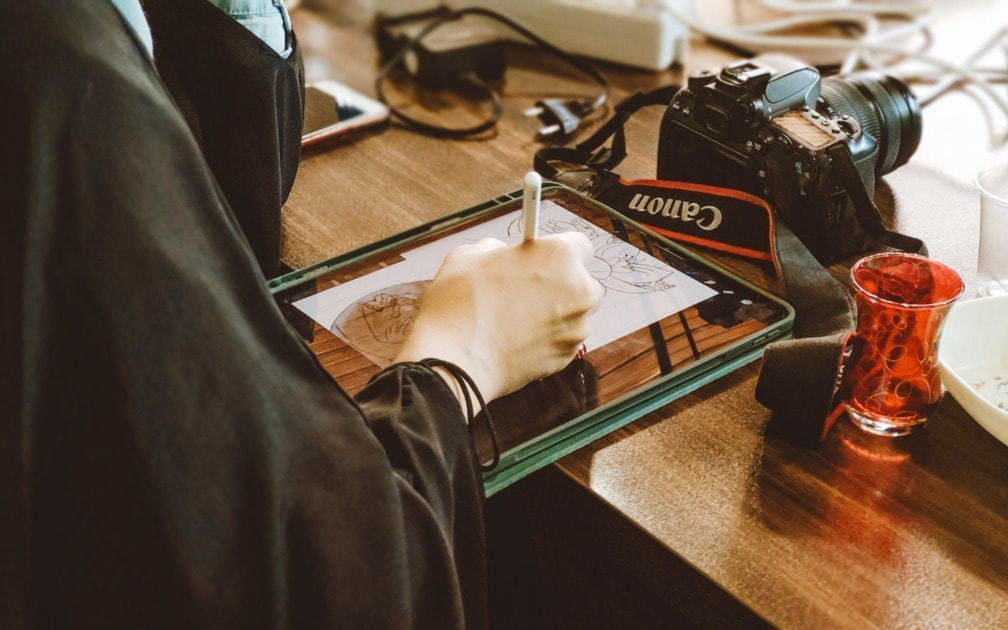
Source: Canva
2. Prepare your file for printing
Getting your digital file ready for printing is a crucial step for making professional-looking art prints.
If you’re using Printful, you can find the specific requirements for each product under the File guidelines tab, but here are the key things to keep in mind:
-
Print file resolution (DPI): To ensure your prints are crisp and clear, always aim for a resolution of at least 300 DPI at the final print size.
-
File size: Check the specific size requirements for your chosen product. For example, a poster will have different dimensions from a canvas.
-
Colour profiles (RGB vs CMYK): Understanding colour profiles is essential for accurate colour reproduction. Your screen displays colours in RGB (Red, Green, Blue), while printers use CMYK (Cyan, Magenta, Yellow, Black). Our printers are calibrated to work best with the sRGB colour profile (specifically sRGB IEC61966-2.1) for the most accurate results.
-
File format: At Printful, we accept JPEG and PNG files. We strongly recommend using PNG, as it’s a lossless format that won’t degrade the quality of your image.
Once your design is uploaded, always check the preview in our free Design Maker to make sure everything looks perfect.
Read more: How to prepare the perfect print file
3. Decide on the material
The material you choose is just as important as the artwork itself. Each option has a unique texture, weight, and finish that shapes the final look and feel of your print.
Posters
Custom posters are a versatile and popular choice for art prints. At Printful, we offer two distinct paper finishes – matte and lustre.
Matte paper has a smooth, non-reflective surface that’s perfect for fine art reproductions and illustrations. It gives prints a classic, gallery-quality feel and prevents glare, so the focus is purely on your art.
Lustre paper has a subtle sheen that sits between matte and gloss. This finish makes colours pop and is a fantastic choice for photographic prints or vibrant digital art, adding an extra layer of depth and richness.

Matte poster (left) and luster poster (right)
Canvas prints
Canvas prints offer a classic, textured appearance that emulates the look of an original painting. They add depth and a three-dimensional quality to artwork, making them a brilliant choice for reproductions of paintings or mixed-media pieces.
Canvas is also known for its durability and resistance to fading, ensuring your art remains vibrant for years to come.
Metal prints
For a modern, sleek look, metal prints are an incredible option. Your artwork is infused onto a sheet of aluminium, resulting in breathtaking clarity and vibrant colours that seem to glow.
Metal prints are waterproof, scratch-resistant, and lightweight, making them a durable choice for a contemporary home or gallery space.
Explore framing options
A great frame doesn't just protect your print – it elevates it. The right frame can significantly increase the perceived value of your artwork and turn a simple print into a show-stopping centrepiece.
Consider the style you're aiming for. A simple black or white frame can create a modern, minimalist look, while an oak-effect frame can add a touch of warmth and rustic charm.
At Printful, we offer framed posters in black, white, and oak, allowing you to offer your customers a ready-to-hang solution that perfectly complements their home decor.
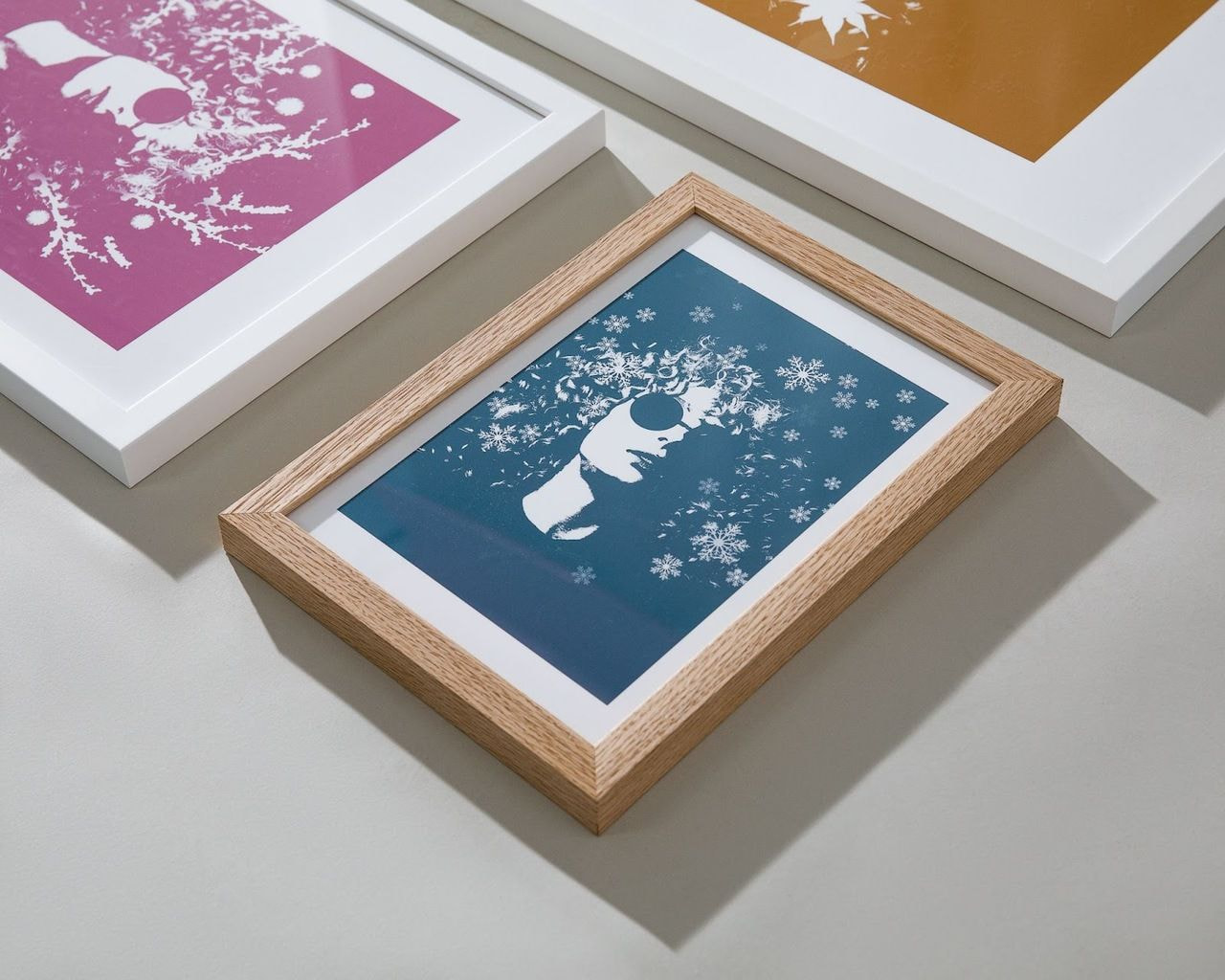
Source: Printful
4. Partner with a reliable printing company
As an artist, your reputation is everything. That’s why delivering high-quality prints on time is non-negotiable. The easiest and most efficient way to do this is to partner with a reliable print-on-demand (POD) company like Printful.
We use high-quality giclée printing to ensure crisp and accurate results, preserving every detail of your original piece.
With Print on Demand, there are no upfront costs or risks. You simply upload your designs, add them to products, and publish them to your online shop. When a customer places an order, we handle everything – printing, packaging, and shipping directly to them. You don't have to buy any stock or worry about posting parcels.
Best of all, Printful has a fulfilment centre right here in the UK. This means your orders are printed locally and shipped quickly to your British customers, usually via Royal Mail. There are no surprise customs fees or long international waits, just happy customers receiving your beautiful prints in a matter of days.
5. Get samples
Before you start selling, it’s helpful to see exactly what your customers will receive. Ordering samples is a vital quality control step. It’s your chance to check the colour accuracy, the sharpness of the details, and the quality of the paper or canvas for yourself.
At Printful, you can order product samples with a 20% discount. Having a physical copy of your print also gives you a fantastic opportunity to create unique marketing content.
You can style your art in your own home, take high-quality photos, and use them on your website and social media to show potential buyers how your prints look in real life.
Please note: Sample order size restrictions may apply for certain wall art products. Please check the product description in our Catalogue for details.
6. Sell your art online
Setting up an online shop has completely changed the game for artists, making it easier than ever to reach a global audience and build a sustainable career.
With a partner like Printful, the process is streamlined. We integrate seamlessly with major eCommerce platforms like Etsy, Shopify, and WooCommerce, so you can focus on creating while we handle the logistics.
For a deep dive into setting up your shop and marketing your work, check out our complete guide on how to sell art online.
A quick note on the business side
If you're planning to make prints of your art to sell in the UK, you'll need to register your business with HMRC. For most artists starting out, this means registering as a sole trader. It's a straightforward process you can do online.
As a sole trader, you're responsible for keeping records of your sales and expenses and filing a Self Assessment tax return each year.
You'll also need to be aware of Value Added Tax (VAT) and register for it once your annual turnover reaches the government's threshold (£90,000).
Legal disclaimer: This information does not constitute legal advice. We strongly recommend consulting with a tax professional to understand your obligations and stay compliant.


Time to share your art with the world
You've got the creative vision – and now you have the steps. Turn your passion into a business and share your art with the world by selling prints.
Start with a high-resolution file and make sure your DPI, size, and colour profile are spot on for flawless results. Choose materials that elevate your artwork, and always order samples to check the quality before selling.
Remember, every print you create is more than just a reproduction – it’s a piece of your artistic soul. Share your work with pride and start building your creative empire today with Printful.
FAQs
To make prints of your art, first digitise it with a high-resolution scanner or camera. Then, prepare the digital file for printing by ensuring it's 300 DPI and in the correct colour profile.
Finally, partner with a print-on-demand service like Printful. We'll print, pack, and ship your art directly to your customers as they order, so there's no need for you to hold any stock.
Use a high-resolution camera or smartphone and shoot in soft, indirect natural light (like near a window on a cloudy day). Lay your artwork flat and position the camera perfectly parallel to it to avoid distortion – we suggest using a tripod for stability.
Afterwards, edit the photo on a computer to match the colours of your original piece.
First, ensure your digital file has a resolution of at least 300 DPI. Then, save the file in the sRGB IEC61966-2.1 colour profile. Finally, export your file in a lossless format like PNG. Read more about preparing print files.

Printful is an on-demand printing and fulfillment service that helps businesses create and ship custom products.

