



Table of contents
Did you know the average Brit spends over seven hours online every single day? That’s a huge part of our lives spent browsing, connecting, and, you guessed it, shopping. It’s no surprise that UK eCommerce is booming, with sales expected to surpass £176B by 2029.
These numbers tell a powerful story: if you want to launch an online business, there’s never been a better time. The journey from idea to profitable shop takes commitment, but it becomes far more manageable when broken down into practical steps.
Read on as we walk you through how to start an online business in the UK, with a clear, eight-step plan for success.
How to start an online business in the UK in 8 steps
Let’s dive into the key actions that’ll turn your business idea into a thriving online store.

Step 1: Identify a niche and come up with a business idea
The heart of every successful business is a great idea that connects with the right audience. Your first task is to spot a gap in the market and define the people you want to serve.
Often, the strongest business ideas come from your own experience. What are you knowledgeable about? What do you genuinely enjoy? If you’re a keen cyclist, you may have noticed a lack of stylish, customisable jerseys. If you’re a fantastic baker, perhaps you could sell unique cake decorating kits. When you build on what you already understand, you establish an instant connection with your future customers.
A standout example is UK-based brand Lucy & Yak, born from a niche audience seeking colourful, comfortable, ethically made clothing – especially dungarees. By focusing on a clear mission and strong values, they built a loyal and highly engaged community.
If you’re still searching for that lightbulb moment, spend some time exploring what’s already out there. Check out trending products to sell or see what’s popular on sites like Not On the High Street.
Remember: you’re not just limited to physical items. You can also sell digital products like design templates, eBooks, or online courses.
Step 2: Conduct product and market research
Even the most brilliant idea needs proof of demand. Once you have a concept, your next step is to validate it by researching the market and understanding your competition. This helps you confirm there’s real interest in your product and identify how you can stand out.
Where to begin? Start with a simple Google search. Type in keywords related to your online business and see what pops up. Use SEO tools to find related search terms and understand what people search for. Remember to check social media platforms like Instagram and TikTok to see what’s buzzing in your niche.
For any business selling physical products, marketplaces are a goldmine of information. Depending on your products, this could be Amazon, Etsy, or eBay. Search for items similar to yours and analyse their pricing, designs, customer reviews, and photos.
For instance, if you plan to sell custom-printed jumpers, Etsy helps you see which styles perform well and where there’s room to offer something fresher, more distinctive, or higher quality.
Study how your competitors market their products, how they price them, and the language they use to talk to their customers. Learn from their wins and, just as importantly, their mistakes.
Step 3: Source products to sell online
You’ve got an idea, and you know there’s an audience for it. Now, how do you actually get the products? There are three main options:
-
Make them yourself
-
Buy products in bulk from a wholesaler
-
Work with a print-on-demand dropshipping partner
Each path has its own pros and cons.
Making products yourself suits unique, handcrafted items. You have complete control over quality and can market your goods as premium, artisanal products. The trade-off is the upfront investment in materials and equipment, along with the time required to produce, pack, and ship every order.
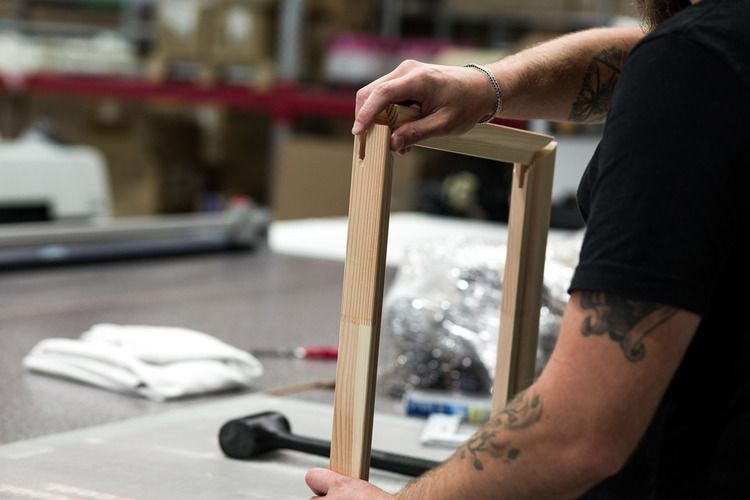
Source: Printful
Buying in bulk from a wholesaler lowers the cost per item, but requires a larger upfront spend and space to store inventory. You’re also responsible for managing fulfilment, returns, and shipping, which can quickly consume time and eat into margins.
This brings us to dropshipping, a game-changing model for new entrepreneurs. With dropshipping, you partner with a supplier who handles the storage, fulfilment, and shipping for you. You don’t have to buy any stock in advance; you only pay your partner when a customer places an order.
While profit margins per item are smaller, the start-up costs are dramatically lower. This frees up your time and money to focus on what truly grows your business: marketing, design, and customer service.
To stand out, consider partnering with a print-on-demand (POD) company like Printful. It works like dropshipping, but with a creative twist: you add your own custom designs to high-quality products. It’s the perfect way to make money online – selling unique items that nobody else has.
Why Printful is a perfect partner for UK businesses: With a UK fulfilment centre and shipping through reliable carriers like Royal Mail, orders are produced locally and delivered quickly. That means no long waits, no unexpected customs fees, and a smoother experience for British customers.
Step 4: Define your brand and image
Now it’s time to build your brand. A strong brand is more than just a logo; it’s the entire experience you offer your customers. It’s your story, your values, and your personality.
Think about what matters to your audience. Reflect that in your shop’s name, logo, colour scheme, and the messaging in your product descriptions and social media posts.
Take a look at Adanola, a UK-based activewear brand. Their branding is clean, modern, and aspirational. Everything from their website design to their Instagram feed communicates a message of effortless, everyday style. They’ve built a powerful brand identity that resonates deeply with their target customer.

The storefront of an activewear brand. Source: Adanola
Your brand is your promise to the customer. Make it clear, consistent, and ensure it reflects the experience you want shoppers to have each time they visit your store.
Step 5: Handle the legal bits and register your business
The legal step might seem daunting, but getting it right early builds trust and saves headaches later. In the UK, you must register your business correctly and understand your tax obligations before you start trading.
First, you need to choose a business structure. The two most common for new online businesses are:
-
Sole trader: This is the simplest way to get started. You are the business. Register for Self Assessment with HM Revenue and Customs (HMRC), then file a tax return each year. You’re personally responsible for any business debts.
-
Limited company (Ltd): This creates a separate legal entity. Your personal finances are protected if the business runs into debt. Register your company with Companies House, then file annual accounts and a Corporation Tax return with HMRC.
Next, you need to understand Value Added Tax (VAT). Register for VAT with HMRC if your VAT-taxable turnover is more than £90,000 in 12 months. Even if you’re below the threshold, you can register voluntarily.
Pro tip: Don’t forget data protection. You must comply with UK GDPR. The UK GDPR governs how you collect, store, and use customer data, and you must follow the Consumer Rights Act 2015 for refunds, returns, and repairs. Ensure your website includes a clear privacy policy, cookie policy, and terms of service.
Setting up your legal and financial foundations correctly gives your business credibility from day one. If you’re unsure about any requirement, it’s worth speaking to a qualified accountant or legal professional.
Step 6: Set up your online shop
It’s time to build your digital storefront! This is where your customers will browse and buy your amazing products. The easiest way to do this is with an eCommerce platform.
Platforms like Shopify, Wix, or Squarespace offer user-friendly templates and tools to create a professional-looking online shop without requiring any coding knowledge.
Better yet, Printful offers seamless integrations with over 20 top eCommerce platforms, syncing your shop so that orders are sent to us automatically for fulfilment. Once connected, every order flows through without manual work on your part.
Another option is selling on an online marketplace like Etsy or Amazon. The big advantage here is access to their huge existing customer base. The downside is that it’s harder to build your own distinct brand identity.
Many UK businesses do both – they build their own branded website and sell on a marketplace to maximise their reach. It’s more to manage, but it can lead to more sales.
Step 7: Develop a marketing strategy
You can have the best products, but if no one knows about them, you won’t make any sales. A solid marketing plan is essential.
There are many digital marketing channels to choose from: social media marketing, email, paid advertising (like Google or Facebook ads), and search engine optimisation (SEO). The key is to focus on the channels where your target audience spends their time.
Always tailor your message to your audience. A campaign for a local football club’s merchandise will have a very different tone and feel from one promoting elegant, personalised wedding stationery.
Don’t be afraid to experiment! Test different types of content, run small ad campaigns, and see what resonates with your audience. Over time, you’ll discover the tactics that drive the strongest results and can reinvest in what works. Track UK-specific sales periods too, like Bank Holidays and the Boxing Day sales, to plan special promotions.
Step 8: Launch your online business
You’ve done the hard work. Your products and shop are ready, and your marketing plan is in place. It’s time to go live!
Create a buzz around your launch. Offer a special introductory discount, run a giveaway on social media, or create a limited-edition product to generate excitement. When the model Kaia Gerber launched her online book club’s merch, she released a t-shirt limited to only 50 pieces. It sold out in hours, creating a massive sense of urgency and exclusivity.
Remember, launching is just the beginning. eCommerce is constantly changing. Keep listening to your customers, refining your products, and adapting your marketing. An online business is a journey, not a destination.
Congratulations – you are now the proud owner of a UK online business!
Read next: How to start an eCommerce business with no money: A complete guide
Frequently asked questions about starting an online business in the UK
At minimum, you must register your business structure (for example, as a sole trader or limited company) and register for the correct taxes with HMRC. You’re also required to comply with UK GDPR for data protection and the Consumer Rights Act 2015, which covers refunds, returns, and customer rights.
A print-on-demand dropshipping business is one of the most accessible options. With Printful, you avoid managing stock or shipping, and our UK fulfilment centre allows fast delivery with carriers like Royal Mail. This lowers your upfront investment and helps you launch quickly with custom products.
Starting a business with absolutely zero budget is difficult. However, with Print on Demand, you can get started for very little. You avoid the massive cost of buying stock. Your initial main costs will be for your eCommerce platform subscription or marketplace listing fees, as well as your business registration, which are relatively small.
Profitability depends on your niche, pricing, and marketing. Models with low overheads – like dropshipping and Print on Demand – are attractive because they minimise financial risk. Selling digital products can also be highly profitable, as there are no repeat production costs.
Ready, set, go – Get your UK online business idea started now
The incredible growth of online shopping offers a massive opportunity for UK entrepreneurs. If you have a passion and a great idea, there’s an audience waiting for what you have to offer.
Yes, it takes hard work and commitment. But partners like Printful make it easier than ever for anyone to start a business selling high-quality, custom products. By breaking the process down into these eight steps, launching your own online store is entirely within your reach.
So, what are you waiting for? Your business journey starts today.



Printful is an on-demand printing and fulfillment service that helps businesses create and ship custom products.

