



Table of contents
For more than a decade, Etsy has been the number one marketplace for unique gifts and original clothing in the UK. When British shoppers are looking for something personalised or handmade, it’s the first name that springs to mind.
From a new seller's point of view, Etsy offers huge potential with a vast customer base that continues to grow. If you're running a small business selling custom goods, you’ve probably thought about joining the ranks of Etsy sellers.
But with other eCommerce opportunities just a click away, is it worth selling on Etsy UK today? Let's see how Etsy stacks up against running your own online shop.
What to expect from Etsy in the UK
Despite its dominance in the creative goods scene, Etsy is still a niche eCommerce platform compared to giants like Amazon or Shopify. Regardless, it’s carved out a special place for itself, and its community of buyers remains incredibly loyal.
Like most online marketplaces, Etsy saw a massive surge during the pandemic, with its buyer count jumping to over 90 million globally. Those numbers have stayed strong, promising continued shopper interest for British sellers.
Top Etsy sellers can reach tens of thousands of sales every month. While most successful Etsy shops are often US-based, many UK creators have built hugely successful full-time businesses on the platform.
Source: Etsy
Recent data shows a nearly even split between genders among buyers, with a slight majority being women. This could mean that focusing on men's products, like custom wallets or unique prints for a home office, might help you find a less competitive niche. Just remember that many items for men, like matching jumpers for couples, are bought as gifts.
Age is another key factor. Almost half of Etsy's visitors are between 18 and 34. This means your best bet is to design products that appeal to young adults, professionals, and new parents.
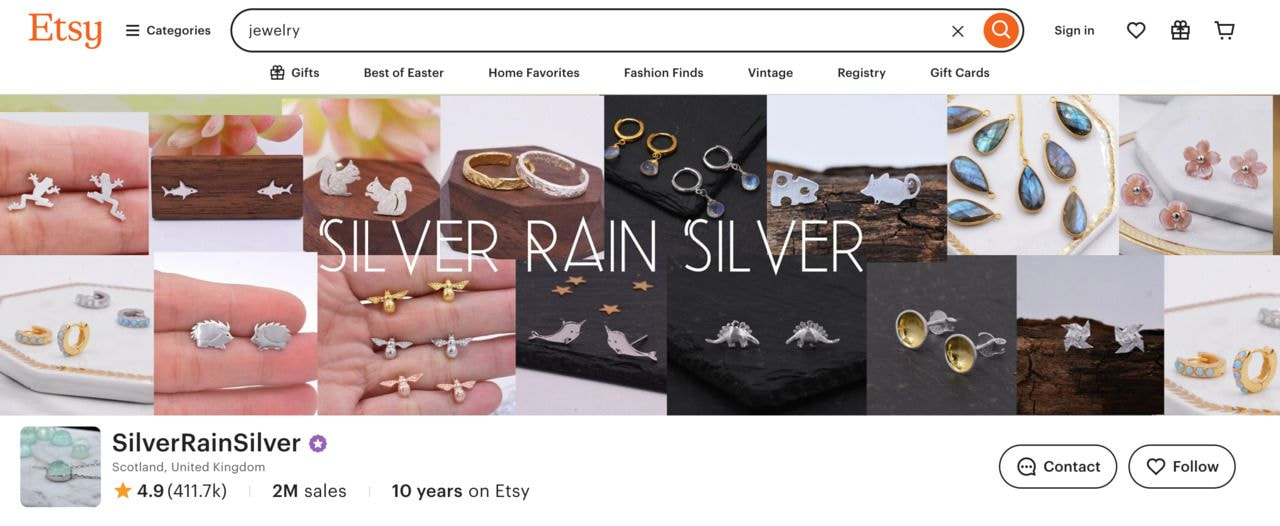
Jewellery, craft supplies, and wedding items are consistent top-selling categories and will likely stay popular and competitive. On top of that, homewares and wellness products have become more popular, appearing in top-rated listings and offering great potential for new sellers to explore.
Read more: Etsy statistics you need to know
Is selling on Etsy worth it in 2026?
Yes, selling on Etsy is worth it, especially if you use it as a starting point or combine it with other sales channels like your own website and social media. The marketplace gives you instant access to millions of active buyers, including many right here in the UK.
Etsy also allows you to sell handmade or custom-designed items, which protects small creators like you from having to compete directly with big high-street brands.
How hard is it to sell on Etsy?
Starting an Etsy shop is generally straightforward. The bigger question is deciding what to sell and at what price. You'll also need to understand the Etsy algorithm, fees, and SEO to run a successful shop.
So, while the setup is simple, long-term success takes effort.

Source: Etsy
A great way to simplify the process is to partner with a print-on-demand company. The Printful and Etsy integration makes it a breeze. You can focus on creating brilliant designs and marketing your products, while we handle printing, packing, and shipping for you.
Best of all, with fulfilment centres in the UK, orders reach your British customers in just a few days via carriers like Royal Mail, with no cross-border customs fees. It's a fantastic way to offer fast, local service.
Read more: Learn how Printful works.
Pros of selling on Etsy
Etsy has established itself as the world's largest online marketplace for unique, curated, handmade, and custom products. Here are some of the key benefits of Etsy compared to selling on your own website.
1. Access to a huge audience
The huge, built-in customer base is the main reason creators open an Etsy shop. With over 90 million active buyers worldwide, you have a massive potential market from day one.
When you start your own online store, you have to build that audience from scratch. Unless you already have a big social media following, attracting the same number of eyes as you would on Etsy takes a lot more time and money.
2. Quick and easy set-up
You can set up an Etsy shop in minutes. You don’t need any technical skills, and there are no monthly fees to have an account. You only get charged when you list an item for sale. The simple setup on Etsy also makes it a low-risk way to test new product ideas.
If you choose to build your own online shop, you’ll either need to hire a web designer or spend time building it yourself on a platform like Shopify or Squarespace. Plus, you’ll have to pay monthly hosting or subscription fees even if you don't make any sales.
3. Low starting costs
While it isn't free, the initial costs to sell on Etsy in the UK are very low. Listing fees are minimal, making it an accessible platform for anyone starting out as a sole trader or small limited company.
-
Listing fee: Around £0.16 per item (it's $0.20 USD, so the GBP amount fluctuates slightly).
-
Transaction fee: 6.5% of the total order amount (including postage).
-
Payment processing fee (UK): 4% + £0.20 for each transaction.
In comparison, you'd have to pay for the domain name, hosting, and design if you run your own website – all before you even list a product.
4. Multiple marketing opportunities
Designing great products is one thing – marketing them is another. Thankfully, Etsy offers several built-in marketing tools to help bring more customers to your shop.
You can run Etsy Ads, create discounts for UK Bank Holidays or Boxing Day sales, and integrate your shop with your social media accounts.
While it takes practice, it’s often much simpler than trying to master Google Ads or social media advertising for your own independent website.

Source: Etsy
5. Extensive learning resources
A brilliant, often-overlooked benefit is Etsy's huge library of resources. The Etsy Seller Handbook can teach you everything from optimising your listings for search to building a brand and content strategy.
Etsy also has a dedicated community forum, making it easy to connect with and learn from other UK sellers.
When you're running your own site, finding that sense of community and support can be much more difficult.
Cons of selling on Etsy
While Etsy can feel like a golden opportunity, it's not without its challenges. The low barrier to entry means you'll face some serious competition and have to navigate a complex fee structure.
1. Numerous seller fees and UK tax obligations
While the initial listing fee is low, the costs can add up. As your shop grows, you need to be aware of all the fees and your legal obligations in the UK.
Here's a breakdown of the main costs:
-
Listing fee: Around £0.16 per item.
-
Transaction fee: 6.5% of the total price.
-
Payment processing fee: 4% + £0.20 per transaction in the UK.
-
Offsite Ads fee: 12%-15% on sales generated from ads Etsy runs on places like Google and Facebook (this is mandatory if you make over £8,000 in a year).
-
Value Added Tax (VAT): If your business's annual turnover exceeds the £90,000 threshold, you must register for VAT with HMRC and charge it on your sales.
-
HMRC reporting: Under new digital platform rules, Etsy is now required to report seller data to HMRC for any UK seller who completes over 30 transactions or earns more than €2,000 (roughly £1,700) in a calendar year.
These financial responsibilities are crucial to understand when considering whether Etsy is worth it for your business.
2. Tough competition
While big brands generally don’t sell on Etsy, that doesn't mean there's no competition. There are approximately eight million active sellers on the platform. Some categories, like custom mugs and t-shirts, are incredibly saturated, making it hard to stand out.
This fierce competition often drives prices down, meaning you have to constantly innovate and run promotions to stay visible.
3. Influx of mass-produced items
What began as a marketplace purely for artisans is now home to many items that are not truly handmade. This influx of factory-produced goods can push prices down and make it harder for genuine local creators to compete.
Etsy's policy doesn't allow reselling (unless it's a vintage item or a craft supply), but it does allow you to work with a production partner.
This is where using a print-on-demand (POD) service like Printful is a perfect fit. You can design unique custom products and leave the production and shipping to us.
4. Limited brand control
When you run your own website, you control everything about its look and feel. On Etsy, your shop has to fit within the platform's template. You can change your banner and shop description, but you can't build a fully unique brand experience.
Since you’re essentially renting space on Etsy's platform, you’re also subject to their rules and any changes they decide to make, which could impact your business.
5. Unexpected suspensions
Etsy is generally clear about its policies, but many sellers in community forums have shared stories of their accounts being suspended suddenly and without a clear explanation.
Most often, this is due to issues with identity verification or copyright infringement in your designs. As long as you follow the rules, your business should be fine. However, the risk is still a good reason to consider having your own website as a backup sales channel.
Who is selling on Etsy best for?
People come to Etsy to find things they can't get on the high street. The typical customer prefers something unique and handmade over a mass-produced product.
This makes Etsy the ideal platform for designers, illustrators, and crafters across the UK who want to showcase their creativity to a global audience. It's also a fantastic choice for beginner sellers who feel overwhelmed by the idea of building their own website from scratch.
Etsy is a great starting point for building brand recognition and learning about your customers before scaling up. It can be a brilliant side hustle for earning extra income or an additional sales channel to complement a physical shop or market stall.
Conclusion: So, is selling on Etsy worth it?
Etsy offers huge opportunities for creators of custom-made products in the UK. But to truly answer the question "Is it worth selling on Etsy UK?" – you need to weigh the pros and cons for your specific situation.
If you’re happy to pay Etsy fees in exchange for access to its massive audience, and you're prepared for the competition and your tax obligations to HMRC, there’s no other platform quite like it.
However, if you want complete control over your brand and customer experience, your own website might be a better long-term goal. Of course, you don't have to choose one or the other. Having both an Etsy shop and your own website can be a powerful strategy for growing your creative business.



Printful is an on-demand printing and fulfillment service that helps businesses create and ship custom products.

