


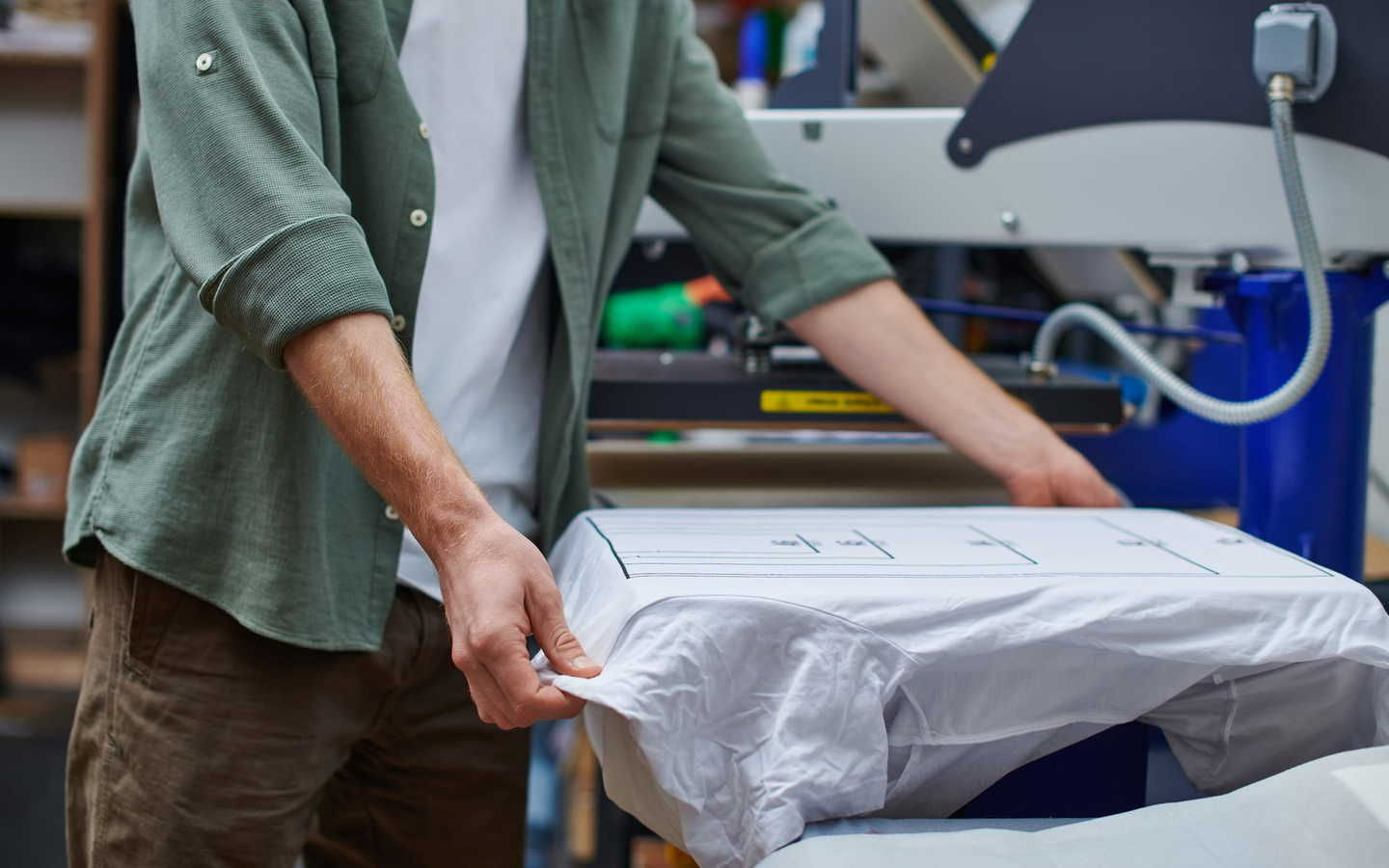
Table of contents
Choosing the right shirt printing method can make or break your custom t-shirt business. The best fit depends on your fabric, order volume, design complexity, quality expectations, and budget.
We’re walking through seven different types of shirt printing – covering fabric compatibility, design flexibility, and where each method shines. Whether you’re launching a t-shirt business from your living room or scaling to bulk orders, you’ll know exactly which shirt printing type fits your goals.
Let’s dive in.
Types of shirt printing (quick answer)
Shirt printing means applying designs, graphics, or text onto t-shirts and other apparel. The different types of t-shirt printing methods each use a distinct process and fit different fabrics, design styles, and order sizes.
The seven most popular types of t-shirt printing methods:
-
Screen printing
-
Direct-to-garment (DTG) printing
-
DTFlex printing
-
Heat transfer vinyl printing
-
Sublimation printing
-
Airbrushing
-
Plastisol transfers
Each method has its own strengths, ideal use cases, and material compatibility – so let’s break them down.
7 Most popular types of shirt printing
1. Screen printing
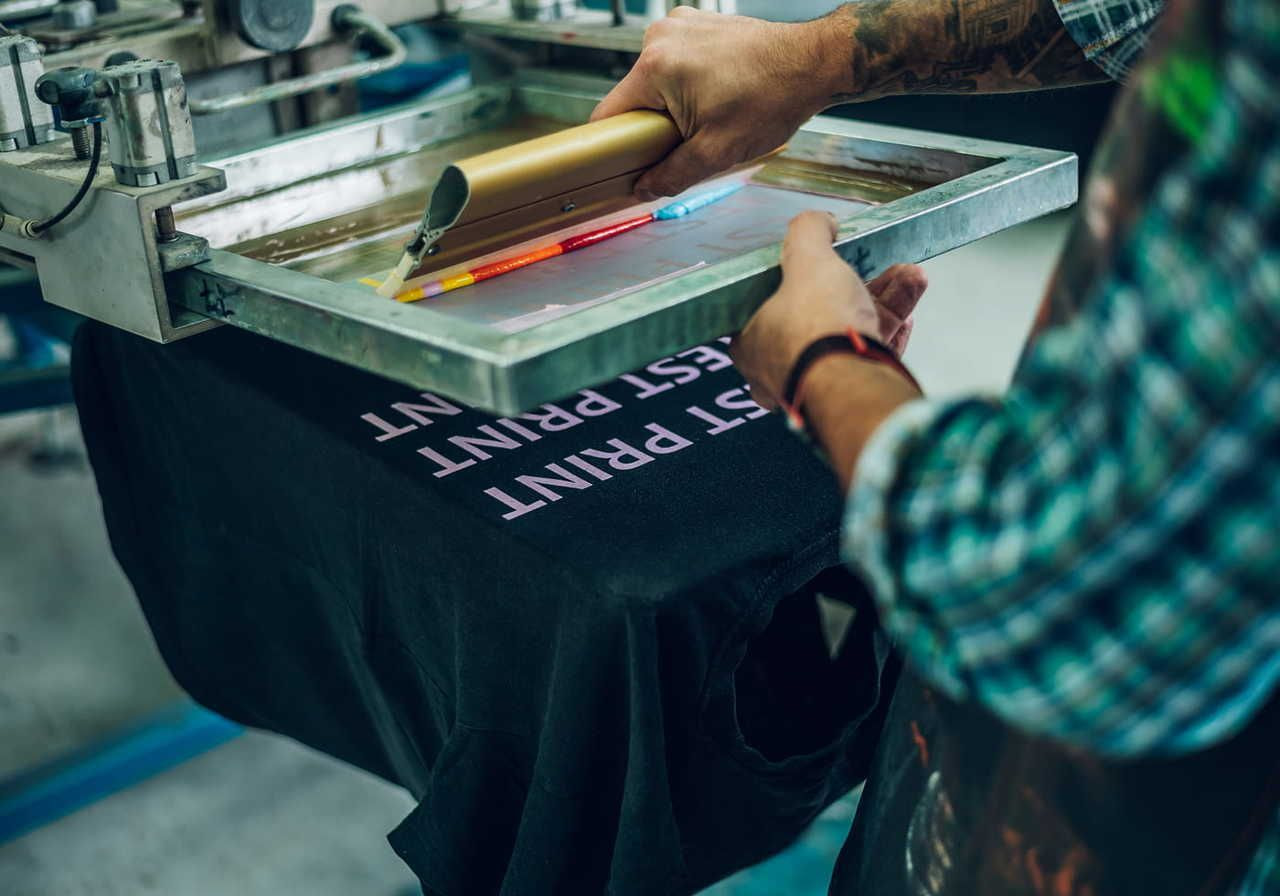
Screen printing (aka silkscreen printing) is one of the oldest and most reliable shirt printing techniques. It’s a cost-effective approach that consistently delivers vibrant and durable prints, which is why screen printing dominates the apparel industry for high-volume jobs.
Here’s how it works:
-
Create a stencil of your design and stretch a fine mesh screen over it
-
Push the screen printing inks – usually plastisol inks or water-based inks – through the holes of the stencil onto the fabric using a squeegee
-
Use a different screen for each ink color
-
Heat-cure the t-shirts to lock the ink in
There’s also a variation called discharge printing, which uses water-based inks containing a discharge agent that removes the fabric’s dye and replaces it with the ink color. Discharge printing produces a soft, vintage feel and works especially well on 100% cotton dark shirts.
The best materials for screen printing are natural fabrics like cotton, silk, and wool because these fibers absorb ink well and bond with it during curing. High-cotton-content blends work too, though results vary. Purely synthetic fabrics like polyester and spandex aren’t ideal – their smooth surfaces resist screen-printing ink absorption.
Screen printing is best for:
-
Bulk orders
-
Simple graphics with limited colors
-
Band merch, event t-shirts, promotional giveaways, and uniforms
Setup costs are high, but once your screens are ready, each additional unit costs very little – that’s what makes it so cost-effective at high volumes. Not the right fit for detailed artwork with photographic gradients or designs with lots of different colors.
|
Feature |
Pros |
Cons |
|
Durability and quality |
Vibrant colors and durable designs that survive countless washes |
Not great for intricate designs or photo-realistic work |
|
Cost efficiency |
Highly cost-effective for large bulk orders |
High setup cost for small runs (pricey for one-offs) |
|
Material and detail |
Works beautifully with cotton and other natural fabrics |
Limited color count – each color needs its own screen |
2. Direct-to-garment printing
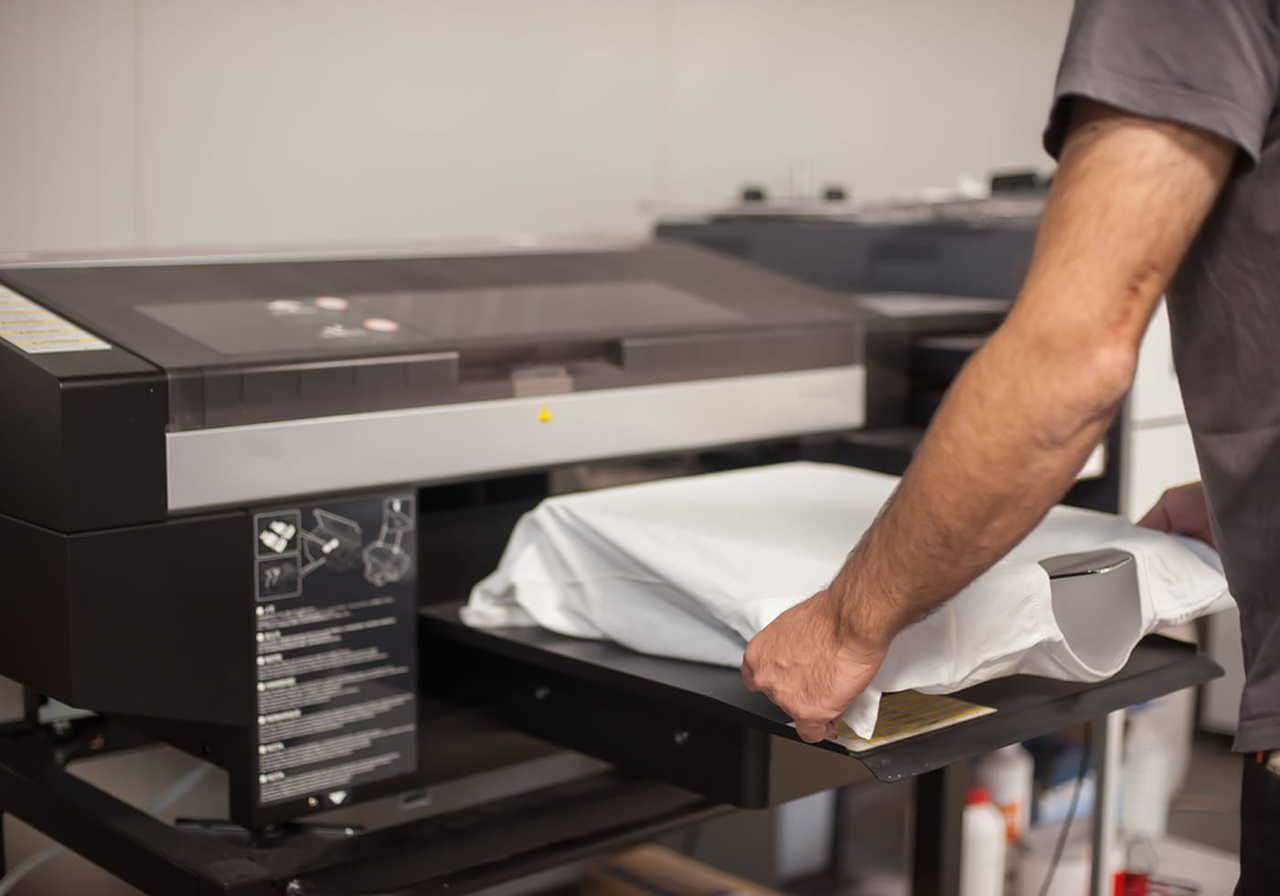
Direct-to-garment printing (DTG) is a relatively new but rapidly growing method that’s reshaping how merchants are printing t-shirts. If you’ve ever printed a document with an inkjet printer, you already understand the basic concept – DTG printing applies ink directly onto the garment, layer by layer, using specialized water-based inks.
Here’s how it works:
-
Pre-treat the garment with a spray that helps the ink adhere properly
-
Load the shirt onto a flat platen and feed it through a large-format inkjet printer, which applies the design with precision
-
For dark fabrics, add a white underbase layer first to keep colors true
-
Heat-cure the garment to permanently set the ink
The best materials for DTG printing are natural fabrics, especially 100% cotton. Cotton fibers absorb ink effectively, producing rich, accurate color. Cotton blends work but won’t deliver the same vibrancy. Purely synthetic fabrics are a poor fit – the ink doesn’t bond properly.
Because the printer reads a digital file and prints it directly onto the shirt, you get unlimited colors, photographic detail, and gradients – no setup screens or color separations.
DTG printing is best for:
-
On-demand printing and small-batch runs
-
One-off custom orders and print-on-demand stores
-
Detailed artwork, photographic prints, and designs with many colors or gradients
If you’re running a print-on-demand store or testing new designs, this is your go-to. DTG isn’t the most cost-effective choice for bulk orders – that’s where screen printing pulls ahead – but for variety and detail, it’s hard to beat.
|
Category |
Pros |
Cons |
|
Visual quality |
Unlimited colors and high-quality prints with photographic detail |
Best results are generally limited to cotton (synthetic blends can be tricky) |
|
Setup and speed |
Low setup cost – no screens required; fast prep |
Slower per-unit production speed compared to screen printing |
|
Order volume |
Ideal for on-demand printing and one-off custom orders |
Higher per-unit cost on bulk orders – price doesn’t scale down like screen printing |
Read more: DTG vs Screen Printing


3. DTFlex printing
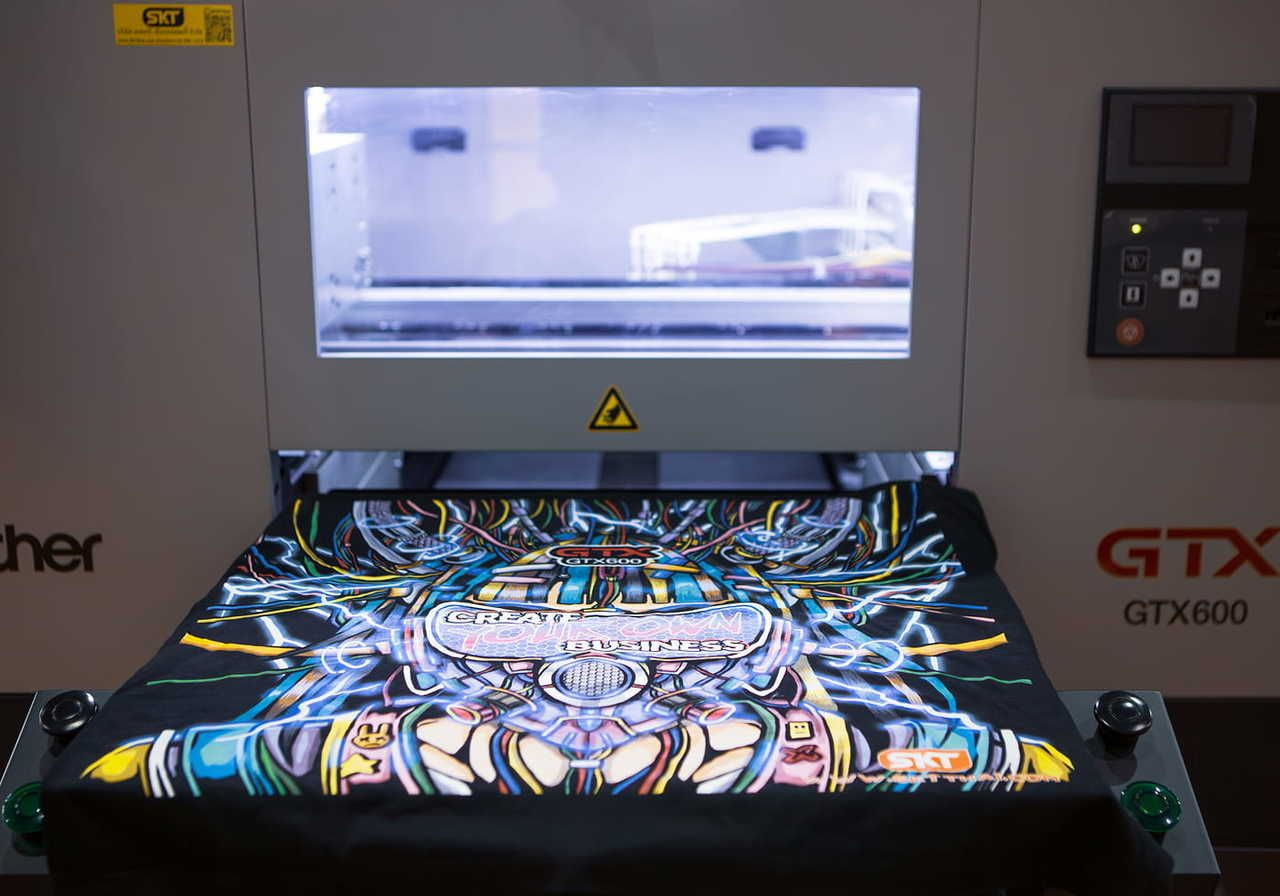
DTFlex is Printful’s premium take on direct-to-film (DTF) printing, available exclusively through our Catalog. DTFlex is built for sharper edges, richer color, and stronger wash durability than standard DTF printing.
Here’s how it works:
-
Print the design digitally onto a special film
-
Coat the film with adhesive powder
-
Pre-flatten and dehumidify the garment to lock in print quality
-
Heat-press the film onto the fabric, leaving the ink sitting on top for a slightly raised, ultra-vivid finish
DTFlex’s biggest strength is fabric flexibility – it works on cotton, polyester, fleece, nylon, and blended fabrics. Synthetic-heavy garments that resist DTG and screen printing? No problem.
DTFlex handles complex designs, gradients, and detailed artwork with unlimited colors. The prints have a slightly thicker, more textural feel than DTG and hold up well to washing. If you need high-quality prints with sharp lines and bold color, DTFlex delivers.
DTFlex is best for:
-
Colorful designs and detailed prints across a variety of fabrics
-
Single shirts and bulk orders alike
-
Merchants who want versatility without investing in equipment up front
One tee or a thousand – Printful’s DTFlex technology delivers consistent, vibrant, and durable results across nearly any fabric.
|
Feature |
Pros |
Cons |
|
Fabric versatility |
Works on nearly any fabric, including synthetic fabrics and polyester fabrics |
Black designs on black fabric don’t work well – the print reads as dark grey |
|
Print quality |
Vibrant prints with excellent wash durability |
Slightly thicker print feel may not suit every aesthetic |
|
Scalability |
Great for both small-scale and bulk orders |
Less breathable than DTG on large prints |
Read more:
4. Heat transfer vinyl printing
Heat transfer vinyl printing (HTV), also called iron-on, is a heat transfer printing method behind the bold names and numbers on sports jerseys. It uses colored vinyl sheets that are cut into shapes and pressed onto the garment using heat.
Here’s how it works:
-
Carve the design out of colored vinyl sheets using a cutting machine
-
“Weed” away the unwanted vinyl, leaving just the design on a backing sheet
-
Place the vinyl on the t-shirt and bond it to the fabric with a heat press
-
The adhesive on the back of the vinyl activates under heat, locking the design in place
The best materials for heat transfer vinyl are cotton, polyester, and poly-cotton blends – essentially any fabric that can handle the temperatures of a heat press. This makes vinyl printing well-suited for athletic wear.
Heat transfer vinyl excels at clean, bold graphics – names, numbers, logos, and simple shapes. You can layer different-colored vinyl sheets to add variety, but it’s not ideal for intricate designs or photographic work. Because vinyl is a solid material, large prints can feel stiff and reduce breathability.
Heat transfer vinyl is best for:
-
Sports jerseys, team apparel, and athletic wear
-
Personalized, made-to-order pieces with names or numbers
-
Small custom projects where each piece needs durable designs that won’t crack or peel
It’s not a method built for scaling – the cutting and weeding steps are slow – but for one-offs and short runs of bold, durable graphics, vinyl is hard to beat.
|
Feature |
Pros |
Cons |
|
Durability |
Highly durable, especially for athletic wear and garments that take a beating |
Can feel stiff or heavy if used for very large, solid prints |
|
Customization |
Great for names, numbers, and simple, high-contrast graphics |
Time-consuming for complex designs (requires “weeding” out the excess vinyl) |
|
Accessibility |
Easy entry point with affordable equipment (just a cutter and a heat press) |
Not suited for large-scale production due to the manual labor involved |
Read more: A step-by-step t-shirt design and logo placement guide
5. Sublimation printing
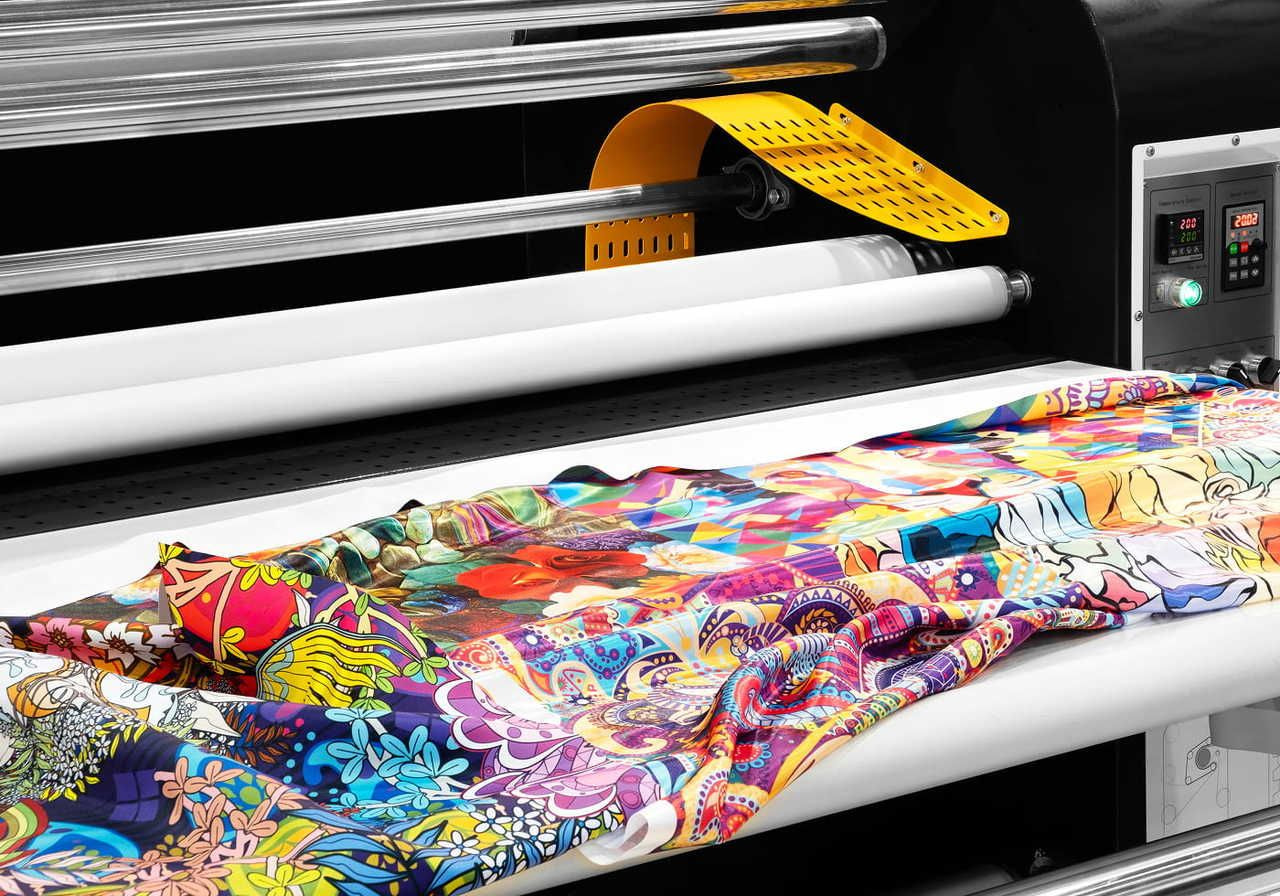
Sublimation printing – sometimes called dye sublimation or digital sublimation – is the technique behind those eye-catching all-over printing t-shirts where the design covers every inch, seam to seam. It’s a favorite for activewear, fashion-forward apparel, and any project where you want a print that feels like part of the fabric itself.
Here’s how it works:
-
Print the design onto transfer paper using sublimation inks
-
Place the transfer paper against the fabric and run it through a heat press
-
Under heat and pressure, the ink turns into gas and bonds directly with the fibers – dyeing the material rather than sitting on top of it
-
For all-over printing, print the fabric flat in panels before cutting and sewing it into the finished garment, so the design lines up properly across seams
The best materials for sublimation are synthetic fabrics – polyester is the gold standard. Cotton t-shirts are off the table; the dye-sublimation process needs polyester fibers to bond with. Light-colored polyester fabrics produce the most vibrant prints – dark fabrics don’t work because sublimation inks are translucent.
Sublimation produces incredibly vibrant prints with unlimited colors, making it perfect for photographic prints, abstract patterns, and full-coverage designs. Because the ink becomes part of the fabric, prints never crack, fade, or peel.
Sublimation is best for:
-
All-over printing on polyester apparel
-
Athletic wear, fashion tees, and lifestyle brands
-
On-demand printing and small-scale runs
Each piece requires its own transfer paper and assembly, so sublimation is better suited for made-to-order and small batches than massive bulk orders. But for vibrant, full-coverage prints that won’t crack or fade, nothing else comes close.
|
Feature |
Pros |
Cons |
|
Print quality |
All-over, edge-to-edge printing with absolutely no “hand feel” (the fabric stays soft) |
Only works on light-colored garments (the ink is transparent and won’t show on dark shirts) |
|
Longevity |
Vibrant prints that chemically bond with fibers – they won’t crack or fade |
Not viable for cotton; the process requires synthetic fibers to bond with the dye |
|
Material & labor |
Perfect for synthetic fabrics like polyester and performance blends |
More labor-intensive than other methods due to the precise heat and pressure required |
6. Airbrushing
Airbrushing is one of the oldest types of shirt printing and remains a favorite for one-of-a-kind, hand-crafted pieces. You’ve probably seen it at markets or live events – a single artist, a few stencils, and a t-shirt that’s done in minutes.
Here’s how it works:
-
Connect a small, handheld airbrush gun to a compressor
-
Spray paint through the gun onto the fabric, using stencils to create defined shapes and edges
-
Control color blending, shading, gradients, and detail by hand
-
Let the paint cure before wearing or washing
The right paint matters more than the fabric. Fabric paints with binding agents work best on natural fabrics like cotton. Acrylics handle both natural and synthetic surfaces. Always test first – some fabric and paint combinations don’t bond well.
The creative freedom is real – colors, gradients, textures, all done by hand. The trade-off is durability: airbrushed prints don’t hold up to washing as well as prints from other methods, and crisp lines aren’t really in the cards.
Airbrushing is best for:
-
Personalized, artistic, one-off pieces
-
Custom event shirts and art-inspired apparel
-
Live-event work where the show is part of the product
It’s not a scalable method, and it requires real artistic skill – airbrushing is typically the domain of individual artists rather than production shops. But for hand-crafted, expressive pieces, it’s still in a class of its own.
|
Feature |
Pros |
Cons |
|
Aesthetic |
Offers a unique, hand-crafted look that stands out from mass-produced items |
Hard to replicate – because it’s done by hand, each piece is one-of-a-kind |
|
Business model |
Great for live, on-the-spot custom work at events or festivals |
Not suited for fine detail or intricate designs that require mechanical precision |
|
Barriers to entry |
Low equipment investment; you mainly need brushes, airbrushes, and fabric-safe paints |
Lower durability than industrial methods; paint can stiffen or fade over time if not heat-set perfectly |
7. Plastisol transfers
Plastisol transfers are a hybrid technique that borrows from screen printing but adds an intermediate step. Instead of printing directly onto the shirt, you print the design onto transfer paper first using plastisol inks through a traditional screen. Then apply it to the garment with a heat press.
Here’s how it works:
-
Lay down the design on plastisol transfer paper using the screen-printing process: create screens and push ink through them
-
Store the transfer paper until you’re ready to apply it
-
Place the transfer on the t-shirt and bond it to the fabric with a heat press
-
The plastisol ink melts under heat and adheres permanently to the garment
The best materials for plastisol transfers are tougher fabrics – fleece and heavier cotton blends, which handle the heat and pressure without distortion. They’re a flexible option for garments that’ll see heavy use.
Plastisol transfers produce print quality comparable to traditional screen printing – bold, sharp, and durable. You can pull off detailed designs, and the prints hold up to repeated washing without significant fading or cracking.
Plastisol transfers are best for:
-
Live printing events, pop-up shops, and on-site custom work
-
Garments that need the look of screen printing without the on-site setup time
-
Made-to-order projects where transfers can be prepared in advance and applied as customers order
They’re less practical for large-scale operations because the multi-step process slows production. But for portable, on-demand screen-print quality, plastisol transfers are tough to beat.
|
Feature |
Pros |
Cons |
|
Print quality |
Screen-printing quality (vibrant and durable) with the flexibility of on-demand printing |
Requires plastisol-printed release paper and a heat press – more setup than printing directly |
|
Versatility |
Capable of detailed designs with sharp lines, bold colors, and gradients on almost any fabric |
More time-consuming than direct screen printing for very high-volume runs |
|
Practicality |
Great for live events and pop-ups – print the films in advance and press them on-site |
Not the most cost-effective for large bulk orders vs traditional screen printing |
Side-by-side comparison
Now that we’ve covered each method, here’s how they stack up at a glance.
|
Printing method |
High quality |
Detailed designs |
Unlimited colors |
Fabric compatibility |
Ideal volume |
Sustainable |
Primary best use |
|
Screen printing |
Yes |
No |
No |
Natural fabrics |
Bulk orders |
No |
High-volume merch |
|
DTG |
Yes |
Yes |
Yes |
100% cotton |
Small-scale |
Yes |
One-off photo prints |
|
DTFlex (DTF) |
Yes |
Yes |
Yes |
Various fabrics |
Any volume |
Yes |
Versatile, durable transfers |
|
HTV |
Yes |
No |
No |
Cotton/Poly blends |
Small-scale |
No |
Sports names and numbers |
|
Sublimation |
Yes |
Yes |
Yes |
Synthetic (Polyester) |
Small-scale |
Yes |
All-over athletic gear |
|
Airbrushing |
No |
No |
Yes |
Depends on paint |
Small-scale |
No |
Custom street art/events |
|
Plastisol transfers |
Yes |
Yes |
No |
Tougher fabrics |
Small-scale |
No |
Uniforms & heavy canvas |
Read more: 8 Best quality t-shirts for printing
Which shirt printing method should you choose?

With so many types of printing on shirts, picking the right t-shirt printing method comes down to matching the technique to your business model, customers, and designs. Here’s how the most common scenarios break down.
For Print on Demand
Running a print-on-demand store means no inventory and no setup costs eating into your margin. DTG printing and DTFlex printing are the two strongest options here. Direct-to-garment (DTG) printing handles cotton beautifully and lets you produce detailed prints on demand.
Meanwhile, DTFlex gives you the same flexibility across a wider range of fabrics. Both methods skip the upfront screens and tooling that make screen printing impractical for one-off orders.
For bulk orders
When volume is the priority, and your designs are relatively simple, screen printing is hard to beat. The screen printing process has high upfront setup costs but extremely low per-unit costs once your screens are ready. It’s the most cost-effective method for orders of 50, 100, or 1,000+ identical t-shirts.
It’s the standard for event merch, uniforms, and promotional apparel. For bulk orders that need more color variety or fabric flexibility, DTFlex is a strong modern alternative that scales without per-color setup fees.
For sportswear
Sports jerseys and athletic apparel have specific demands: they need to handle sweat, repeated washing, and high-stress movement. Heat transfer vinyl is the long-standing favorite for player names and numbers because it produces durable designs that won’t peel during a season of play.
For full-coverage athletic wear with vibrant colors and patterns, sublimation is the better call. The dye becomes part of the polyester fabric, so there’s no print to crack or fade, no matter how many times the jersey hits the wash.
For premium branding
If you’re building a premium brand, print quality and feel matter as much as the design itself. Discharge printing on heavyweight cotton creates a luxurious, vintage hand feel that high-end streetwear brands love.
DTG printing also delivers a soft, premium finish on quality cotton t-shirts. For elevated all-over prints, sublimation on polyester fabrics produces seamless, fashion-forward designs that feel like part of the garment.
Bring your ideas to life
Understanding the different types of t-shirt printing methods is the first step in starting a t-shirt business. Each shirt printing method has its sweet spot – screen printing for bulk orders, DTG for cotton on-demand printing, DTFlex for detailed designs across fabrics, and sublimation for all-over prints on synthetics.
The right t-shirt printing type lasts longer, looks better, and pays off in customer retention.
Want to sell custom t-shirts online without the headache of equipment, inventory, or logistics? That’s what a print-on-demand provider like Printful is for. Printful handles printing, packing, and shipping so you can focus on designing and marketing – no upfront capital required.
Read next: 56 T-shirt design ideas that are seriously next-level
FAQs
For bulk orders, screen printing is the cheapest method per unit once you’re past the setup phase – plastisol inks are affordable, and the process scales well. For small batches or single shirts, heat transfer vinyl printing or DTG printing is the most cost-effective option because there’s no per-color setup fee.
The two longevity champions are screen printing and sublimation printing. Screen printing is a t-shirt printing method where you create a stencil and push ink through a mesh screen. It produces vibrant and durable designs on natural fabrics that survive hundreds of washes.
Sublimation printing embeds the dye directly into synthetic fabrics – the print can’t crack or peel because there’s no ink layer to begin with. The right choice comes down to fabric: screen printing for cotton, sublimation printing for polyester.
It depends on your fabric and design. The DTFlex t-shirt printing technique is better for colorful designs on synthetic fabrics like polyester, nylon, and fleece. It handles intricate designs across blended fabrics with ease.
Direct-to-garment printing (DTG) is the stronger choice for cotton garments with simple graphics, text, and large designs where breathability matters. Both t-shirt printing techniques deliver high-quality prints. The right one for your t-shirt business depends on which fabric and design style you sell most.

Chan is a copywriter, creative writer, and technical writer with 15 years of experience creating everything from training courses to compelling marketing copy. A self-confessed research nerd, she loves digging deep into a subject and bringing it to life on the page. When she’s not writing, she’s exploring forest trails or walking the beach with her dog, or in the kitchen experimenting with homemade pickles and jams.

