


Table of contents
So, how much money can custom t-shirts make? Start with the real range: most sellers keep a net profit of $3 to $8 per shirt after core costs, while stronger brands often target 30-50% profit margins.
With Print on Demand (POD), launching an online custom t-shirt business is low-risk and fast to get started. Printful’s helped thousands of entrepreneurs in the t-shirt industry go from their first sale to full-time income.
How profitable is making t-shirts?
It’s very lucrative, with typical net profits ranging from $3 to $8 per shirt. For instance, premium eco-friendly shirts can net nearly $8 after costs.
Top sellers even report monthly revenues between $250K-$300K, proving that strategic pricing and smart fulfillment with Print on Demand leads to significant long-term financial success.
1. Production costs
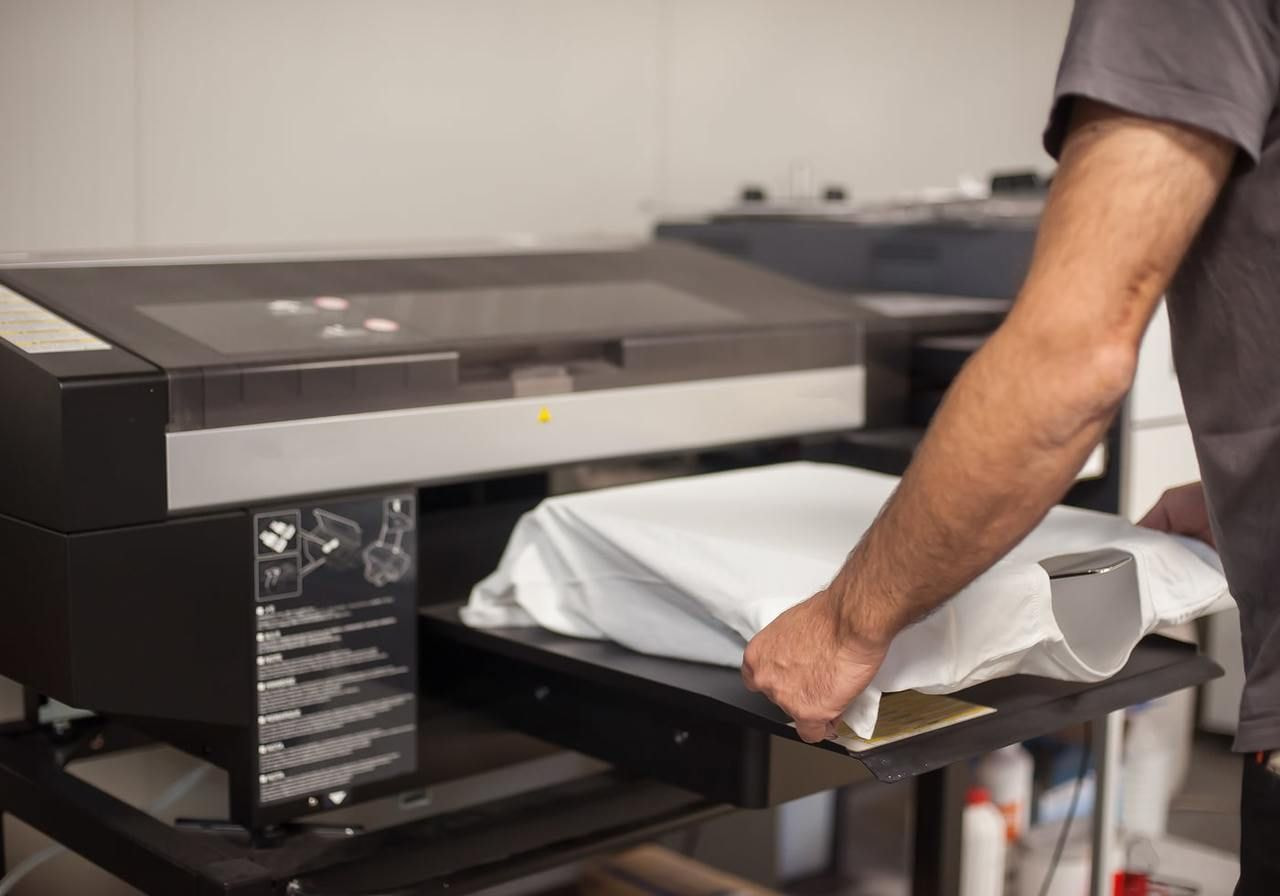
Production costs include the base price of a blank t-shirt plus your chosen t-shirt printing method. For most standard tees, Printful uses direct-to-garment (DTG) printing, which works well for detailed artwork, color-rich graphics, and small-batch product testing.
These t-shirt production costs vary by size, product, region, print placement, and other material costs built into the blank. On Printful in 2026, costs look like this for size M t-shirts:
-
Gildan 5000 – $9.25 (budget option)
-
Bella + Canvas 3001 – $11.69 (premium staple)
-
Stanley/Stella Organic – $21.10 (eco-friendly option)
-
Comfort Colors 1717 – $15.29 (popular pigment-dyed)
Pro tip: With Printful Growth, cut production costs by up to 33%, giving your custom t-shirt business more room for profit.
2. Shipping costs
Shipping costs directly affect your t-shirt pricing strategy. Domestic shipping expenses at Printful usually start at $4.75 for the shirts category in the US. International shipping has different price points, so factor in delivery zones when you price t-shirts.
Add shipping to your base cost or build it into your final price if you offer free shipping. This helps you cover costs without surprising buyers at checkout.
Check the full list of current shipping prices on the Printful Shipping page, which lists costs by product and region.
3. Transaction fees
Every platform takes a small cut from your sales, so include them in your total cost calculation. These platform fees can hit your sales price fast, especially if you sell through marketplaces, run ads, or offer free shipping.
-
Etsy: 6.5% transaction fee, ~3% processing fee, and $0.20 listing fee (Etsy fees guide)
-
Shopify: No third-party fees with Shopify Payments; 0.5-2% with outside providers (Shopify cost guide)
-
WooCommerce: Varies by payment gateway and region (free to install)
Expect around $2 per sale in t-shirt order transaction fees across most sales channels.
Cost-estimate table
Let’s look at the total cost estimate and net profit of four of the most popular blanks in the Printful Catalog. We’ll use US domestic shipping ($4.75 per shirt) and Etsy’s standard fees.
This table assumes you offer free shipping, meaning you pay the Printful shipping charge and include it in the retail price. If you charge customers separately for shipping, Etsy also applies transaction and payment processing fees to the shipping amount, increasing the costs involved.
-
6.5% transaction fee
-
3% + $0.25 payment processing fee
-
$0.20 listing fee per product
|
T-shirt |
Production |
Shipping (US) |
Etsy fees |
Total costs |
Retail price |
Net profit |
|
Gildan 5000 |
$9.25 |
$4.75 |
$2.35 |
$16.35 |
$20.00 |
$3.65 |
|
Bella + Canvas 3001 |
$11.69 |
$4.75 |
$2.83 |
$19.27 |
$25.00 |
$5.73 |
|
Comfort Colors 1717 |
$15.29 |
$4.75 |
$3.30 |
$23.34 |
$30.00 |
$6.66 |
|
Stanley/Stella Organic |
$21.10 |
$4.75 |
$3.30 |
$29.15 |
$30.00 |
$0.85 |
Lower production costs make it easier to set competitive prices, but often leave less room for profit.
Higher-cost blanks need premium pricing profit margins. At $30.00, the Stanley/Stella Organic custom shirt leaves only $0.85 in net profit – a margin too thin to build a business on. Price it at $38.00 instead, and net profit jumps to $8.09. Premium blanks aren’t the wrong choice; underpricing them is.
What’s the average profit margin in a t-shirt business?

Want to know if your t-shirt business is healthy? Look at your profit margins – they show how much money you actually keep after expenses.
Gross profit vs net profit
-
Gross profit – your revenue minus production costs, shipping expenses, and transaction fees
-
Gross profit margin – gross profit divided by revenue, shown as a percentage
-
Net profit – shows what your t-shirt business truly earns, subtracting marketing, website, and tax costs
Track variable costs per order, like blanks, printing, shipping, and fees. Then separate fixed costs, like subscriptions, design tools, and other overhead costs, so your operating expenses don’t quietly shrink net profit.
Tip: Use both metrics to understand your t-shirt profit margin. Gross profit helps track efficiency, while net profit reveals long-term sustainability.
Typical ranges
Most t-shirt businesses see average profit margins between 30% and 50%.
A budget shirt at a lower selling price may land near the bottom of that range. Premium shirts with higher perceived value can push you toward the top. A good profit margin depends on your product, sales channel, and the cost to acquire each buyer.
Here’s a quick example: sell 100 t-shirts at $25 each, and you’ve got $2,500 in revenue. If your total costs per shirt average $17, your gross profit is $800 – about a 32% t-shirt profit margin. To estimate how much profit you keep, calculate the margin after fulfillment, platform, and marketing – not just after production.
How to increase your custom t-shirt profit (step-by-step)

Making your first sale feels great. But turning a few sales into a successful t-shirt business takes a clear plan. Follow this six-step framework to boost your profit margins, strengthen your pricing strategy, and scale your custom t-shirt business sustainably.
1. Calculate costs and set margin goals
To know your true custom t-shirt cost, add up:
-
Production expenses – the base cost of your blank, plus printing or embroidery
-
Shipping costs – what you pay to deliver each order (domestic and international)
-
Transaction fees – marketplace or payment processing charges, often overlooked
-
Material costs – blank product price, fabric quality, garment weight, and construction
-
Overhead costs – subscriptions, design tools, samples, apps, and other recurring expenses
Use this t-shirt business profitability calculator or a simple spreadsheet to compare product cost, shipping, fees, marketing spend, and your desired margin before publishing a product. That spreadsheet becomes your custom t-shirt pricing strategy – grounded in real numbers, not guesswork.
Once you know your total costs, it’s time to set your profit margin goal. Here are a few ways to figure out where to land:
-
Study your market: Most t-shirt businesses aim for a margin between 30-50%. Lower margins help when you’re competing on price; higher profit margins work when your custom t-shirts offer stronger perceived value or brand recognition.
-
Consider your business model: If you rely on paid ads, you’ll need a higher margin to cover those marketing costs. Selling through word of mouth or organic SEO lets you keep margins slimmer.
-
Define your goals: Want to grow fast? Lower your margin to drive t-shirt sales volume. Building a premium brand? Price t-shirts higher, aim for fewer sales, but protect your profit margins.
Pro tip: Revisit your pricing strategy every quarter. Production costs and platform fees shift – your margin targets should too.
2. Test products on POD platforms like Printful
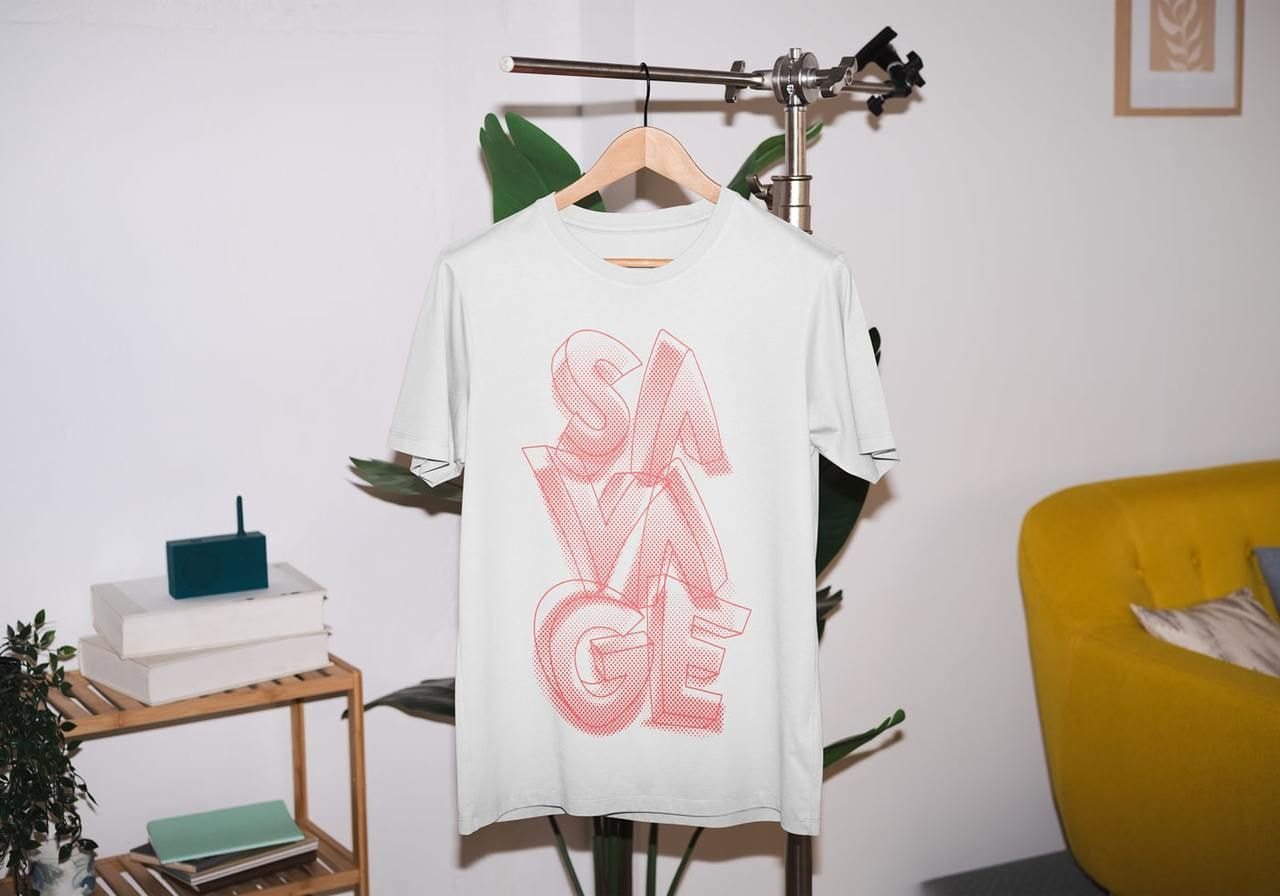
Many new sellers order in bulk too soon.
Instead, start by uploading a few t-shirt designs through Printful’s Design Maker or other t-shirt design software and testing them with your audience.
Starting a print-on-demand business is a perfect testing ground: you only pay for production after a customer orders. No upfront costs, storage, or risk of unsold inventory.
Think of Printful as a low-risk print-on-demand testing ground for custom apparel: publish small batches of designs, watch which niche markets respond, and compare clicks, add-to-carts, and orders before buying ads.
How to find profitable t-shirt niches? Start with buyer behavior, not personal taste:
-
Search Etsy for your niche phrase, then study best-selling listings, product titles, review language, and repeated design angles. Etsy says listing titles, descriptions, tags, categories, and attributes help match products with buyers, so use them to spot the words shoppers already use.
-
Check Google Trends for stable or rising demand. Compare phrases like “pickleball shirt,” “teacher shirt,” and “dog mom shirt” to see whether interest grows, fades, or spikes seasonally.
-
Use Pinterest Trends to find visual themes buyers save before they shop – color palettes, slogans, aesthetics, seasonal events, and gift ideas.
-
Open TikTok Creative Center to find current hashtags and content formats in your niche. Look for patterns in hooks, comments, and creator videos – not random viral noise.
-
Publish a small batch of 3-5 designs per niche, then compare clicks, add-to-carts, favorites, conversion rate, and orders.
-
Keep designs that get traffic and carts. Cut designs that get views but no action. Only buy ads after a product proves organic interest.
A niche is worth testing when people already search for it, save similar ideas, comment with buying intent, and respond to your first listings without paid traffic.
Try testing different t-shirt types:
-
Graphic-focused custom tees – bold artwork, logos, or slogans
-
Niche custom t-shirts – designs tied to hobbies, local pride, or subcultures
-
Personalized t-shirts – names, dates, or custom text that adds a personal touch
-
Eco-friendly options – organic cotton or recycled fabrics for eco-conscious buyers
You’ll learn which t-shirt printing styles connect with your target market, which sales channels drive results, and how much money your custom t-shirts make in real conditions.
3. Optimize pricing and marketing
Even the best t-shirt designs won’t sell if the price feels off. Your pricing strategy decides if you attract buyers and keep healthy profit margins.
Once you’ve calculated your custom t-shirt cost – production, shipping, and transaction fees – and set a profit margin goal, decide how to actually price your shirts.
There are four proven pricing strategies:
-
Cost-plus pricing: Take your total costs and add a percentage for profit. If one shirt costs $18 and you want a 40% margin, set the sales price at $30.
-
Value-based pricing: Price according to how much your target audience thinks your custom shirts are worth. This works best if your brand, niche, or t-shirt designs stand out and justify higher t-shirt prices. Strong print quality, clear mockups, and reliable delivery protect customer satisfaction and help your custom shirts support a premium price.
-
Competitor pricing: Look at what other t-shirt businesses in your niche charge. You can price slightly higher if your designs or quality justify it, or slightly lower if you’re trying to break in. That becomes your competitive edge when similar designs fill the same search results.
-
Psychological pricing: Minor tweaks can influence perception. Listing at $24.99 instead of $25.00, or offering bundle discounts, can make buyers feel like they’re getting more value. Test different price points before raising prices across your whole catalog. If a design converts consistently at a higher price point, it signals stronger perceived value and room for better margin.
Pricing alone won’t drive sales – people need to see your products. That’s where a good marketing strategy comes in.
How to market your shirts:
-
Search engine optimization (SEO): Use relevant keywords like ‘funny t-shirts’ or ‘eco-friendly custom t-shirts’ in your product titles, tags, and descriptions. This brings up your online store when buyers search for styles they want. SEO is slow to build, but it delivers consistent traffic without cutting into your net profit.
-
Social media marketing: Instagram, TikTok, and Pinterest are built for visuals. Short-form videos, customer photos, and behind-the-scenes content keep your target audience engaged.
-
Paid ads: Facebook and Google Ads let you reach a narrow target market – like dog lovers, gamers, or local communities. Start small with budget tests, track which ads bring a profitable t-shirt sales volume, and reinvest in the winners.
-
Influencers and user-generated content: Influencer marketing is powerful. Influencers already speak to your niche; a photo of them in your custom tees builds trust. Ask buyers to share photos of themselves in your shirts – user-generated marketing creates social proof and authentic marketing material.
-
Email marketing: If you run your own online store, email is one of the most reliable sales channels. Offer a small discount for signups, then follow up with new t-shirt designs, seasonal promotions, or bundles. Email builds relationships and keeps happy customers coming back, boosting long-term profit.
4. Track profit and performance by sales channel

Your numbers tell the truth about your online t-shirt store profits. Tracking shows whether your custom t-shirts make a real profit and which sales channels give you the best return.
Key numbers to monitor:
-
Net profit – your revenue minus production, shipping costs, and transaction fees. This shows what you really keep.
-
Sales volume – how many shirts you sell in a given period. High volume with low margins can still create strong profit.
-
Sales channels – compare results between Etsy, Amazon, or your own online store. Some channels drive steady buyers, others take bigger cuts.
If your net profit per shirt is low, review your pricing strategy, switch to a cheaper blank, or refocus on organic SEO instead of ads.
Track performance over time, not just per sale. If one channel sells more shirts but leaves a lower net profit, move the budget to the channel that’s actually working.
5. Scale your t-shirt business strategically

Growth without planning drains profit. Once you’ve proven that your custom t-shirt business is profitable, it’s time to scale.
-
Reinvest profits: Use earnings from early t-shirt sales to fund growth. Small, steady reinvestments in ads, influencer campaigns, or new t-shirt designs are safer than betting everything on one big campaign.
-
Expand product range: Add hoodies, sweatshirts, mugs, or bundles with your own custom t-shirts. Expanding increases your average order value and makes it easier to keep customers coming back.
-
Explore new printing methods: Adding embroidery or sublimation can attract new buyers who prefer the premium look and durability these methods bring, despite the price.
-
Grow into new sales channels: Don’t rely on a single platform. Pair your online store with marketplaces like Etsy or Amazon – but compare fees and margins carefully before committing.
-
Plan for scale: Scaling without a plan burns cash fast. Create a solid business plan to track upfront costs, marketing budgets, and delivery timelines. For scaling t-shirt business online, expand only after you know your best sellers, average profit per order, return rate, and repeat-purchase rate.
Growth requires careful planning because new designs, more sales channels, and higher ad spend can increase costs before revenue catches up.
Main takeaway: Scaling a custom t-shirt business takes control. Measure costs, refine pricing, and expand one proven product at a time. That’s how a few early sales turn into a sustainable, profitable t-shirt brand.
6. Avoid common mistakes when selling custom t-shirts
Most profit problems start before the first ad runs. Sellers pick broad niches, skip samples, underprice products, ignore fees, or scale designs that never proved demand.
The best print-on-demand business success tips are simple:
-
Test before scaling: Prove organic demand first – clicks, carts, and conversions without paid traffic
-
Order samples: You can’t sell a product you haven’t held. Catch print quality and sizing issues before customers do.
-
Track every fee: Platform fees, payment processing, and shipping costs add up fast. Run the real math before you publish.
-
Cut what doesn’t convert: If a design gets views but no sales after testing, move on. Keeping underperforming designs wastes time and mental bandwidth that’s better spent on what actually sells.
So be smarter and avoid these common mistakes – selling t-shirts doesn’t have to be hard. The best t-shirt business ideas match a specific buyer, a repeatable visual style, and a sales channel where that audience already shops.
A design for “everyone” usually dies fast. A design for marathon runners, dog groomers, or local sports fans? That gives your offer a real buyer and, in turn, better print-on-demand profits.
Real seller income stories
How much money can custom t-shirts make in practice? These brands prove you can turn custom t-shirt ideas into real income with the right niche, strong branding, and a smart print-on-demand setup.
-
Itsjusta6 – from merch drop to $300K a month: What started as a small racing YouTube channel is now a brand pulling in 6.5K monthly orders and about $300K in revenue, all thanks to on-demand fulfillment and zero inventory stress.
-
Match Kicks – scaling to seven figures: By outsourcing production to Printful, Match Kicks turned its sneaker-inspired apparel line into a 7-figure streetwear brand, cutting down on returns and production time.
-
UMAI Clothing – creativity meets $130K in monthly sales: Anime-inspired streetwear label UMAI hit $130K a month after refining its email and marketing strategy with Printful’s help, proving that data and design can work hand in hand.
-
Inspire Uplift – 15K orders a month and counting: From a viral Facebook page to a full-scale marketplace, Inspire Uplift now processes around 15K orders monthly using Printful to fulfill designs for more than 1.5M customers worldwide.
Read more: Printful success stories
Start your t-shirt store with Printful

Still asking how much money can you make selling t-shirts? The answer depends on your product, pricing, and repeat demand. Printful’s print-on-demand business model is perfect for launching an eCommerce t-shirt business without inventory, then tracking every cost from production to delivery.
Short t-shirt business startup guide with Printful:
-
Sign up with Printful – it’s free
-
Pick a product from our t-shirt Catalog
-
Create your own t-shirts with our Design Maker
-
Connect your store through Printful’s sales channel integrations
-
Publish products and start selling custom t-shirts and other custom apparel online
No minimums. No wasted stock. Just your designs, your prices, and your profit. That’s how to make money selling t-shirts – one design at a time, at your own pace.


FAQ
Most custom t-shirts sell for $20-30 online. Pricing depends on shirt quality, design style, and sales channel. Premium blanks or screen printing designs can push prices higher, especially in niche online retail markets. Is t-shirt printing business profitable? Yes – when the design, target audience, and selling price are right.
About 20% of new businesses fail in their second year, and around 50% within five years.
Many sellers give up early, often because they miscalculate production expenses or lack a clear pricing strategy. When you have your own business plan, realistic goals, and smart marketing, you can stay in the profitable half that succeeds.
Custom t-shirt prices at Printful start at $9.07 (Gildan 64000). In general, costs vary based on the blank, print method, and fulfillment details. Most custom t-shirts fall between $11 and $15 total, including production costs, shipping, and transaction fees.
Always add up your total costs before setting a selling price so you can achieve your desired profit margin.
Earnings range from a few hundred dollars a month to full-time income, depending on sales volume and profit margins. The more unique your t-shirt designs, the better your chances of earning consistent t-shirt business profit.
With a print-on-demand supplier like Printful, launch designs without upfront costs, test what sells, and scale into a full-time business. Thousands of creators have already turned their ideas into income this way, making selling custom t-shirts more accessible than ever.
That depends on your margin per shirt. At $3.65 net profit (Gildan 5000 at $20 on Etsy), you’d need to sell about 274 shirts to clear $1,000/month. At $8.09 net profit (Stanley/Stella at $38), you’d only need 124 shirts.
Higher margins mean fewer shirts to hit the same income target – which is why pricing strategy matters as much as volume in the t-shirt industry.
Yes – t-shirt printing is highly profitable because print-on-demand eliminates upfront inventory risks. With the global apparel market expanding, sellers can capture niche trends via social media marketing.
Most successful entrepreneurs maintain healthy 30% to 50% profit margins, turning creative designs into steady, scalable income streams with zero wasted stock.

Zane is a sharp-witted writer with a deep interest in eCommerce, branding, and creative entrepreneurship. With a knack for blending humor, insight, and no-nonsense advice, she crafts engaging content that helps merchants learn and businesses grow. When she’s not dissecting industry trends, she's exploring philosophy, music, and the perfect balance between solitude and connection.

