



Table of contents
Etsy alternatives are gaining traction among creators who want more freedom and fewer fees. While Etsy remains a go-to for launching an online store and selling unique designs, it’s not the only – or always the best – path to success.
Whether you’re into print-on-demand products or handmade goods, exploring other sites like Etsy can help you grow faster, increase profits, and gain more brand control.
For many Etsy sellers, the shift comes down to rising transaction fees, limited store customization, and concerns around marketplace trust. At the same time, shoppers are actively seeking Etsy alternatives that still prioritize genuine handmade items over mass-produced listings.
Why search for a different creative market instead of Etsy?
Etsy’s great for beginners, but growth needs freedom. Many Etsy sellers eventually look for alternatives that let them sell handmade items and other custom products without rising transaction fees, limited customization, or Etsy’s restrictive store design.
Fees
Etsy skips the monthly plan, but those transaction and listing fees can eat into your profit margins fast. The bigger your craft business, the more those costs sting.
Competition
Etsy’s crowded marketplace makes visibility a daily struggle. New Etsy sellers compete with millions of listings, and organic reach keeps shrinking.
Unless you pour money into ads or spend hours optimizing keywords, your products risk getting buried, prompting many to explore Etsy alternatives for sellers with fairer exposure and better selling tools.
Customization
Etsy’s design tools are minimal. You can’t change your store theme, layout, or experience. To build a real brand, you’ll need a website builder that gives full creative control.
Growth potential
Expanding to multiple platforms through multi-channel selling lets you reach new audiences and sell products online on your terms. With better selling tools, your profits and independence grow together.


10 Best alternatives to Etsy: Marketplaces and eCommerce platforms

Many of the top Etsy alternatives fall into two categories: online marketplaces and standalone eCommerce platforms. Marketplaces often come with lower upfront costs and built-in traffic, making them appealing to handmade sellers who want exposure without having to run their own website.
Online marketplaces
1. eBay
A giant, flexible marketplace where sellers can list their handmade crafts alongside vintage and niche goods. eBay charges insertion (listing fees) in some cases and a final value fee on each sale, which includes a percentage plus a per-order amount.
Key features:
-
Massive buyer reach and robust search
-
Promoted listings and coupons
-
Seller protections and integrated payments
-
Analytics and order management
Pricing:
-
Final value fee varies by category, typically ~2.5%-15.3% plus a per-order fee
-
Insertion listing fees may apply
-
eBay manages payments, so there are no separate third-party transaction fees
|
Pros |
Cons |
|
Huge traffic for marketplace sales |
Category-based seller transaction fees can add up |
|
Mature tools and protections |
Competes with non-handmade product sellers |
|
No separate payment processor setup |
Fees vary by region and category |
Best for: Sellers who want to scale fast and can price smartly around fees.
2. Amazon Handmade

Amazon Handmade is a curated artisan marketplace with application approval. You get Amazon’s massive customer base, Fulfillment by Amazon (FBA) options, and built-in tools to manage inventory in a space similar to Etsy, but with Amazon’s trust and logistics.
Key features:
-
Brand pages, A+ content style options
-
FBA/Prime eligibility, strong payment processing
-
Bulk listing, inventory, and order management
-
“Storefront” feel within a curated marketplace
-
Unlimited products under the Professional plan
Pricing:
-
Requires a Professional plan, typically $39.99/month, but Amazon waives the ongoing monthly fee for approved Handmade sellers after the first month
-
Sellers pay a referral fee – usually around 15% – on most categories
|
Pros |
Cons |
|
Enormous trust and reach from Amazon Handmade |
Application review and category rules |
|
Prime logistics, strong conversions |
Referral fees ~15% impact margins |
|
Robust tools to manage inventory |
Competitive, high standards for product quality |
Best for: Approved artisans targeting scale and Prime shoppers.
3. Bonanza
A general marketplace favored by small business owners who want a lighter setup and more flexibility than Etsy. Emphasis on simplicity, custom booth branding, and importer tools from other platforms.
Key features:
-
Easy product import from eBay, Amazon, and Shopify
-
Custom booth branding and buyer messaging
-
Advertising tiers to boost visibility
-
Basic analytics and shipping label support
Pricing:
-
One-time $14.99 setup fee, free plan available afterward
-
Paid memberships starting at $25/month
-
Final Value Fee minimum is 11% plus a $0.25 transaction fee for non-members
-
Larger orders over $4,000 charge 1.5% on the portion above that threshold
-
Advertising programs can increase overall payment processing costs, depending on usage
|
Pros |
Cons |
|
Simple setup and importer tools |
Final value fees (11%) can reduce profit margins |
|
Flexible booth branding aids customer relationships |
Lower overall traffic than top marketplaces |
|
Referral-link ad credits offset fees |
Added $0.25 fee for non-members |
Best for: Sellers who want a simple online marketplace with light customization and easy imports across multiple platforms.
4. Goimagine
A handmade-only, cause-driven online marketplace and one of the most popular Etsy alternatives. Strong community vibe for handmade sellers, artists, and graphic designers, with options to run a standalone eCommerce store via Mosaic.
Key features:
-
Handmade-focused audience and policies
-
Mosaic sites for standalone storefronts, unlike Etsy
-
Basic marketing, analytics, and product management
-
Built-in support for multiple sales channels
Pricing:
-
Community – free, up to 12 products, and a 6.5% transaction fee
-
Thrive – $5/month for 200 product listings and 5% transaction fee
-
Mosaic – $15/month for 1,000 listings, 2% marketplace fee; includes a branded website
|
Pros |
Cons |
|
Mission-driven buyer base for handmade |
Smaller audience than mega-markets |
|
Low 2% marketplace fee, 0% via Mosaic |
A monthly membership adds a fixed cost |
|
Mosaic gives a your-own-site feel inside the platform |
Fewer third-party integrations than the bigger players |
Best for: Handmade sellers who want a great Etsy alternative focused on authenticity, lower fees, and the option to grow into their own online store.
eCommerce platforms
5. Shopify
Shopify is the heavyweight option among the best Etsy alternatives if you want your own online store, a custom domain, and full control over branding, checkout, and scaling. It supports physical goods, subscriptions, and selling digital products.
Key features:
-
Robust storefront setup, POS options, automation, and international tools
-
AI-powered store theme design, workflow automation, and B2B capabilities
-
Multi-platform selling across social and physical stores
-
Fulfillment, logistics, and inventory management
Pricing:
-
First three months with any paid plan just $1/month
-
Paid plans start at $29/month, plus card rates depending on the plan
|
Pros |
Cons |
|
Highly scalable and user-friendly |
Some reliance on paid apps |
|
Massive app ecosystem and integrations |
Extra fees if not using Shopify Payments |
|
Excellent analytics and automation |
Can feel complex for beginners |
|
Supports both physical and digital products |
Monthly subscription required |
Best for: Sellers who want to sell online professionally and manage handmade goods and print-on-demand products at scale.
6. Squarespace

A great Etsy alternative for creatives who want their own site instead of a crowded marketplace. Etsy sellers often migrate here for its refined templates, brand-first experience, and built-in marketing tools without worrying about listing fees.
Key features:
-
Beautiful templates and intuitive drag-and-drop design
-
Built-in eCommerce for physical, digital, or service-based products
-
Marketing and SEO automation for visibility
-
Analytics and scheduling tools for better store management
Pricing:
-
eCommerce-ready plans start at around $17/month (annual billing) and 3% transaction fees
-
Upgraded plans unlock advanced analytics, subscriptions, 0% transaction fees, and merchandising tools
|
Pros |
Cons |
|
Stunning visual templates |
Limited third-party integrations |
|
No separate listing fees |
Smaller app ecosystem than Shopify |
|
Easy setup for non-technical users |
Fewer advanced eCommerce features |
|
Excellent for branding-focused sellers |
Less customization flexibility |
Best for: Creators who sell handmade items and want a polished, all-in-one storefront that feels like a premium gallery.
7. Wix
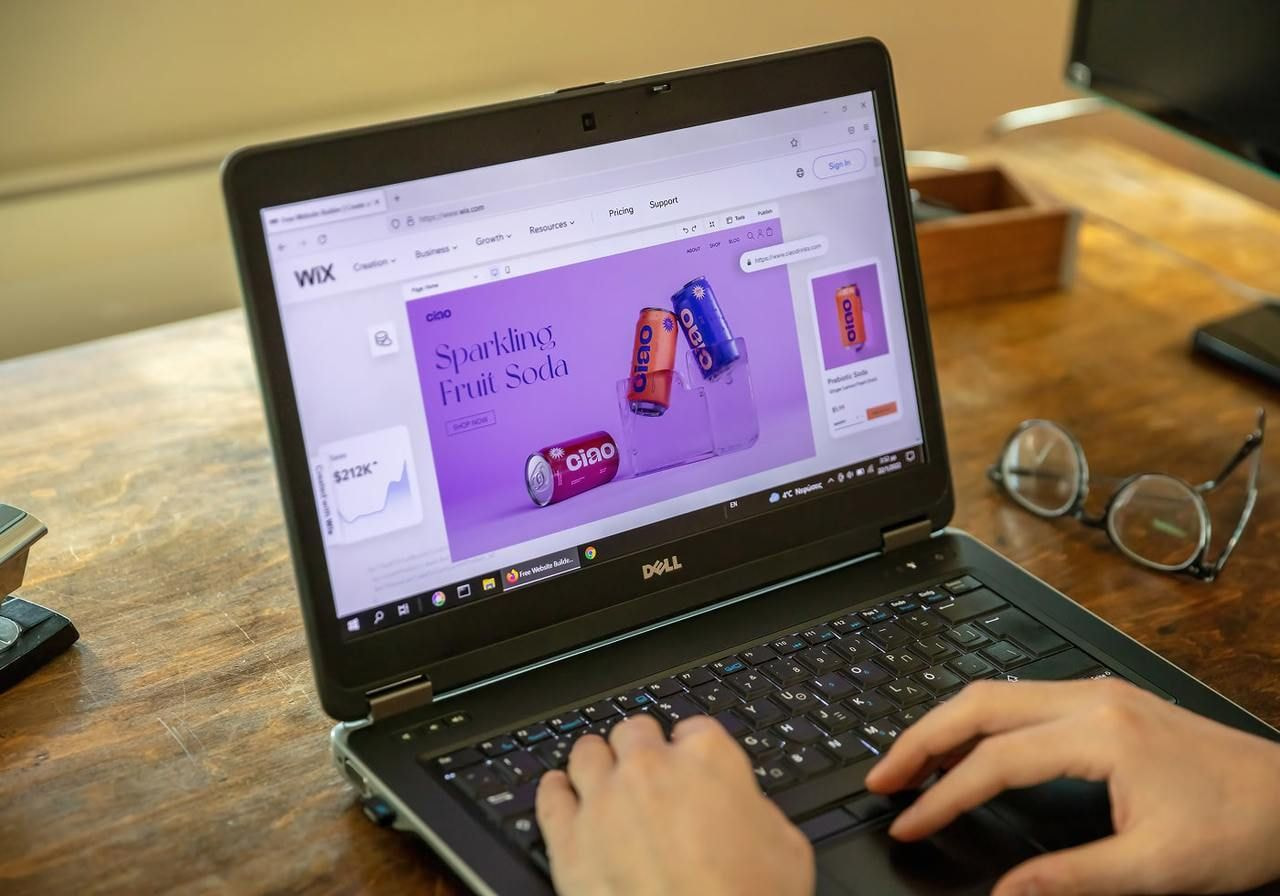
Wix is a flexible website builder offering full control over your own store. This excellent Etsy alternative supports both physical and digital goods, offering design freedom and strong management tools to nurture customer relationships.
Key features:
-
2,000+ customizable templates and an intuitive drag-and-drop editor
-
Built-in CRM for personalized communication
-
Integrated marketing, analytics, and automation
-
Global shipping costs, tax, and currency tools
Pricing:
-
Plans with eCommerce features start at $29/month
-
Fixed payment processing fees via your chosen gateway
|
Pros |
Cons |
|
Easy to build and customize |
Add-ons can get expensive |
|
Great for design-focused brands |
Template switching is limited |
|
Solid SEO and marketing tools |
Performance varies with heavy media |
|
Strong built-in CRM |
Costs rise with added features |
Best for: Sellers who want an easy-to-manage website with flexible design control and built-in tools for running an online store.
8. Big Cartel

Big Cartel is the right Etsy alternative for independent creators and artists looking for simplicity. With a free plan allowing up to five products, you can start selling quickly, especially if your niche is small-batch or artistic merchandise like t-shirts and prints.
Key features:
-
Free and low-cost paid tiers for small catalogs
-
Simple dashboard for discounts, taxes, and product edits
-
Built-in themes and customizable storefronts
-
Marketing tools for email and seasonal promotions
Pricing:
-
Free Gold plan includes up to 5 products
-
Paid plans start at $15/month and unlock larger catalogs with custom domains and tracking options
-
Lower fees than most major competitors
|
Pros |
Cons |
|
Free forever plan |
Limited scalability for growing stores |
|
Minimal setup and clean interface |
Few third-party integrations |
|
Great for artists and small brands |
Limited analytics |
|
Affordable pricing structure |
Limited design flexibility compared to larger platforms |
Best for: Artists testing the market or those who want to boost sales fast without major investment or effort.
9. WooCommerce
WooCommerce turns WordPress into a full online store, perfect for digital creators seeking alternatives to selling on Etsy while keeping customer data and full ownership of their platform.
Key features:
-
Open-source flexibility with thousands of plugins
-
Strong SEO and content marketing capabilities
-
Full ownership of site, brand, and analytics
-
Accepts all major gateways and custom domain control
Pricing:
-
Core plugin is free, but hosting, themes, and plugins cost extra
-
Transaction fees depend on your chosen payment processor
|
Pros |
Cons |
|
100% ownership of data and design |
Requires technical maintenance |
|
Huge plugin and theme marketplace |
Plugin compatibility can break |
|
Fit for advanced SEO |
Hosting costs vary |
|
Free to start with flexible scalability |
Steeper learning curve for beginners |
Best for: Sellers who value flexibility, independence, and full data ownership while scaling beyond third-party marketplaces.
10. Ecwid

Ecwid is a simple Etsy alternative for sellers who want to add eCommerce functionality to an existing website or social profile. It supports digital downloads and products while offering clean, code-free integration.
Key features:
-
Add a store to any website, blog, or social media platform
-
Real-time sync with Facebook, Instagram, and TikTok
-
Multilingual support and mobile-ready storefront
-
No platform fees – you only pay processor rates
Pricing:
-
Starts at $5/month for up to 10 products
-
Tiered plans unlock advanced features like abandoned cart recovery and custom fields
|
Pros |
Cons |
|
Quick setup on any site |
Limited advanced store design |
|
Strong multi-channel reach |
Dependent on the existing website host |
|
Supports physical and digital products |
Fewer third-party integrations |
|
Transparent fee structure |
High-end features in upper tiers only |
Best for: Sellers who already have a blog or social media following and want to launch online sales fast with easy digital downloads integration.
How to choose the best Etsy alternative?

Finding the right platform to sell online is not just about popularity. You need to think about control, profit, and fit. The best alternatives to Etsy give you flexibility over your online store, access to your customer data, and tools to grow without limits.
Whether you’re comparing marketplaces, building a branded site, or browsing other apps like Etsy, here’s what to weigh before moving.
1. Look beyond listing fees
Etsy charges listing fees, but you also need to check for transaction costs, processing rates, and hidden add-ons that can eat into profits. Some platforms charge monthly subscriptions, while others take a percentage of every sale.
2. Consider how much store customization you want
Choose a platform that matches your technical comfort. Some are plug-and-play, others require custom setup, coding, or plugin maintenance.
3. Digital products or physical – Make your store yours
A good alternative should allow custom branding – your logo, your tone, your design. The more freedom you have over layout and presentation, the stronger your brand identity.
4. Think about tools and integrations
For creators using Printful or similar POD providers, make sure your chosen platform integrates seamlessly. Automatic syncing of products, orders, and fulfillment saves hours of manual work.
5. Weigh reach vs independence
Some marketplaces like Amazon Handmade or eBay give you instant exposure, while standalone stores depend on SEO, Google Shopping, and social traffic. Decide which is more important to you: built-in reach or full independence.
6. Find the best support and policies
Check refund, return, and support terms. A platform with responsive service and transparent seller protection can make or break your experience. Good policies and support will reduce returns and increase customer satisfaction.
7. Look for long-term growth in selling handmade goods or POD
Many Etsy alternatives for sellers offer access to full analytics and buyer insights. Owning your customer data helps you build loyalty, launch email campaigns, and maintain relationships beyond the first sale.
In short, the best platform is the one that lets you scale your creativity and maintain control, without surrendering your profits or brand identity.
The best Etsy alternatives for sellers: Final thoughts
While Etsy remains a popular choice for creators, there are plenty of Etsy alternatives that offer more freedom, better margins, and easier integration with your print-on-demand business. Think about your goals, budget, and branding control, and whether you want your own website.
With Printful, you can connect your store to any of these platforms in just a few clicks and start building your brand today.
Read next:
FAQ about Etsy alternatives
Among the top Etsy alternatives for sellers, Amazon Handmade stands out as the biggest rival. It offers huge visibility thanks to Amazon’s global customer base, built-in trust, and advanced fulfillment tools.
Other strong contenders include eBay for marketplace reach and Shopify for sellers who prefer running an independent online store.
If you want websites like Etsy that cater to creative entrepreneurs, consider Goimagine, Bonanza, or Squarespace for brand-focused control. For a broader reach, Amazon Handmade and eBay deliver massive buyer traffic.
If you’d rather own your platform entirely, Shopify and WooCommerce let you create a fully customized online store.
Etsy usually has lower upfront costs, but ongoing fees apply to every sale. eCommerce platforms like Shopify charge a monthly subscription, but you keep more profit per order as your volume grows.
Long-term sellers often find Shopify more cost-effective once steady sales start rolling in.
Buyers can spot genuine handmade items by checking seller profiles, product descriptions, and production details. Platforms that focus on handmade goods often require sellers to explain how items are made, show behind-the-scenes photos, or follow strict handmade policies.
Reading reviews and looking for clear creator information also helps confirm authenticity.

Zane is a sharp-witted writer with a deep interest in eCommerce, branding, and creative entrepreneurship. With a knack for blending humor, insight, and no-nonsense advice, she crafts engaging content that helps merchants learn and businesses grow. When she’s not dissecting industry trends, she's exploring philosophy, music, and the perfect balance between solitude and connection.

