



Table of contents
If you're wondering how to sell t-shirts on Etsy and turn your creativity into real income, you've come to the right place.
Whether you're brand new to eCommerce or trying to bring in more sales from an existing online store, this guide covers everything you need – from choosing a profitable niche and picking the right shirts to designing shirts, building your Etsy storefront, and attracting customers consistently.
Ready to learn how to start a t-shirt business on Etsy? Let's get into it.
How to sell t-shirts on Etsy without inventory


The easiest way to sell t-shirts on Etsy is through a print-on-demand (POD) service like Printful. You create designs, list your custom t-shirts on Etsy, and when a customer places an order, Printful prints and ships the shirt directly to them. No upfront costs, no inventory to manage, no shipping to handle yourself.
This model makes it possible to start selling shirts on Etsy with minimal risk and expand your selection as your t-shirt store gains traction.
Why sell shirts on Etsy?
Etsy is home to 86.5 million active buyers specifically looking for unique, custom, and personalized products, making it one of the best platforms for POD sellers to build a customer base. Setting up an Etsy account takes only a few minutes, and there's no shortage of free resources to help you run a profitable business.
Connecting your Etsy shop to a print-on-demand service like Printful means you can turn your t-shirt designs into sellable custom products without worrying about production or fulfillment. And with Etsy's built-in tools – customizable shop layouts, detailed listing fields, and marketing options – you can shape your Etsy storefront into something that genuinely reflects your brand and helps attract buyers from day one.
Why Etsy is still one of the best places to sell shirts online

For anyone looking to start selling custom t-shirts, Etsy remains one of the smartest places to begin. Unlike building your own online store from scratch, Etsy gives you immediate access to a marketplace where tens of millions of active buyers are specifically searching for unique, personalized, and niche products – the exact kind of custom t-shirts a print-on-demand business produces.
Here’s what makes Etsy a great platform for t-shirt sellers:
-
Built-in traffic. Etsy invests heavily in search and advertising to drive potential customers to the platform. As an Etsy seller, you benefit from that traffic without paying for it yourself.
-
Gifting culture. A significant share of Etsy purchases are gifts. Custom t-shirts personalized with names, dates, or inside jokes sit right at the heart of what Etsy shoppers are looking for when buying for someone else.
-
Niche-friendly audience. Etsy customers aren't browsing for generic products. They're searching for something specific, which means a well-targeted t-shirt design reaches its ideal buyer far more efficiently than it would on a mass-market platform.
-
Low startup barrier. Setting up an Etsy account is free, and connecting it to a print-on-demand service like Printful means you can start selling custom products with no inventory and minimal upfront costs.
-
Personalization trend. Custom and made-to-order products accounted for 30% of Etsy's gross merchandise sales in 2024, and that share continues to grow. Personalized t-shirts are one of the most popular products in this trend.
Is selling shirts on Etsy still profitable in 2026?
Yes, but the sellers who thrive are the ones who approach it strategically. A saturated niche with generic designs is a tough road. A focused t-shirt store built around a specific target audience, strong visuals, and solid Etsy search engine optimization (SEO) is a genuinely profitable business. Pair that with a print-on-demand service like Printful to keep upfront costs low, and the profit potential is real. A realistic target for a well-run Etsy t-shirt shop is 20–30% profit margin per sale.
How to sell shirts on Etsy in 6 steps
Custom t-shirts are among the most popular print-on-demand products out there. Add a great design in the right niche, and you have an irresistible product with real earning potential. Follow these six steps to start selling t-shirts on Etsy the right way.
1. Choose a profitable t-shirt niche

Before making t-shirts to sell, you need to know who you're designing for. The most successful Etsy t-shirt shops don't try to appeal to everyone – they speak directly to a specific target audience, and that focus is what makes them stand out.
Identify communities built around shared interests or hobbies. Ideally, pick a niche you know something about. That insider knowledge makes it easier to create designs that resonate and to connect authentically with your customer base.
Start wide and narrow down from there. "Pet owners" is a wide niche, while "corgi moms" is a specific, targetable community. The narrower you go, the less competition you'll face in Etsy search results, and the easier it becomes to attract customers who are ready to buy.
Once you've settled on your target audience, research what competitors are doing: what they offer, which keywords they use, and where gaps exist. Maybe you can offer better quality, address an underserved sub-niche, or bring a fresh design perspective that no one else has.
Useful market research tools for Etsy sellers:
-
eRank – Competitor research, keyword discovery, and trend tracking
-
Alura – Chrome extension with an AI tool that surfaces market gaps from listing reviews
-
EtsyHunt – Budget-friendly tool with a large Etsy product database
-
Marmalead – Targeted feedback on titles, tags, descriptions, and focus keywords
Valuable read: How to find low-competition Etsy niches
These are the niches driving consistent sales on Etsy right now:
-
Personalized milestone tees – Custom birthday shirts, graduation, retirement, new homeowner
-
Niche hobby communities – Dog breeds, plant parents, book lovers, yarn crafters, gamers
-
Profession-specific designs – Teachers, nurses, veterinarians (humor and pride-based)
-
Vintage and retro aesthetics – 70s/80s-inspired graphics, bootleg-style band tees, distressed typography
-
Mental health and inclusive messaging – Boundary-setting phrases, body-positive designs, therapy humor
-
Cottagecore and nature aesthetics – Bushrooms, botanicals, celestial imagery, minimalist landscapes


2. Pick t-shirts that fit your audience's style

Choose shirts that actually match how your target audience lives and dresses. Understanding your potential customers – their demographics, lifestyle, and budget – will help you make the right call on style and quality. Are they looking for a specific color palette? An oversized silhouette or something more tailored? Eco-conscious options? The answers guide you toward the right t-shirt materials and fits.
Here’s a quick guide to the most popular styles to know about while learning how to make shirts to sell on Etsy:
-
Unisex classic tees – Broad appeal and the foundation of most t-shirt stores
-
Oversized and boxy fits – Popular with Gen Z and streetwear audiences
-
Women's fitted tees – Ideal for fashion-forward or lifestyle niches
-
Premium blanks (Bella+Canvas, Comfort Colors) – Support higher price points for quality-focused buyers
-
Eco-friendly styles – Increasingly in demand among environmentally-conscious shoppers
Browse Printful's t-shirt Catalog to explore the full range of styles, weights, and materials.
Valuable reads:
3. Create and test designs
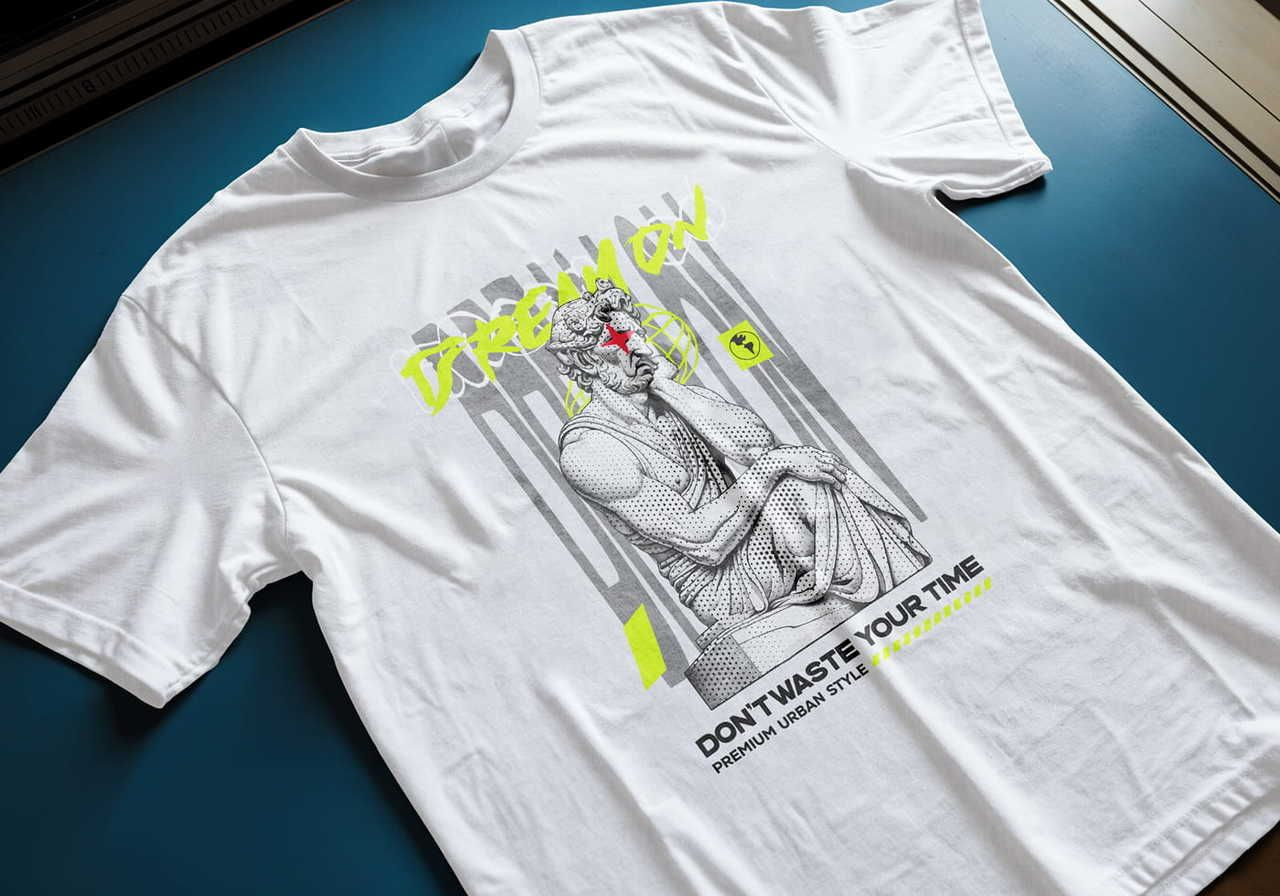
Good t-shirt designs don't just look good – they say something. Before you open any design tool, explore what's trending in your niche. Browse Etsy, scroll TikTok, search Pinterest, and check Google Trends to spot rising themes and gauge search volume.
The best-performing Etsy shirts blend a recognizable niche with a clear emotional trigger – humor, nostalgia, pride, or a sense of belonging – and execute it cleanly. That combination is what makes custom t-shirts genuinely compelling rather than just another option in the feed.
Also consider print placement when designing shirts. A standard chest print works for most niches, but an oversized graphic, a sleeve print, or a back design can set your shop apart. Check out this t-shirt logo placement guide for inspiration.
Here are some top design tools to help you get started:
-
Printful's Design Maker is the natural starting point for Etsy sellers using Printful. It's free, includes a library of fonts, graphics, and templates, and lets you preview your designs on actual product mockups before you publish. The drag-and-drop interface works well even for beginners with no design background.
-
Canva is another accessible option with a broad template library – useful for text-based and simple graphic designs, and it integrates smoothly with Printful workflows.
-
Adobe Express offers more flexibility for sellers who want to level up their visuals without the full complexity of Illustrator or Photoshop.
Valuable read: 11 things you didn't know Printful's Design Maker could do
If you have creative ideas but aren't confident executing them yourself, hiring a freelance designer is a smart investment. Platforms like Fiverr have designers who specialize in t-shirt graphics, illustration, and typography.
Another option is collaborating with local artists – illustrators, muralists, or street artists – whose style fits your niche. Collaborations like these tend to produce more distinctive work, and there's cross-promotion potential that can help both parties reach a wider audience.
We recommend ordering samples before publishing your products. This gives you a chance to check quality in person, spot any necessary design adjustments, and take your own photos for your listings.
4. Publish detailed listings
When someone searches for shirts on Etsy, visuals are the first thing they see. Your listing images and video do the selling before a single word is read, so ensure they’re effective.
If you opt for mockups instead of your own product photos, use these styles:
-
Lifestyle mockups – A shirt shown in a relevant real-world context, like a hiking tee on a trail, outperforms a plain background every time.
-
Flat-lay photos – Styled with niche-relevant props; great for showcasing design detail.
-
Close-up shots – Let buyers inspect print quality and fabric texture before purchasing.
-
On-model mockups – Showing multiple body types and skin tones helps a broader customer base picture themselves in the product.
Printful's Mockup Generator lets you create polished lifestyle mockups and on-model shots directly in the platform.
Don’t skip the option to include a short listing video. This boosts engagement and can improve your ranking in Etsy search results. A clip of someone wearing the shirt, a quick design walkthrough, or a behind-the-scenes moment are all effective. Even a simple video sets your listing apart from shops that use static images only.
Include a clear size chart in every listing. It reduces sizing questions and abandoned carts. If you offer custom products with personalization (names, dates, or text), set up personalization fields so customers can submit their details directly in the order.
Your listing description should cover fabric, fit, printing method, care instructions, and enough brand personality to build trust. Think of it as answering every question a first-time buyer might have. Detailed descriptions reduce returns and help turn hesitant shoppers into confident buyers.
Pro tip: Use eRank, Alura, EtsyHunt, and Marmalead to find relevant keywords for your titles and tags. Use up to 13 tags per listing – short, descriptive phrases like "funny nurse shirt" or "vintage graphic tee" perform best.
Valuable read: How to sell print-on-demand on Etsy in 10 easy steps
5. Set up your Etsy storefront

Signing up for Etsy is free and takes only a few minutes. Go to Etsy's signup page, create a new account, and click Sell on Etsy from your profile menu. Set your shop preferences – language, location, and currency – choose your shop name, and you're live.
A few things worth setting up properly from the start:
-
About section – Tell your brand story. Etsy customers are more likely to buy from shops that feel like real people are behind them.
-
Shop policies – Clear return and processing time policies reduce disputes and build confidence for new buyers.
-
Shop announcement – Use this space to highlight seasonal offers, new collections, or anything time-sensitive.
Knowing what Etsy charges upfront is essential for pricing your t-shirts profitably.
Here's the current fee structure:
-
Listing fee: $0.20 per item (renews each time an item sells)
-
Transaction fee: 6.5% of the total sale price, including shipping costs
-
Payment processing fee: 3% + $0.25 per transaction (US sellers; rates vary by country)
-
Offsite ads fee: 15% on sales driven by Etsy-placed ads (12% for sellers earning over $10,000 in the past 12 months)
Factor all of these into your pricing from the start. Aim for a 20–30% profit margin after production costs, Etsy fees, and shipping costs. If you plan to offer free shipping, build that cost into your item price so your profit margin stays intact.
Valuable read: How to succeed on Etsy: your complete 30-step checklist
6. Promote your Etsy t-shirt business

Setting up a t-shirt store on Etsy is only half the work – getting your listings in front of the right buyers takes consistent effort. Start with on-platform tactics, then expand outward over time.
Most sales in established Etsy shops come through Etsy search, making SEO the highest-ROI (return on investment) starting point for new sellers.
Focus on these four fundamentals:
-
Use relevant keywords in titles and tags – Niche-specific, long-tail phrases like "funny dog mom shirt" will outperform broad terms and deliver more targeted Etsy search results.
-
Optimize all listing components – Titles, tags, categories, and attributes all feed Etsy's search algorithm, so add relevant keywords to each.
-
Use high-quality images – Strong visuals drive higher engagement, which improves Etsy search ranking over time.
-
Earn positive reviews – The biggest trust signal for Etsy customers. Respond to messages quickly and consistently deliver quality.
Use eRank, Marmalead, and Google Trends to find long-tail relevant keywords with healthy search volume and manageable competition.
Valuable read: Etsy SEO: 5 strategies every Etsy store needs for top rankings
Once your listings have some organic traction, consider using promoted listings through Etsy Ads to increase their visibility in Etsy search results. Set a daily budget, and Etsy surfaces your listings more prominently across the platform.
Offsite Ads promote your listings on Google, Facebook, and Instagram, increasing traffic from audiences outside the marketplace. You pay only when a sale results – 15% for most sellers, dropping to 12% past the $10,000 annual earnings threshold. Focus Offsite Ads on your best-selling shirts, which already have proven appeal and strong visuals to support conversions.
With 631 million monthly active users, Pinterest is built around visual discovery and draws audiences with strong purchase intent. Post high-quality images and short videos, add relevant keywords to your pin titles and descriptions, and link directly to your Etsy listings to build traffic steadily over time.
TikTok drives real traffic to Etsy shops, especially in lifestyle, humor, and hobby niches. Behind-the-scenes content, design process videos, and "shop with me" clips perform well. A single video reaching the right audience can produce a meaningful spike in Etsy sales without any ad spend.
Instagram is useful for building brand aesthetics and staying connected with your target audience. Share design inspiration, show real people wearing your shirts, and run occasional promos to turn followers into repeat Etsy customers.
Planning around seasonal demand is one of the most reliable ways to grow more sales on Etsy. Valentine's Day, Mother's Day, graduation season, Halloween, and the holiday gifting period all drive surges in t-shirt searches. List seasonal designs four to six weeks ahead of the event so your listings have time to gain traction before peak demand hits.
Encourage buyers to leave reviews and respond to every one you receive. Customer photos are especially persuasive – seeing how a shirt looks on a real person is often what gets a shopper on the fence to make a purchase. Printful's branded packaging options make it easy to add a personal touch that prompts positive feedback.
Valuable read: 21 tips for how to get more sales on Etsy
Earn the Star Seller badge
Consistent customer service can earn your shop the Star Seller badge – a credibility marker that appears directly in Etsy search results and on your shop page, helping attract customers who are on the fence.
To qualify within any three-month window:
-
At least 5 sales totaling $300 or more
-
An average rating of 4.8 or higher
-
A message response rate of 95%+ within 24 hours
Etsy awards the badge automatically when you hit those benchmarks – no application needed.
Common mistakes new Etsy t-shirt sellers make

Avoid these typical pitfalls when starting your print-on-demand t-shirt business on Etsy:
-
Targeting saturated niches without differentiation. Entering "funny cat shirts" without a specific angle puts you against thousands of established shops. Find a sub-niche or design approach that sets you apart.
-
Poor mockups and low-quality listing images. Etsy shoppers are visual. Blurry or generic mockups will cost you sales regardless of how strong your designs are.
-
Launching too many products at once. Ten to fifteen focused listings will outperform a hundred rushed ones. Start small, learn what sells, and expand from there.
-
Ignoring Etsy SEO. Listings without keyword research rely on luck for visibility. Even basic title and tag optimization makes a significant difference in Etsy search.
-
Pricing too low. When you don't account for production costs, listing fees, transaction fees, payment processing, and shipping costs, your profit margin won't sustain the business. Price for profitability, not just competitiveness.
-
Copying trending designs directly. Replicating a viral design risks copyright issues and puts you in a race you can't win against seasoned shops. Use trends as creative direction, then bring your own angle.
Start selling shirts (and more) on Etsy
Building a thriving t-shirt shop on Etsy takes genuine effort, but it's achievable for creative entrepreneurs who approach it with a clear strategy. Choose a niche you understand, design for a specific target audience, invest in strong listing visuals, and market consistently.
When you use Printful to sell on Etsy, you get seamless integration, reliable t-shirt printing across a wide range of styles, and a full set of tools to support a profitable print-on-demand business without inventory or fulfillment headaches. Focus on the creative and marketing side while Printful handles the rest.
FAQ
Yes, selling custom t-shirts on Etsy can be a profitable business, but it requires the right approach. Profitability depends on choosing a viable niche, pricing correctly to cover all Etsy fees and production costs, creating optimized listings, and investing in quality marketing.
Sellers who focus on specific niches and consistently optimize their Etsy storefront tend to see better margins. A 20–30% profit margin is a realistic starting target.
Very little upfront. Creating an Etsy account is free. The listing fee is $0.20 per item.
With Printful, there are no monthly fees or upfront costs – you pay only for production when an order comes in. Your main investment at the start is time spent researching your niche, creating designs, and setting up your listings.
Optional early expenses include product samples and Etsy Ads.
The best-selling shirts on Etsy in 2026 are personalized milestone tees, niche hobby designs, profession-specific humor shirts, and vintage or retro-aesthetic graphics. They all share a specific community, a clear emotional hook, and clean execution across the entire garment – from print placement to fabric choice. Generic, broad designs rarely compete. Etsy customers want something that feels made for them.
Connect Printful to your Etsy shop, add your t-shirt designs to products in the Printful Catalog, and publish them to your online store. When a customer orders, Printful prints and ships the shirt directly to them – you never handle the product. It's the most accessible way to run an Etsy t-shirt store without any upfront inventory investment.

Chan is a copywriter, creative writer, and technical writer with 15 years of experience creating everything from training courses to compelling marketing copy. A self-confessed research nerd, she loves digging deep into a subject and bringing it to life on the page. When she’s not writing, she’s exploring forest trails or walking the beach with her dog, or in the kitchen experimenting with homemade pickles and jams.

