



Table of contents
What can you sell on Shopify? Almost anything – clothing, accessories, home decor, pet products, and more.
The harder question is what will actually sell, because the right product depends on demand, margins, and your target audience.
In this guide, we’ll show you how to choose what to sell on Shopify to make money, plus the best products and niches worth your attention in 2026.
How to choose what to sell on Shopify
Here’s how to conduct market research and find the best products to sell on Shopify.
Start with your passion or a problem you understand
The most successful Shopify stores start with something the founder knows, cares about, or has struggled with themselves. You already understand what the buyer wants and where existing products fall short. A few places to look:
-
A problem you’ve run into. If something bugs you, chances are it frustrates other people, too. A product that fixes it comes with a built-in audience.
-
A hobby you’re into. When you’re already part of a scene, you know what people want and where to find them.
-
A community you’re part of. It’s way easier to design and sell for people you actually get than for total strangers.
That said, an idea isn’t enough on its own. The steps below help you validate whether there are real buyers out there before going all in.
Look for steady or growing demand
Chase products with consistent sales, not viral fads that crash once the hype fades. Here are free tools that can help with product research:
-
Google Trends. Enter your product ideas and look for a consistent or rising line over two to three years. Steady search volume signals lasting demand.
-
Pinterest Trends. Pinners save ideas long before they buy, and this tool can show emerging trends weeks or months before they peak in search.
-
TikTok Creator Search Insights. Its Content gap feature lets you spot high-demand topics and products that many sellers haven’t covered yet.
Validate your niche early

Validation means confirming that a niche or a specific group of people will likely spend money on your product before building a Shopify online store around it.
After gathering a few product ideas, look them up on online marketplaces like Amazon and Etsy:
-
Review counts and bestseller badges can signal proven demand, but make sure the niche isn’t too crowded to break into.
-
The number of sellers tells you how hard you’ll compete on price.
-
Recent reviews reveal what potential customers like, what they complain about, and where current products fall short.
A product category with clear interest but no standout shop is the sweet spot. Customers are already buying, and you don’t have to outprice a high-performing store to win them.
Alternatively, consider running a small ad leading to a simple landing page and see whether people click or buy. A little spend now beats guesswork, and it’s better than building an online store around a product idea no one wants.
Check your profit margins
Before selling products, add up the costs to make and sell each item, then price it to reflect your profit goals. Calculate:
-
Production costs, such as the base product price and any design or printing charges.
-
Selling fees, including your Shopify subscription and payment processing fees.
-
Marketing costs, such as the budget required to run your marketing channels and land a sale.
-
Shipping costs, especially if you absorb them with free shipping rather than charging the customer at checkout.
Test products with Print on Demand
Print on Demand lets Shopify merchants trial product ideas without planning inventory or buying stock. Just sign up for free, pick a product to sell, add your design to it, and put it up for sale.
When someone places an order, their payment covers the production costs, and the rest is your profit. That means:
-
No upfront costs for storage or unsold stock gathering dust.
-
Freedom to launch several designs and keep only the proven bestsellers.
-
Quick pivots as trending products come and go – add new designs or remove weak ones without losing money.
Print on Demand also works well beyond testing. Since there’s no logistics to deal with, you can focus on designing products, building your brand, and growing your Shopify store.
Best things to sell on Shopify right now

Wondering “What can I sell on Shopify to make money?” These nine categories are proven bestsellers.
1. Clothing
Why sell clothing: People upgrade their wardrobes constantly, and that steady demand has made the US apparel market worth $373 billion in 2026. The Shopify sellers that do well design for a specific audience and win on branding rather than price.
Popular products: Depends on the niche, but basics like custom t-shirts and hoodies sell year-round. Keep an eye on emerging aesthetics to spot trending products.
Shopify store example: Dogecore built a whole brand on meme-based apparel for an audience it had already grown over years of posting. The community came first, the products followed.
Read also: Gen Z fashion trends to watch out for
2. Home decor
Why sell home decor: People spend more on their living spaces than ever, and the global home decor market is worth $139 billion in 2026. Buyers want pieces that feel personal, which makes custom products an easy way to stand out among mass-produced items.
Popular products: Custom wall art leads the category, alongside home decor items such as throw pillows, blankets, and mugs.
Shopify store example: At first, the Shopify store Lone Fox sold wholesale decor, but shoppers could find the same products cheaper elsewhere. So the store switched to distinctive pieces no one else carried, and sales more than doubled.
3. Accessories
Why sell accessories: Accessories are easy add-on buys, helping to raise average order value. Most are also small and light, so shipping costs stay low and your profit margins hold up.
Popular products: Jewelry, tote bags, hats, and hair accessories.
Shopify store example: Shopify store owner Pia Mance grew her accessories label by inviting customers to monthly events and letting them vote on what to design next. Listening to her target audience made the store stand out among other brands.
4. Tech accessories
Why sell tech accessories: People own more devices than ever – phones, laptops, tablets, smartwatches – and they need accessories to protect and personalize them. Buyers replace these add-ons more often than the devices themselves, so demand stays steady.
Popular products: Everything from everyday accessories like phone cases or laptop sleeves to niche products like cable organizers.
Shopify store example: Wildflower Cases is a successful Shopify store that turned a hobby into a smartphone accessories brand. The founder handed creative direction to his teenage daughters because they understood the young, style-driven buyer far better than he did.
5. Pet products

Why sell pet products: 42.6% of US households have a dog and 32.6% a cat – and owners love spoiling their four-legged family members. That keeps pet products in high demand.
Popular products: Personalized pet gear such as bandanas, bowls, and collars.
Shopify store example: Alpha Paw built its online business around things pet parents love – practical products for their furry friends and personalized photo gifts. Offering items for both the pet and the owner gives the store more to sell to the same customer.
6. Baby and kids’ items
Why sell baby and kids’ items: Parents replace clothing, toys, and books constantly as their children outgrow them. That makes them some of the most profitable products for online stores.
Popular products: Kids and youth apparel, toys, books, and personalized keepsakes like name blankets or milestone cards.
Shopify store example: Natural Baby Shower grew over nearly two decades by carefully vetting everything it sells. In a category where parents worry about safety and quality, an online business that chooses products people can trust earns repeat buyers.
Read also: How to start a kids’ clothing line: Key steps for beginners
7. Stationery and paper goods
Why sell stationery and paper goods: As more of daily life moves to screens, people are returning to analog hobbies like journaling and letter-writing. That makes physical products like notebooks and cards an easy sell.
Popular products: Custom notebooks, journals, greeting cards, stickers, and planners.
Shopify store example: eCommerce store Phidon Pens moved its in-store experience online without losing the personal touch – the owner still tucks a handwritten thank-you note into every order. Those small details are what turn one-time buyers into loyal regulars.
8. Recycled and organic material products
Why sell recycled and organic products: Consumers say they’ll pay up to 12% more for an eco-friendly product with a lower environmental impact. But vague claims won’t work – using certified materials gives your online business something concrete to stand behind.
Popular products: Apparel like t-shirts, tote bags, and hoodies made from organic cotton, recycled polyester, or recycled nylon.
Shopify store example: Bedi Studios makes outerwear from ECONYL®, a fabric woven from recovered fishing nets and industrial waste. It sells durability over disposability – coats built to last a decade, not a season – giving buyers a real reason to pay more.
9. Seasonal and holiday items
Why sell seasonal and holiday items: US holiday spending is expected to reach a record $1 trillion this season. And since these buying moments come like clockwork, you can plan inventory and designs ahead, then ride the search volume when it peaks.
Popular products: Holiday ornaments, themed apparel, gift mugs, greeting cards, and limited-edition drops tied to Christmas, Halloween, or Valentine’s Day.
Shopify store example: Jammie Claus built a Christmas store around one family ritual – Mrs. Claus delivering fresh pajamas each Christmas Eve. An online business rooted in an annual tradition gives customers a reason to return each season.
Profitable Shopify niche markets to target in 2026

After figuring out what to sell on Shopify, the next step is picking a niche with buyers who keep coming back. Here are five worth targeting.
Fitness and wellness
Target audience: Gym-goers, yoga enthusiasts, and runners. Newcomers kit themselves out, and regulars replace their worn fitness gear, keeping the niche in high demand year-round.
Popular products: Workout leggings, matching sets, sports bras, gym towels, and water bottles.
Shopify store example: POPFLEX grew from the YouTube audience that founder Cassey Ho built first. Her product research came straight from that community – anti-camel-toe leggings, gym bags with a waterproof pocket for dirty shoes – so every release solved a real problem.
Read also: How to start a fitness clothing line
Travel
Target audience: Frequent flyers, digital nomads, and weekend adventurers. Most tend to do their online shopping well before they leave, researching and stocking up weeks leading up to a trip.
Popular products: Packable windbreakers, fanny packs, water bottles, toiletry bags, luggage tags, and other portable gifts for travelers.
Shopify store example: Shopify seller Peter Dering started Peak Design to fix a specific problem – his camera hitting against his chest while hiking, and no existing products solved it. That gap attracted buyers with the same issue and grew into a full range of travel gear.
Gaming and pop culture
Target audience: Gamers, anime lovers, sports fans, and fandom communities who buy merch to show what they love. These groups follow trending products closely and rally around new releases, game launches, and franchise moments.
Popular products: T-shirts, hoodies, wall art, posters, mugs, and stickers built around a fandom.
Shopify store example: Uncanny Brands builds officially-licensed pop culture products around major franchises like Marvel and Star Wars.
Note: Before you start selling, read up on copyright and trademark rules for printing so your designs stay on the right side of the law. Fan merch featuring someone else’s intellectual property without permission is copyright infringement.
Home office equipment
Target audience: Remote workers, freelancers, and anyone who has built a workspace at home and wants products that help with comfort and productivity.
Popular products: Everything from larger items like standing desks and ergonomic chairs to smaller tech accessories like mouse pads and desk mats.
Shopify store example: Ergodriven sells ergonomic home office equipment. Its Topo mat looked unusual at first, but it solves a real problem for standing-desk users – the fatigue of standing still on a hard floor. It turned it into one of the brand’s best-selling products.
Personalized items
Target audience: People shopping for a birthday, wedding, new baby, or holiday who want a gift that feels thoughtful rather than generic. The personal touch is the selling point, so these buyers care more about meaning than price.
Popular products: Monogrammed notebooks, custom name necklaces, engraved keepsakes, photo mugs, and other personalization-ready items.
Shopify store example: Appointed sells minimalist notebooks that customers can monogram. That small touch turns a plain notebook into something made for one person, creating a more premium perceived value that supports higher profit margins.
Quick tip: Want to start selling personalized gifts without upfront costs? With Printful’s personalization tool, shoppers can submit their edits, you approve them, and we’ll print and ship each made-to-order piece.
Why sell on Shopify?
Shopify is a leading eCommerce platform for people who want to sell online without dealing with code or hiring a developer. Here’s why so many sellers build their store on it:
-
Quick to launch. You can create a working online store with its drag-and-drop templates and start selling products the same day, no technical skills needed.
-
High-converting checkout. Shopify converts up to 36% better than other eCommerce platforms. Plus, it supports every major payment method, so you lose fewer sales at the last step.
-
Sells across multiple channels. Beyond your store, you can sell products on Instagram, TikTok Shop, marketplaces, and in person, all managed from one dashboard.
-
Huge app ecosystem. Thousands of apps plug straight into your store, so you can add reviews, email marketing, upsells, or print-on-demand fulfillment without building anything yourself.
-
Large, active community. You get 24/7 support, free Shopify Academy courses, and seller forums to turn to when you're stuck.
How to start selling on Shopify with Printful
Pairing Shopify with Printful is one of the fastest ways to start selling online with no inventory.
Unlike the dropshipping business model – where you resell generic products that other vendors already offer – Print on Demand lets you sell custom items with your own designs. You compete on branding and originality, not price.
What’s more, the Printful Shopify app is free to install and has a 4.7-star rating from over 3,200 merchant reviews. That means your print-on-demand business will run on a setup thousands of other sellers already trust.
1. Create a Shopify store
Sign up at Shopify and pick a subscription. The Basic plan costs $23/month and covers everything a new business needs – an eCommerce store, unlimited products, a checkout that supports every major payment method, and the ability to sell on multiple channels.
You can launch on Basic and upgrade as you grow, so there’s no need to overcommit on day one. Shopify also offers a 3-day free trial, then $1/month for the first three months.
Need more information? Read Printful’s guide on whether Shopify is worth it for a closer look.
2. Connect Printful to Shopify
Next, create a free Printful account and sign in to your dashboard. Select Stores from the sidebar menu, then click Choose platform.
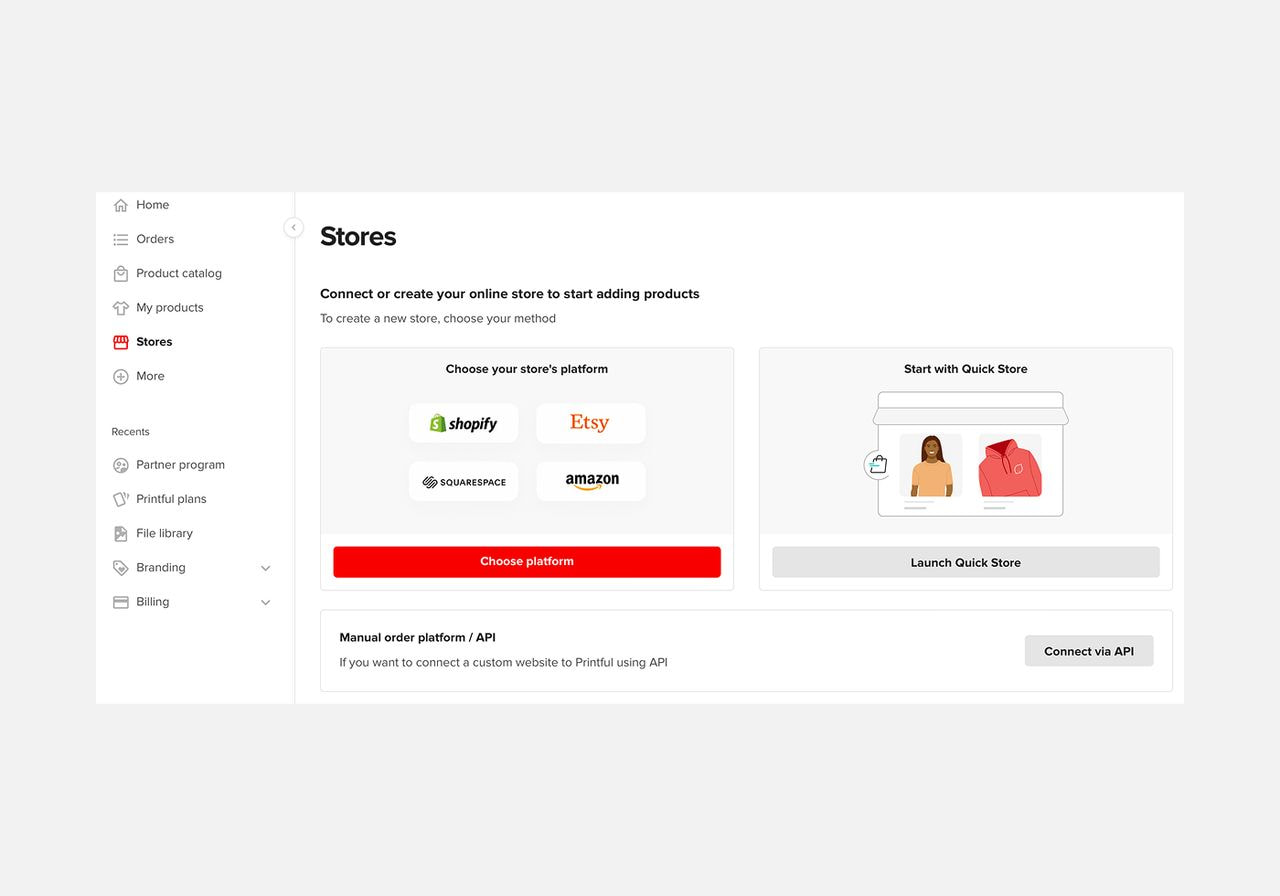
Pick Shopify, then click Install app to start the integration. For a full walkthrough, follow our guide on connecting your Shopify store to Printful.
Once integrated, any product you publish in Printful appears in your Shopify store, ready to sell online.
3. Choose and customize your products
Browse the Printful Catalog and pick products based on your earlier product research, then add your artwork with the Design Maker.
A few tips to set up your online store:
-
Start with a few products rather than a full catalog. A tight lineup is easier to market and lets you see what sells before deciding to expand.
-
Order samples to assess print quality firsthand and write accurate product descriptions.
-
No designs ready yet? Use our free clipart and customizable templates, or access visuals from Getty Images and Vexels for just $1.
4. Set your pricing strategy
Price your products too high, and you lose the sale – too low and your net profit disappears. The goal is to set competitive pricing that sits in between, and here’s how to find it:
-
Add up your costs first. Count the base product price, Shopify online store fees, and marketing costs – your price should cover these expenses.
-
Check what other sellers charge. Look at similar items to find the going rate, then set a price within the range shoppers expect.
-
Add a profit margin that feels fair for the design. If an item’s not selling, try new artwork, fresh photos, or an adjusted price to see what can turn it into a best-selling product.
Quick tip: For more information, read our guide on print-on-demand profit margins.
5. Drive traffic to your Shopify store
An online store needs visitors before it can make sales. Here are the basics on driving traffic to your Shopify website:
-
Search engine optimization (SEO). Write product titles and descriptions using the keywords people actually type, so your online store turns up in Google’s search engine when someone’s looking for what you sell.
-
Social media. Show up on social media channels where your audience already hangs out. Create short-form video content that entertains or teaches first and sells second – that’s what gets shared and seen.
-
Email marketing. Collect emails from people who buy or sign up, then use that list to bring back returning customers with new drops and deals. It’s a lot cheaper than chasing a new shopper every time.
Conclusion
Figuring out what to sell on Shopify comes down to three main things – real demand, healthy margins, and a clear audience.
Start with a niche you’re familiar with and test a few designs around it with Print on Demand. This way, you only pay for what sells, so trying out an idea costs nothing if it doesn’t take off.
Ready to start? Sign up with Printful for free and connect it to your Shopify store to launch your first product today.
FAQ
You can sell almost anything on Shopify to start a business, from custom apparel and accessories to home decor, pet products, and digital goods.
Print-on-demand products are a popular starting point, since you can add your own designs and sell them without holding any inventory.
Physical items like clothing and beauty products can be highly profitable, but it comes down to your niche, branding, and pricing strategy. Digital products like courses, templates, and presets are also a strong example, since they cost almost nothing to deliver once made.
Yes, you can sell on Shopify without inventory using Print on Demand. Simply sign up with a print-on-demand platform like Printful, connect it to Shopify, and add your custom-designed items. Products are made and shipped only after a customer orders, so you never buy stock upfront.
The cost to start a Shopify store depends on the plan you choose. Shopify’s Basic plan runs $23/month when billed yearly, with higher tiers available for growing businesses. You can test it first with a 3-day free trial, then $1/month for your first three months.

Maisha is a content writer with 6+ years of experience in turning complex topics into clear, search-optimized content. She believes readability always wins, no matter how SEO trends shift. Outside of writing, she’s usually trying new recipes (but never following them), watching niche YouTube videos, or planning food-fueled adventures.

