



Table of contents
Since September 2025, Redbubble Standard accounts pay up to half their monthly earnings in platform fees. That’s a big cut, and a good reason to look at Redbubble alternatives with better profit margins, more branding control, or both.
Some print-on-demand marketplaces, such as Amazon Merch on Demand and TeePublic, offer access to millions of buyers. Other platforms, like Printful and Printify, let you build your own storefront and connect it to the sales channels you already use.
Below, we compare the best alternatives to Redbubble – from art-focused marketplaces to full-service print-on-demand platforms – so you can find the right fit for your print-on-demand business.
Redbubble alternatives at a glance
Not sure where to start? Here’s how the top Redbubble alternatives compare on business model and earnings.
| Platform | Type | How you earn | Best for |
|---|---|---|---|
| Printful | Your store | Markup | More branding control and reliable product quality |
| Printify | Your store | Markup | More product variety and supplier flexibility |
| Amazon Merch on Demand | Marketplace | Royalty | Selling to Amazon’s massive built-in audience |
| Saatchi Art | Marketplace | Royalty | Artists selling premium art prints |
| Zazzle | Marketplace | Royalty | Selling stationery and event-driven products |
| Fine Art America | Both | Markup | Independent artists selling across multiple product types |
| TeePublic | Marketplace | Fixed commission | Pop culture and fan artists |
| Gelato | Your store | Markup | Selling internationally with local fulfillment |
| Sellfy | Your store | Markup | An online store with built-in Print on Demand |
| Amaze Commerce | Your store | Markup | Social media content creators |
| Displate | Marketplace | Fixed commission | Artists focused on metal prints |
| CafePress | Both | Royalty (marketplace) or markup (shop) | Selling through a built-in marketplace and a storefront |
| Gooten | Your store | Markup | More printing options beyond DTG or DTF |
| Threadless | Both | Royalty (marketplace) or markup (Artist Shop) | Artists who want a community-focused marketplace |
| Spreadshirt | Both | Fixed commission (marketplace) or markup (Spreadshop) | Selling on marketplaces, social media, and your own shop |
| Viralstyle | Both | Markup | Running limited-time merch campaigns |
| Fourthwall | Your store | Markup | Selling merch, memberships, and digital downloads |
| PrintAura | Your store | Markup | A straightforward white-label print-on-demand service |
What are the best Redbubble alternatives? Top 18 picks
Whether you’re looking for custom branding options or more competitive pricing, here are the best sites like Redbubble to start or grow your own store.
1. Printful

Best for: More branding control and reliable product quality
Want to sell custom products under your own brand? Printful is built for just that. Our platform connects to your online store in just a few clicks through integrations with Shopify, Etsy, Amazon, Wix, and other popular eCommerce platforms.
With over 602 custom products to choose from, you can start with custom apparel and branch out into wall art, framed prints, phone cases, tote bags, and other trending products.
Printful runs in-house production centers in the US, Canada, Mexico, Latvia, Spain, and the UK, alongside partner facilities in Japan, Brazil, and Australia. Printful controls the whole process, so you get high-quality printing for customers worldwide.
Fees and pricing
No upfront costs – sign up for free and only pay for production when someone places an order. Or upgrade to Printful Growth for $24.99/month to get up to 33% off products.
Pros
-
In-house printing with strong quality control
-
White-label packaging, packing slips, and branded pack-ins
-
User-friendly design tools with ready-made clipart and templates
Cons
-
Production network is smaller than some partner-based POD services
-
No phone support – help is available through live chat or the Help Center


2. Printify
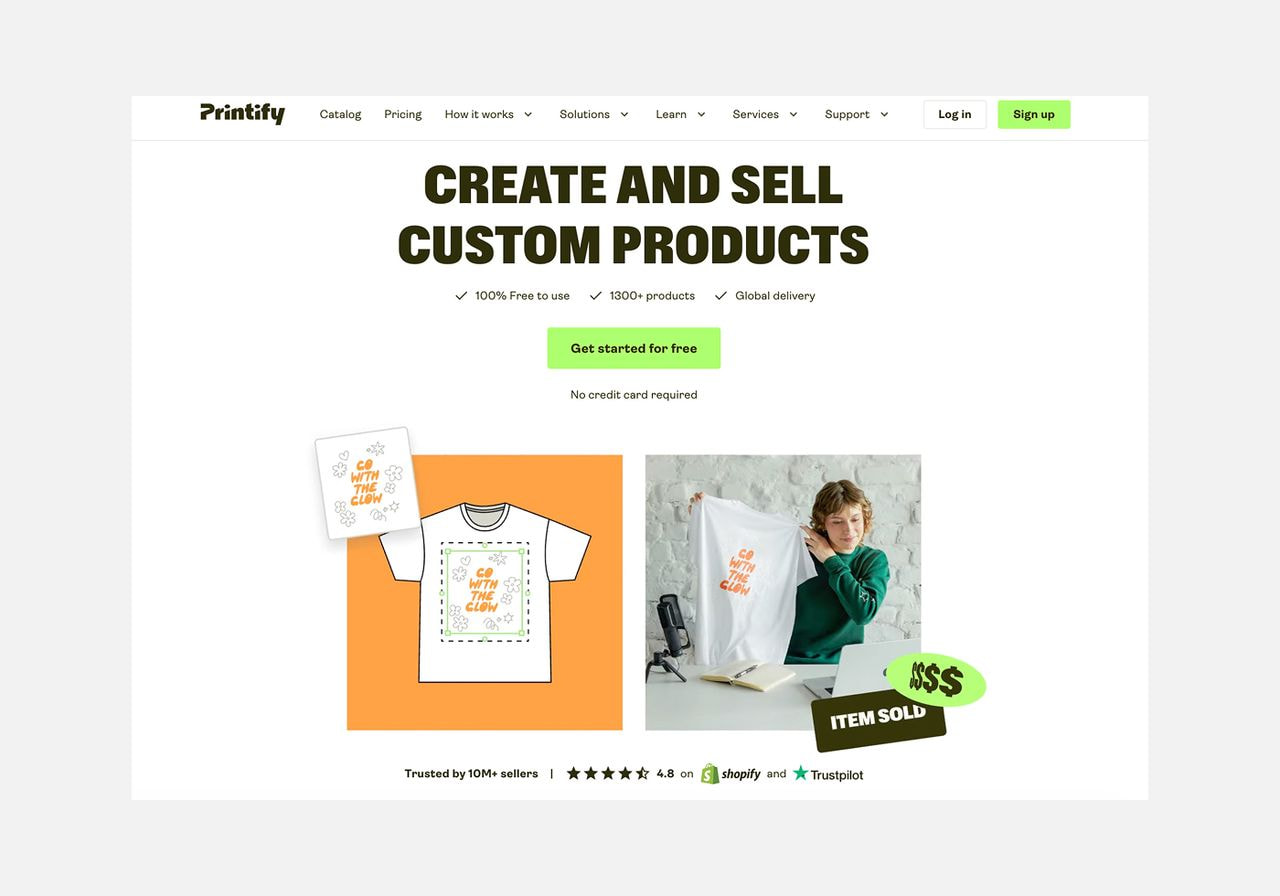
Best for: More product variety and supplier flexibility
As one of the most recognized Redbubble alternatives, Printify stands out for its broad range of over 2,000 custom products across apparel, accessories, home decor, and wall art.
Instead of in-house production, Printify works with multiple Print Providers. Compare production partners by price, print quality, location, and shipping speed – or let Printify choose one for you.
Fees and pricing
Free plan available – only pay the base product cost and shipping when someone buys. Printify Premium costs $39/month (or $299/year) and gives you up to 20% off products.
Pros
-
Extensive product range with 2,000+ items
-
Trends tool to spot popular designs and aesthetics
-
No store yet? Sell through a Printify Pop-Up Store
Cons
-
Product quality depends on your chosen Print Provider
-
No branded packaging – only custom pack-ins or slips
Read more: Printify alternatives for your print-on-demand needs
3. Amazon Merch on Demand
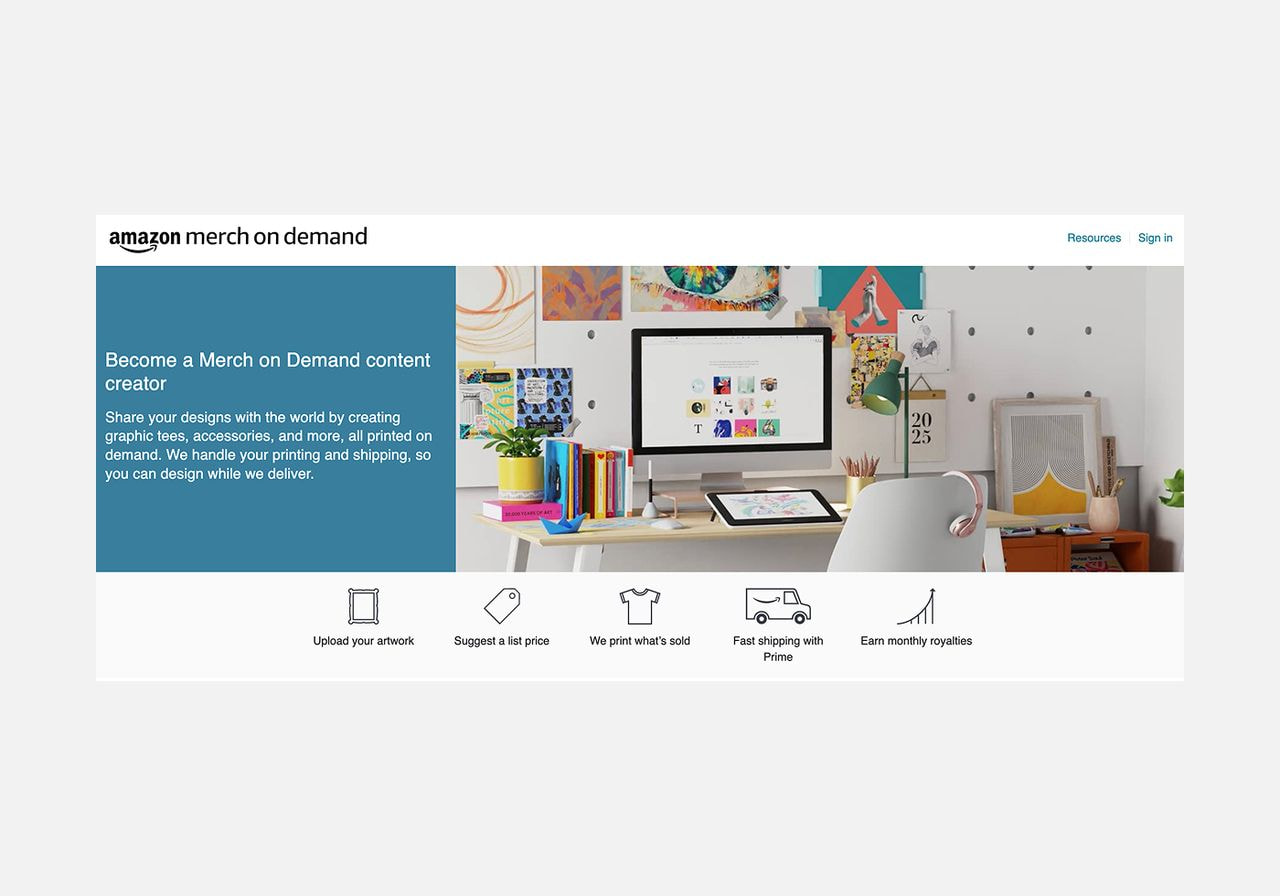
Source: Amazon Merch on Demand
Best for: Selling to Amazon’s massive built-in audience
Among Redbubble alternatives, Amazon Merch on Demand offers one of the biggest built-in audiences. You sell designs directly on Amazon through its Merch on Demand service, reaching customers worldwide. Amazon handles production, fulfillment, customer service, and shipping.
Fees and pricing
No upfront fees. You earn a royalty based on your chosen selling price, minus base production costs and Amazon fees.
Pros
-
Massive built-in traffic from Amazon’s global marketplace
-
Prime shipping eligibility to boost buyer trust
-
Built-in analytics for tracking sales
Cons
-
Approval is required, and applications may be rejected
-
Smaller product range than other print-on-demand platforms
-
Royalty-based earnings can limit profit margins
Read more: Is selling on Amazon worth it?
4. Saatchi Art
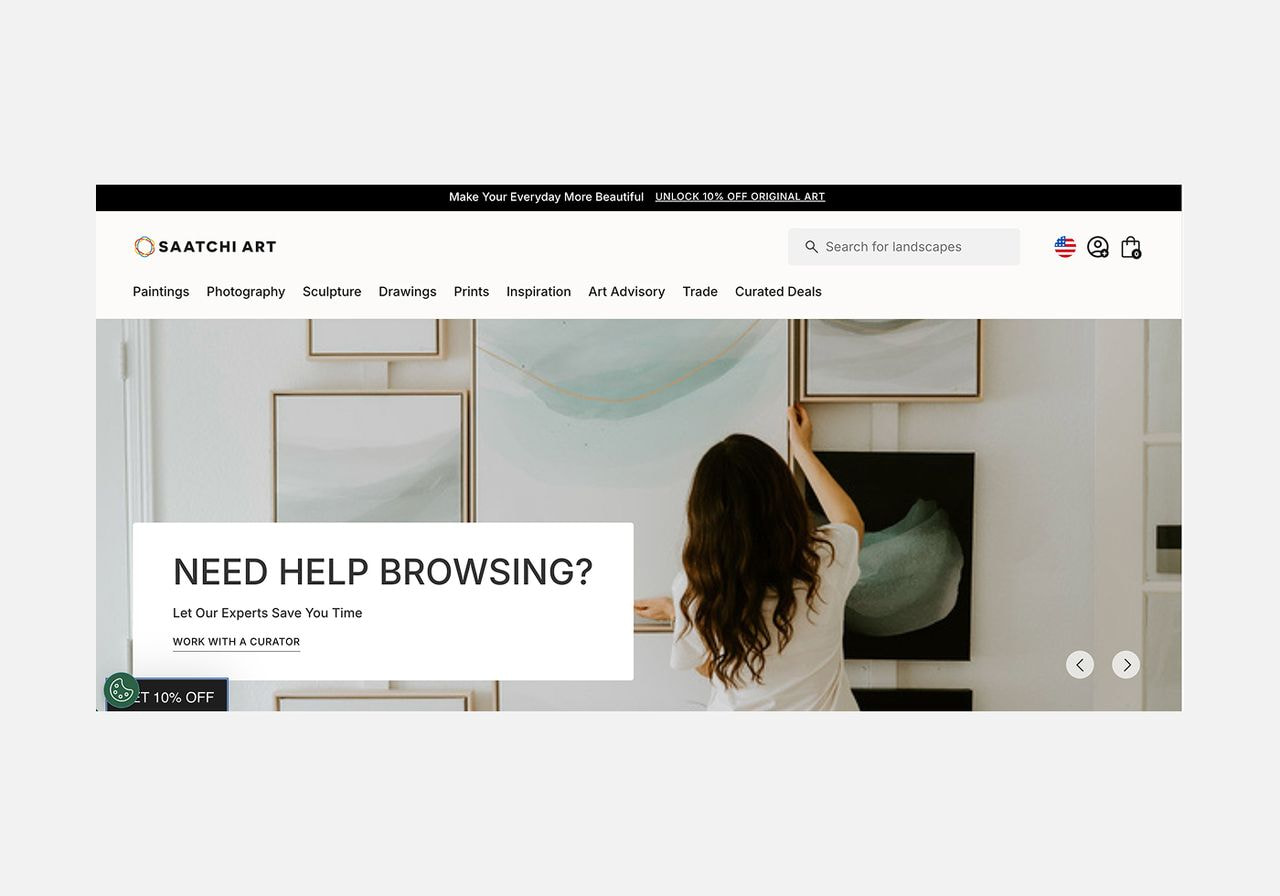
Source: Saatchi Art
Best for: Artists selling premium art prints
Saatchi Art is one of the best places for artists to sell to collectors. Alongside original pieces, it lets you sell open-edition art prints of your own artwork.
Fees and pricing
Free to join with no upfront costs. Artists keep 60% of every original artwork sold, and open-edition prints add another income stream on top – Saatchi Art handles every print sale from production to delivery.
Pros
-
Built for artists, with curators and art advisors promoting work
-
Access to collectors in 140+ countries
-
Non-exclusive policy, so you can make money from your art on other platforms
Cons
-
Limited to wall art and original artwork
-
Less suited for high-volume merchandise sales
-
Application process with identity verification
5. Zazzle
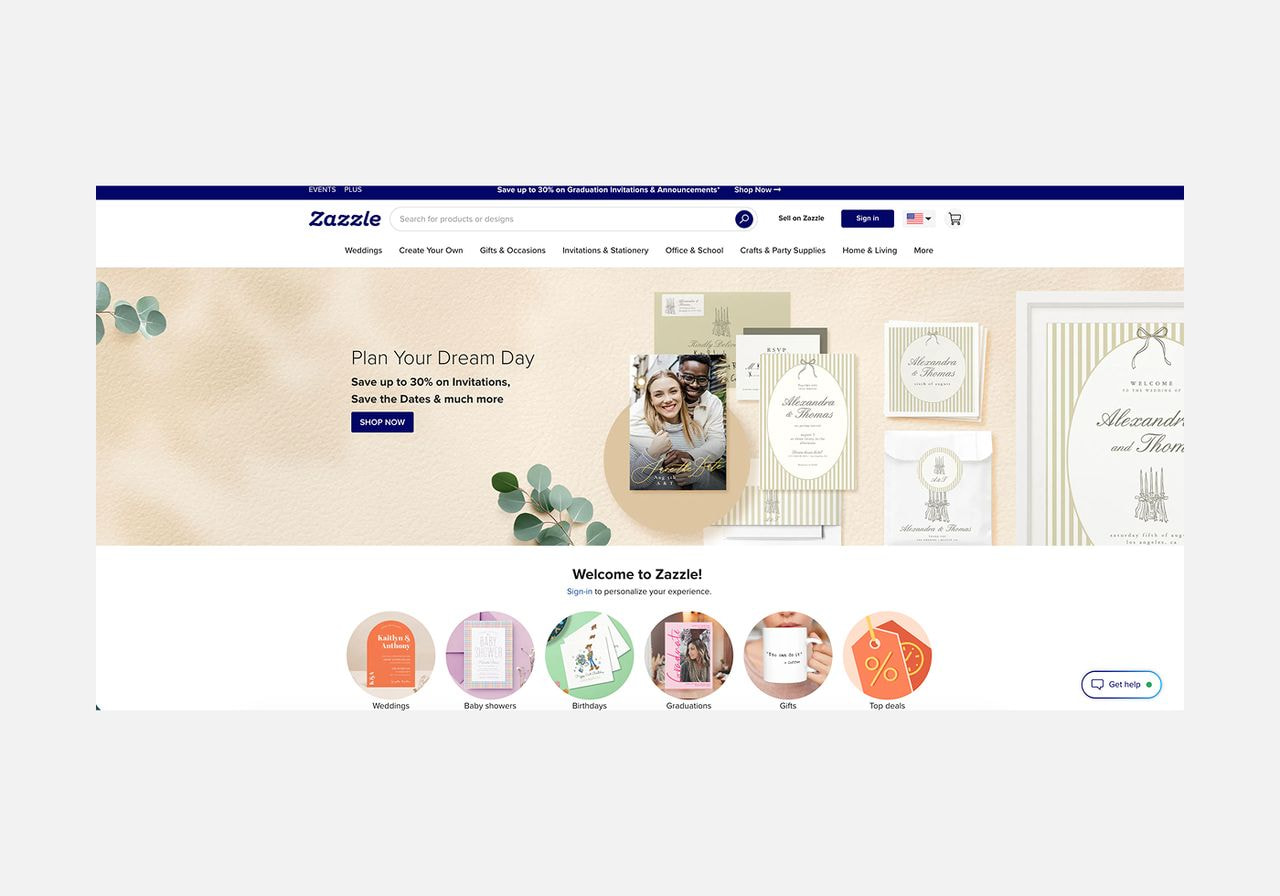
Source: Zazzle
Best for: Selling stationery and event-driven products
If you’re looking for companies like Redbubble that focus more on paper products, Zazzle is a solid option.
Although it offers apparel and home items, this print-on-demand marketplace is best known for invitations, greeting cards, business stationery, and party decor.
Fees and pricing
No upfront costs. You set a royalty between 5% and 50% for physical products and up to 99% for digital downloads, which is added to the base price to form the retail price. Higher royalties may trigger extra fees.
Pros
-
Event-driven audience with potential for bulk orders
-
Flexible royalty rates
-
Extra income through referral earnings
Cons
-
More niche audience compared to other online marketplaces
-
No custom branding or packaging control
-
Most items are made in the US, so international shipping can be costly
6. Fine Art America
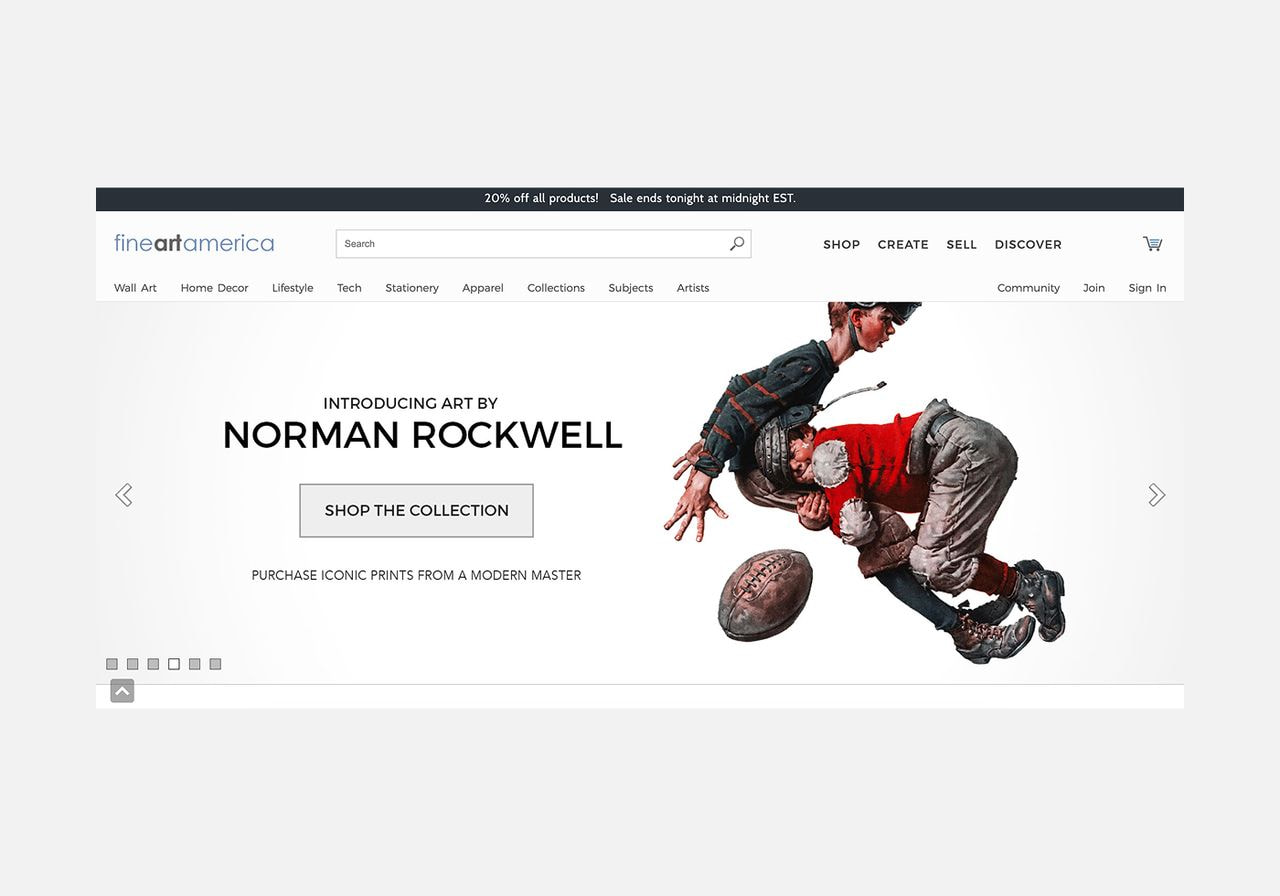
Source: Fine Art America
Best for: Independent artists selling across multiple product types
Fine Art America is one of the best print-on-demand sites for visual artists and photographers. It’s known for canvas and framed prints, but you can also sell designs on apparel, home decor, phone cases, and more.
Fees and pricing
No upfront costs. Set a markup above the base price, and the difference is yours. The $30/year Premium membership unlocks unlimited uploads, a white-label artist website, and marketing tools.
Pros
-
Strong art-focused community
-
Wide wall art catalog, from canvas to metal prints
-
Built-in analytics and marketing tools
Cons
-
Free accounts are capped at 25 images
-
Your own website requires Premium unless you use Shopify or BigCommerce
-
No direct integration with Etsy
7. TeePublic
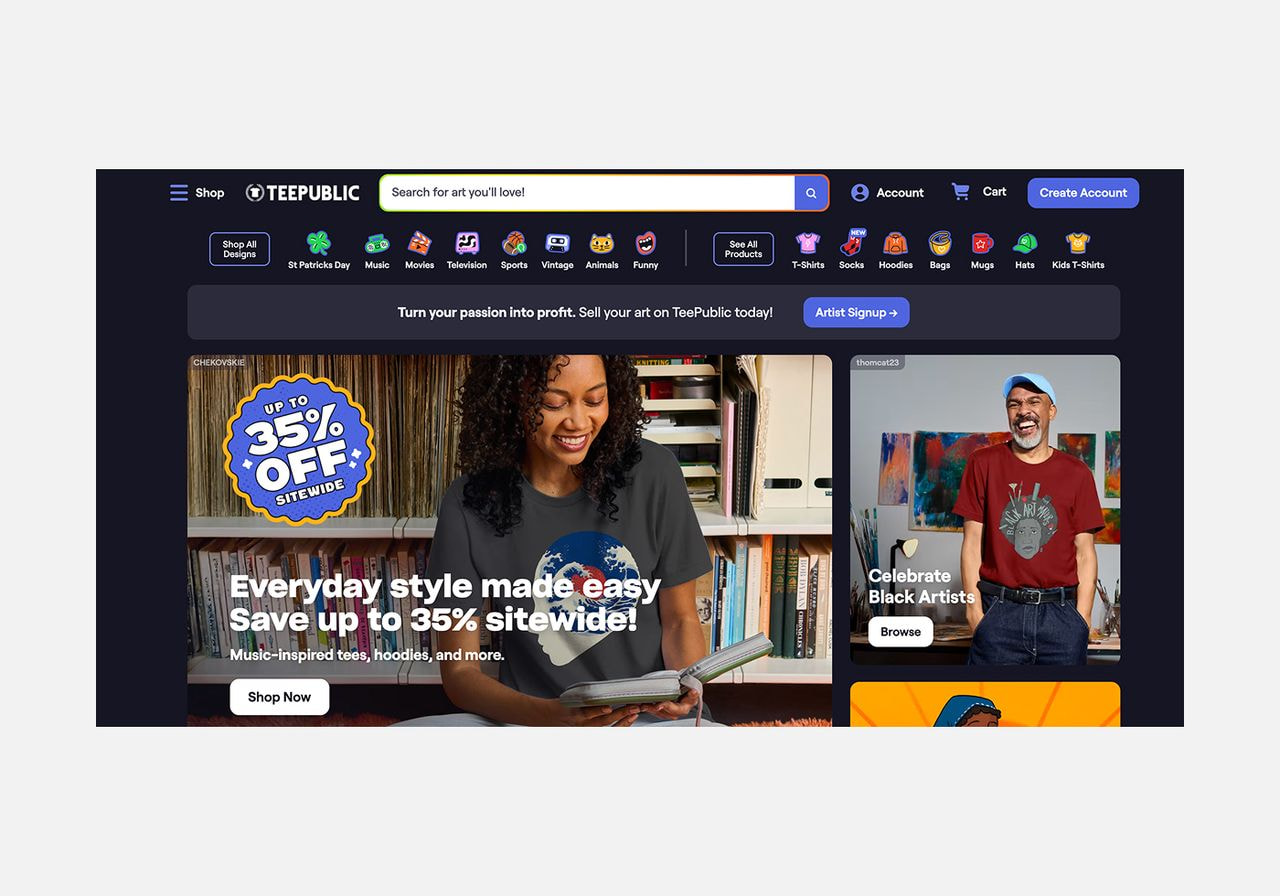
Source: TeePublic
Best for: Pop culture and fan artists
TeePublic is owned by Articore, Redbubble’s parent company – it runs its own marketplace and customer base. Artists can sell designs on custom t-shirts, hoodies, stickers, phone cases, mugs, and more.
Its Fan Art Program lets artists submit officially licensed artwork for participating brands, so independent creators can work with recognizable pop culture franchises.
Fees and pricing
No upfront costs. TeePublic sets the retail price, and earnings are fixed per product. For example, a t-shirt earns Artisan-tier artists $4 at regular price and $2 during sitewide sales.
Pros
-
Simple, predictable earnings
-
Non-exclusive rights to your designs
-
Fulfillment centers in the US, UK, and Australia
Cons
-
No pricing control, which limits profit margins
-
Frequent sales mean many orders earn the lower rate
-
Fewer printing techniques than some other platforms
8. Gelato
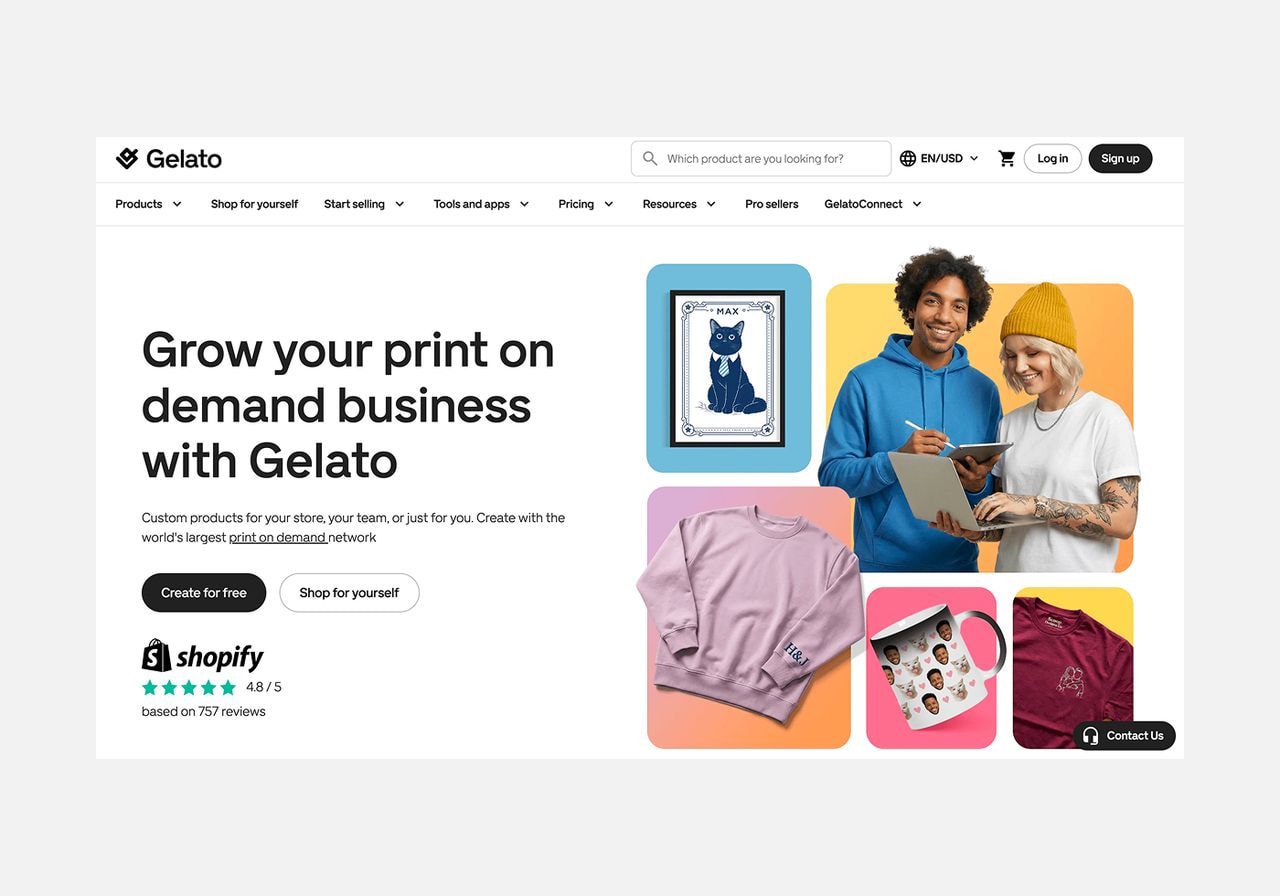
Source: Gelato
Best for: Selling internationally with local fulfillment
Gelato is a print-on-demand platform that connects sellers with over 250 production partners across 32 countries. Each order is routed to a nearby partner for printing and shipping.
Fees and pricing
No upfront fees on the free plan – only pay when a product sells. Gelato+ costs $29.99/month (or $19.99/month billed annually) and adds product discounts and branding options.
Pros
-
Local production can cut delivery times and costs
-
Integrations with popular eCommerce platforms
-
Automatic routing to the closest production partner
Cons
-
Branding options require a paid plan
-
No in-house printing, so print quality may vary between partners
-
Some design features require a subscription
Read more: Best Gelato alternatives for your business
9. Sellfy
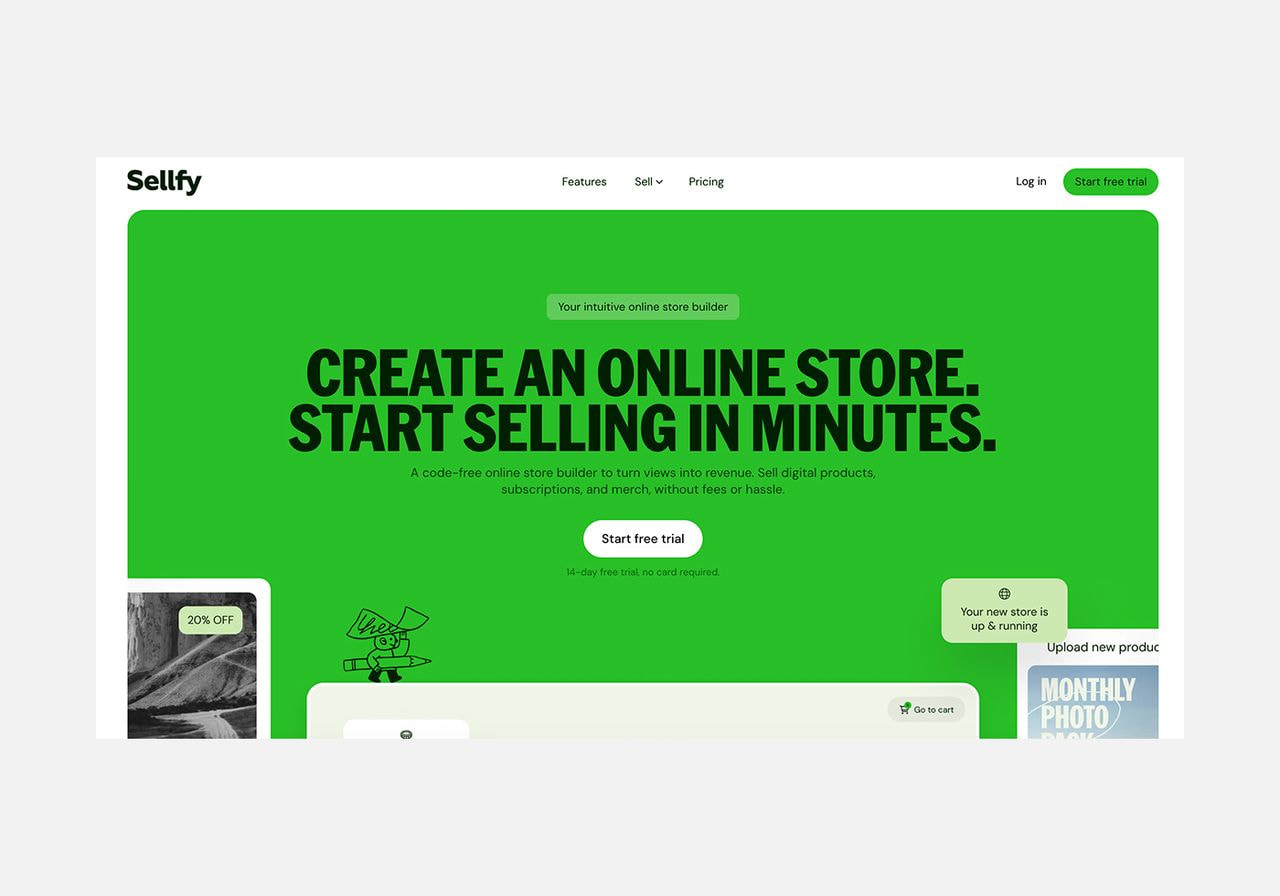
Source: Sellfy
Best for: An online store with built-in print-on-demand functionality
If you want sites like Redbubble but with more control over your storefront, Sellfy is worth a look. It lets you build a branded online store and sell print-on-demand products on the same platform.
Offer custom merchandise like t-shirts, hoodies, mugs, and posters alongside digital downloads such as eBooks, presets, or design files.
Fees and pricing
Paid plans start at $29/month ($22/month when billed annually), and you set your own product prices. When a customer orders, Sellfy charges you the production and shipping costs.
Pros
-
Sell physical products and digital downloads together
-
Store setup and fulfillment in one place
-
Built-in email marketing and discount codes
Cons
-
Smaller product catalog than the bigger POD companies
-
No direct integrations with marketplaces like Etsy or Amazon
-
Annual sales caps on each plan
10. Amaze Commerce
Best for: Social media content creators
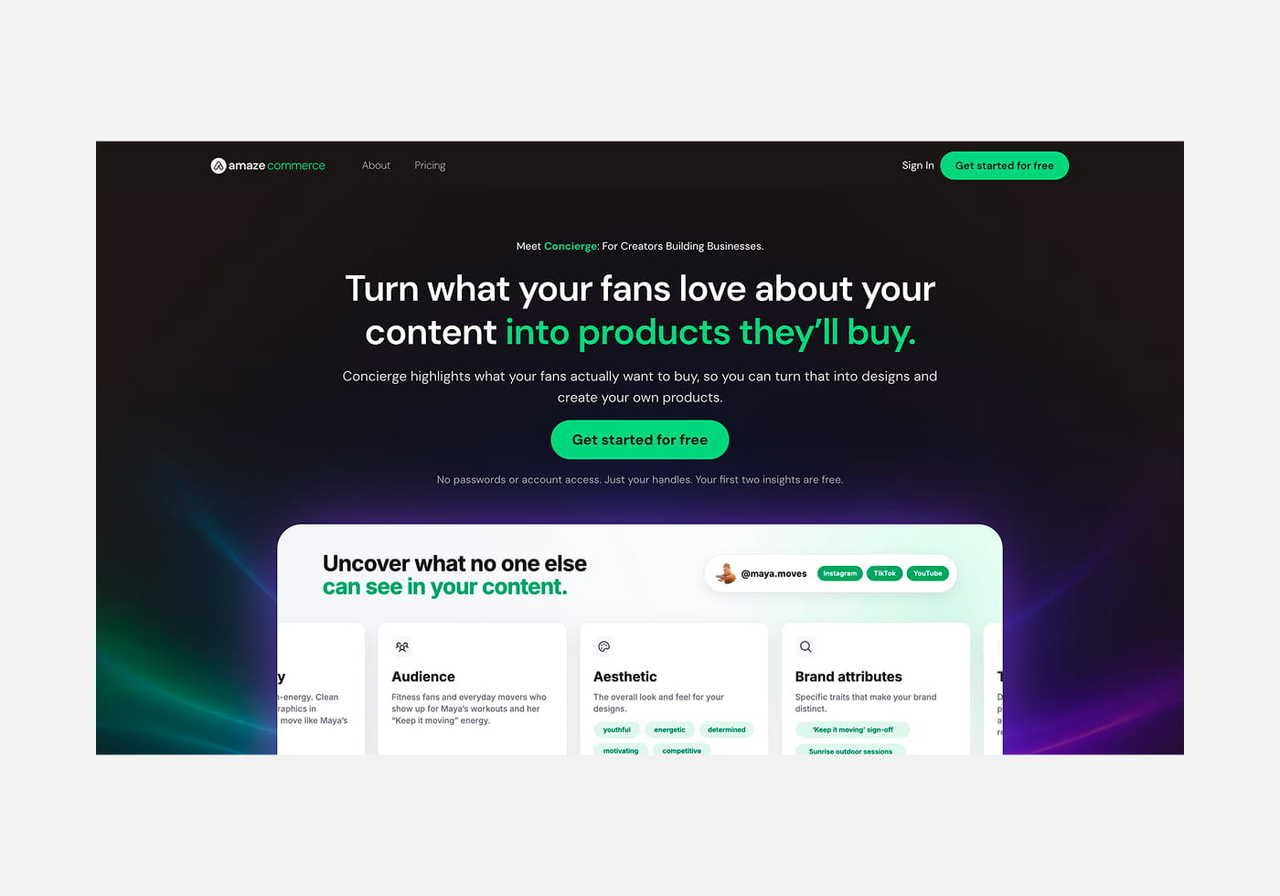
Formerly Spring (and before that, Teespring), Amaze Commerce helps creators launch merch their audience actually wants. Add your social handles, and its AI analyzes your content across multiple platforms to suggest designs and products. Got fans who found you by watching niche YouTube videos? Moments AI turns a single video into product ideas.
Fees and pricing
No upfront costs. The free plan includes 100 AI credits a month, and Basic costs $9.99/month and gives you 700 credits. You choose your profit per sale, and Amaze adds the production cost to set the selling price.
Pros
-
AI brand analysis turns fan insights into designs
-
Your profit stays fixed even if production costs change
-
Create products and publish a store at no cost
Cons
-
Storefronts and integrations are still listed as coming soon
-
AI tools run on monthly credits
-
Shorter track record than other Redbubble alternatives
11. Displate

Source: Displate
Best for: Artists focused on metal prints
Displate is one of the few Redbubble alternatives built entirely around metal wall art. If your designs work as bold statement pieces, it lets you sell metal posters without managing production or shipping.
Fees and pricing
For regular collections, artists earn a fixed commission per sale – $4.50 for M, $9 for L, and $14.50 for XL. Limited Edition commissions vary by agreement.
Pros
-
High-quality metal prints with premium finishes
-
Curated marketplace with a strong pop culture and gaming audience
-
Earn an extra 41% commission through your Share and Earn link
Cons
-
Limited to metal wall art only
-
Limited Edition drops require curator approval
-
Production is centered in Poland, so delivery outside Europe can take longer
12. CafePress

Source: CafePress
Best for: Selling through a built-in marketplace and a storefront
CafePress is a long-running print-on-demand marketplace that, unlike many Redbubble competitors, offers both visibility and control. List products in its built-in marketplace, or open a seller shop under your own name.
Fees and pricing
In a seller shop, you set the markup above the base price and keep it. When a product sells through the marketplace, you earn 5% of net revenue.
Pros
-
Hundreds of products across multiple categories
-
Sell on a built-in marketplace and your own shop
-
Free to start, with no monthly fees
Cons
-
Royalty payouts available only in select countries
-
5% marketplace earnings are low
-
Interface feels dated compared to newer platforms
13. Gooten

Source: Gooten
Best for: More printing options beyond DTG or DTF
Gooten is a print-on-demand platform that stands out for its range of techniques – including DTG, DTF, embroidery, and laser engraving – making it a good fit if you want to sell custom products beyond basic apparel.
Most orders are produced in the US through partner facilities.
Fees and pricing
No upfront fees. Set a retail price, and your profit is the difference between that and Gooten’s base cost.
Pros
-
Wide catalog across apparel, home decor, and accessories
-
Personalized packing slips
-
Loyalty program with perks for high-volume sellers
Cons
-
No in-house production, so quality may vary by partner
-
No direct integrations with Amazon or eBay
-
Base costs and shipping vary by partner facility
14. Threadless

Source: Threadless
Best for: Artists who want a community-focused marketplace
Threadless offers three ways to earn – design challenges, Artist Shops, and the main Threadless marketplace.
Fees and pricing
No upfront fees. In an Artist Shop, you set your retail price, and Threadless deducts a base cost that includes a 5% processing fee. In the marketplace, you earn a flat 10% royalty on each sale.
Pros
-
Partnered with hundreds of thousands of artists over 25+ years
-
Managed pricing lets Threadless run promotions for you
-
Free Artist Shops with no monthly fees
Cons
-
No direct integrations with external sales channels
-
Marketplace placement depends on curation
-
Mostly US-based production, so international shipping takes longer
15. Spreadshirt

Source: Spreadshirt
Best for: Selling on marketplaces, social media, and your own shop
Spreadshirt lets you sell through its global marketplace, a Spreadshop website, or external channels like Amazon or eBay in select countries.
Fees and pricing
No upfront costs. On the marketplace, you earn a fixed design commission that varies by country, product, and sales channel. On Spreadshop, you set your price and keep the difference above the base cost.
Pros
-
An AI design tool to generate new designs
-
Multiple revenue streams from the same design
-
Performance-based bonuses as sales grow
Cons
-
Discounts can reduce your commission
-
Production only in Europe and the US
-
Spreadshop features are less advanced than dedicated eCommerce platforms
16. Viralstyle

Source: Viralstyle
Best for: Running limited-time merch campaigns
With Viralstyle, you launch a time-limited campaign, promote it to your audience, and collect orders for your print-on-demand products during that window. Once it ends, Viralstyle prints and ships everything.
Fees and pricing
No upfront costs. Set a selling price above the base cost and keep the profit.
Pros
-
Built-in clipart library for quick designs
-
Coupon codes and one-click upsells
-
Downloadable buyer data for retargeting
Cons
-
Campaign orders ship after the campaign ends, which delays delivery
-
Smaller built-in audience than larger marketplaces
-
Campaigns must be relaunched to keep selling
17. Fourthwall

Source: Fourthwall
Best for: Selling merch, memberships, and digital downloads
Fourthwall is for creators who want a strong brand identity without the hassle of running eCommerce. This all-in-one print-on-demand platform lets you build an online store and source over 200 customizable products in one place.
Fees and pricing
The free plan has no monthly fees. Set your price above the flat base cost. Digital products carry a 5% fee on the free plan, and memberships carry 5% on every plan.
Fourthwall Pro costs $19/month (or $180/year) and removes the digital product fee.
Pros
-
Sell merch, digital downloads, memberships, or your own items
-
Integrations with YouTube, TikTok Shop, Twitch, and more
-
Handles customer support for catalog orders
Cons
-
Free plan caps you at 50 product listings
-
No direct integrations with Etsy or Amazon
-
Membership fees apply to both plans
18. PrintAura

Source: PrintAura
Best for: A straightforward white-label print-on-demand service
PrintAura is a no-frills service for brands that want a private-label feel. Besides standard apparel, it offers branded labels, packaging inserts, and label removal.
Fees and pricing
No upfront costs. Set your retail price above PrintAura’s base cost and keep the difference.
Pros
-
Multiple custom branding options
-
Integrations with Etsy and Shopify
-
Uses well-known apparel brands like Gildan and Champion
Cons
-
Dashboard is less intuitive than newer platforms
-
Smaller catalog than most Redbubble alternatives
-
Higher shipping costs than some services
Why search for Redbubble alternatives?
For many independent artists, Redbubble Print on Demand is the easy first step: it’s simple to upload designs and start selling. But the economics have changed for many sellers.
Since September 1, 2025, Redbubble charges Standard accounts a 50% platform fee on monthly earnings and Premium accounts 20%. Only Pro accounts are exempt, and fees are capped at $150 a month.
On top of that, Standard and Premium artists set a markup above 20% pay a 50% excess markup fee on earnings over that threshold. In practice, that limits your pricing control – the more you charge, the bigger the cut.
What that looks like: You set a 20% markup on a shirt with a $20 base price – you earn $4. On a Standard account, the platform fee takes $2 of it.
Beyond platform fees, creators often look for Redbubble alternatives to:
-
Expand their product range and printing techniques
-
Diversify sales channels instead of relying on a single online marketplace, where visibility can drop as SEO trends shift
-
Increase their profit margins by setting their own markup
-
Get more control over branding, packaging, and the customer experience
How to choose the best Redbubble alternative
Not all Redbubble alternatives work the same way, so compare a few before you commit.
-
Decide where you’ll sell. Do you want your own store, marketplace exposure, or both? Unlike a typical POD platform, hybrids like CafePress and Threadless let you do both.
-
Check the catalog. Make sure it fits your niche – apparel, wall art, metal posters, or personalized gifts.
-
Compare earnings. Marketplaces are often pitched as passive income, but fixed commissions, royalties, and your own markup lead to very different margins.
-
Look at branding. For a lasting brand identity, prioritize custom packaging, labels, and white-label features.
-
Test the tools. A user-friendly interface makes it easier to upload designs, adjust prices, and track orders.
-
Check integrations. Make sure the platform works with your existing eCommerce stores, such as Shopify, Etsy, or WooCommerce.
Bottom line: Pick the platform that fits how you sell
Redbubble alternatives give creators more flexibility in how they sell and price their work. The best Redbubble alternatives for you depend on your goals – marketplace exposure, a fully branded store, or a mix of both.
If you want to build a brand with consistent quality, try Printful. It’s free to start, integrates with major eCommerce platforms, and offers in-house printing.
Frequently asked questions
Many Redbubble alternatives are better for specific goals. If you want reach without building a store, TeePublic, Zazzle, and Amazon Merch on Demand are strong marketplaces, while Displate and Saatchi Art suit wall art. If you want pricing control and your own brand, a platform like Printful lets you sell through your own store and keep your full markup.
Yes – Redbubble is still an active marketplace. But since the 2025 fee update, many Standard-tier artists pay up to 50% of their monthly earnings in platform fees, which is why more sellers now use Redbubble alongside other platforms.
Articore owns both, but they pay artists differently. TeePublic pays fixed amounts per sale, such as $4 per t-shirt at regular price, and doesn’t charge account fees. Redbubble lets you set your own markup, but tier-based fees can cut your earnings. TeePublic is simpler, while Redbubble offers more pricing flexibility.
Zazzle is a better fit for stationery, invitations, and event products, and lets you set royalties from 5% to 50% on physical items. Redbubble is stronger for art-driven apparel and stickers.

Chan is a copywriter, creative writer, and technical writer with 15 years of experience creating everything from training courses to compelling marketing copy. A self-confessed research nerd, she loves digging deep into a subject and bringing it to life on the page. When she’s not writing, she’s exploring forest trails or walking the beach with her dog, or in the kitchen experimenting with homemade pickles and jams.

