



Table of contents
The print-on-demand business model lets you sell custom products without buying inventory or handling fulfillment yourself. Add your designs to products like t-shirts, wall art, mugs, hoodies, tote bags, and phone cases, then your provider prints and ships each order. Here’s a look at the best print-on-demand companies worth your time.
We compared leading print-on-demand providers by product range, pricing, branding, integrations, shipping, and production setup to help you find the right fit for your store and customers.
What’s a print-on-demand company?
A print-on-demand company prints, packs, and ships custom products only after someone places an order. You choose a product, add your design, list it in your online store, and the provider handles production and fulfillment.
Most print-on-demand sites let you sell one item at a time, so you don’t need bulk inventory, storage space, printing equipment, or packaging supplies. The trade-off comes from per-item costs: on-demand production may cost more than bulk manufacturing, so your pricing has to cover the product, shipping, platform fees, and profit margin.
For sellers, this model works best when the provider matches the products you want to sell and meets your standards for print quality, branding, delivery speed, and customer support.
How to choose the best print-on-demand supplier?
The best print-on-demand supplier depends on what you sell, where your customers live, and how much control you want over branding, pricing, and fulfillment. Don’t pick a print-on-demand platform just because one product looks cheap. Test the full path from design upload to delivery.
Before choosing, check:
-
Product range – make sure the catalog supports your core products, whether you want to sell t-shirts, offer framed prints, or build a mixed store
-
Production setup – compare in-house production, local manufacturers, marketplace networks, and third-party print provider options
-
Shipping logic – check how fast the company can ship products domestically and internationally, plus tracking, and whether it supports fast local delivery
-
Branding options – look for custom neck labels, branded packaging, pack-ins, inside labels, and white-label workflows if brand presentation matters
-
Integrations – confirm the platform connects with your preferred eCommerce platforms, marketplace tools, or API setup
-
Profit control – compare base prices, shipping, discounts, taxes, and the final retail price before judging profit margins
-
Testing workflow – use order samples to check product feel, color accuracy, sizing, packaging, and whether the result matches customer expectations
Most POD platforms look similar from the outside. The difference shows up after you publish a product, receive an order, contact support, and see what the customer actually gets.
The best print-on-demand eCommerce platforms at a glance
What is the best print-on-demand platform? You need to take into account things like ease of use, production costs, branding options, and best use case. Use it to shortlist companies before choosing your POD partner.
|
Company |
Product range |
Pricing tier |
Branding options |
Best for |
|
Printful |
582 products across apparel, accessories, home goods, and wall art |
$$ |
Strong |
Sellers building a brand with repeat customers |
|
Printify |
2,000+ products and 90+ Print Providers |
$-$$ |
Moderate |
Sellers who want choice, testing room, and provider flexibility |
|
Gelato |
Apparel, paper products, posters, and wall art |
$$ |
Limited |
Stores that need local production for global audiences |
|
Redbubble |
Apparel, stickers, accessories, and wall art |
$ |
Limited |
Artists who want a marketplace instead of their own store |
|
Amazon Merch on Demand |
Apparel, accessories, and select merch products |
$ |
Limited |
Creators who want Amazon reach and built-in fulfillment |
Use this table as a first filter, then read the full reviews of even more below. A fashion brand, art shop, creator merch store, and high-volume POD business won’t need the same print-on-demand sites.
The 16 best print-on-demand sites
Let’s check out the top print-on-demand companies for building your online store and selling customized products with no upfront costs.
1. Printful
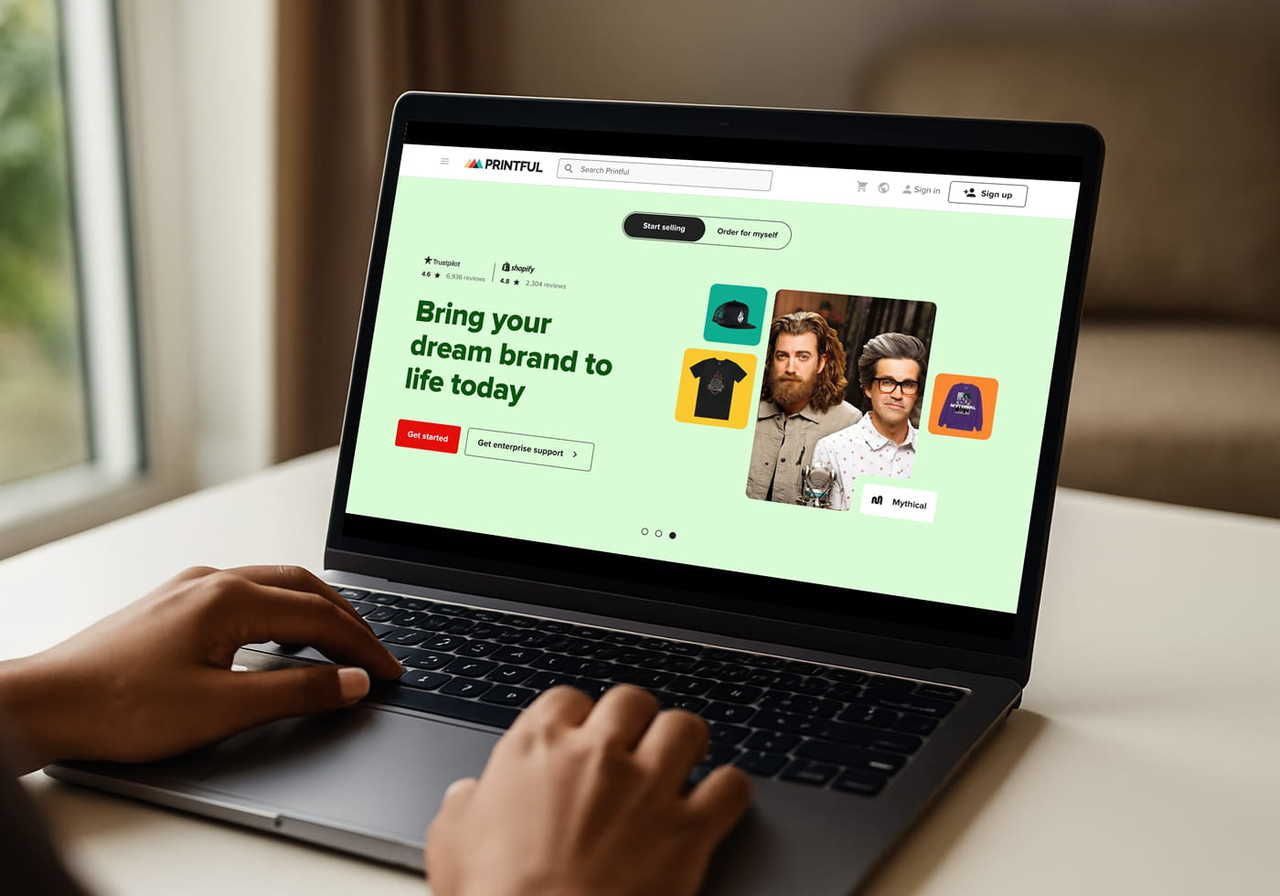
Printful is a leading POD company known for its consistent quality, responsive customer service, and wide range of customizable products.
We offer several decoration methods, including direct-to-garment (DTG) printing, all-over print, direct-to-film (DTFlex, our proprietary solution for extra vibrant results) printing options, classic embroidery, and unlimited color embroidery.
Sellers can also use branding features like custom neck labels, inside labels, custom packaging, pack-ins, and branded packing slips on eligible products – the entire process takes mere minutes to create them.
Read more: 7 Printful branding tools to create a consistent look and feel for your brand
Pros:
-
Excellent product, print, and embroidery quality
-
In-house production through Printful’s own facilities
-
582 high-quality products to design
-
Several custom branding options
-
Fast shipping times
-
User-friendly interface
-
22 sales channel integrations
-
Bulk discounts
Cons:
-
Some other POD platforms offer larger catalogs
-
Base prices may sit higher than marketplace-style suppliers
Available products:
-
Clothing
-
Accessories (bags, footwear, and tech accessories)
-
Home goods (wall art, home decor, drinkware, stationery, kitchen, bathroom, and pet products)
Best for:
-
Entrepreneurs, creators, brands, and small businesses
-
Sellers who care about product consistency, branding, support, and global fulfillment more than chasing the lowest possible base cost.


2. Printify
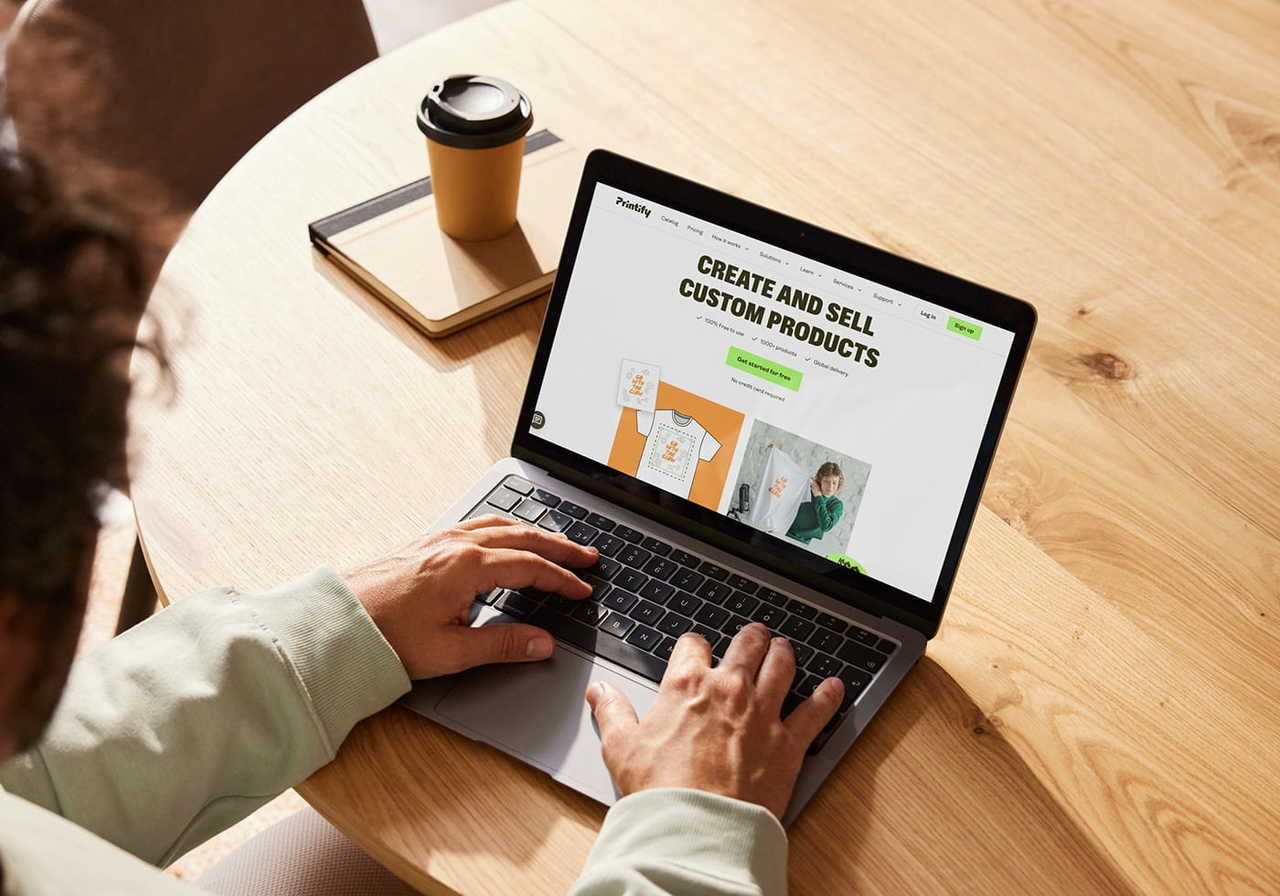
Printify is a print-on-demand company built around supplier choice and catalog size. It offers over 2,000 products and multiple Print Providers (more than 90), giving sellers room to compare price, region, production time, product range, and shipping setup.
The platform is great for sellers who want to test many product categories, including apparel, accessories, wall art, home decor, drinkware, stationery, pet accessories, and tech accessories.
Pros:
-
Large product catalog
-
Low upfront cost with a free plan
-
Custom branding options
-
Fast average production time
-
Provider choice by price, location, production time, and product options
-
Good fit for sellers testing different products or markets
Cons:
-
Print quality, delivery times, and shipping costs all depend on the third-party suppliers
Available products:
-
Clothing
-
Accessories (bags, stationery, tech, car, travel, kitchen, and pet accessories)
-
Home goods (wall art, home decor, and drinkware)
Best for: Online sellers looking to start a print-on-demand business with a wide product selection, competitive pricing, and flexibility to switch between print providers.
Read more: Printful vs Printify comparison
3. Redbubble
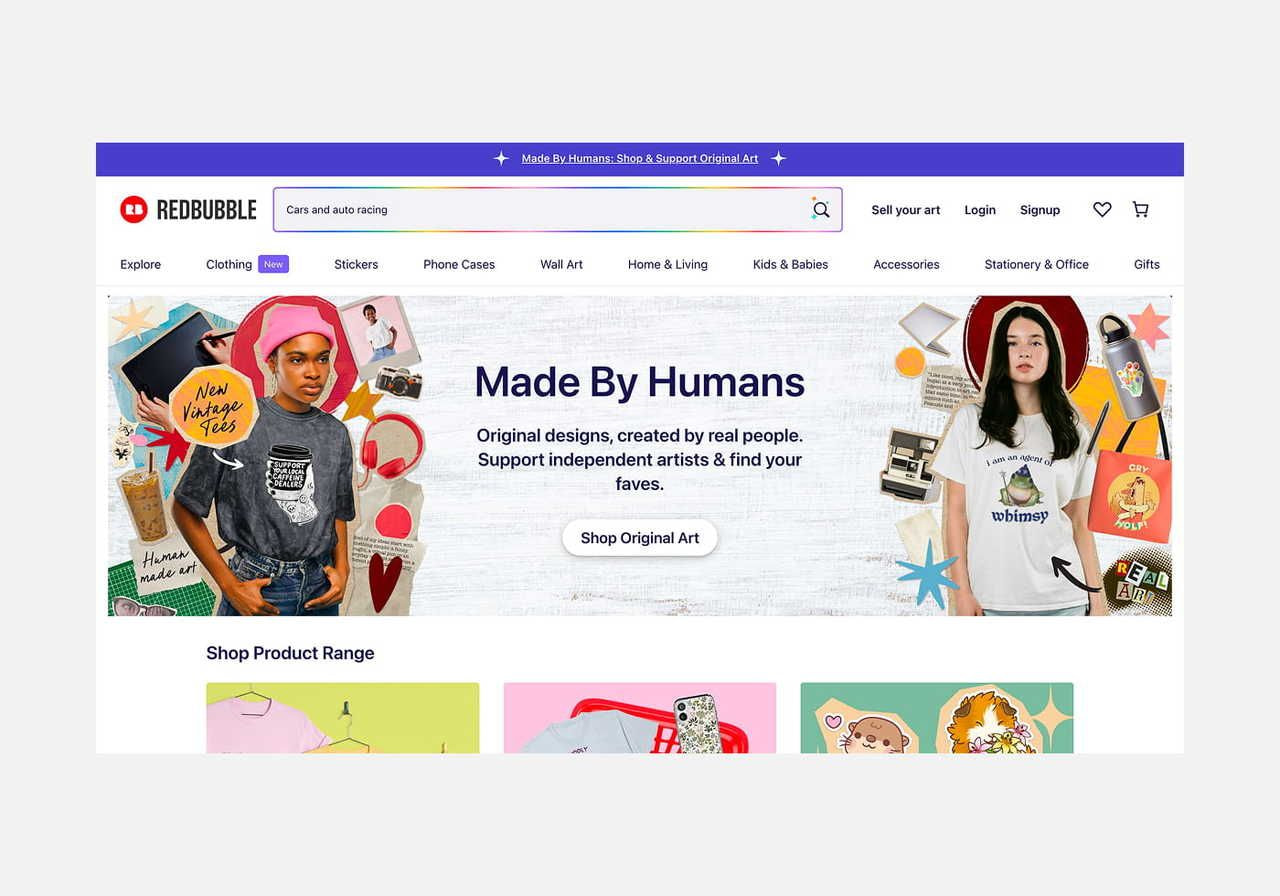
Redbubble is a popular print-on-demand marketplace that connects artists with buyers. It stands out for its artist-focused community and product offerings, including art prints, home decor, and clothing.
Redbubble handles on-demand printing and worldwide shipping, making it easy for artists to reach a global audience without worrying about logistics.
Pros:
-
Large, active community
-
Global audience reach
-
Easy-to-use platform
Cons:
-
Lower profit margins
-
Limited product catalog
-
Email-only support
-
No product branding options
-
No embroidery
Available products:
-
Clothing
-
Accessories (hats, pins, and bags)
-
Home goods (wall art and stationery)
Best for: Artists looking to reach a broad audience and build their own online store without dealing with inventory or shipping.
Read more: 18 Best Redbubble alternatives for Print on Demand
4. Amazon Merch on Demand
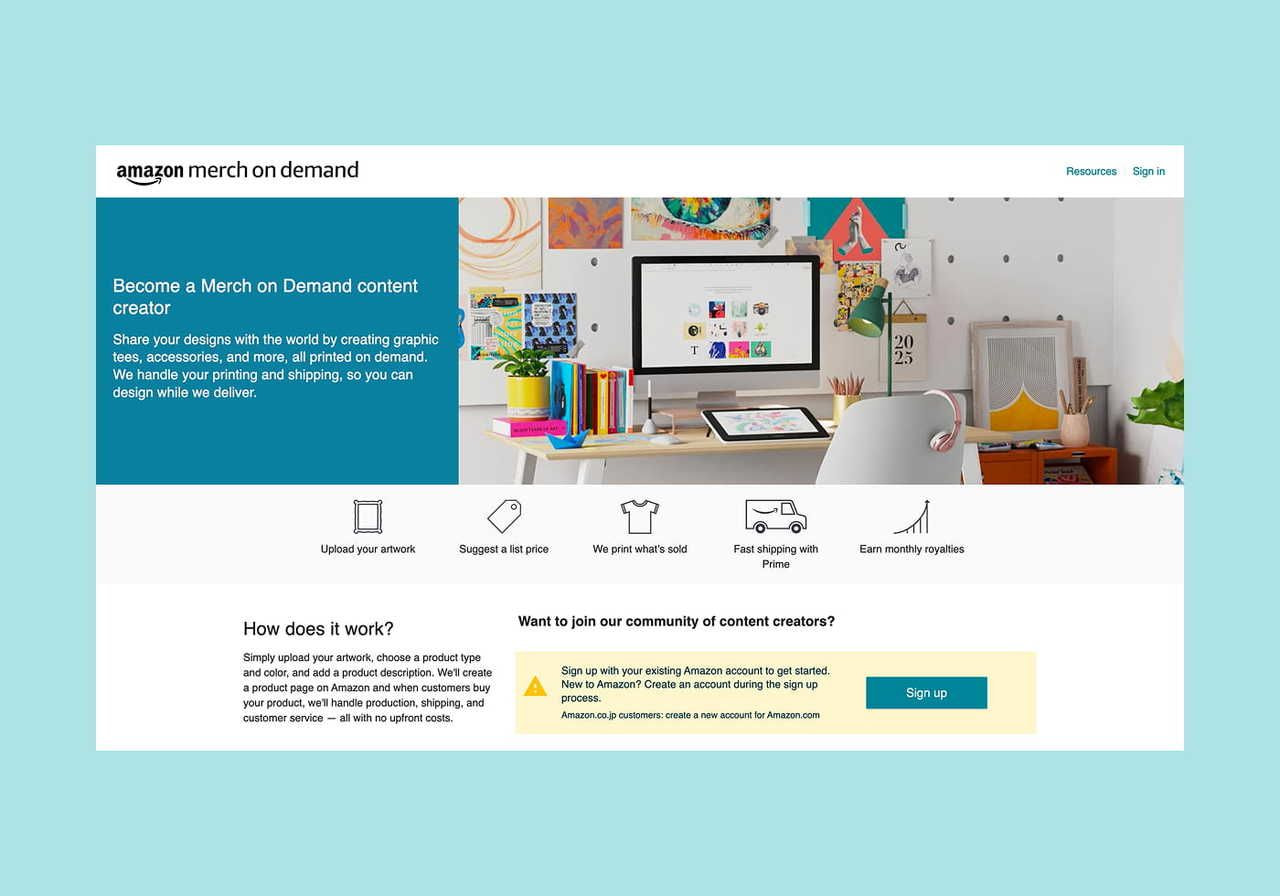
Amazon Merch on Demand lets creators sell products directly on Amazon. The platform handles order fulfillment and customer service.
Pros:
-
Access to Amazon’s vast customer base
-
Reliable shipping times
-
Prime delivery
Cons:
-
Limited product selection
-
High competition
-
Limited personalization options
-
Long approval process
-
Low profit margins
Available products:
-
Tees
-
Sweatshirts
-
Hoodies
-
Phone cases
-
Pillows
-
Tote bags
Best for: Creators, influencers, and brands who want to tap into Amazon’s massive audience and don’t mind the limited product range.
Read more: Amazon Merch on Demand vs Printful: What’s your best fit?
5. Gelato
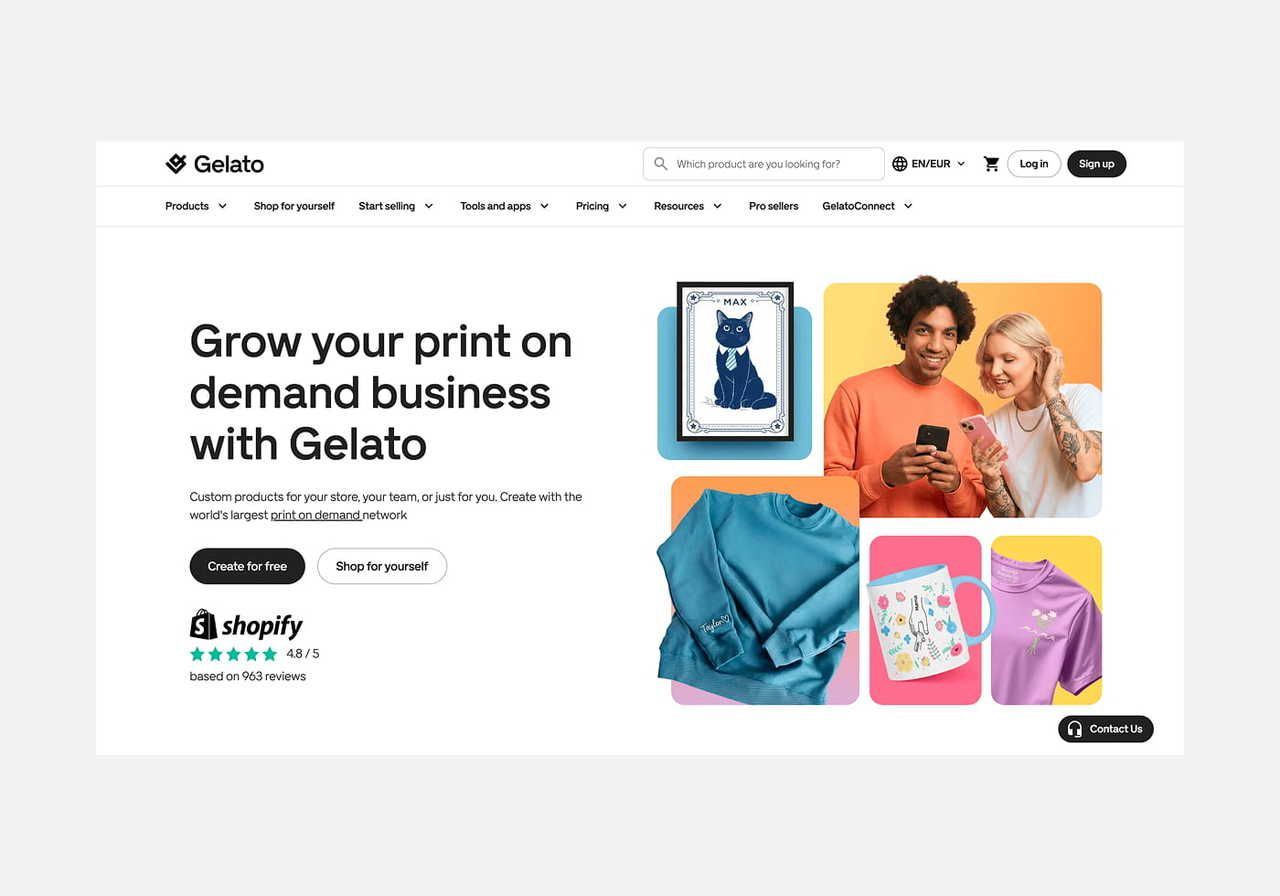
Gelato is a print-on-demand platform focused on local production. It works with over 250 print partners across 32 countries and delivers to 200+ countries and territories, helping sellers shorten routes for international orders.
This setup suits brands selling posters, cards, calendars, apparel, photo books, and wall art to a global target market. Gelato’s value depends on whether the product and destination qualify for local fulfillment.
Pros:
-
Fast delivery with local production facilities
-
Reduced shipping costs
-
Wide custom product range
Cons:
-
Higher prices for some products
-
Not every product can be produced locally in every country
-
Branding options stay limited compared with Printful
-
Product availability can vary by region
Available products:
-
Clothing
-
Accessories
-
Home goods (photo books, posters, calendars, and cards)
Best for: eCommerce businesses targeting global markets that want localized production routes, especially for paper products, posters, and wall art.
Read more: Gelato vs Printful: Print-on-demand services compared
6. Merchize
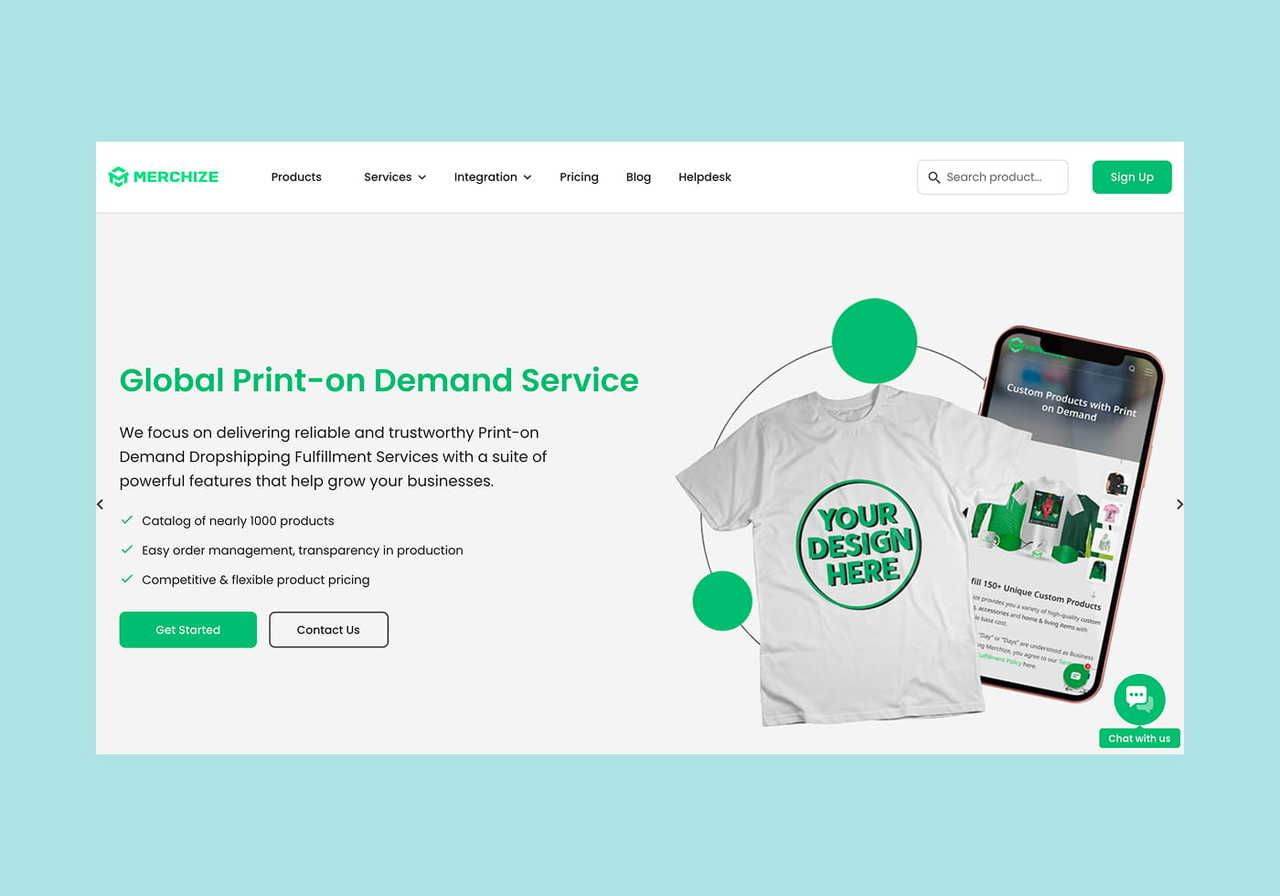
Merchize is one of the best print-on-demand services with in-house production in Vietnam and additional fulfillment coverage in the US, the EU, the UK, Australia, and China. Its homepage now lists more than 700 print-on-demand products.
The catalog covers apparel, accessories, home decor, office products, stationery, and lifestyle items, making it useful for sellers seeking more unusual product formats beyond basic shirts and mugs.
Pros:
-
Big product catalog
-
Worldwide fulfillment
-
1-day production for select products
-
Integrations with all major eCommerce platforms and marketplaces
-
Custom branding available
Cons:
-
The website and setup flow may take longer to learn
-
Shipping speed depends heavily on product type and fulfillment region
-
Some merchants may prefer a simpler beginner interface
Available products:
-
Clothing
-
Accessories (bags, keychains, and footwear)
-
Home & living products (blankets, wall art, and kitchenware)
-
Office and stationery products (phone cases, bookmarks, and badge reels)
Best for: Print-on-demand business owners willing to learn to navigate the website efficiently.
Read more: Print on Demand for beginners
7. Zazzle
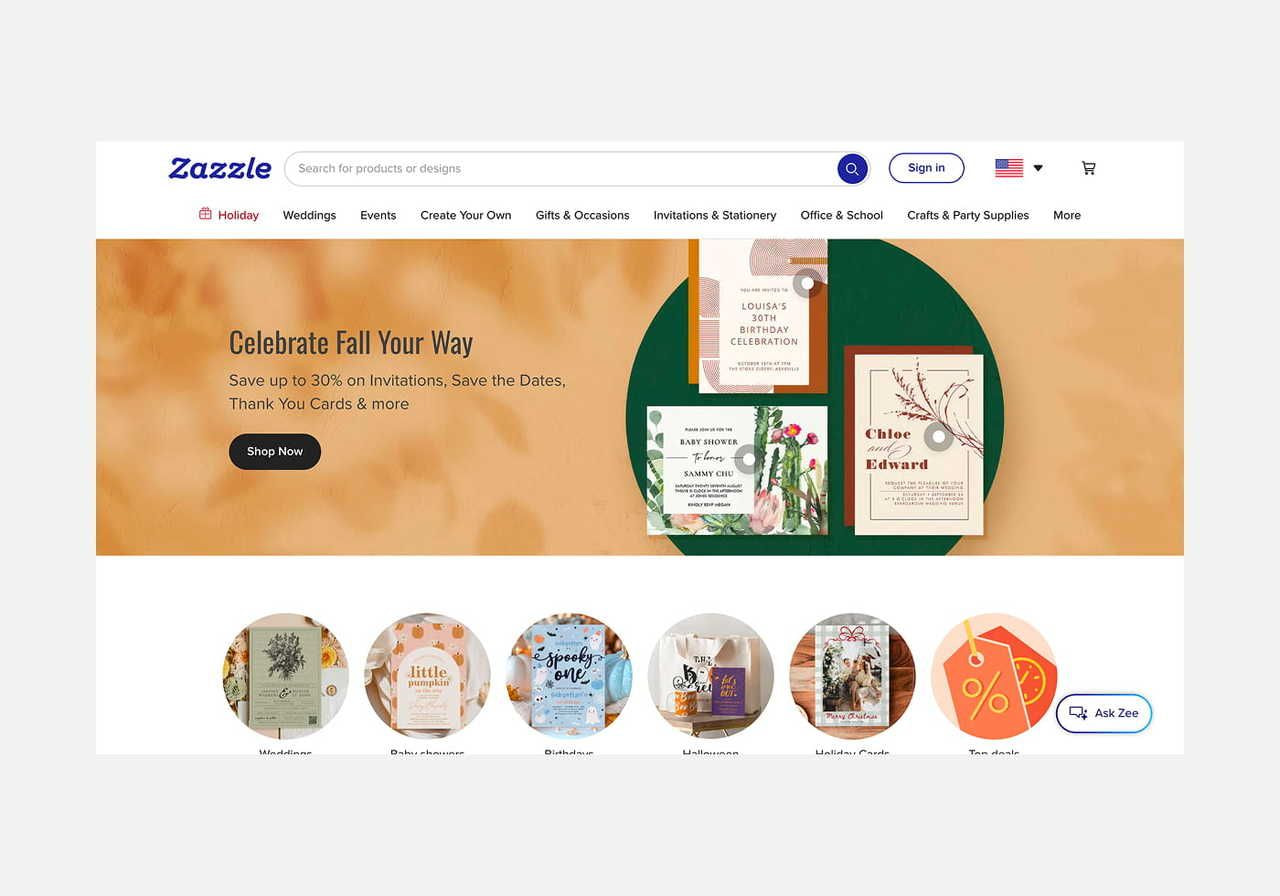
Zazzle is an online marketplace that offers print-on-demand services. Designers and customers can create standout products ranging from clothing and accessories to games and party supplies.
Zazzle provides tools and resources to help artists and creators monetize their designs by reaching a global audience while handling production.
Pros:
-
Unique and vast product catalog
-
Easy-to-use design tool
-
Good customer support
Cons:
-
Lower profit margins
-
Longer shipping for some products
-
Limited custom branding options
-
Competitive marketplace
-
Variable product pricing
Available products:
-
Clothing
-
Accessories (hats, bags, watches, and sunglasses)
-
Stationery
-
Party supplies
-
Home goods (home decor, drinkware, kitchen items, and pet products)
-
Wall art and decor
-
Sports items, games, and toys
-
Tech accessories and electronics
Best for: Designers and artists looking for a broad product selection and a built-in marketplace to sell their work.
8. Society6
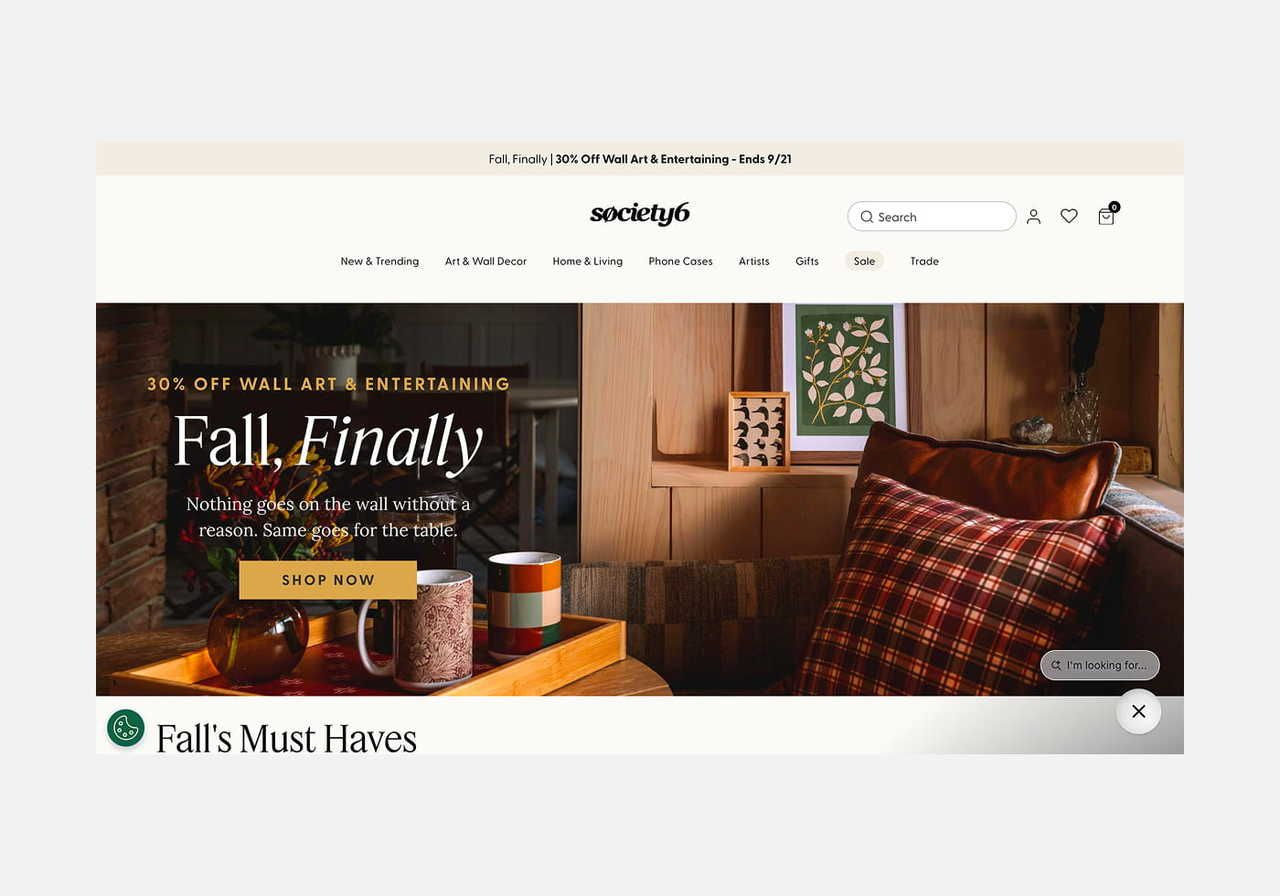
Society6 is a print-on-demand marketplace specializing in art prints, home decor, and lifestyle products.
It’s popular among artists and designers for its unique product offering and community-driven approach. Society6 handles production, shipping, and customer service, allowing artists to focus on creating.
Pros:
-
Unique and artistic product range
-
Active artist community
-
Quality printing
-
Global reach
Cons:
-
Artist earnings changed in 2025: Society6 lists a 10% markup for pillows, wall tapestry, framed art, art prints, framed art prints, and posters, and 5% for other products
-
As of 2025, new artists can no longer just sign up and start selling, and pricing is now standardized platform-wide rather than set by the artist
-
Limited branding control
-
Variable shipping times
-
Competitive marketplace
-
Less control over customer relationships than selling through your own website
Available products:
-
Wall art
-
Home and living items (home decor, kitchen, bedroom, bathroom, office, and outdoor products)
-
Clothing (tees, sweatshirts, hoodies, sweatpants, and socks)
-
Accessories (bags and tech products)
Best for: Artists and designers who want to sell wall art, home decor, and lifestyle products through an existing marketplace instead of building their own print-on-demand website.
9. Gooten
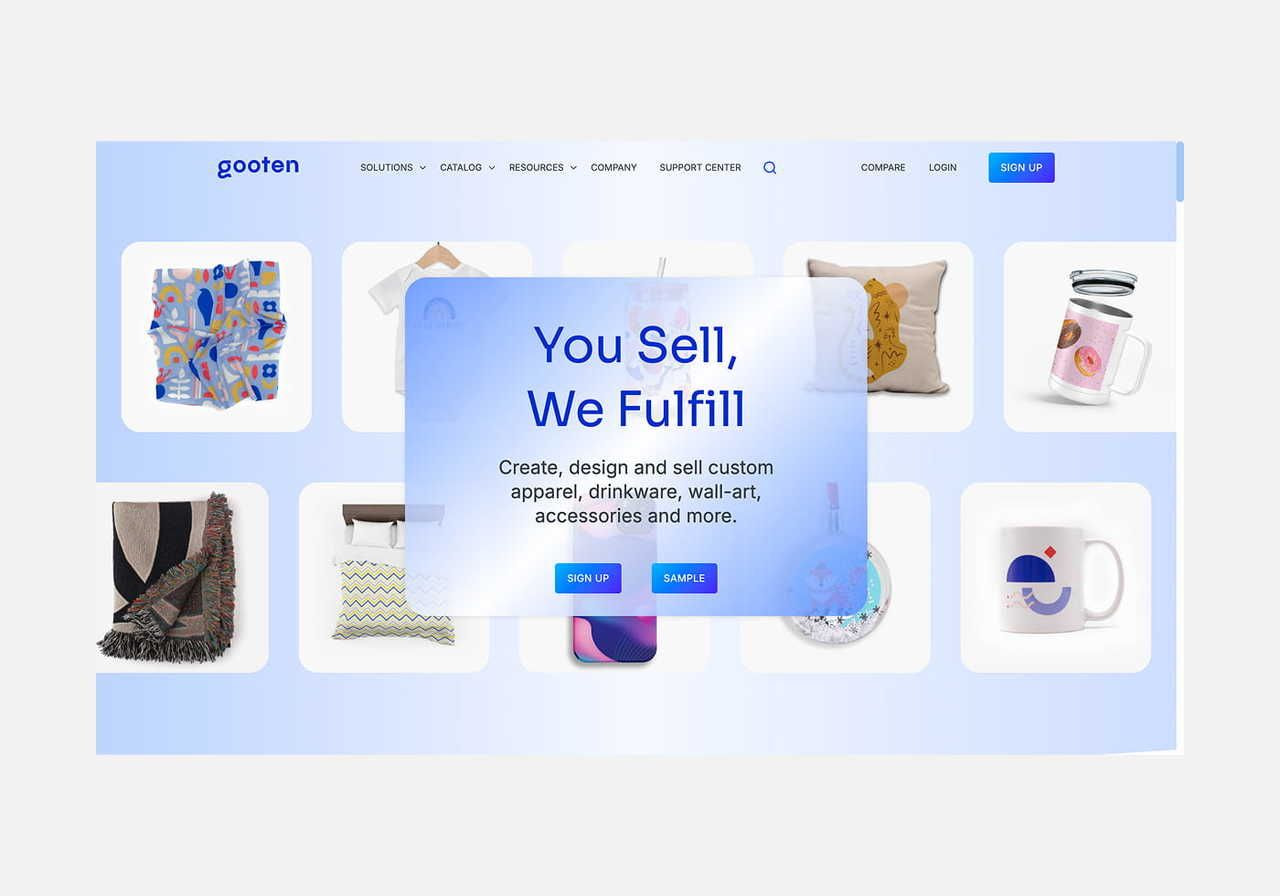
Gooten is a flexible print-on-demand company that partners with a network of print providers to offer a wide range of custom products. Known for its cost-effective shipping and large product catalog, Gooten provides various printing techniques, including DTG, sublimation, and embroidery.
Pros:
-
Wide range of products
-
Multiple printing techniques
Cons:
-
Varying quality
-
Limited custom branding options
-
Most products are only available in the US
-
Customer support can be slow
-
Limited sales channel integrations
Available products:
-
Clothing (mostly t-shirts, sweatshirts, and hoodies)
-
Home and lifestyle products
-
Drinkware
-
Wall art
-
Accessories (bags, stationery, tech, travel, and pet products)
Best for: Entrepreneurs who want a cost-effective POD supplier with a large product catalog and don’t mind a slightly longer setup process.
10. Spreadshop
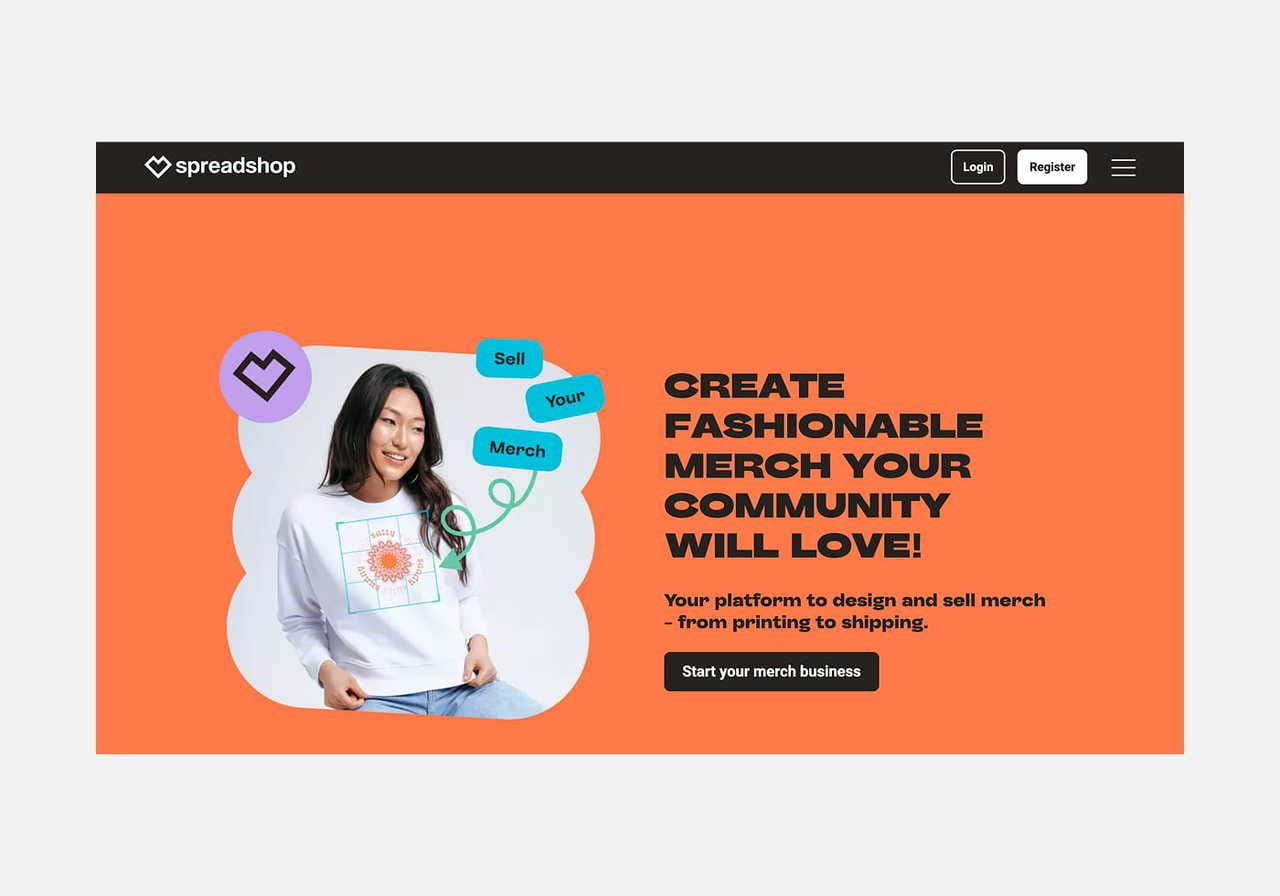
Spreadshop and Spreadconnect sit under the Spreadshirt ecosystem. Spreadshop gives creators a storefront-style selling option, while Spreadconnect focuses on print-on-demand production for sellers using external sales channels.
Spreadconnect claims that 95% of orders ship in under 48 hours, making it a strong option for sellers who prioritize speed over catalog depth.
Pros:
-
Fast production claims for most orders
-
Straightforward setup
-
Good for apparel basics, bags, drinkware, and stickers
-
No setup fee for getting started
Cons:
-
Limited product range compared with larger POD companies
-
Fewer branding options
-
Limited integrations compared with broader POD services
-
May not fit sellers who need a large mixed-product catalog
Available products:
-
Clothing (t-shirts, sweatshirts, hoodies, tank tops, jackets, joggers, shorts, leggings, and baby clothing)
-
Accessories (bags, hats, drinkware, and home goods)
-
Stickers
Best for: Sellers who need fast domestic shipping, simple product setup, and a focused catalog of apparel and merch basics.
11. Fine Art America
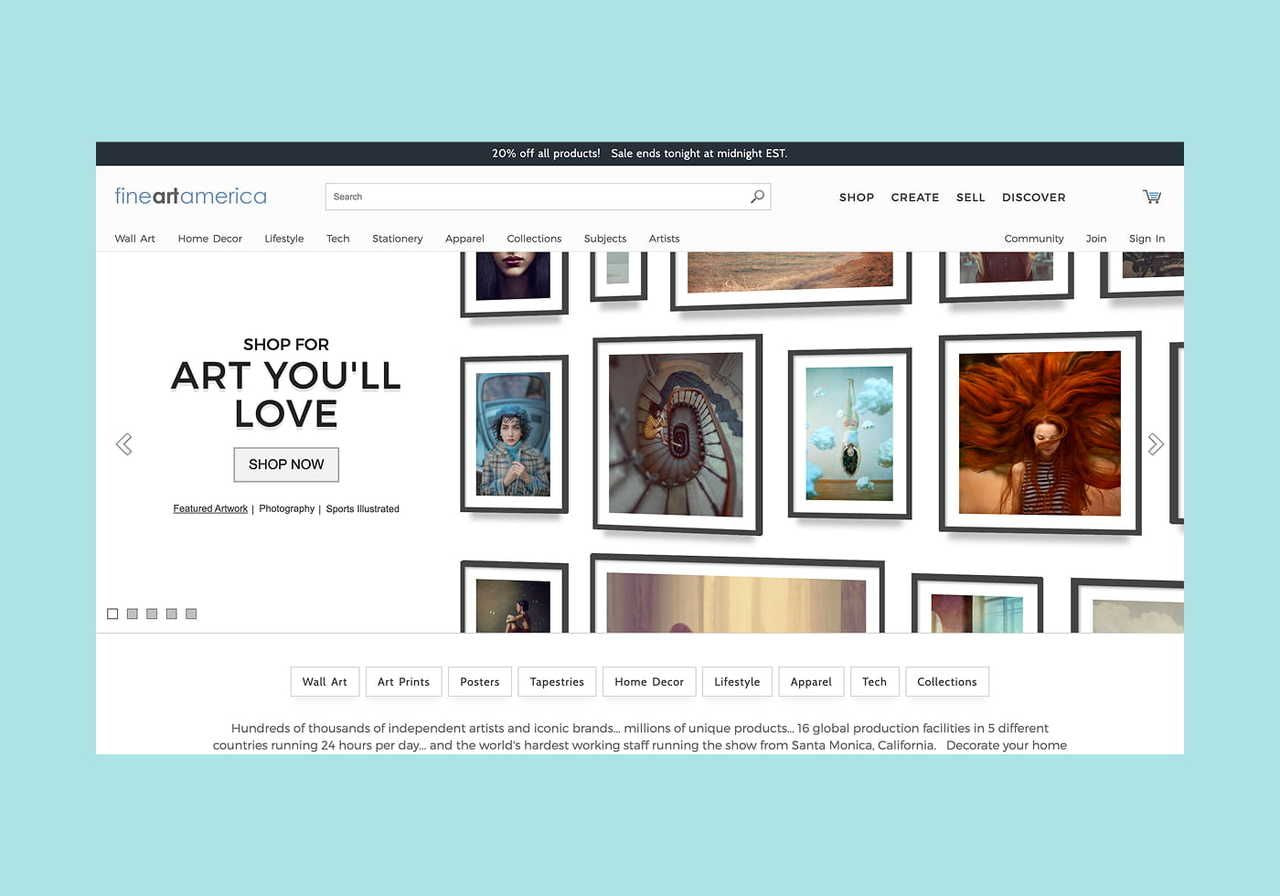
Fine Art America specializes in high-quality art prints and wall decor, catering to artists and photographers.
The company primarily uses giclée printing and can print on several materials, including canvas, metal, acrylic, wood, posters, and framed prints.
Pros:
-
High-quality art prints
-
Wide range of printing techniques
-
Global reach
-
Easy-to-use platform
Cons:
-
Higher pricing
-
Limited product range
-
Slow shipping
-
Less focus on apparel
-
Higher upfront costs
Available products:
-
Wall art
-
Home decor (throw pillows, blankets, shower curtains, and mugs)
-
Lifestyle products (bags, beach towels, and jigsaw puzzles)
-
Phone accessories
-
Stationery (cards, notebooks, and stickers)
-
Apparel (t-shirts, hoodies, and baby onesies)
Best for: Artists and photographers who want to sell higher-end wall art, canvas prints, metal prints, acrylic prints, and framed products with global fulfillment options.
Read more: Fine Art America vs Printful: Artist profitability comparison
12. Spring
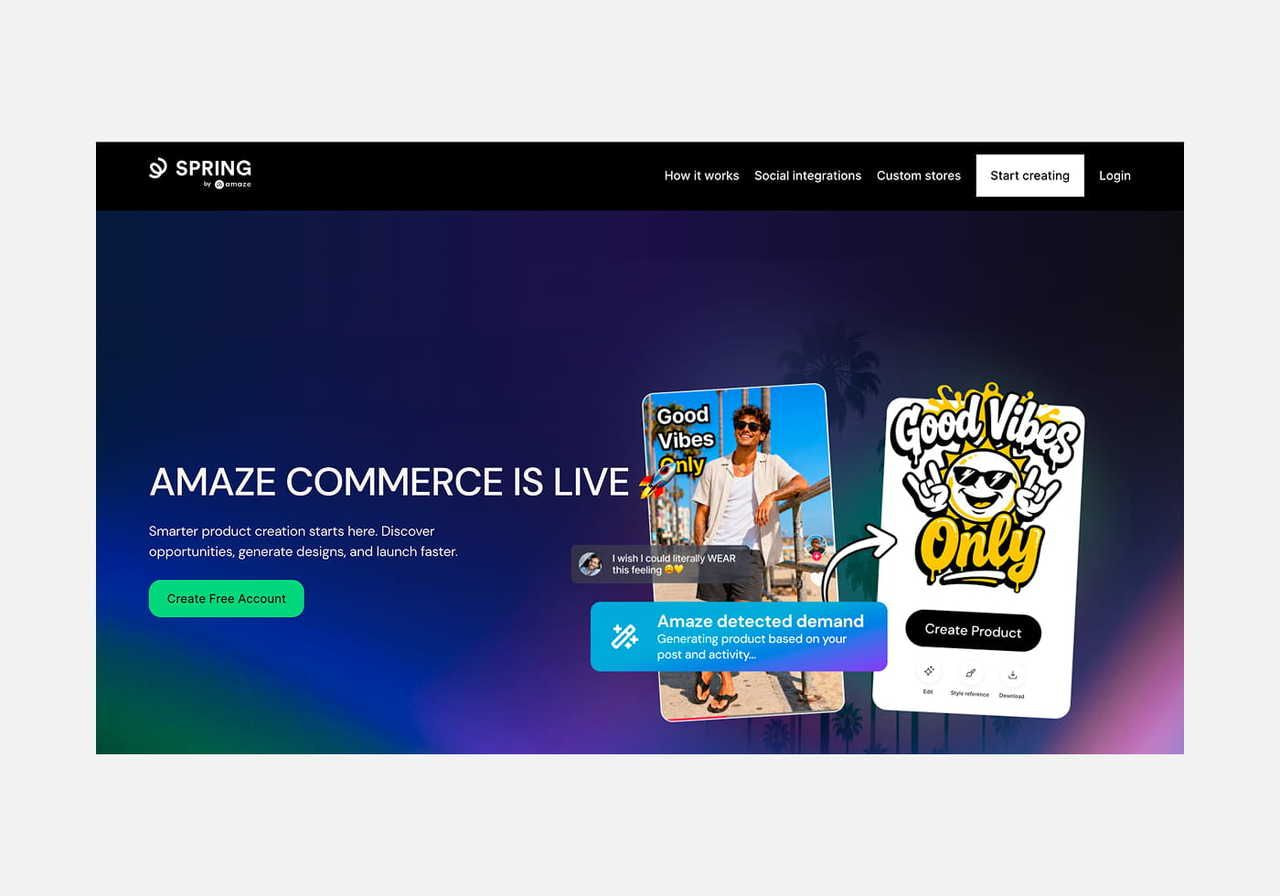
Spring lets creators design and sell custom apparel and merchandise through their platform. It offers a user-friendly design tool and various decoration techniques, including DTG printing and embroidery.
Spring handles production, shipping, and customer service, making it easy to start an online business.
Pros:
-
Easy-to-use design tool
-
Good print quality
-
Integration with social media platforms
-
Global reach
-
Sell directly on the platform
Cons:
-
Limited product range
-
Lower profit margins
-
Slow shipping
-
Limited branding options
-
Product quality can vary
Available products:
-
Apparel
-
Hats
-
Home and decor (wall art, drinkware, and home decor)
Best for: Content creators looking for an easy way to monetize their audience with custom merchandise.
Read more: Printful vs Spring: Print-on-demand partners compared
13. Spreadshirt
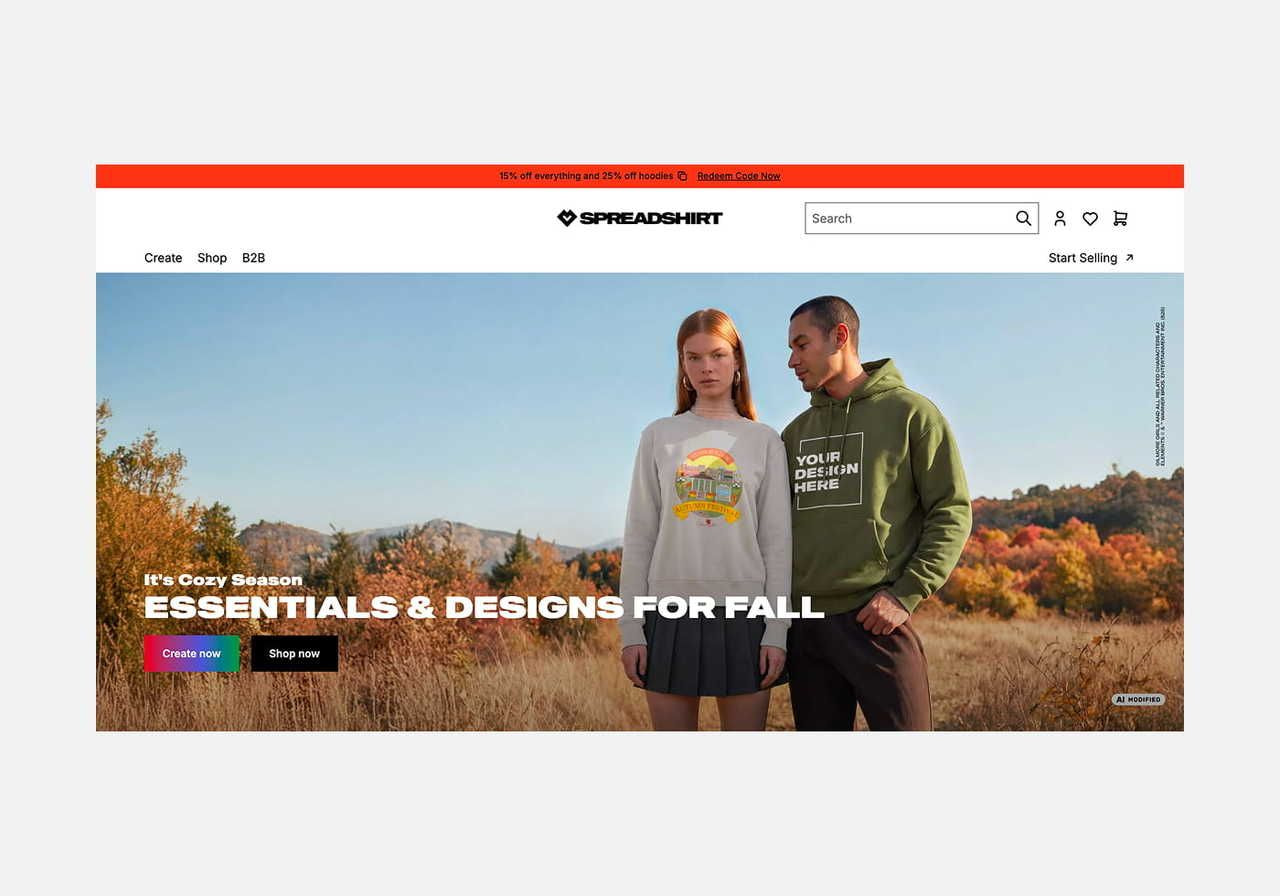
Spreadshirt is an online platform that offers print-on-demand services and also acts as a marketplace. With Spreadshirt, people can customize POD staples like t-shirts, hoodies, mugs, and caps.
Pros:
-
Easy-to-use platform
-
Multiple customization techniques, including DTG and embroidery
-
Cost-effective shipping
-
Product return or exchange within 90 days after purchase
Cons:
-
Lower profit margins
-
Limited branding options
-
Varying product quality
-
Saturated marketplace
Available products:
-
Clothing
-
Bags and hats
-
Home and living items (drinkware, posters, and mouse pads)
-
Stickers
Best for: Small businesses looking for a simple, low-cost POD solution with an easy-to-use platform and built-in marketplace.
Read more: Printful vs Spreadshirt
14. Teelaunch
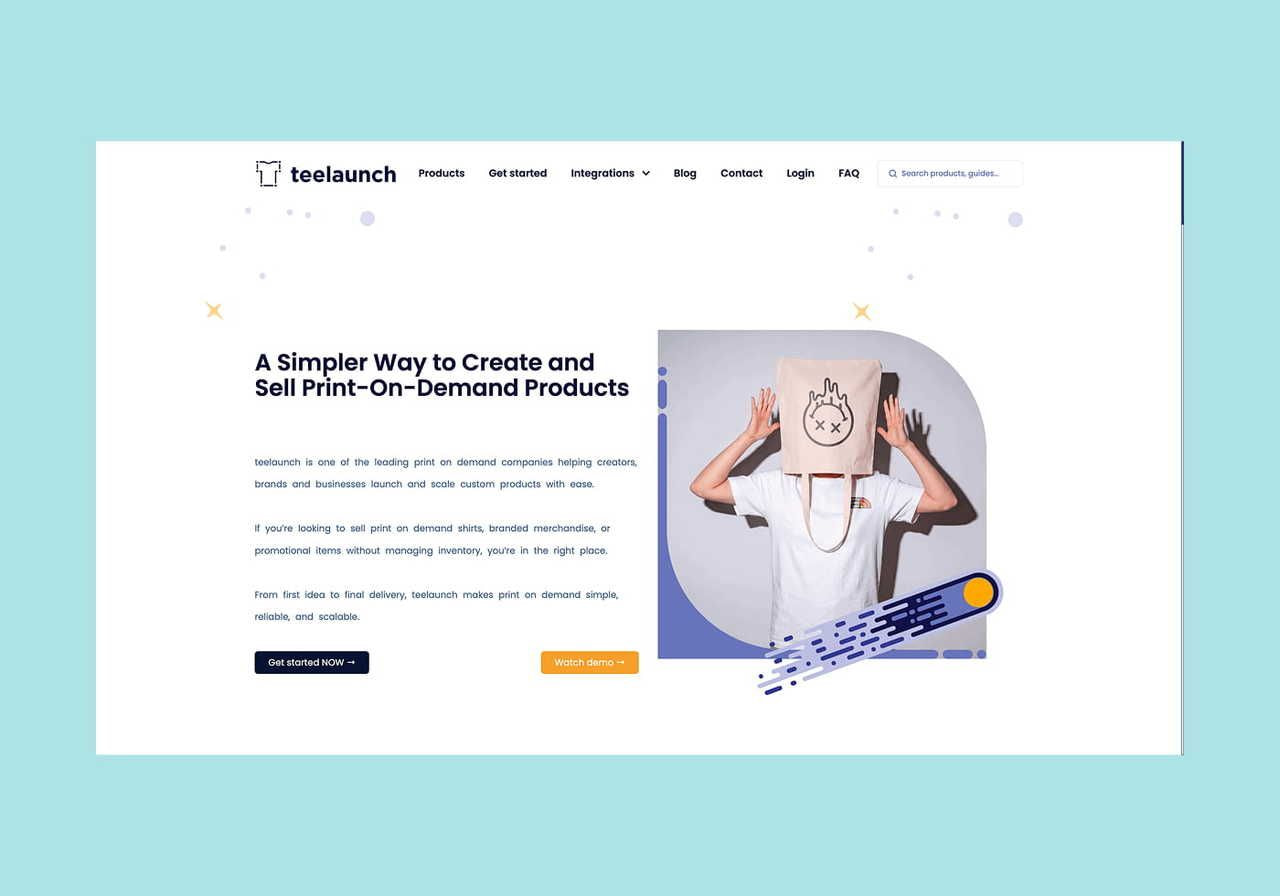
Teelaunch is a print-on-demand company that offers a wide range of custom products using various printing techniques, including DTG, sublimation, and laser etching.
Pros:
-
Price matching to ensure the lowest prices
-
Global fulfillment network
-
Good customer support
Cons:
-
Integrates with only 4 sales channels
-
Higher prices for some products
-
Limited branding options
-
Inconsistent product quality
-
Lengthy setup process
Available products:
-
Apparel (t-shirts, sweatshirts, and hoodies)
-
Accessories (bags and magnets)
-
Drinkware
-
Home goods (signs, candles, pillows, kitchenware, and wall art)
-
Jewelry
-
Stationery
-
Tech gear (headphones, speakers, and phone cases)
Best for:
-
Sellers looking to sell on Etsy, Shopify, TikTok, or WooCommerce
-
Those who want non-conventional POD products like LED signs, jewelry, and sports gear
15. Apliiq
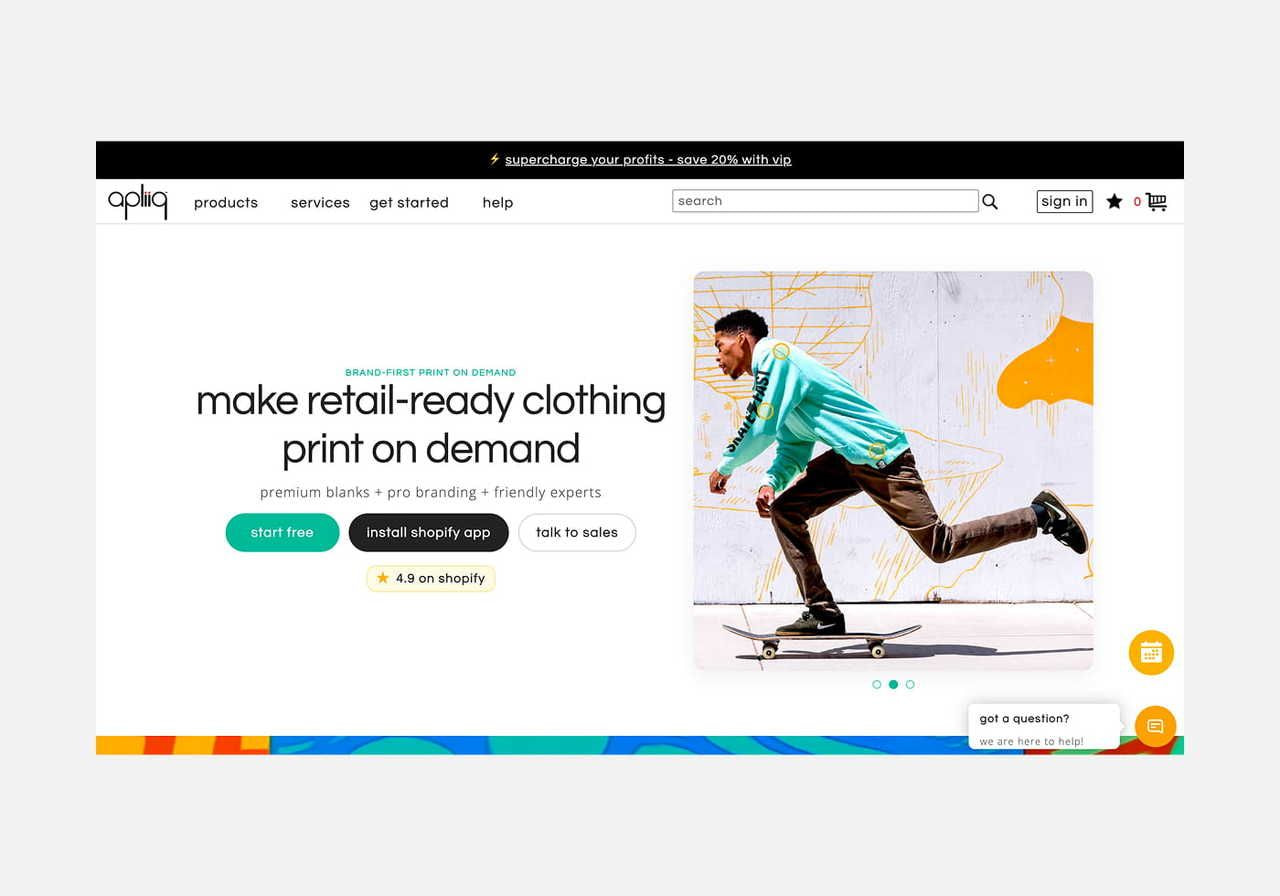
Apliiq specializes in apparel customization, including DTG, DTF, screen printing, embroidery, patches, labels, and private-label finishing. It suits sellers who want premium garments, apparel branding, and more production detail than basic POD apparel usually offers.
Pros:
-
White-label print and private-label apparel options
-
Custom labels, patches, and apparel finishing
-
Hands-on support for clothing brands
Cons:
-
Product range limited to apparel
-
Few integration options (Shopify, WooCommerce, and Etsy)
Available products:
-
Apparel, including t-shirts, hoodies, sweatshirts, joggers, outerwear, and hats
-
Custom pockets, patches, labels, and liner hoodies
-
Private-label apparel products
-
Packaging and pack-in options for eligible orders
Best for: Fashion brands that want premium apparel customization with branding options that go beyond standard POD services.
16. CustomCat
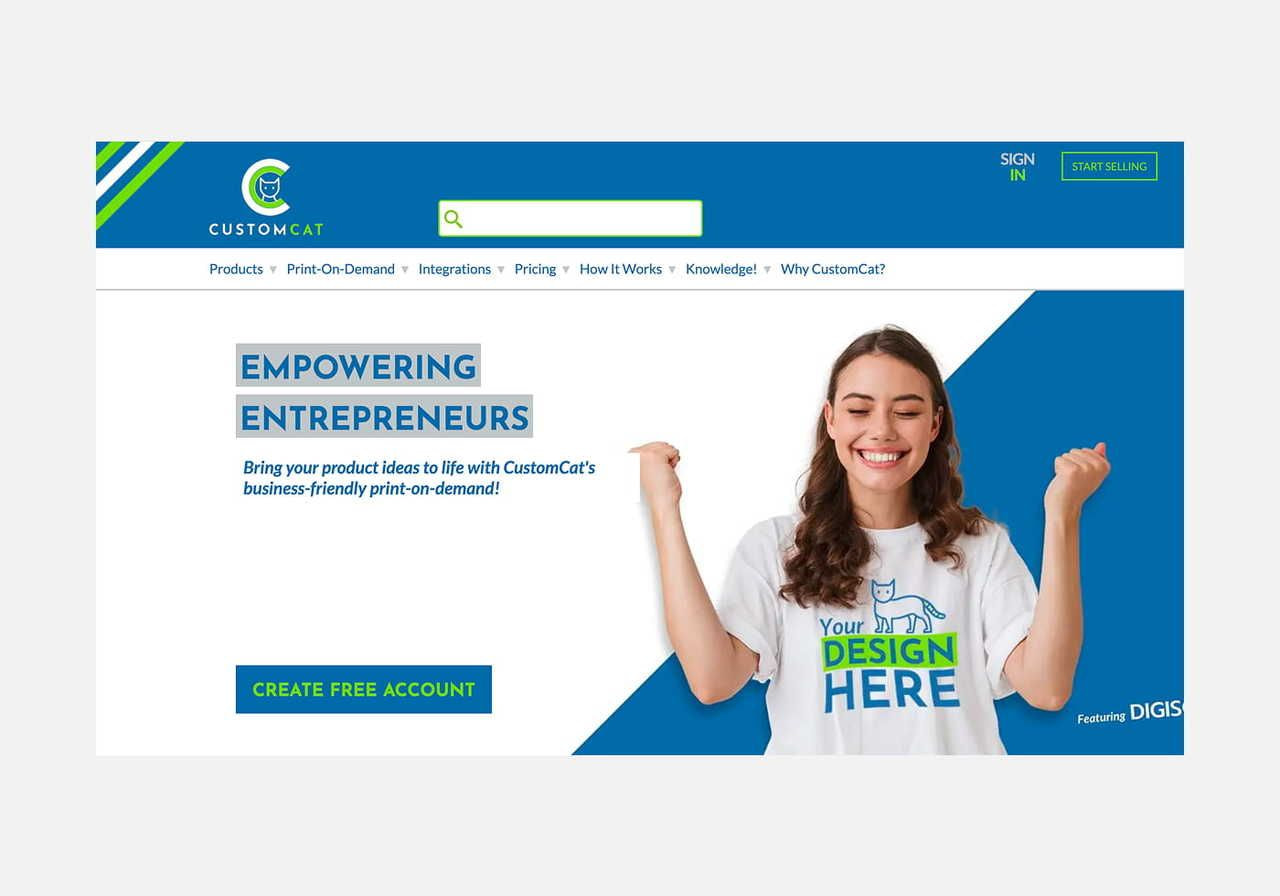
CustomCat is a print-on-demand company known for its fast fulfillment and reasonable prices. It offers DIGISOFT® digital printing, sublimation, and embroidery customization.
CustomCat integrates with Shopify, WooCommerce, Etsy, BigCommerce, and its own API.
CustomCat claims 95% of orders leave its facility within 3 business days, with most orders shipping from its Detroit facility in 2-3 business days.
Pros:
-
Competitive pricing
-
2-3 business day shipping for most domestic orders
-
Discounted pricing with the PRO plan
Cons:
-
Limited product range
-
Limited integration with eCommerce platforms
-
International shipping can take up to 4 weeks
Available products:
-
Apparel
-
Housewares (including home decor, wall art, and drinkware)
-
Accessories (including bags and footwear)
Best for: Merchants who prioritize fast US shipping, sensible pricing, and want to sell on Shopify, WooCommerce, BigCommerce, or Etsy.
Pick your print-on-demand service and begin selling custom products
Starting a clothing brand has never been easier, thanks to Print on Demand, especially with so many services available.
Which print-on-demand service is best for you? Evaluate all features: the lowest prices, the biggest product selections, personalization options, shipping speed, or the best print quality.
Test different printing partners and choose the best POD company for your business goals.
If a huge product selection, many eCommerce integrations, great prices, custom branding options, and fast shipping are at the top of your wishlist, get started with Printful.
FAQs
The best print-on-demand sites are Printful, Printify, Redbubble, Amazon Merch on Demand, Gelato, and other platforms compared above.
Do a competitor comparison and choose based on product range, branding, shipping, integrations, pricing strategy, and how much control you want over the customer relationship, especially if you plan to run your own shop.
The best print-on-demand vendor depends on your products, sales channel, and target audience. Printful fits sellers who want branding options, support, and in-house production. Printify suits sellers who want supplier choice.
Marketplace-style platforms reduce setup work, but the trade-off is less control over branding and customer data.
The most profitable POD product depends on base cost, retail price, shipping, demand, and design quality. Hoodies, tees, mugs, phone cases, posters, and wall art are all great options – you just need to find the right print-on-demand vendor for each category.
Sellers who want to sell shirts should test samples, price carefully, and use their own designs for a specific niche.

Zane is a sharp-witted writer with a deep interest in eCommerce, branding, and creative entrepreneurship. With a knack for blending humor, insight, and no-nonsense advice, she crafts engaging content that helps merchants learn and businesses grow. When she’s not dissecting industry trends, she's exploring philosophy, music, and the perfect balance between solitude and connection.

