


Table of contents
So you’ve got a design ready to print, and now you’re stuck on DTG vs screen printing. Here’s the short version: neither one wins outright. It comes down to your design and how many you’re making.
Direct-to-garment printing suits small batches and detailed, multi-color prints, produced on demand with no setup costs. Screen printing suits bulk runs of simple, bold designs, where the cost per item drops as quantities climb.
In this guide, we’ll compare DTG vs screen printing on quality, design, fabric compatibility, sustainability, and cost – and help you match the right t-shirt printing method to your store.
What is DTG printing?
Direct-to-garment is a printing technique that sprays water-based inks directly onto a garment, much like an inkjet printer works on paper.
Here’s how the DTG printing process works: the fabric is first coated with a bonding agent so that the ink soaks into the fibers and locks in place. The print head then applies the design, and a conveyor dryer cures it, creating a smooth and natural finish.
Because DTG is a form of digital printing, there’s no screen setup required. That means you can print complex designs like photorealistic images or gradients with multiple colors, without paying per-color fees or waiting on stencils.
Since each garment is printed on demand, you can start an online clothing store with minimal upfront investment.
What is screen printing?
Screen printing presses ink through a mesh stencil onto fabric to create a design. Each color in the artwork gets its own screen, so a three-color logo needs three.
Here’s how the screen printing process works: think of each screen as a custom stencil. A light-sensitive emulsion coats the mesh, and light hardens your design onto it. The uncovered areas are then rinsed away, leaving open gaps for the ink to pass through.
Once every screen is ready, a press prints the colors one at a time, and heat sets the screen printing ink. From there, those screens can reproduce the same design hundreds of times.
The ink sits in a thicker layer than DTG, which gives screen-printed t-shirts a bold, tactile feel and holds up well on dark fabrics.
Preparing the separate screens takes time and money, but that setup cost pays off at volume, where the price per unit drops sharply. That makes screen printing a strong fit for bulk orders of bold graphics with solid colors.


What are the key differences between DTG and screen printing?
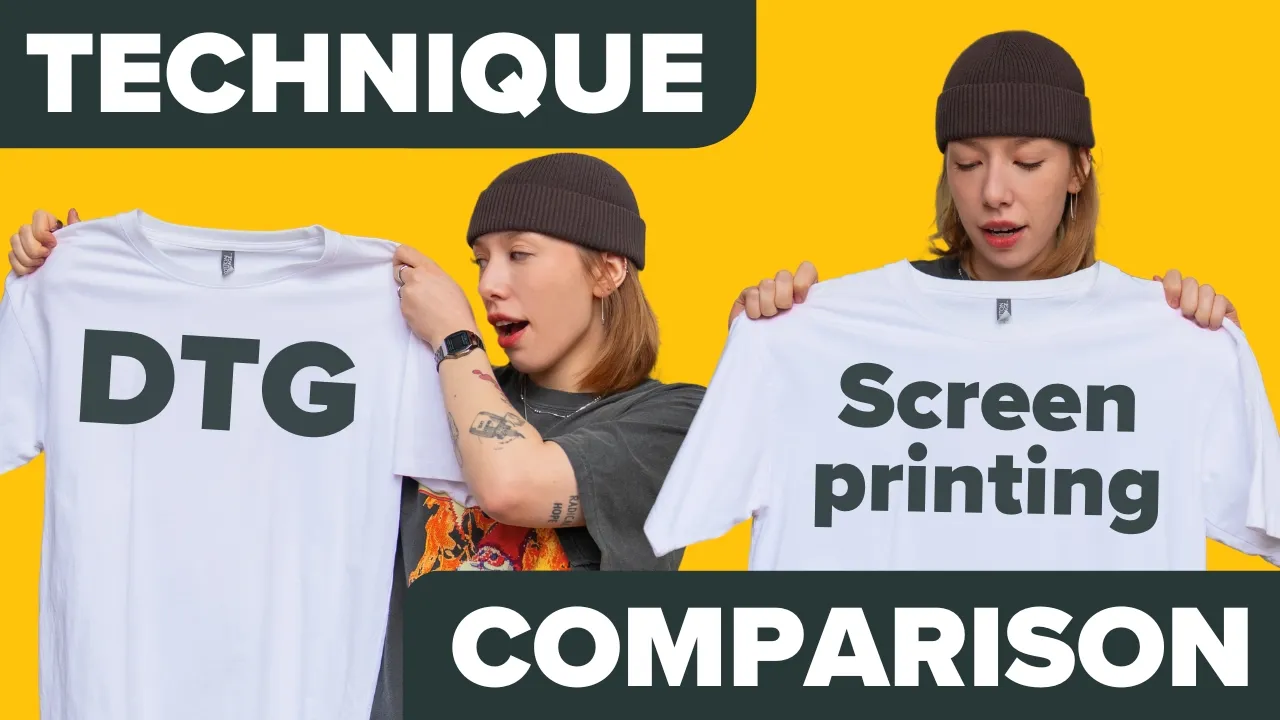
Choosing between DTG vs screen printing comes down to factors like print quality, wash durability, design complexity, and the ability to produce small or large quantities. Let’s examine how the two methods compare.

Print quality and durability
Screen prints generally outlast direct-to-garment prints under heavy, repeated washing, though both hold up well for everyday wear. The real difference is where the ink ends up.
DTG ink bonds directly into the fabric for a soft, flat finish, and it can withstand over 50 washes with proper care when washed inside out and air-dried.
Printful’s DTG ink scores 4 out of 5 for colorfastness on the AATCC scale, the industry test for how well a print holds its color through washing. Because the ink lives in the fibers rather than on top of them, a DTG print fades slowly over time rather than cracking or peeling.
Screen printing works the other way around. A thicker ink layer sits on the surface, resisting wear, frequent washing, and abrasion, which is why screen prints tend to last even longer than DTG under repeated use.
That heavier deposit also keeps vibrant colors bright on dark garments, making screen printing a common pick for workwear and uniforms.
Print complexity
Direct-to-garment printing excels at detailed and intricate designs, while screen printing is better at simple, bold ones. The reason is that each method handles multiple colors differently.
DTG machines lay down the entire image in a single pass, so a full-color photo prints as cleanly as a one-color logo, and it costs the same either way. That flat pricing makes DTG a cost-effective way to offer multi-color designs across a wide range of styles.
The screen printing technique takes the opposite approach. Each color needs its own stencil, so the method suits solid graphics with clean edges: bold typography, geometric shapes, and simple symbols.
Adding colors means more screens and higher costs, and print vendors usually cap designs at nine colors. Plus, thin lines can clog or drop out during exposure. That’s why silk screen printing struggles with gradients, photographic detail, and hairline lines.
Quick tip: Weighing DTG against another digital method? See how it stacks up in DTG vs DTF printing.
Color vibrancy
Both DTG and screen printing produce high-quality prints in vibrant colors, but they achieve it in different ways.
The screen printing process lays down thick, opaque ink on the fabric, so colors stay bright and solid even on dark garments. The technique also allows ink mixing to match each shade to an exact recipe, which is why brands reach for it when a logo has to hit a specific Pantone color.
On the other hand, DTG uses CMYK inks that absorb into the fibers, creating a smooth transition between tones. That makes it the stronger choice for photorealistic images, gradients, and intricate designs with fine color transitions.
The trade-off: DTG can’t always match an exact Pantone shade the way spot-color printing can. But the specialized inkjet technology can render detail and tonal range that screen printing can’t. For full-color or photographic artwork, DTG is the better pick.
Fabric suitability
Direct-to-garment printing works best on cotton, while screen printing is versatile across almost any fabric.
That’s because DTG uses water-based inks that bond only with natural fibers like 100% cotton and cotton-rich blends. It prints on both light and dark garments, though darker ones need a pre-treatment and white underbase first to keep colors bright and solid.
On polyester and poly-heavy blends, DTG struggles. Here, the garment dye can migrate up into the print during curing, turning a white design pink or muddying up the colors.
In contrast, screen printing’s thicker plastisol ink sits on top of the material rather than soaking in, so one design works across cotton, polyester, nylon, and performance blends. This makes it the better fit for athletic wear and moisture-wicking gear.
That opaque layer also prints cleanly on any garment color without pre-treatment, even darker ones.
Sustainability
The method you choose shapes how your business affects the environment, so it’s worth weighing the sustainability between DTG vs screen printing before you commit.
DTG printing generally produces minimal waste compared to traditional screen printing, mainly because of how each item gets made.
Printed on demand with no order minimums, DTG prints a garment only after someone buys it, so there’s less overproduction, less unsold stock, and less textile waste heading to landfills.
The inks matter too. The water-based inks Printful uses for DTG – Kornit Water-based and NeoPigment – are certified to OEKO-TEX® ECO PASSPORT, a certification that checks textile chemicals against defined safety and environmental criteria.
According to Kornit, its NeoPigment inks are 100% water-based and free of heavy metals, formaldehyde, and APE.
Screen printing tends to generate more waste, partly because it’s designed for bulk production. Large runs risk leftover stock that can go unsold and feed the textile overproduction that the sustainable fashion movement is working against.
The screen printing process also uses more water and chemicals during cleanup: every screen has to be washed and reclaimed with solvents after each run, which adds up over the course of a job.
On-demand fulfillment
DTG printing is the clear choice for on-demand fulfillment. The short setup time lets businesses print single items or small batches with minimal upfront cost, so a clothing brand can start selling its custom apparel without ordering stock in advance.
Here’s what the process looks like:
-
Sign up with a print-on-demand platform like Printful
-
Choose a custom t-shirt and add your artwork with the Design Maker
-
List it in your store, and Printful receives each order automatically when a customer buys
-
We produce the design with our DTG printers, and ship it straight to the buyer under your brand
Printful also offers bulk order discounts for DTG products, so you can scale up when a design takes off without switching methods.
Screen printing runs on a different model. The higher setup costs and minimum order requirements are more suitable for large, one-time runs rather than on-demand printing, and it’s harder to work with if you’d rather not sit on excess stock.
Quick tip: Need 500 or more t-shirts for your company or an event? Submit a screen printing request, and our team will get back to you within 48 hours.
Upfront investment
Direct-to-garment printing is cheaper for small runs, while screen printing is more affordable at volume. That’s because DTG lets you start selling without spending on stock first. A print-on-demand provider already owns the DTG printers and produces each item only when it sells.
There are no screens to make and no per-color fees, so one t-shirt costs about the same per unit as ten, though some providers offer bulk order discounts once you reach a certain volume.
You can test new designs without tying up cash, which is why DTG is a safer starting point.
Screen printing usually requires a minimum bulk order of 5-100 units because the setup must be paid for before anything prints. Each color needs a separate screen, so a small run carries a steep per-item price no matter who runs the press.
Order in volume, though, and that fixed cost spreads across hundreds of shirts until the price per unit drops well below DTG.
Screen printing vs DTG: When to choose which
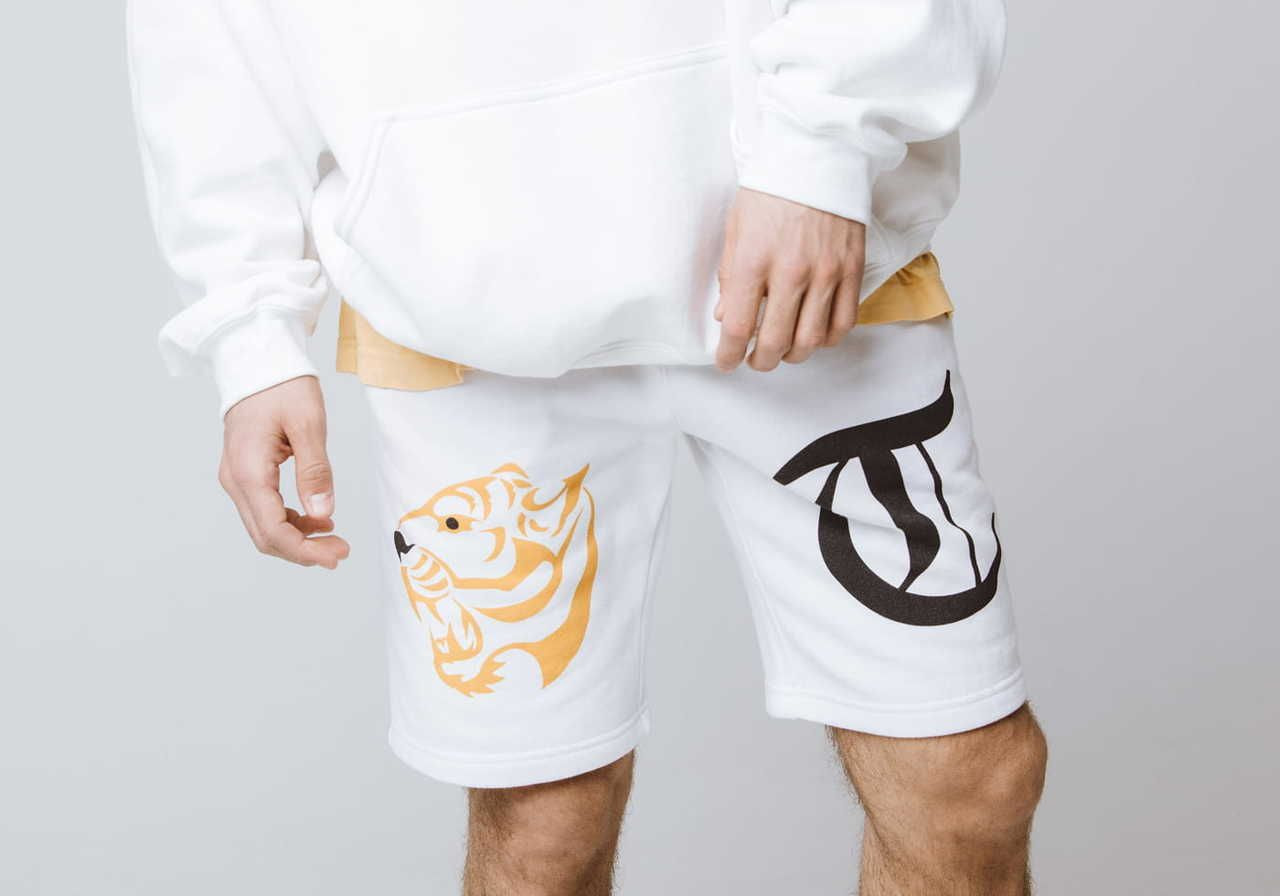
Both techniques have their strengths depending on the design you want to produce. Choosing the right printing method will lower costs, reduce waste, and improve turnaround times.
When is DTG better than screen printing?
DTG is more cost-effective for:
-
Multi-color designs with intricate details that screen printing can’t match without a heavy per-color setup
-
Small quantities, including one-off orders, with no minimum
-
Frequent design updates or new products you want to test without committing cash
-
On-demand production that leaves you no stock to manage
At Printful, DTG-printed t-shirts start from $9.44 with the print included. Explore the full range in our Catalog.
When is screen printing better than DTG?
Choose screen printing if your custom apparel involves:
-
Simple, bold designs built on solid colors, without fine detail
-
Large quantities, where a bulk order pulls the per-item cost down
-
Basic graphics or typography repeated across many identical items
-
A proven bestseller, company rollout, or event, rather than a design you’re still testing
Printful’s screen printing starts at 500 shirts per order, so it pays off at scale rather than for one-off jobs.
Read more: Embroidery vs screen printing: Which should you go with?
If it’s still hard to decide which printing method is right for you, take a look at this comparison table:
|
|
Screen printing |
DTG printing |
|
High-quality prints |
Yes |
Yes |
|
Detailed designs |
No |
Yes |
|
Unlimited color palette |
No |
Yes |
|
Order minimums |
Yes |
No |
|
On-demand fulfillment |
No |
Yes |
|
Bulk discounts |
Yes |
Yes |
|
Requires upfront investment |
Yes |
No |
Choose your printing method wisely
Choosing between DTG vs screen printing depends on the design and quantity. If you’re printing multi-color designs in small batches, DTG is the better choice. If you’re running big orders of simple, bold graphics, screen printing gets cheaper the more you print.
For new sellers, on-demand DTG is the safer way to start. Add new designs whenever you like, skip inventory altogether, and leave the printing and shipping to Printful while you focus on growing your store.
Got a design in mind? Turn it into a custom t-shirt with Printful today.
Read next:
DTG printing vs screen printing: FAQ
Screen printing usually lasts longer than DTG. Its thicker ink layer sits on top of the fabric and resists heavy, repeated washing, which is why it suits workwear and uniforms. DTG also holds up well with proper care, with the print slowly fading over time instead of cracking or peeling.
DTG printing has three main drawbacks. The ink needs to bond with natural fibers, so it works best on cotton and can look off on polyester or blends. It also can’t copy an exact brand color or Pantone shade the way screen printing can. And the price per shirt stays about the same whether you order one or 15, though some providers like Printful offer bulk discounts.
The best t-shirt printing method depends on your design and order size. DTG is best for detailed, colorful, or photographic designs in small quantities, printed on demand with no minimum. Screen printing is best for simple, bold graphics in large runs, where the cost per shirt drops as quantities climb.
DTG is cheaper for small orders, while screen printing is more affordable at volume. DTG requires minimal setup, so a single shirt or a short run costs little to make. With screen printing, you pay for the screens up front, and that cost spreads across a large batch, so the price per shirt drops below DTG.

Maisha is a content writer with 6+ years of experience in turning complex topics into clear, search-optimized content. She believes readability always wins, no matter how SEO trends shift. Outside of writing, she’s usually trying new recipes (but never following them), watching niche YouTube videos, or planning food-fueled adventures.

