


Table of contents
Wondering how to make money on Amazon in 2026? You’re stepping into one of the most opportunity-rich marketplaces online. Whether you want to build an Amazon store, expand what you already sell, or earn without managing inventory, Amazon gives entrepreneurs more paths than ever to generate real revenue.
From Fulfillment by Amazon (FBA) and Merch on Demand to affiliate marketing and Amazon Live, the platform now supports nearly every type of entrepreneur. You don’t need inventory or a big upfront investment to begin making passive income – just a clear plan and the willingness to test what works.
Amazon’s money-making landscape in 2026
Amazon dominates eCommerce, giving entrepreneurs, creators, and small businesses multiple ways to build revenue. From FBA and Merch on Demand to affiliate marketing and influencer programs, the platform’s multiple entry points make it one of the most powerful places to launch or scale a side hustle.
Recent trends (consumer behavior, global marketplace expansion, what’s working now)
Consumer behavior is shifting toward buying inside Amazon’s ecosystem rather than standalone online stores. That’s why Amazon sellers who list on Amazon often see faster discovery and higher conversion rates. Amazon now operates marketplaces in more than 20 countries, giving sellers international reach with minimal overhead.
Creator-focused programs like Amazon Live, Shoppable Video, and Creator Connections are changing the way people earn money on Amazon without managing inventory. These programs let influencers and small brands monetize through videos, reviews, and storefronts instead of traditional product sourcing. For many creators, it’s the first time they get paid by Amazon.
Key metrics
-
Market share: Amazon controls about 40.4% of US eCommerce sales in 2025, underscoring its dominance in online retail.
-
Third-party sales: Over 60% of all products sold on Amazon come from independent sellers. Small businesses – not big-box brands – drive most of the marketplace’s growth.
-
Seller growth: There are roughly 2.5 million active third-party sellers worldwide, yet consumer demand keeps expanding.
-
Creator payouts: Programs like Amazon Associates, Kindle Direct Publishing (KDP), and Merch on Demand pay out millions in royalties and commissions every year. These programs give writers, designers, and creators flexible ways to earn without holding inventory.
Read more: Is selling on Amazon worth it in 2026?


11 Ways to make money on Amazon
Fulfillment by Amazon (FBA)
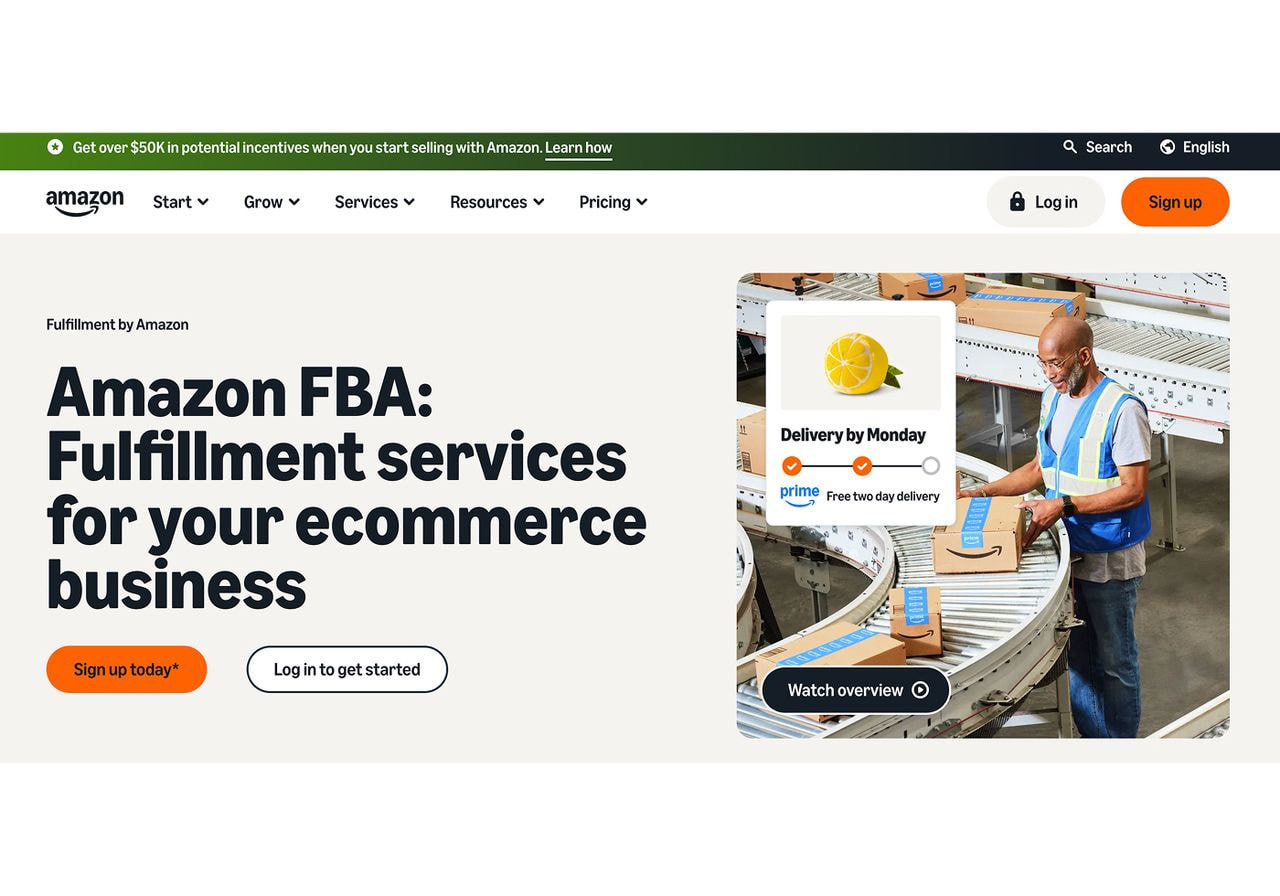
What it is: FBA lets sellers with an Amazon seller account list products, send inventory to Amazon warehouses, where Amazon handles order fulfillment for customer orders (pick, pack, ship, returns, and customer service).
Costs: Expect an upfront investment in inventory, Amazon referral fees, storage, and fulfillment fees. Strong product research and pricing discipline protect your profit margins. Successful sellers typically keep margins around 20-30%.
Risks: High competition, cash flow issues, unsold stock, and strict account policies.
Best for: Entrepreneurs with startup capital who want to scale an Amazon business, reach Prime members, and grow a long-term, brand-owned presence on the platform.
Read more: How to find products to sell on Amazon
Merch on Demand
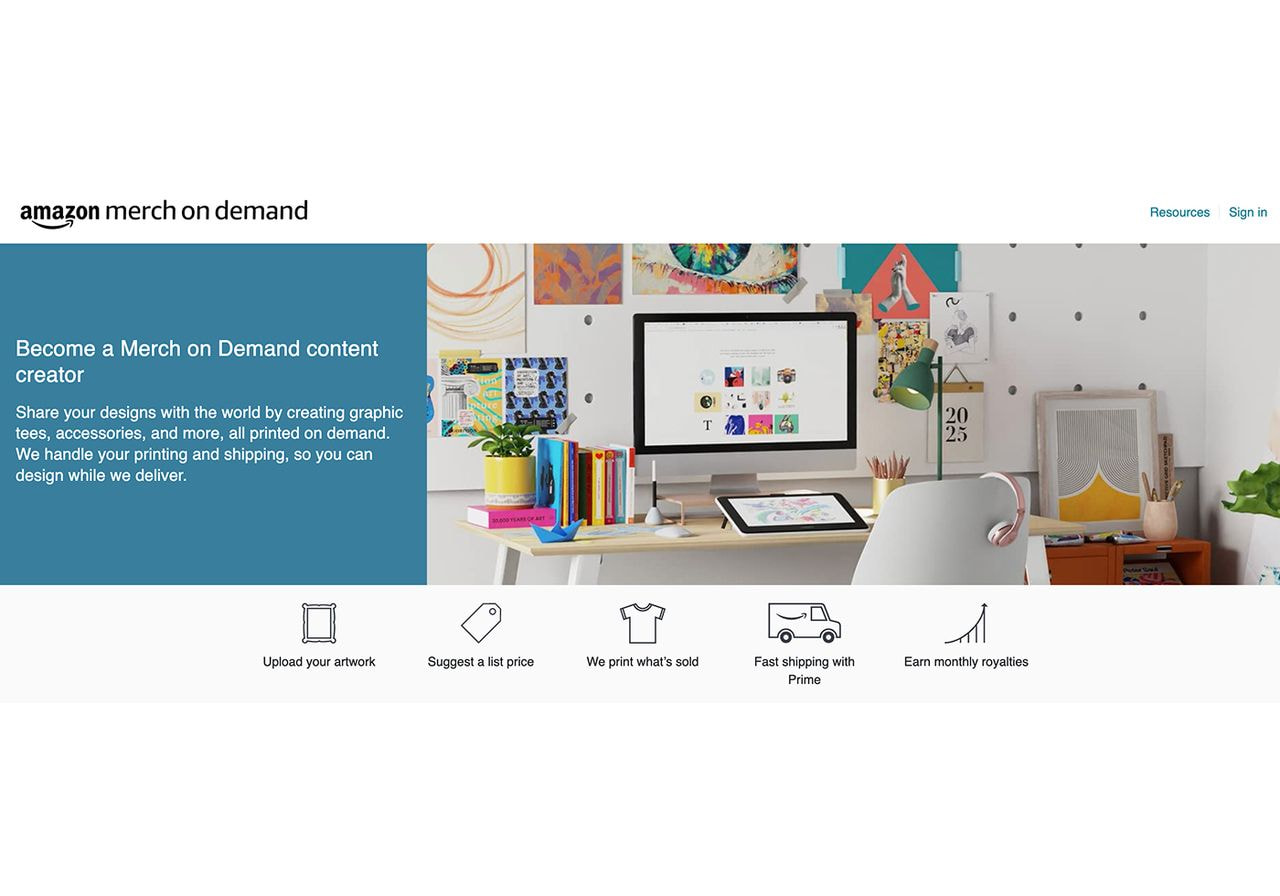
What it is: Amazon Merch on Demand (a.k.a. Amazon Merch) is Amazon’s print-on-demand program. You upload designs under your own brand, and Amazon prints and ships the products sold to customers. No inventory to manage and no retail space required – one of the simplest ways to start selling on the platform.
Costs: Merch on Demand doesn’t require upfront inventory. Instead of paying for production, you earn a royalty on every sale based on the product type and your list price. Amazon covers printing, shipping, and customer service, keeping your startup costs low.
Risks: Limited pricing control, rigid margins, heavy competition in popular niches, and potential design rejection if your work resembles duplicate content.
Best for: Creators who want to build an Amazon presence without managing inventory. Merch works well for artists, designers, and anyone creating content who wants a simple path to test multiple products and learn what customers respond to.
Read more: Amazon Merch on Demand vs. Printful: What’s your best fit?
Printful + Amazon: A smarter way to sell without inventory
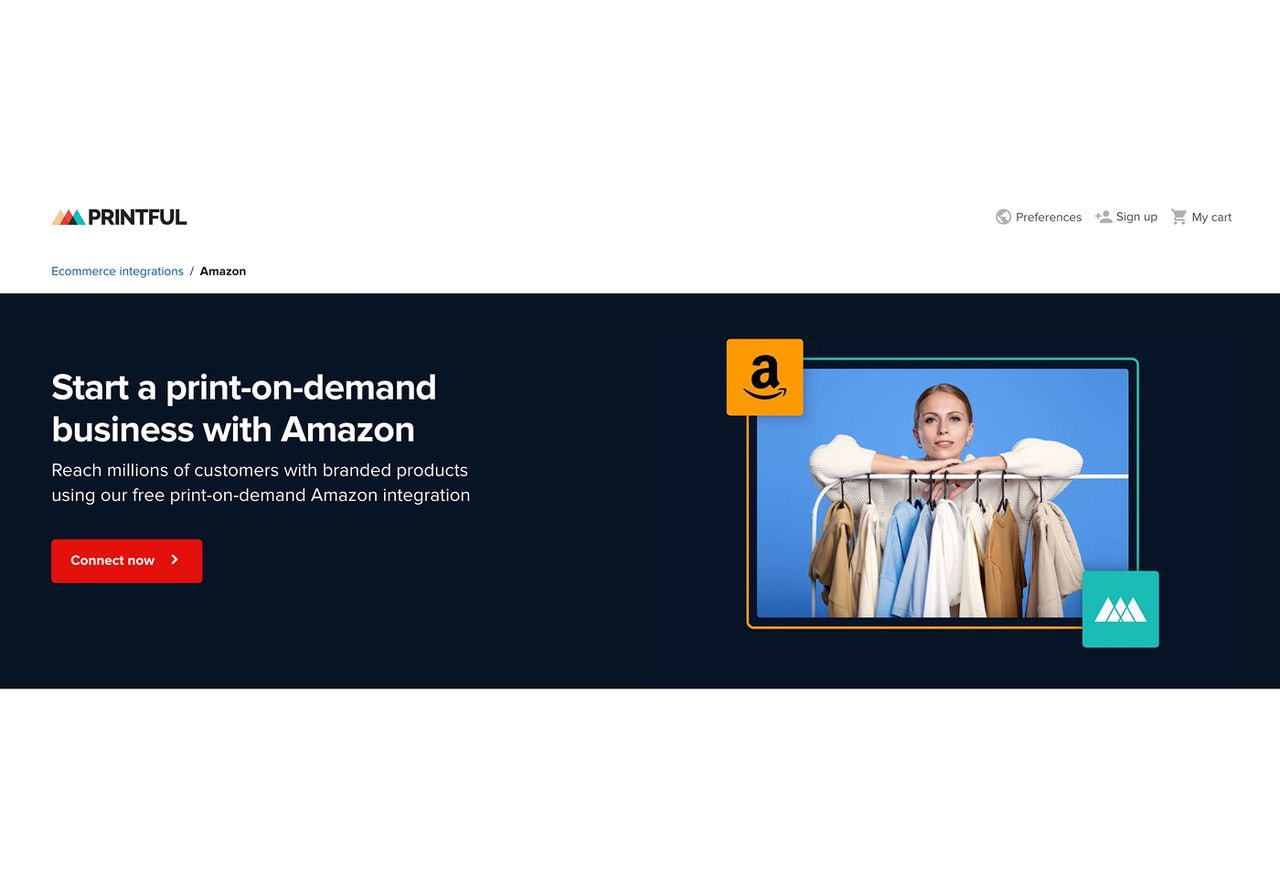
What it is: Printful lets you sell under your own brand on Amazon with a wide product catalog and on-demand fulfillment. You focus on the ideas; we print, pack, and ship the orders with pro-grade quality.
Costs: No upfront inventory. You only pay Printful when you get orders – covering the product, fulfillment, and shipping. Use Printful for free to unlock all the core features, or subscribe to Printful Growth for premium perks.
Risks: Amazon’s setup for print-on-demand listings is technical, approval isn’t guaranteed, and margins shrink fast if pricing doesn’t account for referral fees and fulfillment costs.
Best for: Creators and brands who want more control than Merch allows, faster launches, and a branded customer experience without managing inventory.
Kindle Direct Publishing (KDP)
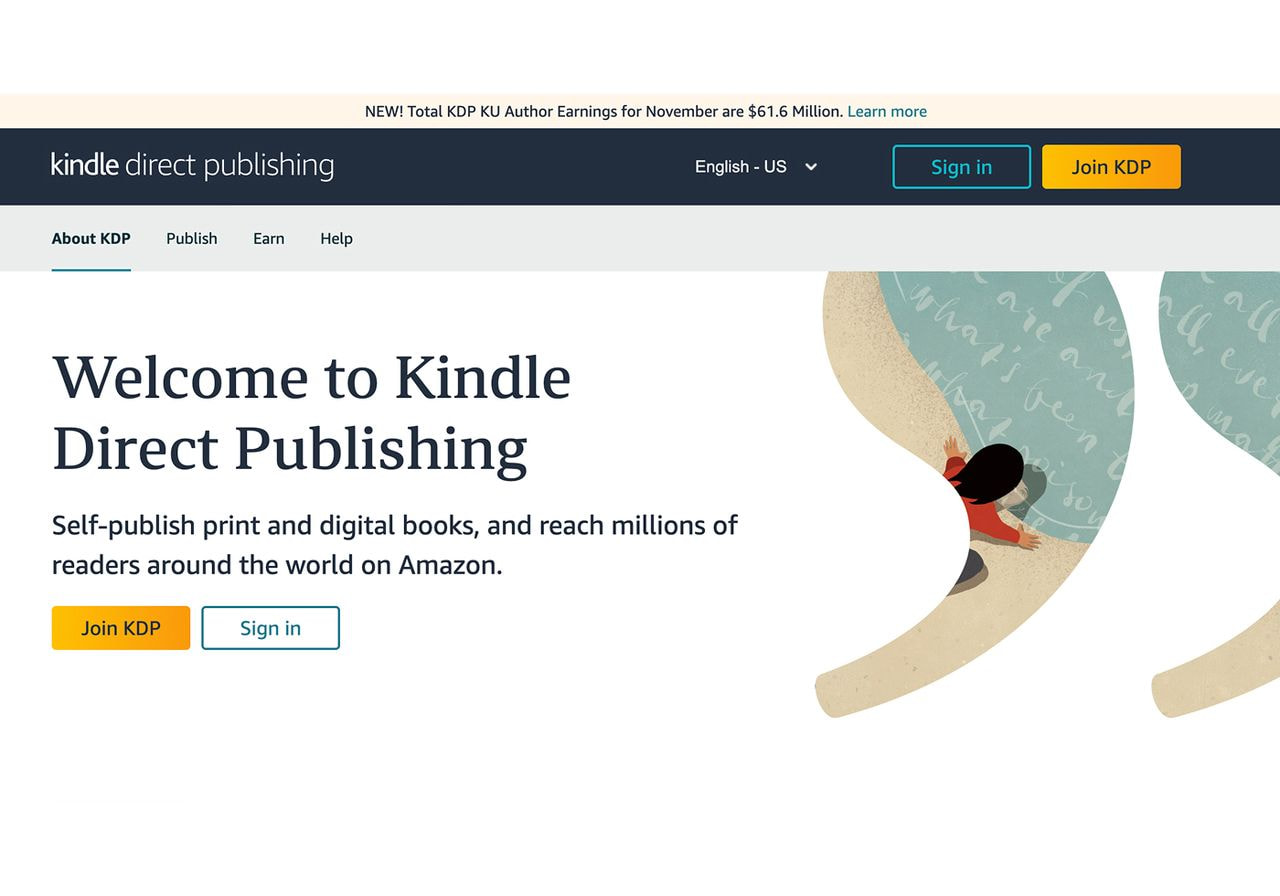
What it is: Kindle Direct Publishing (KDP) is Amazon’s self-publishing platform for eBooks and paperbacks. Unlike traditional publishing, direct publishing gives you control over content, pricing, and release schedule.
Costs: No upfront inventory. Amazon takes a percentage of each sale, and you earn royalties. For eBooks, choose 35% or 70% royalty rate. For paperbacks, choose between 50% and 60% royalty rate.
Risks: Highly competitive marketplace; success requires quality writing, niche targeting, and marketing. Income can be unpredictable without consistent promotion.
Best for: Writers, entrepreneurs, and educators who want to earn money from eBooks or paperbacks without relying on a traditional publisher. Strong potential for passive income with Amazon once books gain traction.
Affiliate (Amazon Associates)
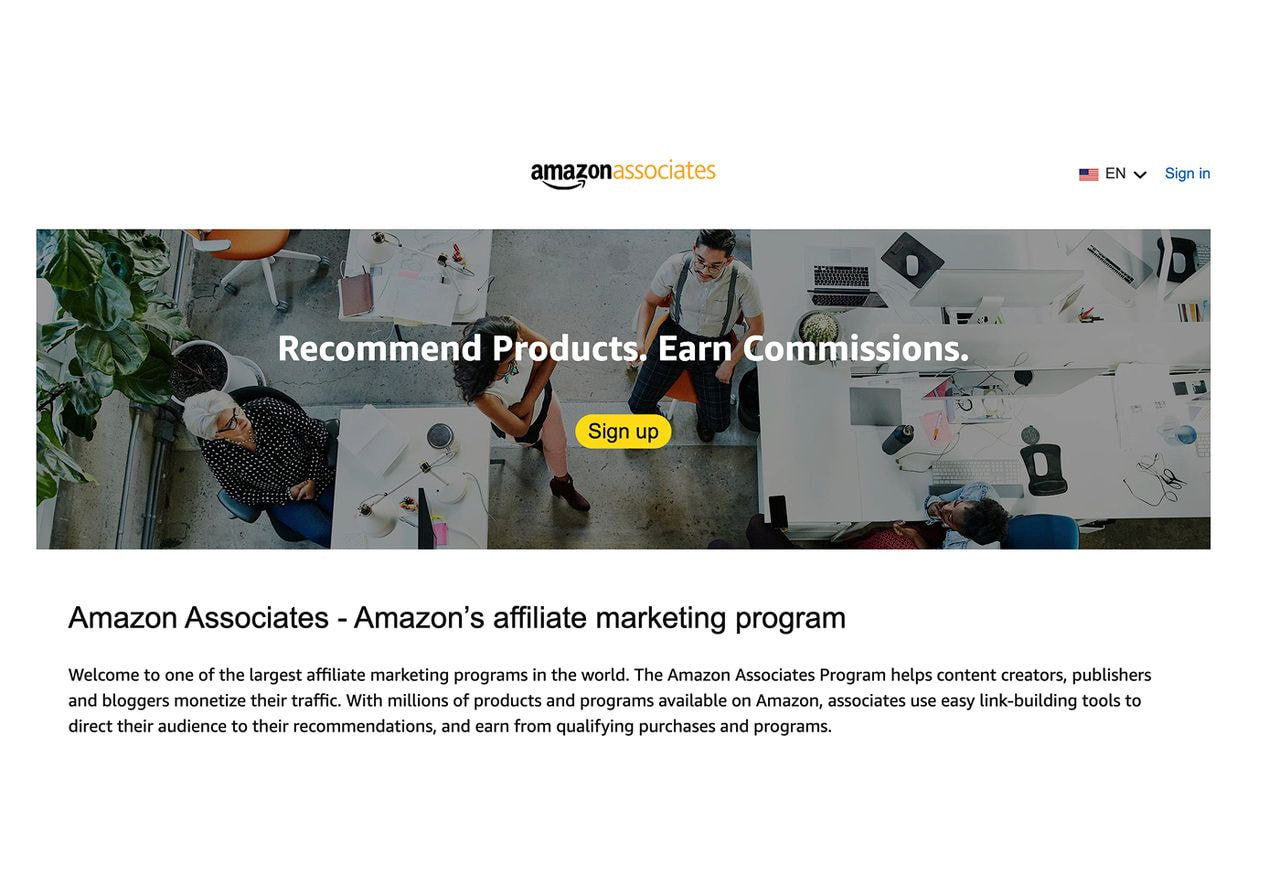
What it is: Amazon Associates pays you when readers buy Amazon products through your links. Place links in blog posts, videos, email, or online stores you already run.
Costs: No upfront costs. Earnings depend on commission rates (typically 1-10%) and the traffic volume you send to Amazon.
Risks: Low commissions per sale, strict compliance rules, and heavy reliance on traffic. Without consistent visitors, revenue stays minimal.
Best for: Bloggers, influencers, and content creators exploring how to make money on Amazon without selling products. A strong fit if you already enjoy creating content and want a simple, low-risk way to monetize your audience.
Influencer Program and Brand Stores
What it is: The Amazon Influencer Program gives creators an influencer storefront tied to their Amazon account and a custom URL that followers can shop. Brand Stores give businesses a branded Amazon presence that improves product discovery and conversion.
Costs: Free to join, but approval requires an active social following or a registered brand. Earnings come from affiliate-style commissions and increased sales visibility.
Risks: Modest commission rates, reliance on steady audience engagement, and low earnings if traffic drops.
Best for: Influencers, small businesses, and content creators who want to leverage an existing audience. A scalable Amazon side hustle with strong branding potential.
Amazon Live
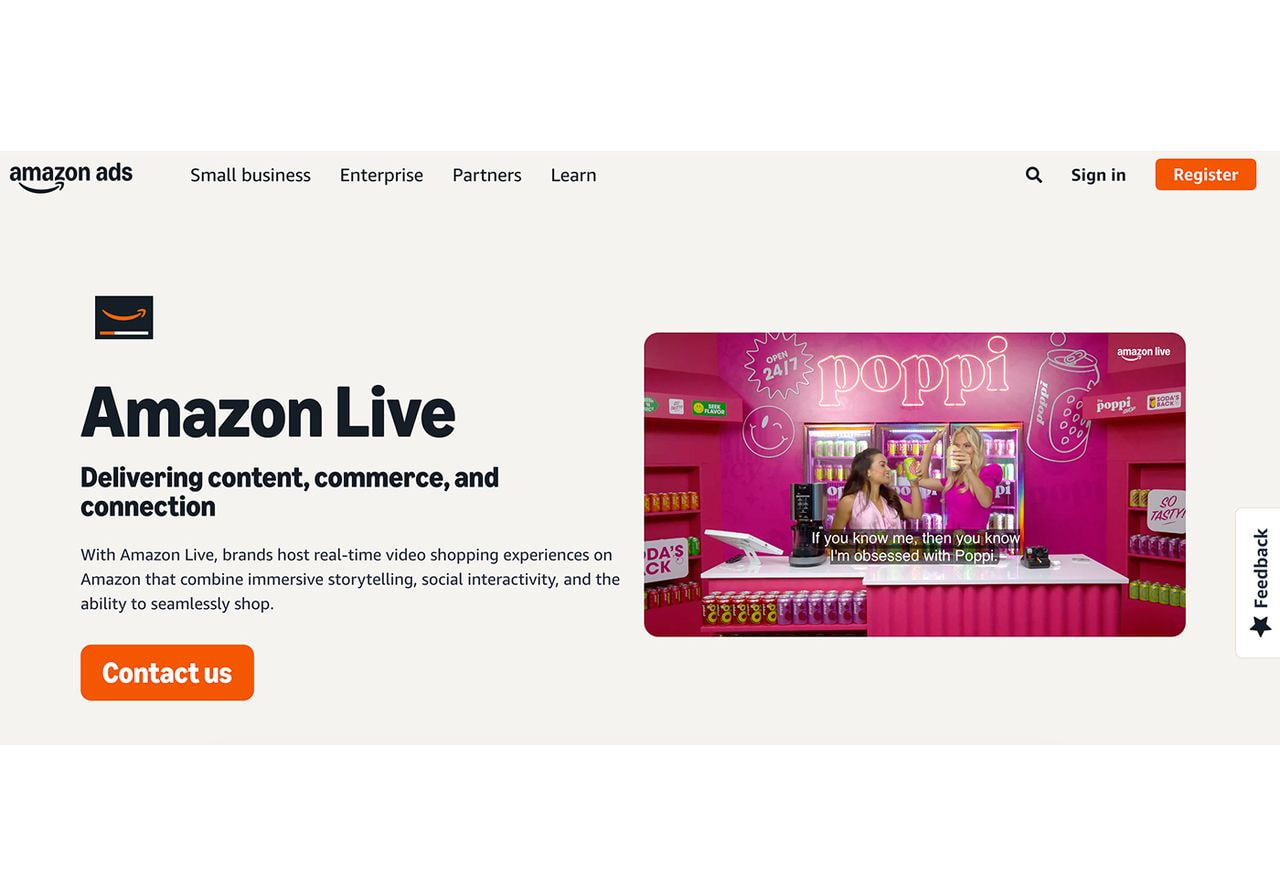
What it is: Amazon Live is a shoppable livestream platform for selling products in real time. Viewers can buy directly while watching.
Costs: Free for influencers and sellers, but effective streaming may require equipment or paid promotion. Income comes from Amazon Associates commissions, brand sponsorships, and increased product sales.
Risks: Requires consistent streaming and audience building. Without engagement, results are minimal. Competition is rising as livestream shopping gains popularity.
Best for: Influencers and sellers who thrive on camera and want an interactive way to showcase products. Ideal as an Amazon side hustle for creators who enjoy making live videos and connecting with shoppers in real time.
Shoppable Videos and review content
What it is: Creators upload shoppable videos and review content that appears on product pages next to Amazon reviews and sometimes as featured products. These assets increase visibility in search results and earn through commissions or partnerships.
Costs: No inventory required. Earnings are performance-based, tied to views, clicks, and conversions.
Risks: Highly competitive, with many creators targeting the same niches. Requires quality video production and frequent uploads to stay visible.
Best for: Influencers, bloggers, and other creators who enjoy creating videos. Strong option for building passive income with Amazon, as the videos keep working once published.
Read more: Amazon Live Shoppable Videos content guidelines
Creator Connections
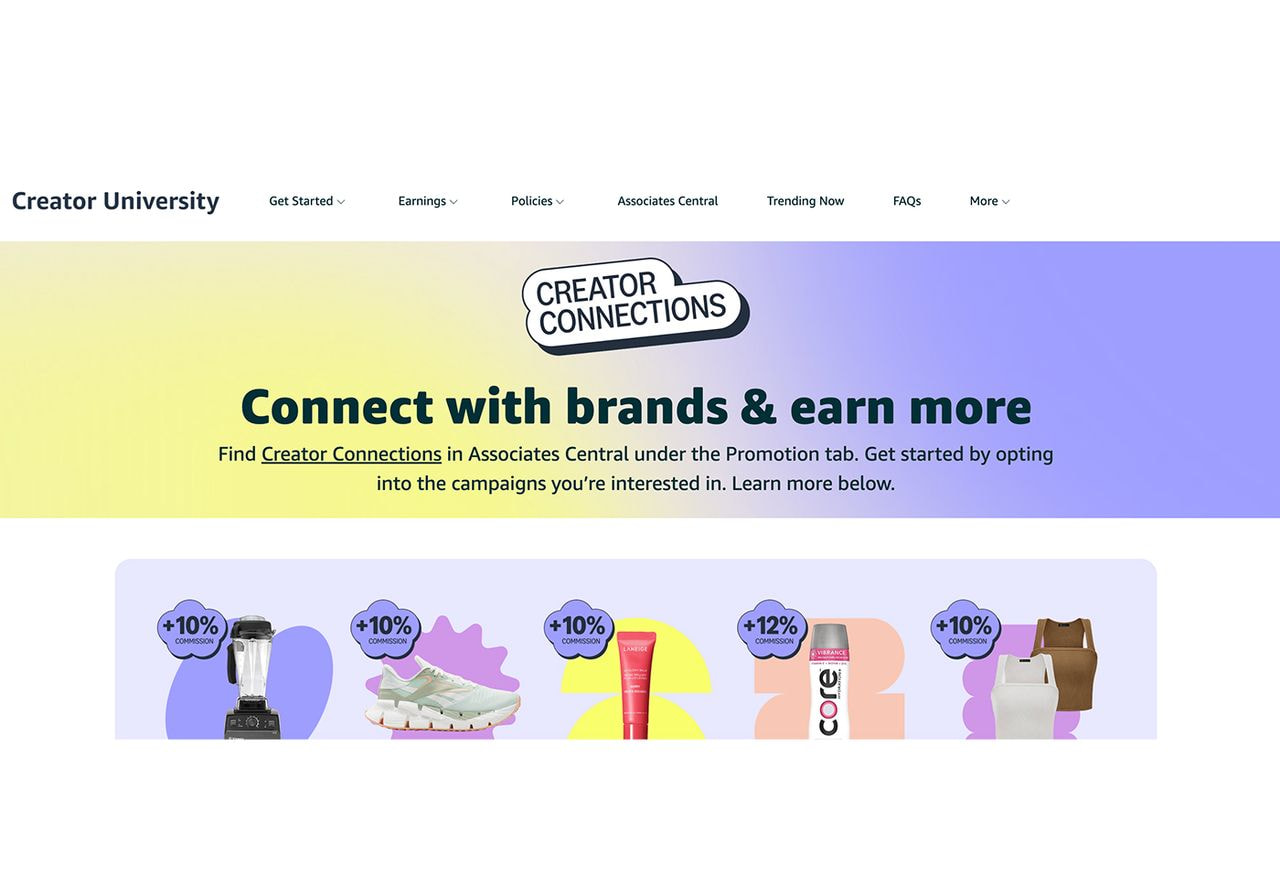
What it is: Amazon Creator Connections links brands with vetted creators for sponsored content and product promotion. Creators collaborate on campaigns and earn through a mix of affiliate commissions and flat fees.
It’s a good starting point for established creators who want to gain exposure and bundle flat-fee deals with affiliate earnings.
Costs: No upfront costs for creators. Brands pay for partnerships, while Amazon facilitates the connection.
Risks: Income depends on brand demand and niche relevance. Hard to qualify or secure consistent deals.
Best for: Established influencers and content creators with engaged audiences who want to earn through partnerships. It’s a strong fit for people already creating content or producing videos that brands can use to promote their products.
Handmade/custom products (Amazon Handmade)
What it is: Amazon Handmade is a curated marketplace for artisans selling handmade items. You apply, get approved, and list unique goods to reach more customers.
Costs: No listing fees, but Amazon charges a 15% referral fee per sale. Sellers must apply and be approved before listing products.
Risks: Higher fees, slower approval times, and competition from larger brands offering “handmade-style” products.
Best for: Artisans, crafters, and small businesses selling handmade items or customized goods. A solid Amazon side hustle for crafters wanting to scale without managing their own store.
Selling refurbished or used goods (Amazon Renewed or similar)
What it is: Amazon Renewed lets approved sellers list certified refurbished or used products that look and work like new. You must find reliable suppliers, provide invoices from them, meet quality metrics, and follow warranty rules. Strong sourcing and compliance are essential for consistent order fulfillment.
Costs: Referral fees apply, similar to other categories. Sellers need approval, provide invoices from suppliers, and meet performance metrics.
Risks: Strict requirements, limited product categories, dependence on reliable suppliers, and the risk of account suspension if standards aren’t met.
Best for: Businesses or resellers with access to reliable refurbished stock. A practical way to make money on Amazon while appealing to eco-conscious buyers and offering value-driven alternatives.
Retail arbitrage
What it is: Retail arbitrage means buying discounted products and reselling them for profit. Wholesale involves ordering in bulk from potential suppliers. Many sellers build an Amazon business by launching private-label goods under their own brand. Competition with other sellers is high, so strong product ideas and pricing discipline matter.
Costs: Requires upfront investment in inventory, along with Amazon referral fees and, if you use FBA, additional storage fees.
Risks: Heavy price competition, shrinking margins, listing restrictions, and higher capital requirements for wholesale.
Best for: Entrepreneurs with capital who want proven ways to make money on Amazon by reselling products. It’s practical for anyone building toward a full Amazon business with strategic sourcing and consistent execution.
Amazon fees and profit factors you need to know
No matter which model you choose, Amazon takes a cut of every sale. To truly understand how to make money on Amazon, you need to calculate fees, margins, and realistic earnings. Here’s a quick breakdown of the main costs by method.
|
Method |
Main fees |
Profit factors |
Notes |
|
Fulfillment by Amazon |
Referral fee (8-15%), storage fees, fulfillment fees |
Margins are often 20-30% after fees |
Prime access boosts sales but requires upfront inventory |
|
Merch on Demand (POD) |
Amazon’s base cost and a referral fee |
Royalties paid per sale (usually low) |
No inventory risk; best for creatives |
|
Kindle Direct Publishing |
30-70% royalty share, based on price and format |
Passive royalties scale with more titles |
Digital publishing has no storage costs |
|
Amazon Associates |
Free to join; commissions run 1-10% |
Depends on traffic and conversions |
Easy entry but low per-sale payout |
|
Influencer Program and Brand Stores |
Free to join; earns commission (like Associates) |
Driven by audience size and engagement |
Strong branding benefits |
|
Amazon Live |
Free to use; earns commission or sponsorships |
Based on views and conversions |
Works best with an engaged audience |
|
Shoppable Videos and Review content |
Free to use |
Performance-based earnings from Shoppable Video clicks/conversions |
Appears next to reviews and featured products |
|
Creator Connections |
Free to join |
Sponsored deal rates and commissions |
Income depends on niche demand |
|
Amazon Handmade |
15% referral fee |
Higher pricing for unique goods |
Requires approval; competitive with Etsy |
|
Amazon Renewed (refurbished/used) |
Referral fee (varies by category) |
Margins vary; warranty requirements apply |
Needs reliable sourcing and approval |
|
Retail arbitrage |
Referral fee (8-15%), FBA fees if used |
Profits tied to sourcing discounts |
Labor-intensive; margins can be thin |
Comparison table: Time to launch, scalability, and best fit
|
Method |
Time to launch |
Scalability |
Risk level |
Best for |
|
Fulfillment by Amazon |
Weeks (setup and sourcing) |
High – scalable into a full Amazon business |
High – inventory risk, policy strictness |
Entrepreneurs with capital aiming to build a long-term Amazon store |
|
Merch on Demand (POD) |
Fast (days after approval) |
Moderate – earnings grow with multiple products |
Medium – limited control over pricing/margins |
Designers and creatives seeking ways to make money on Amazon without selling inventory |
|
Kindle Direct Publishing |
Immediate (upload-ready content) |
Moderate – more books = more royalties |
Medium – competitive niches |
Writers, educators, and entrepreneurs using Amazon’s self-publishing platform for digital royalties |
|
Amazon Associates |
Immediate (once approved) |
Low to moderate – depends on traffic |
Low – only traffic-driven |
Bloggers, influencers, online stores, or creators who want to earn money without inventory |
|
Influencer Program and Brand stores |
Days-weeks (approval needed) |
Moderate – audience size drives growth |
Medium – relies on steady engagement |
Influencers or small brands building authority with an influencer storefront and a custom URL |
|
Amazon Live |
Quick, if you already stream |
Moderate – grows with sponsorships |
Medium – consistency required |
On-camera creators who want to gain exposure and convert customers through livestreams |
|
Shoppable Videos and review content |
Fast (upload after approval) |
Moderate – evergreen content keeps earning |
Medium to high – niche competition |
Bloggers and video creators producing featured products content tied to Amazon reviews |
|
Creator Connections |
Weeks (brand matching) |
Moderate – depends on brand demand |
Medium – not all niches qualify |
Established influencers looking to earn money through sponsorship + affiliate bundles |
|
Amazon Handmade |
Weeks (application + approval) |
Low to moderate – unique goods, but slower to scale |
Medium – fees and large competition |
Artisans, crafters, and small makers selling handmade items to more customers |
|
Amazon Renewed (refurbished/used) |
Weeks to months (approval, sourcing) |
Moderate – resale volume limited by sourcing |
High – compliance and warranty rules |
Resellers with reliable access to used products and strong order fulfillment processes |
|
Retail arbitrage |
Immediate to weeks (depends on sourcing) |
Low to moderate – limited by finding discounted stock |
Medium to high – competition, upfront costs |
Entrepreneurs ready to invest in product ideas and build an Amazon business with long-term ROI |
Choosing the right path for you
The best way to make money on Amazon depends on your budget, skills, and long-term vision. Decide whether you want a quick Amazon side hustle or a scalable Amazon business with your own brand. Here’s how the main entry points compare:
-
Low-barrier entry
If you’re testing ideas or short on cash, start with Amazon Associates, Kindle Publishing (Amazon’s self-publishing platform), or Merch on Demand. You don’t need inventory or a warehouse, just creativity and consistency. These models are perfect for side hustlers who want to earn money fast and build passive income with Amazon.
-
Medium investment
Options like Amazon Handmade or retail arbitrage take more effort. You’ll need time for product sourcing, approvals, and managing product categories. Still, they let you validate product ideas without committing to bulk orders, and they attract more customers looking for unique or discounted goods.
-
High investment
Launching with FBA or wholesale/private label requires a registered Amazon seller account, upfront capital, and strong product research. Done well, this path delivers higher profit margins and faster sales growth. With the right setup, you’ll consistently get paid by Amazon and build an Amazon store that scales like a traditional online business.
Takeaway: Match your budget, time, and skills to the right model. For most sellers, starting small and expanding as you learn is the most reliable way to build a sustainable Amazon business.
Case study: How USimplySeason scaled with Fulfillment by Amazon
Sylvia Kapsandoy launched her spice company, USimplySeason, and began selling items through Fulfillment by Amazon. Instead of worrying about order fulfillment and shipping, she built her own brand around bold spice blends inspired by her Kenyan roots and focused on creating new product ideas.
Her blends quickly reached more customers in the Amazon store, supported by positive Amazon reviews and tools like advertising and A+ content. These features helped her gain exposure, increase sales, and grow her Amazon business without adding staff or managing a physical retail space.
Her top lessons for other Amazon sellers:
-
Use reviews as research. Positive Amazon reviews helped her refine blends that became featured products.
-
Protect your time. With FBA handling logistics, she could focus on growth, not packing boxes.
-
Leverage Amazon tools. Ads, A+ content, and promotions helped her gain exposure on search results and drive sales.
-
Build with intention. Know your “why,” keep creating new product ideas, and scale gradually.
Sylvia’s story shows that even niche brands can make money on Amazon, grow an authentic Amazon business, and reach thousands of loyal customers with the right strategy.
Read more: Navigating the jungle: How to be a successful Amazon seller
Scaling and growth strategies
Making the leap from beginner to a sustainable Amazon business takes strategy. Once you’ve learned how to make money on Amazon, the next step is scaling – growing revenue, protecting margins, and building long-term assets. Here’s how experienced sellers and creators do it.
Read more: How to get more sales on Amazon: 12 Expert tips
When to diversify product lines
Relying on one bestseller is risky. Adding multiple products spreads out demand, reduces dependency, and helps you reach more customers.
For FBA and wholesale sellers, this may mean introducing variations (colors, sizes, bundles). For Amazon Merch on Demand and KDP, publishing more designs or titles increases the chance of steady royalties.
Diversification gives you more room to grow and protects your revenue when trends shift.
When to use Amazon ads or promotions
Ads can drive traffic and organic sales, especially when launching new products or competing in saturated niches.
Amazon Advertising tools like Sponsored Products, Sponsored Brands, and Deals improve visibility and help your listings stand out.
Experienced sellers treat ads as an investment, not just an expense. While they increase costs, well-managed campaigns often lift sales rank and long-term visibility, helping your listings stay competitive.
Building off-Amazon assets (website, email, social)
Successful sellers don’t rely entirely on an Amazon store for growth. Algorithms, fees, or policy changes can shift overnight, so building off-Amazon assets gives your business stability and more control over your audience.
Start with a simple website or landing page where you showcase featured products, test new ideas, and collect email sign-ups. Email gives you direct access to customers and keeps you from depending entirely on platform visibility. Optimized product descriptions on your site or blog can also rank in Google, bringing in more customers over time.
Social media channels also help you gain exposure and drive traffic back to Amazon, where visitors convert into sales. Influencers and affiliates can support this with blog posts or videos that continue working long after they’re published.
By owning your audience, you protect revenue streams, control your messaging, and foster repeat buyers – even when competition on Amazon intensifies.
Conclusion
Building an Amazon store can start as a small Amazon side hustle and grow into a full Amazon business. Whether through KDP, Merch on Demand, or FBA, you’ll make money selling products, grow beyond online stores, and get paid by Amazon for your work.
Read next:
Frequently asked questions
With Amazon Associates, Kindle Direct Publishing (KDP), or Merch on Demand, most beginners earn a few hundred dollars a month. Scaling traffic, publishing more books, or uploading more designs can increase earnings – but results vary by niche and consistency.
Private-label products through Fulfillment by Amazon (FBA) usually offer the highest margins, around 20-30% after fees. Amazon Handmade can also be profitable if you control production costs. Affiliate and retail arbitrage margins are smaller but easier to start.
No. You can start an Amazon side hustle without a trademark. You’ll only need one if you want access to the Amazon Brand Registry for stronger protection and marketing tools.
FBA, Merch on Demand, and Amazon Associates approvals usually take a few days. Amazon Handmade can take 1-2 weeks.
Amazon charges referral fees (8-15%), and FBA adds storage and fulfillment costs. Handmade charges 15%, while KDP and Merch on Demand use royalty-based payouts. These fees reduce margins, so pricing must cover both costs and profit.
Yes – some Amazon programs generate ongoing revenue after the initial setup. FBA automates fulfillment, KDP pays royalties on existing books, and affiliate links or videos can keep earning as long as they continue to drive traffic.

Karlina is an SEO Content Writer specialist at Printful. As a firm believer in attitude over aptitude, Karlina gives her 100% whenever she works on something new. Karlina spends her free time reading, traveling, and doing yoga.

