



Table of contents
Ever wondered why some custom mugs sell nonstop on Etsy while others barely get noticed? It’s rarely luck. The difference comes down to niche research, smart design choices, and listings optimized for how buyers actually search.
If you’re asking, ‘Is Etsy a good place to sell mugs?’ – the short answer is yes, as long as you have a plan. Mugs remain one of the most popular custom products because they’re practical, giftable, and easy to personalize. Paired with Print on Demand, Etsy lets you launch a mug business without inventory or paying upfront production costs.
This guide shows you exactly how to sell mugs on Etsy, step by step. You’ll learn how to validate demand, choose the right mug types, create designs that convert, optimize listings for Etsy search, and scale your shop once sales start coming in.
Key takeaways
Selling mugs on Etsy in 2026 is still viable, but success depends on market research, niche focus, and understanding real customer demand rather than competing with generic listings.
An Etsy mug business performs best when you choose the right types of mugs to sell, price products carefully, and account for Etsy fees, production costs, and a long-term pricing strategy.
Strong mug designs and personalization options attract potential buyers, but visibility comes from Etsy SEO for mugs, optimized listings, and high-quality photos.
Print on Demand simplifies inventory management, fulfillment, and scaling, making it easier to launch an Etsy shop for mugs without upfront risk.
Consistent marketing, customer feedback analysis, and ongoing optimization are key factors that help sellers grow sales, build trust, and turn an Etsy store into a sustainable business.
Is selling mugs on Etsy still worth it in 2026?
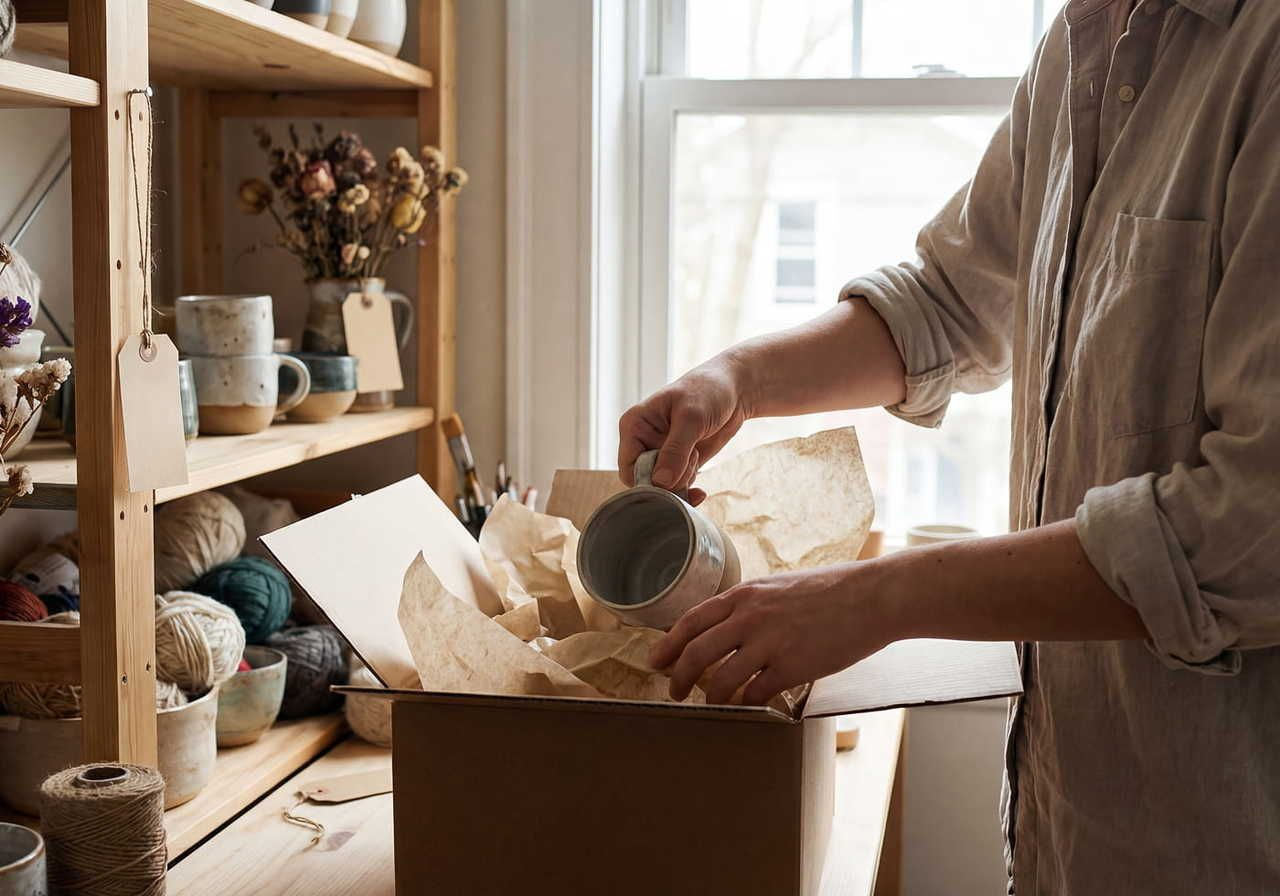
Selling mugs on Etsy is still worth considering, but it’s important to be realistic.
Mugs remain popular because they fit several strong buying motivations: gifts, home and office essentials, and personalized keepsakes. Personalization, in particular, keeps demand steady, as buyers want items that feel unique to them, their family, or their interests.
Yes, competition is high – a search for ‘personalized mug’ on Etsy returns thousands of listings. But most are generic or outdated designs.
Success in 2026 depends on finding a micro-niche – like mugs for frog lovers with quirky humor or ‘Nana Chic’ vintage-style ceramics – where you can be the big fish in a much smaller pond.
The pros and cons of selling mugs on Etsy
|
Pros |
Challenges |
|
Consistent gifting demand: Mugs are the ‘universal gift’ for holidays, birthdays, and coworkers. |
High saturation: With millions of listings, reaching the first page of search results is difficult. |
|
Personalization potential: Customers are willing to pay a premium for names, dates, or custom illustrations. |
Narrow margins: Between Etsy fees and production costs, you must manage your pricing carefully. |
|
Low barrier to entry: Print on Demand lets you start a business without buying a single piece of inventory. |
Fragility and shipping: Even with the best quality control, ceramics can break, leading to difficult reviews. |
|
Niche opportunities: There is always room for unique designs targeting hyper-specific hobbies or trends. |
Copycat culture: Successful unique designs are often quickly copied by competitors. |
How to sell mugs on Etsy in 8 steps
Let’s break down how to sell mugs on Etsy, from early research to scaling your Etsy shop once sales grow.
Follow these steps to build a solid foundation, avoid common mistakes, and set up an Etsy mug business that is designed to grow.
1. Research your niche
Every successful Etsy shop for mugs starts with research. Before you create designs or sell mugs online, you need to understand what customers are already searching for and where real demand exists.
Start with the Etsy search bar. Type broad terms like ‘coffee mugs’ or ‘custom mugs’ and review the autocomplete suggestions. These suggestions reflect popular keywords and real buyer intent on the Etsy marketplace.
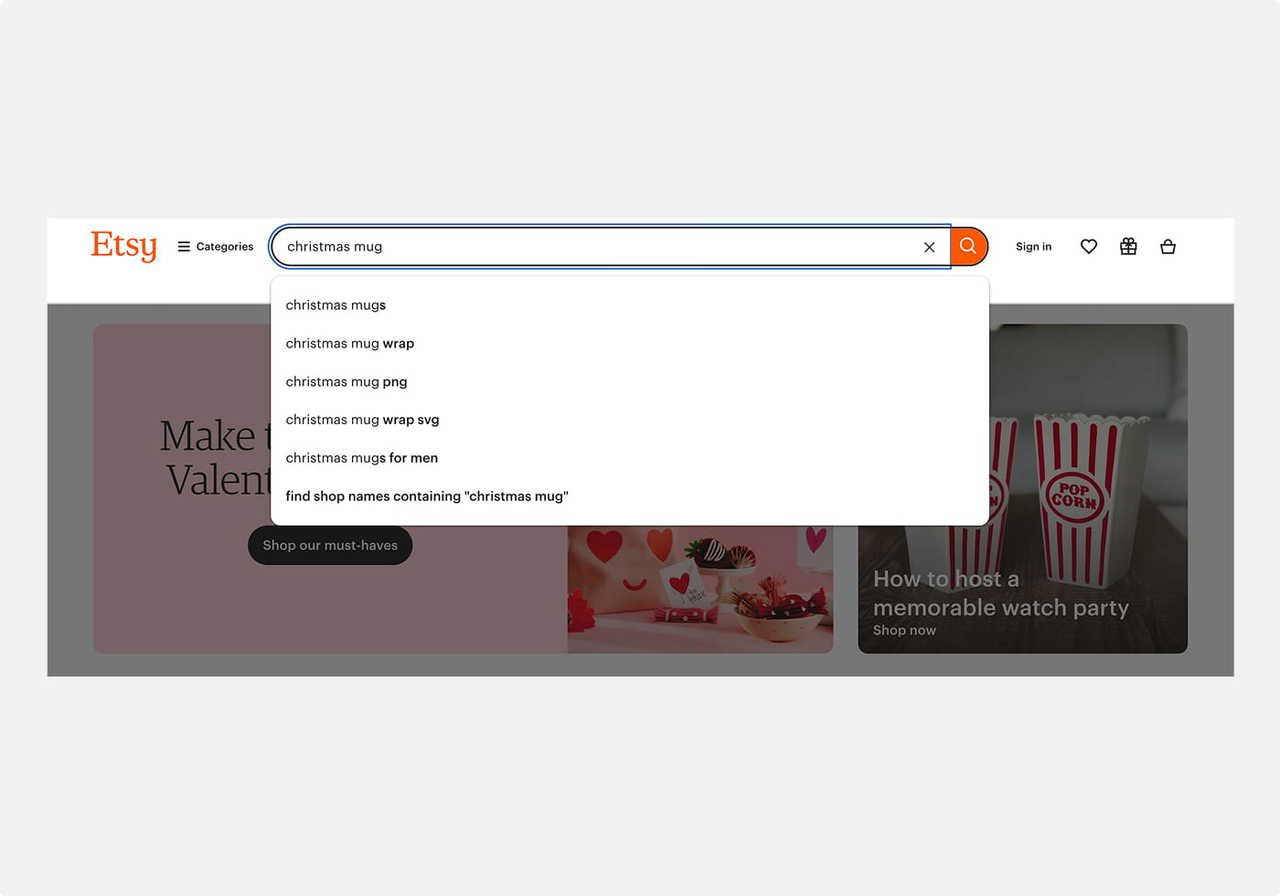
Source: Etsy
Look for recurring themes: personalized gifts, humor, home or office mugs, and niche interests like family roles or dog lovers. Then open the top search results and study pricing, reviews, and customer feedback to understand what buyers like and what they complain about.

Source: Etsy
To validate demand beyond Etsy, use tools like Google Trends to spot long-term interest and seasonal spikes, and keyword research platforms such as eRank or Marmalead to analyze Etsy-specific search volume, competition, and trending products.
AI-driven research tools like ChatGPT or Google Gemini can also help summarize patterns and generate niche ideas based on existing listings. Your goal is to find profitable gaps where customers are actively searching, but listings feel repetitive or underserved.
2. Choose the right mug type and materials

Not all mugs appeal to the same buyers, so selecting the right product types is a key decision.
-
Ceramic mugs. These are the heavy hitters of the coffee world. Ceramic mugs are the most common coffee mugs because they work well for everyday use, sentimental gifts, and deep personalization. Since they’re microwave and dishwasher-safe, they’re the go-to choice for home and office use. If you’re designing for birthdays, holidays, or office humor, ceramic is your best bet.
-
Enamel mugs. These have a distinct, retro vibe that outdoor enthusiasts love. Enamel mugs are lightweight and durable, making them popular for outdoor or travel-focused niches like camping, hiking, or van-life branding. They won't shatter if dropped on a trail and look great in campfire photos – making them highly shareable.
-
Travel mugs. These appeal to commuters and on-the-go customers who value functionality above all else. Because they’re designed to fit in car cup holders and keep drinks hot for hours, they command a higher price point than standard mugs. This is a great category for busy professionals, students, or anyone who spends mornings on the move.
Using Printful mugs allows you to test different materials and formats without committing to inventory upfront.
Each type comes with different pricing, shipping costs, and durability expectations. Quality matters here. Customers expect mugs to withstand daily use and washing, so choose materials that match your brand promise and niche focus.
3. Design and personalize your items

Once you know your niche and mug types, it’s time to create designs that stand out. Focus on unique designs that are easy to read, visually balanced, and clearly aligned with your niche. Overly complex artwork often loses impact when printed on curved surfaces like mugs, especially for text-heavy designs.
-
Personalization options such as names, dates, or short messages consistently perform well for Etsy custom coffee mugs. Keep personalization simple and clearly structured to reduce order errors and improve fulfillment accuracy.
-
You don’t need to be a professional designer or artist. To create artwork, many sellers use AI-driven tools like Midjourney or Google Gemini to generate illustration concepts, visual styles, or design ideas based on text prompts. These tools work best for creative exploration, not final production files.
-
AI-generated visuals should be refined for print using professional editing software like Adobe Illustrator or Adobe Photoshop. If you prefer free tools, GIMP is a common alternative for editing, resizing, and improving image quality.
-
For layout, text-based designs, and mockups, tools like Canva help create clean compositions quickly, while the Printful Design Maker allows you to upload final files, preview them directly on mug products, and generate ready-to-use mockups for Etsy listings.
Reviewing designs in these tools before publishing helps ensure print quality, accuracy, and consistency across your shop.
Tip: Use royalty-free images from Unsplash or licensed photos from Shutterstock.
Always check copyright and intellectual property before listing. Before publishing any mug design, always verify that it doesn’t infringe on existing artwork, characters, logos, or trademarks. This is especially important when using AI-generated images or inspiration from trending designs.
Use reverse image search tools like Google Images or TinEye to check whether similar visuals already exist online.
Listing copyrighted or trademarked designs can lead to takedowns, shop penalties, or permanent suspension on Etsy.
4. Calculate potential price and profits

Pricing should be based on real costs, not guesswork.
Start by calculating your total cost per mug: base cost, printing, packaging, shipping, and Etsy fees. Payment processing and optional marketing costs should also be factored in.
Once you know your baseline, review competitor pricing in search results and set a price that’s competitive while still profitable. Avoid racing to the bottom – customers often associate higher prices with better quality.
To increase average order value, consider strategies like bundle offers, family sets, or small discounts for multiple items.
5. Establish quality control and fulfillment
Quality control protects your reviews and your brand.
Always order samples before selling. This allows you to check print clarity, color accuracy, and overall quality. Sample orders also help you create high-quality photos for your listings.
Because mugs are fragile, packaging matters. Reliable fulfillment reduces breakage, refunds, and negative customer feedback.
At this stage, decide whether you’ll use Print on Demand, mug dropshipping, or hold inventory. For most sellers, Print on Demand simplifies inventory management and lowers upfront costs, especially when starting out.
Tip: Use our guide to estimate processing and shipping times and costs.
6. Perfect your Etsy listings with SEO
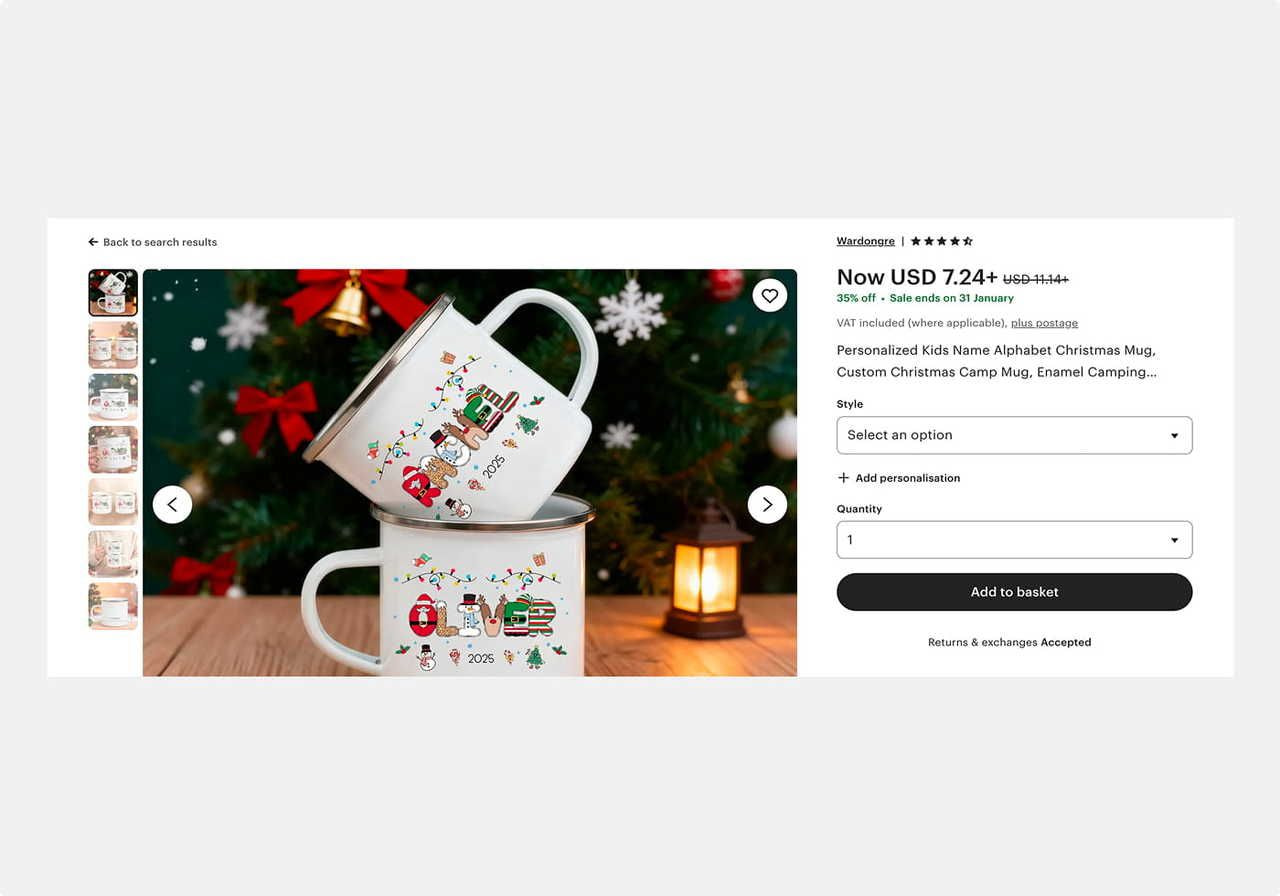
Source: Etsy
Even great mug designs won’t sell if buyers can’t find them. Etsy SEO for mugs starts with crafting titles, tags, and descriptions using relevant keywords customers actually search for.
Tools like eRank and Marmalead help you discover trending keywords, search volume, competition levels, and seasonal demand so you can choose terms that match real Etsy search behavior. Place your primary keywords early in the title and support them with related terms in tags and descriptions based on data from these tools.
Use listing attributes and subcategories accurately, as these act like additional keywords in Etsy search results. Tools like Keyword Tool (Etsy) and the Etsy search bar itself help you identify relevant phrases and long-tail terms for attributes, tags, and titles.
Seasonal keywords – such as ‘Valentine’s Day mug,’ ‘birthday mug,’ or ‘holiday gift mug’ – can also boost visibility during gift-heavy periods when paired with listing updates timed around peak demand.
High-quality photos are essential. Include lifestyle images, close-ups, and mockups that clearly show size, finish, and important details buyers look for before purchasing.
Tip: Explore Etsy SEO on our blog.
7. Market and promote
Publishing listings is only part of the process. Marketing an Etsy shop is what brings consistent traffic, especially in the early stages before listings gain organic visibility.
-
Start by promoting your mugs on visual platforms like Instagram, TikTok, and Pinterest. Short videos showing the mug in use, behind-the-scenes design clips, or unboxing posts help buyers understand the product and build trust.
Tip: Tools like CapCut or Canva make it easy to edit short-form videos and visuals without advanced skills.
-
Collaborating with small creators in your niche can expand reach without large budgets. Find potential partners by searching hashtags on Instagram or TikTok, or by reaching out to Etsy sellers in your niche.
-
Encourage user-generated content by including a short message in your packaging or order confirmation asking customers to share photos of their mugs.
-
Seasonal campaigns help maintain momentum. Use tools like Google Trends to plan content and promotions around holidays, birthdays, and gift-giving moments.
-
Email tools like Mailchimp help you reconnect with customers, announce new designs, or promote limited-time offers.
You can also test Etsy Ads on listings that already convert well. Start with a small daily budget and monitor performance closely, increasing spend only on products that generate consistent sales and positive returns.
8. Scale your mug business

Once you start seeing steady sales, focus on scaling intentionally rather than adding products at random. Expanding into related items – drinkware sets, coasters, or complementary home goods – increases revenue per customer.
-
As your Etsy store grows, automation becomes essential. Tools like Vela let you bulk-edit titles, tags, prices, and images across multiple listings, which is especially useful when updating seasonal keywords or adjusting pricing at scale.
-
Connecting your shop to Printful ensures products and orders sync automatically.
-
To track performance beyond surface-level metrics, use the Etsy Shop Manager analytics to monitor traffic sources, conversion rates, and listing performance, and connect Etsy to Google Analytics 4 for deeper insights into buyer behavior and drop-off points.
-
Regularly reviewing customer feedback helps identify recurring issues with product quality, packaging, or messaging. You can do this directly inside Etsy Shop Manager, where all customer reviews are collected and displayed for your shop.
Sign up, connect your Etsy shop to Printful, and start creating your mug brand.


How much does it cost to sell mugs on Etsy?

As you get ready to launch an Etsy shop and start selling your custom drinkware, you need to know how the math breaks down. Etsy is a ‘pay-as-you-go’ platform, which is great for starting out, but those small costs add up if you aren't tracking them.
Here's a breakdown of Etsy seller fees for 2026:
1. The mandatory ‘Big 3’ fees
Every time a mug sells, Etsy takes a few specific cuts to keep the platform running:
-
Listing fees: It costs $0.20 to publish a product. This listing stays active for four months or until the item sells. Listing ten different mugs costs $2 total.
-
Transaction fees: When a customer buys a mug, Etsy takes 6.5% of the total order amount. This includes the price of the mug plus whatever you charged for shipping and gift wrapping.
-
Payment processing fees: This covers the cost of handling the credit card transaction. In the US, this is usually 3% + $0.25 per order.
Tip: Try our Etsy Calculator and take control over your final selling costs on Etsy.
2. The new shop ‘Handshake’ (Setup fee)
As of 2026, Etsy has a one-time setup fee for many new sellers to help keep the marketplace secure. This is typically a flat $15 charge when opening your shop. Since it’s only paid once, it functions like a setup permit.
3. Optional (but helpful) extras
When you want to take your shop to the next level, these ‘pro’ features are available:
-
Etsy Plus: For $10/month, you get a bundle of tools, including 15 listing credits and a $5 credit for Etsy Ads.
-
Pattern by Etsy: For a separate branded website outside of the Etsy marketplace, the cost is $15/month.
-
Offsite ads: Etsy may advertise your mugs on Google or social media. If someone clicks an ad and buys a mug, a fee is applied (usually 12-15%). You only pay if the ad results in a sale.
Tip: When pricing mugs, ensure you cover all fees plus Printful production costs. Most successful sellers aim for a retail price that leaves a 30-40% profit margin after all fees are settled.
Conclusion
Selling mugs on Etsy can still be a smart move in 2026 if you approach it with realistic expectations and a clear plan. Mugs attract customers because they’re practical, giftable, and easy to personalize. That steady demand creates opportunities, but competition means success depends on research, quality, and consistency rather than shortcuts.
If you want to sell mugs successfully, focus on a well-defined niche, create unique designs that solve a specific customer need, and price your products with all costs in mind. Optimizing listings, acting on customer feedback, and improving what works drive long-term sales. With print-on-demand fulfillment, you can test ideas, manage inventory efficiently, and scale at your own pace.
Treat your Etsy shop as a real business, not a one-time experiment. When you combine research, thoughtful design, and reliable fulfillment, selling mugs on Etsy can become a sustainable source of income rather than a short-lived side project.
FAQ
Selling mugs on Etsy can be profitable, but it depends on your pricing, niche, and cost management. Sellers who account for Etsy fees, production, shipping, and marketing while maintaining strong design quality and clear messaging are more likely to see consistent profits. Profitability improves over time as listings gain reviews and visibility.
Yes, you can make money selling mugs on Etsy, but results vary.
Successful sellers usually focus on profitable niche markets, optimize Etsy listings for search, and build trust through reviews and customer service. Most shops don’t see instant success, so patience and regular optimization matter.
In addition to Etsy, you can sell mugs through your own online store, social media platforms, or other marketplaces. Etsy remains a popular starting point because it already attracts buyers searching for custom and personalized products, reducing the need to generate traffic from scratch.
Pricing depends on your total costs, including production, shipping, Etsy fees, and marketing. Many sellers review search results to understand common price ranges, then set pricing that reflects quality and leaves room for profit. Charging too little can hurt margins, while pricing too high without clear value can limit sales.
Print-on-demand services that integrate directly with Etsy are often the easiest option. Printful is a widely used choice because it offers consistent quality, sample orders, and automated fulfillment. Choosing a reliable provider helps protect reviews, manage inventory, and scale your Etsy mug business more efficiently.

Published author, scholar, and musician, Andris draws on over 11 years of experience in and outside academia to make complex topics accessible – from SEO and website building to AI and monetizing art. Devoted to his family and self-confessed introvert, he loves creating things, playing musical instruments, and walking around forests.

