



Table of contents
Wondering how to connect Printful to Shopify? It’s simpler than you might think. Create accounts on Shopify and Printful, then sync the two for automatic fulfillment. Choose and customize products to sell, and set up shipping and billing to start taking orders.
In this guide, we’ll walk through each step in detail and share practical tips to improve your Shopify SEO for Print on Demand, attract more traffic, and grow sales faster.
Why use Printful and Shopify together for your business
Connecting your Shopify store to your Printful account only takes a few clicks thanks to the built-in integration. You don’t need coding skills or a complex setup to launch an online store selling custom products.
Once connected, Printful syncs products to your Shopify store, so you can launch listings faster. When customers place orders, Printful handles production and fulfillment automatically, saving time and reducing manual work.
This setup also lowers the risk of starting a business. With Printful’s print-on-demand model, you can sell personalized products without buying inventory upfront or storing stock. Set your own retail prices, test new ideas quickly, and expand your business as demand grows.
You also get the best of both platforms. Shopify gives you powerful eCommerce tools to run your store, while Printful handles printing, packing, and shipping, so you can focus on branding, marketing, and growing sales.
Pro tip
Take inspiration from best Shopify store examples to see how great branding, strong product pages, and clean layouts can help turn visitors into customers.
How to connect Printful to Shopify in 6 simple steps
Need a visual guide? Follow this handy YouTube tutorial on how Shopify + Printful integration works.


Step 1: Create your Printful account
Head to Printful’s registration page or click Get Started at the top right corner of this guide. Creating a Printful account is completely free and only requires an email address.
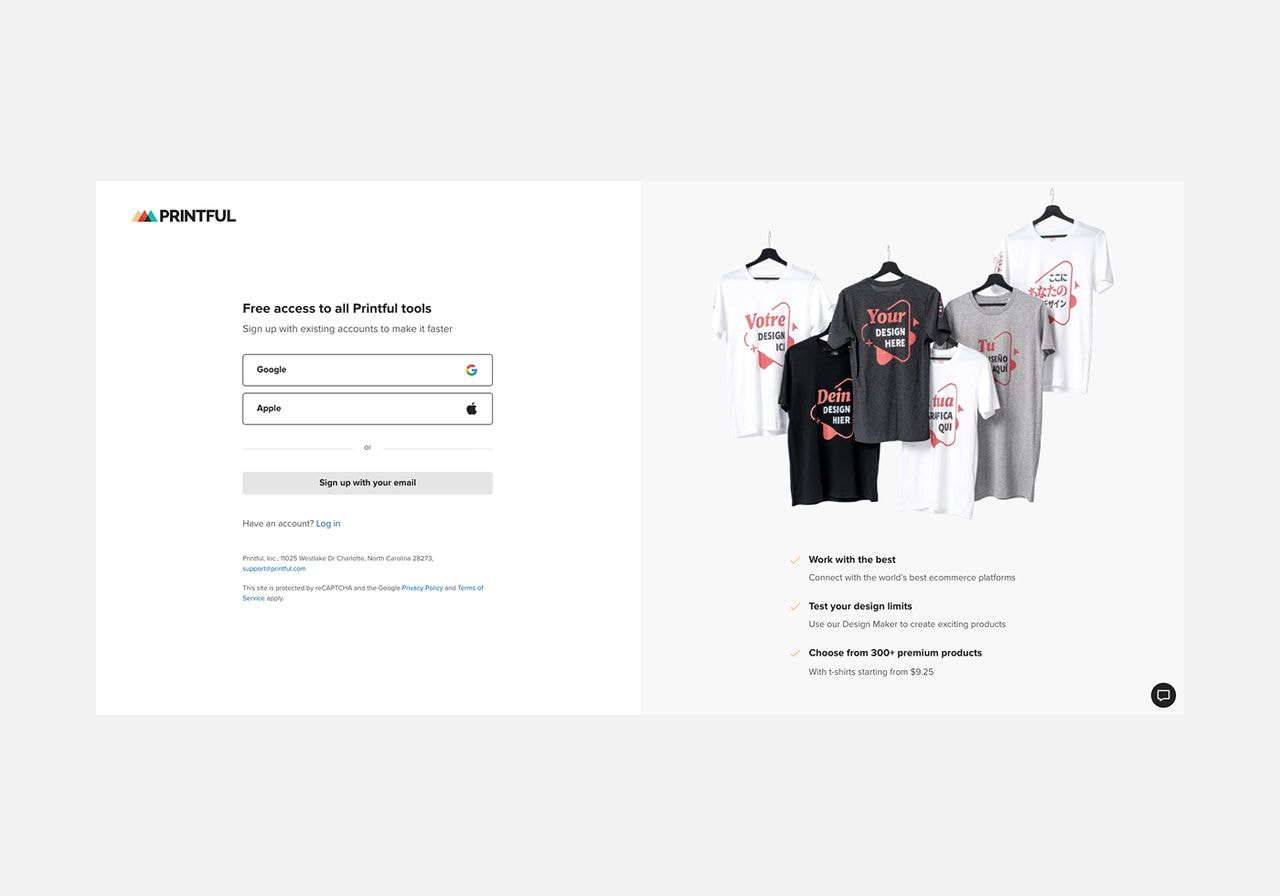
Once your account is ready, you can access the Printful dashboard along with our custom products and design tools.
Step 2: Install the Printful app on Shopify
Sign up or log in to your Shopify account and go to Apps on the left side of your dashboard. Click Add to browse available tools and select Printful. If you don’t see the Printful app, open the Shopify App Store and search for it manually.
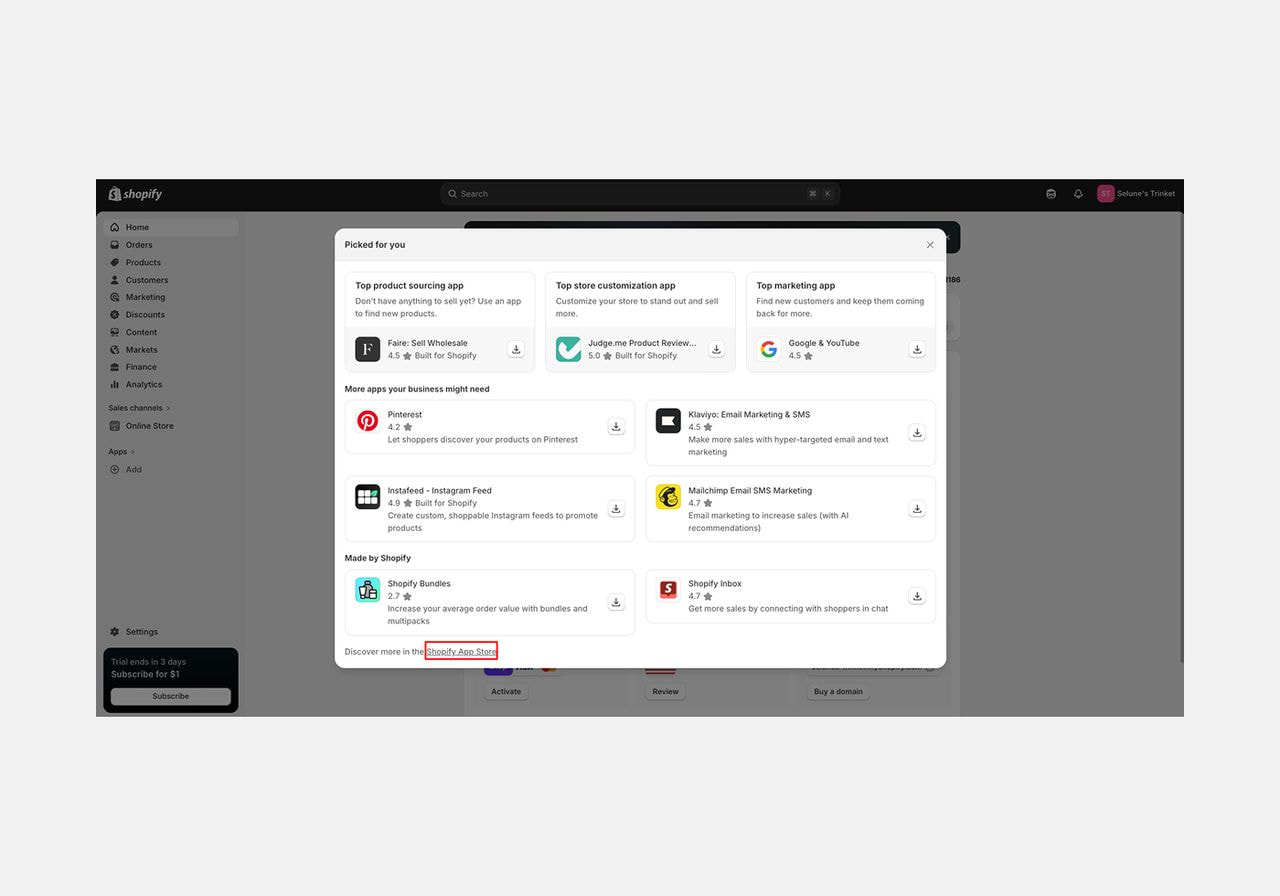
Click Install, then confirm your choice to continue.
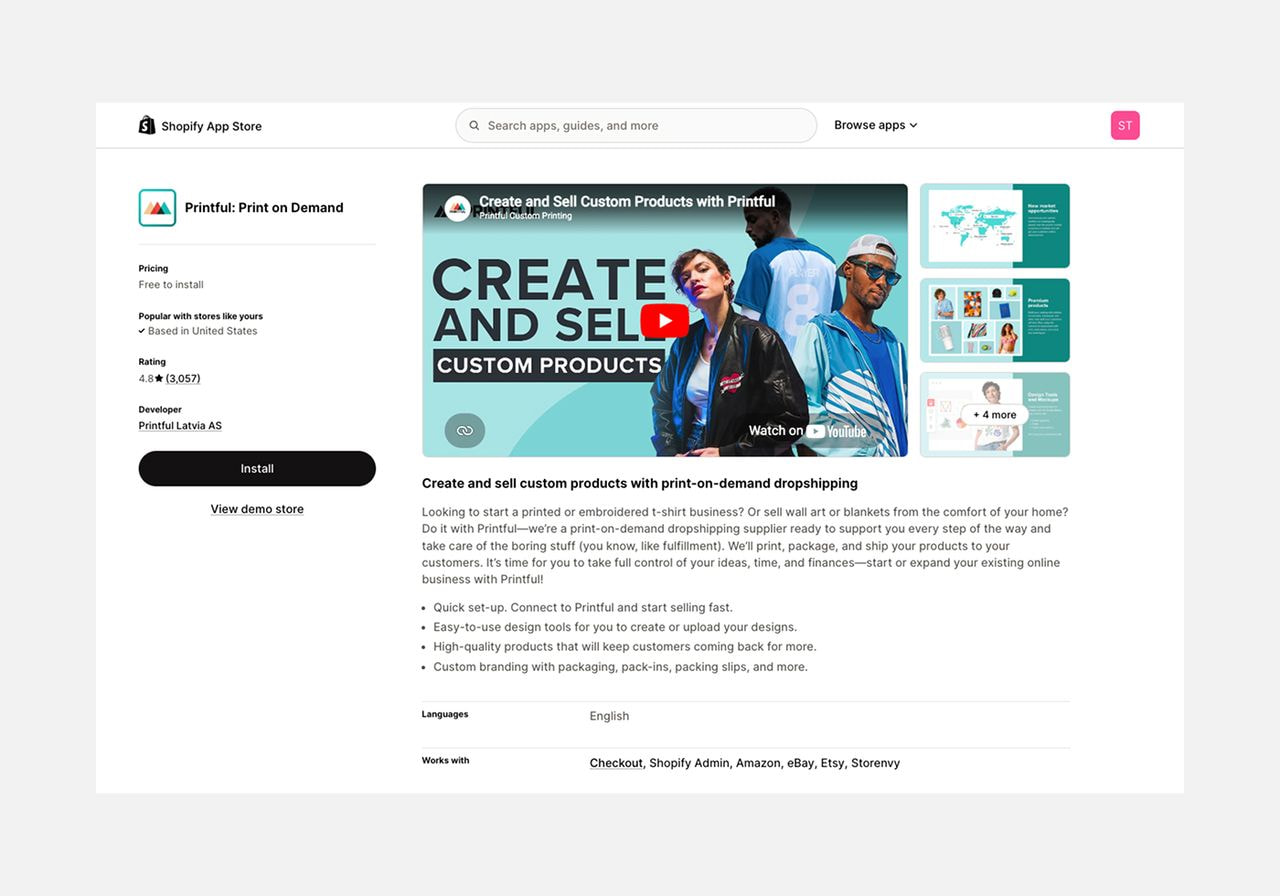
Step 3: Sync Printful with Shopify
Shopify will ask you to authorize access to your Printful account. Review the permissions and approve the connection. If the sync process is successful, Printful’s tools will appear in the left sidebar of your Shopify dashboard. Don’t forget to refresh your Printful dashboard so it registers the integration.
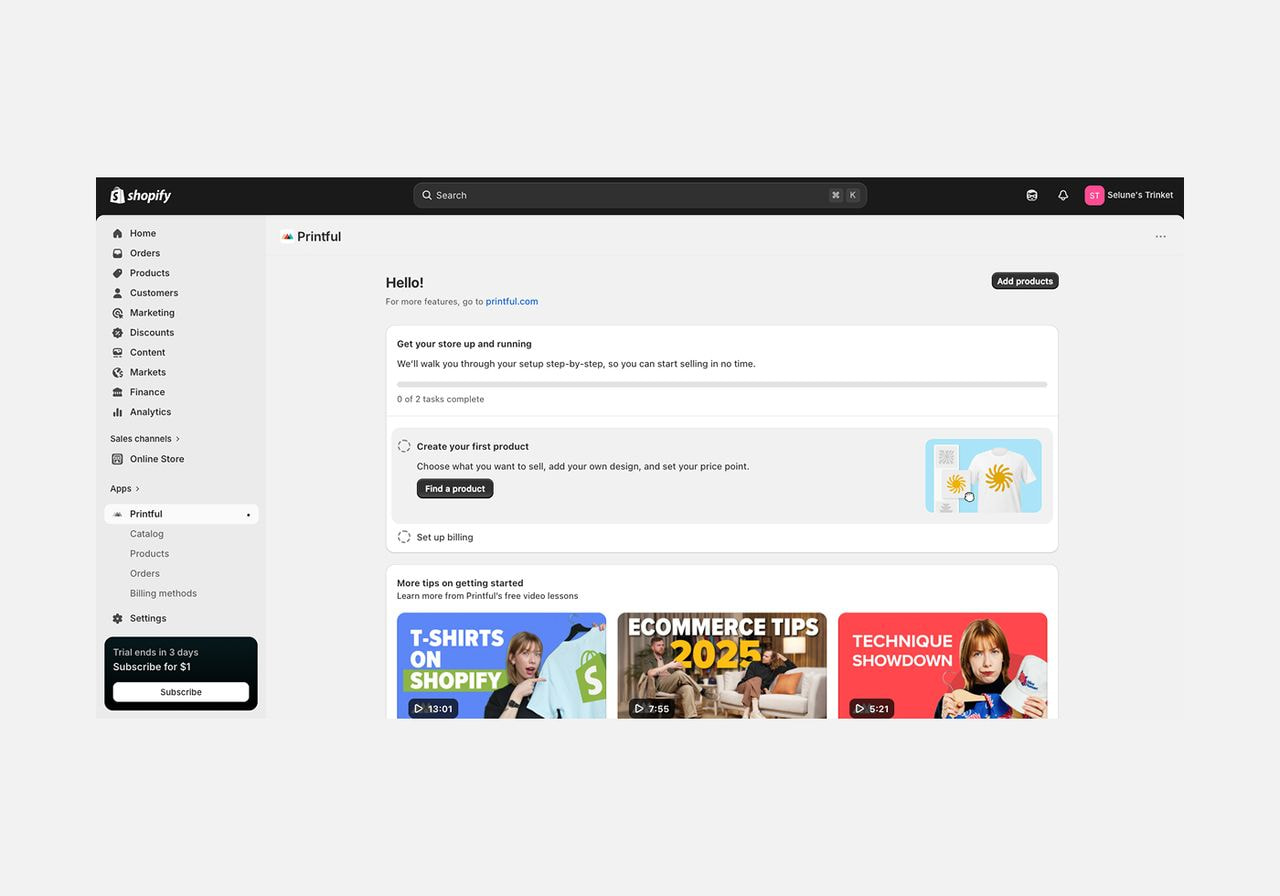
Step 4: Design and add your products
Switch back to Printful and open My products from the left sidebar.
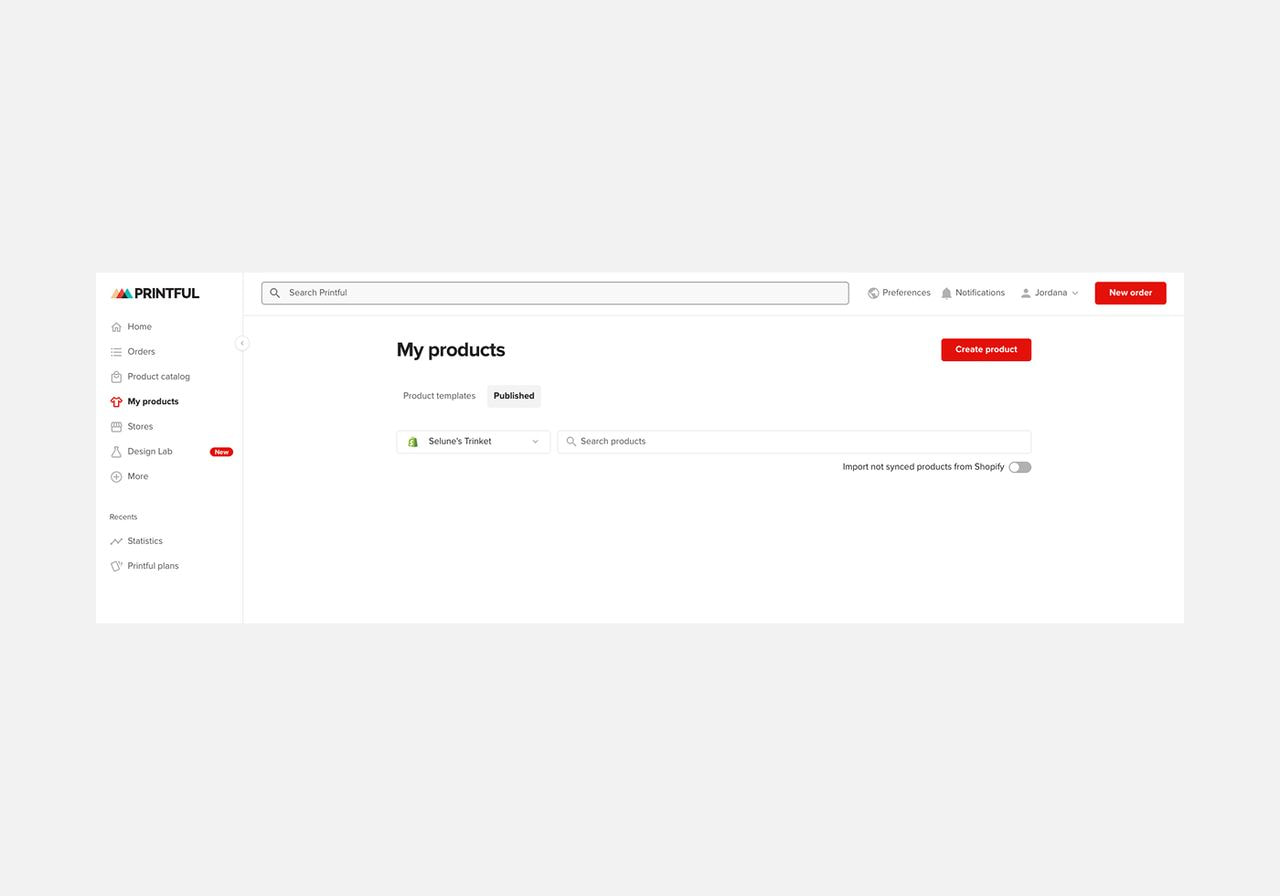
Click Create product and choose an item from the Printful catalog. On the product page, select your preferred customization method, then click Start designing.
Use the Design Maker to upload your artwork or customize a design from scratch. When your design is ready, select Publish to set up the product page.
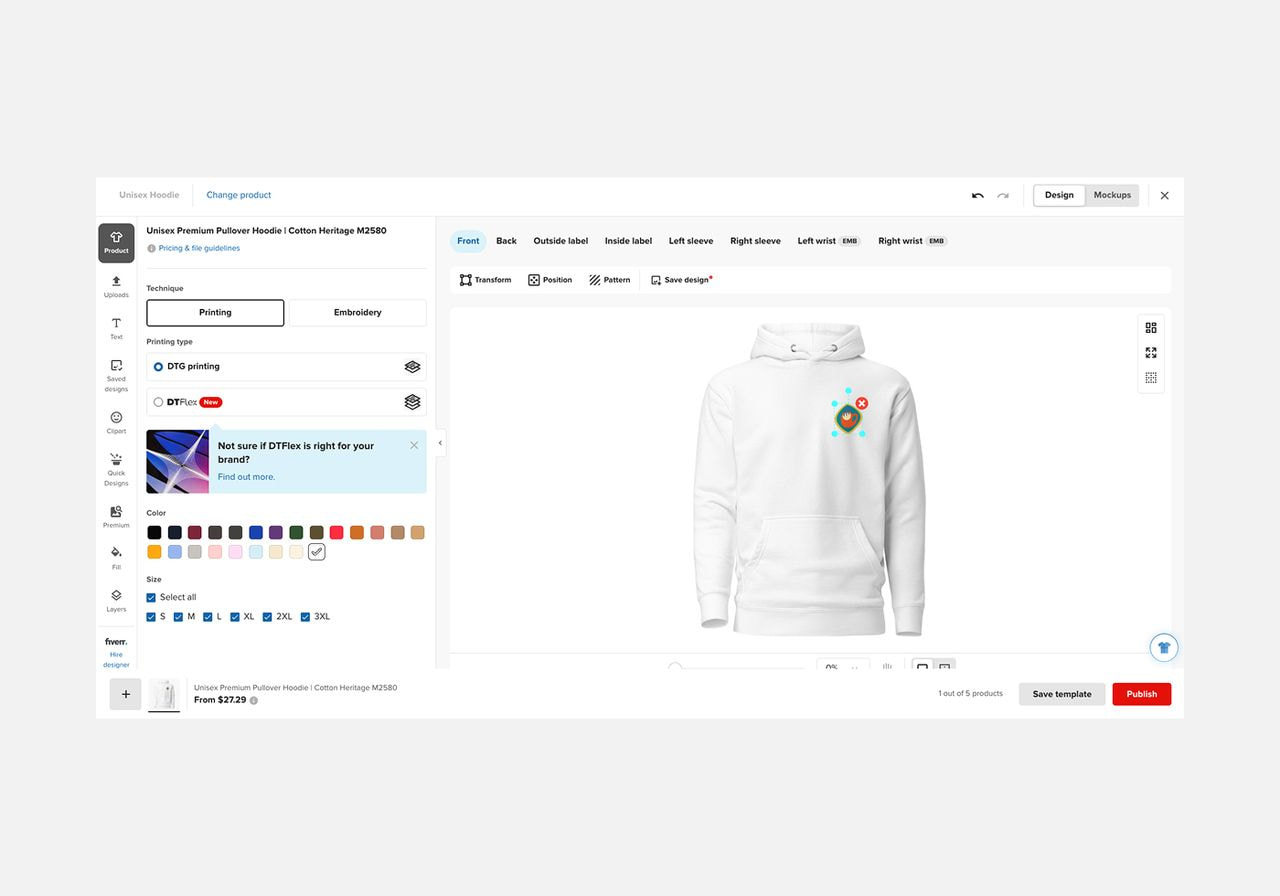
Complete the process by choosing a mockup style, setting pricing, and filling in product details, then select Publish.
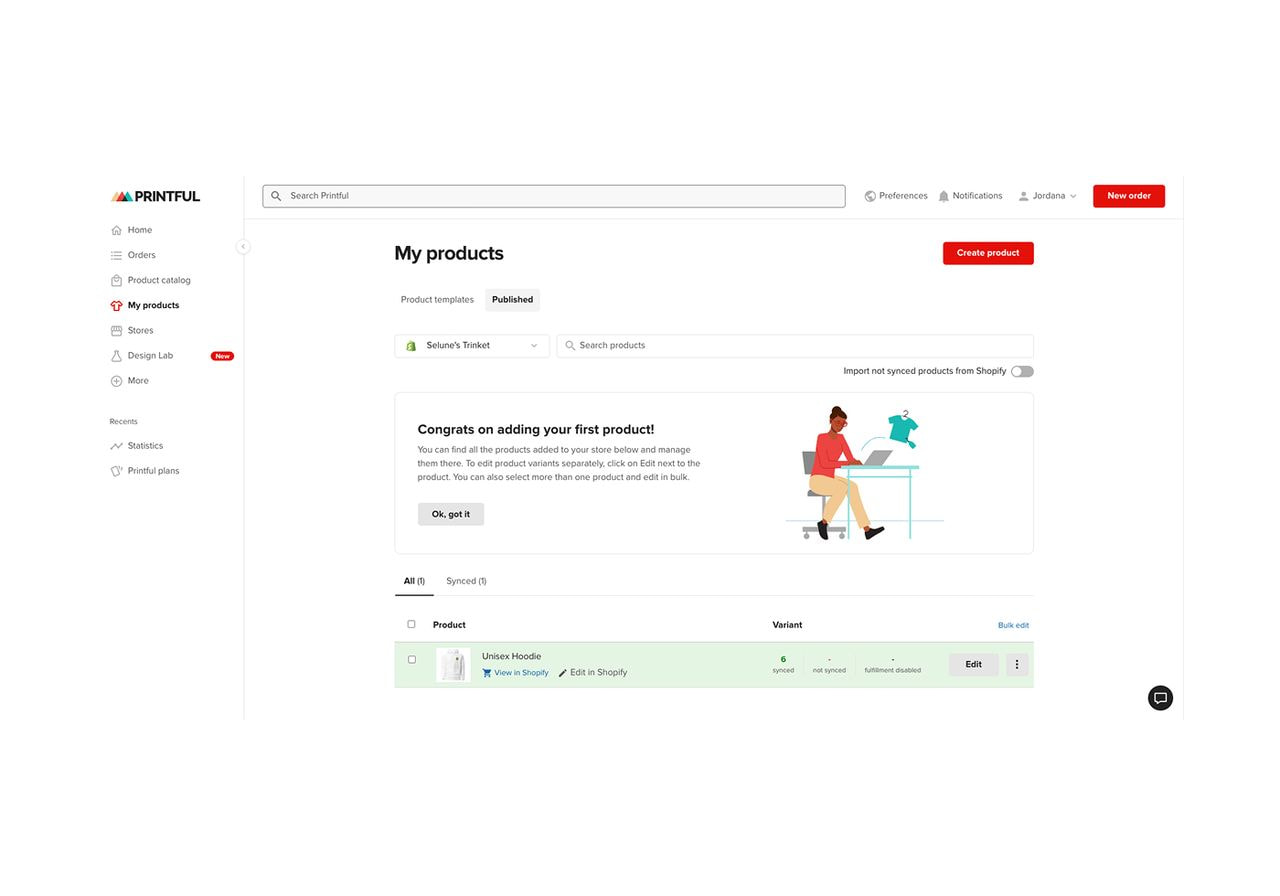
The new listing will appear in My Products. Repeat this process to add more Printful products to your Shopify store.
Step 5: Set up payments
When a customer places an order, they pay you directly through your Shopify payment gateway. Printful charges you for product fulfillment and shipping through your Printful Wallet or selected billing method.
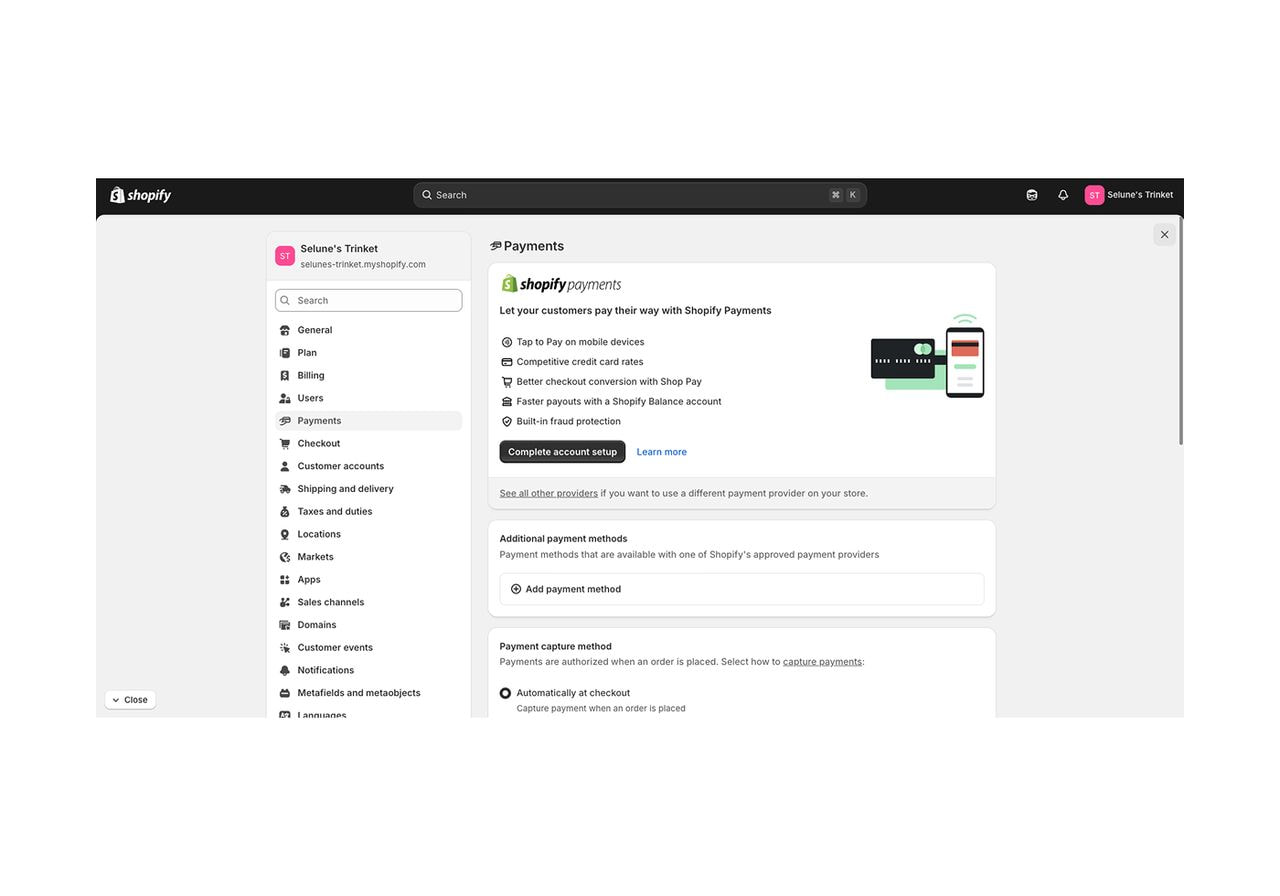
To set up customer payments, go to Settings → Payments in your Shopify admin. Choose your preferred payment provider and follow the setup steps.
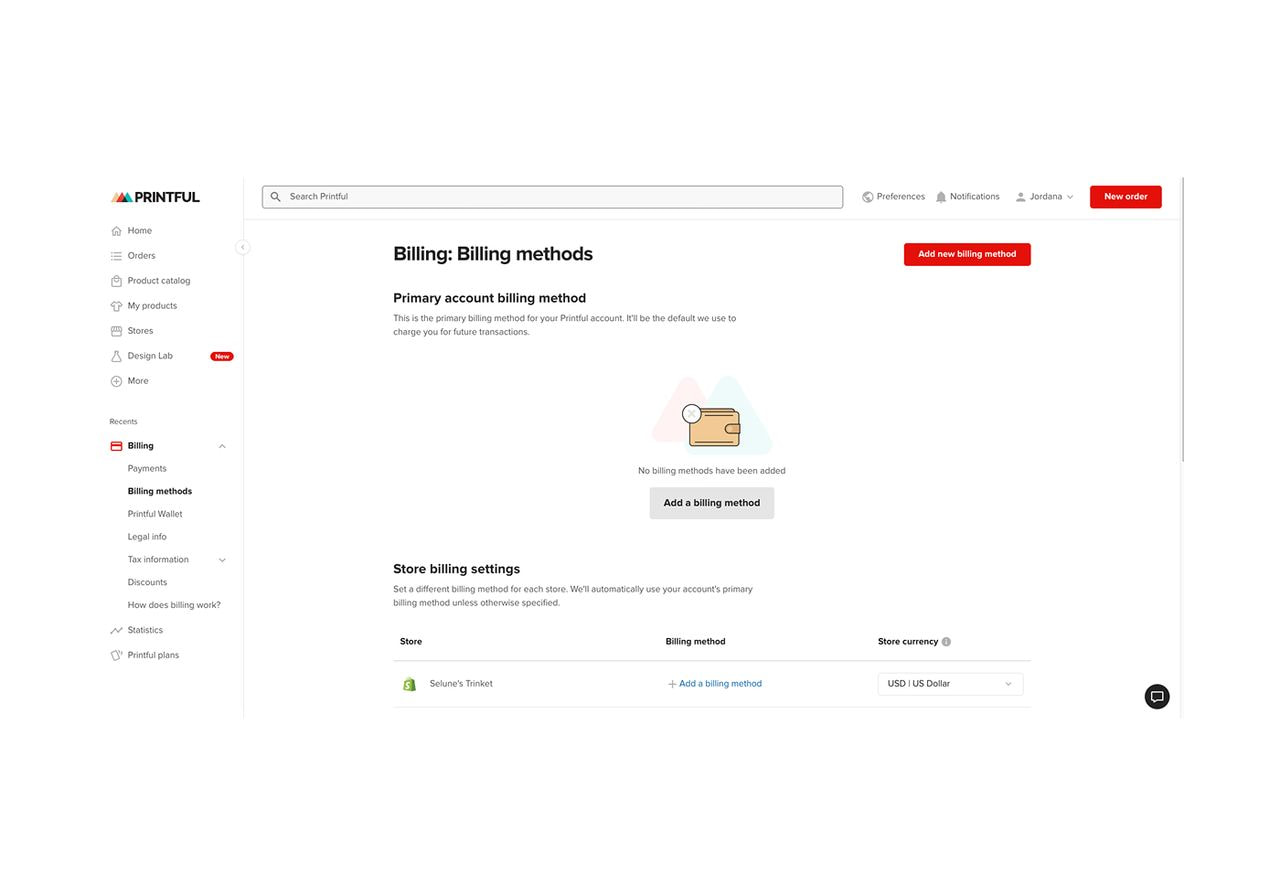
To cover fulfillment and shipping costs, open your Printful dashboard and go to Billing → Billing Methods. Click Add new billing method and choose how Printful should charge future orders.
What about shipping?
Since Printful handles fulfillment, shipping profiles and rates are set up automatically when you publish a listing. It’s best to leave the shipping settings in your Shopify admin as they are.
Step 6: Start selling
That’s it! Once your products are live and payments are set up, your store is ready for customers. Review your product pages, test your checkout experience, and make sure everything looks right on desktop and mobile.
Pro tip
Check out the Printful + Shopify integration section in our Help Center for answers to common questions.


Master Shopify Print on Demand SEO: Tips for better visibility
Once your Shopify store is live, search engine optimization (SEO) helps customers find it. These simple Shopify POD SEO tips can bring more traffic and help you sell more custom products.
Optimizing product titles
Your product title is one of the first things shoppers and search engines notice, so make it clear, descriptive, and keyword-focused. Include what the item is, who it’s for, and any standout feature a buyer might search for.
Avoid vague names like “Cool Shirt” or “Summer Tee.” Instead, use titles that explain the product right away and match real search intent.
Example: Men’s Custom Gym T-Shirt | Motivational Workout Tee
Strong titles can improve click-through rates, help your Shopify store rank better, and make it easier for customers to find the right product.
Writing unique descriptions
Avoid copying generic supplier text or using the same wording across every product page. Unique descriptions help your Shopify store stand out in search results and give shoppers a better reason to buy.
Highlight the fit, material, use case, gift appeal, or design story behind your Printful products. Use clear, benefit-focused creative writing to explain what makes your product worth choosing. Keep the tone natural and easy to scan.
It’s also smart to edit descriptions over time. Refresh wording, add customer insights, and improve keywords based on performance. Regular updates keep pages relevant and improve conversions, especially for trend-driven products.
Not a wordsmith? Many AI content writers can help you brainstorm ideas and create engaging copy from a simple prompt.
Adding image alt texts
Alt text is short descriptive text added to an image. It helps search engines understand what the image shows and improves accessibility for shoppers using screen readers.
Use clear, specific wording that describes the product and key visual details. Include relevant terms naturally, such as color, style, audience, or design features. This supports better indexing and stronger Printful product optimization across your store.

Example: White custom hoodie with minimalist front logo for men
Avoid stuffing keywords or writing vague labels like “image1” or “product photo.” Strong alt text adds useful product details and can help more shoppers discover your listings through search.
Optimizing site speed and mobile experience
With over 8 billion smartphone users worldwide, many shoppers will visit your Shopify store on mobile. Keeping your store fast and mobile-friendly creates a better shopping experience and helps improve search visibility.
Start with a mobile-optimized Shopify theme that loads quickly and looks clean on smaller screens. Keep navigation simple, use readable text, and make buttons easy to tap. Also, limit unnecessary apps and compress large images to keep your store running smoothly.
Test your store on different devices to make sure pages load properly, product images look right, and checkout feels easy. Faster stores often rank better, turn more visitors into buyers, and encourage repeat visits.
Experimenting with content marketing
Strong content marketing can help bring more visitors to your Shopify store and keep your brand visible after launch. Instead of relying only on ads, use content to attract shoppers and build long-term interest.
Shopify includes built-in blogging tools, so you can publish a helpful blog post around your niche, product ideas, trends, or gift guides. You can also use email marketing and SMS through Shopify Messaging to promote new launches, share discounts, and bring past visitors back to your store.
For faster and broader reach, share product pages directly to social media from your Shopify admin. Printful handles fulfillment in the background while Shopify makes selling simple with synced products, payments, and order management.
Both platforms also connect with top sales channels like Facebook Shops, YouTube Merch Shelf, and Instagram Shopping, helping you reach a wider audience and turn social traffic into sales.
Printful + Shopify troubleshooting: Common connection issues and fixes
Products aren’t syncing properly
This issue can happen even if you have successfully connected Printful with Shopify. If you create products directly in your Shopify admin, those listings may not connect automatically, which can prevent orders from syncing for fulfillment.
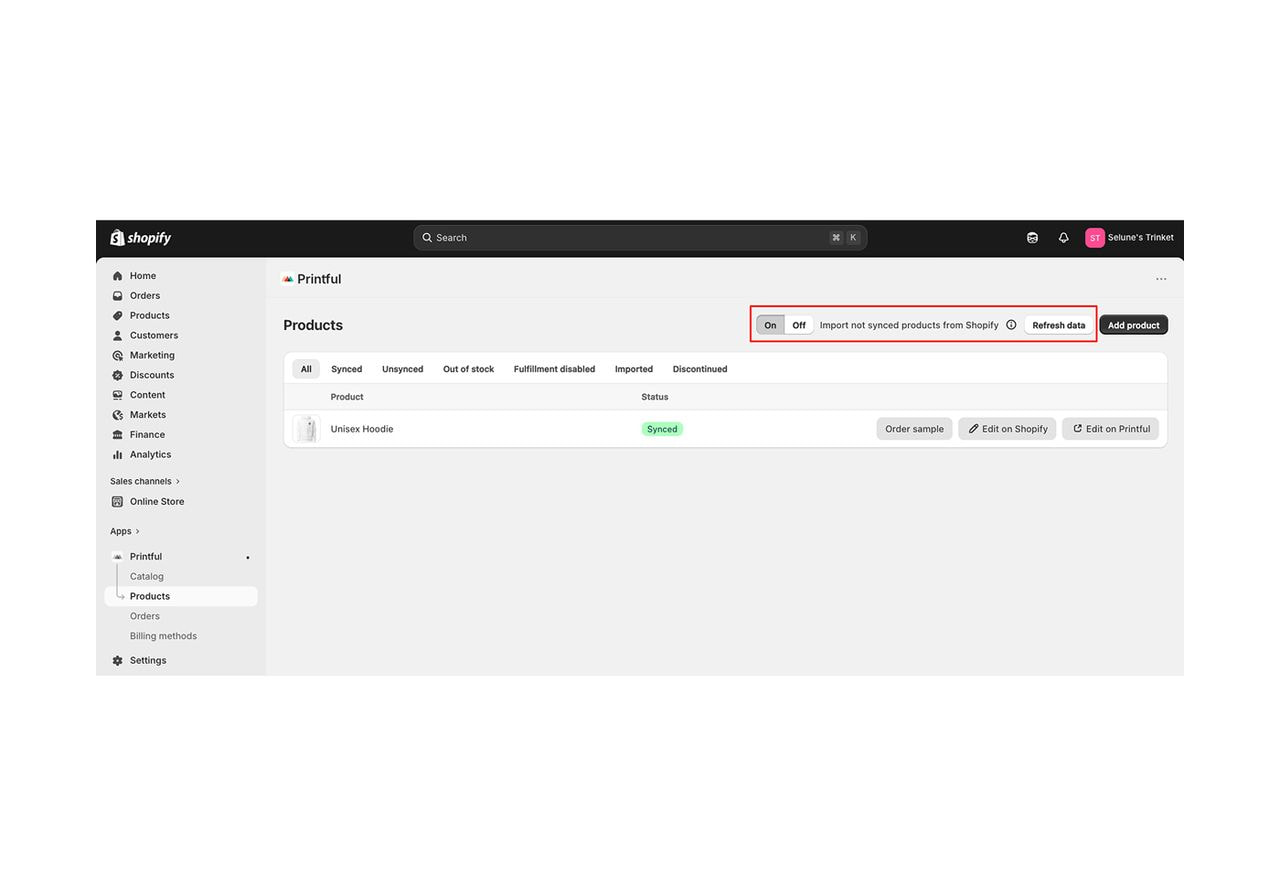
To fix it, open Printful → Products inside your Shopify dashboard. Turn on Import not synced products from Shopify, then click Refresh data.
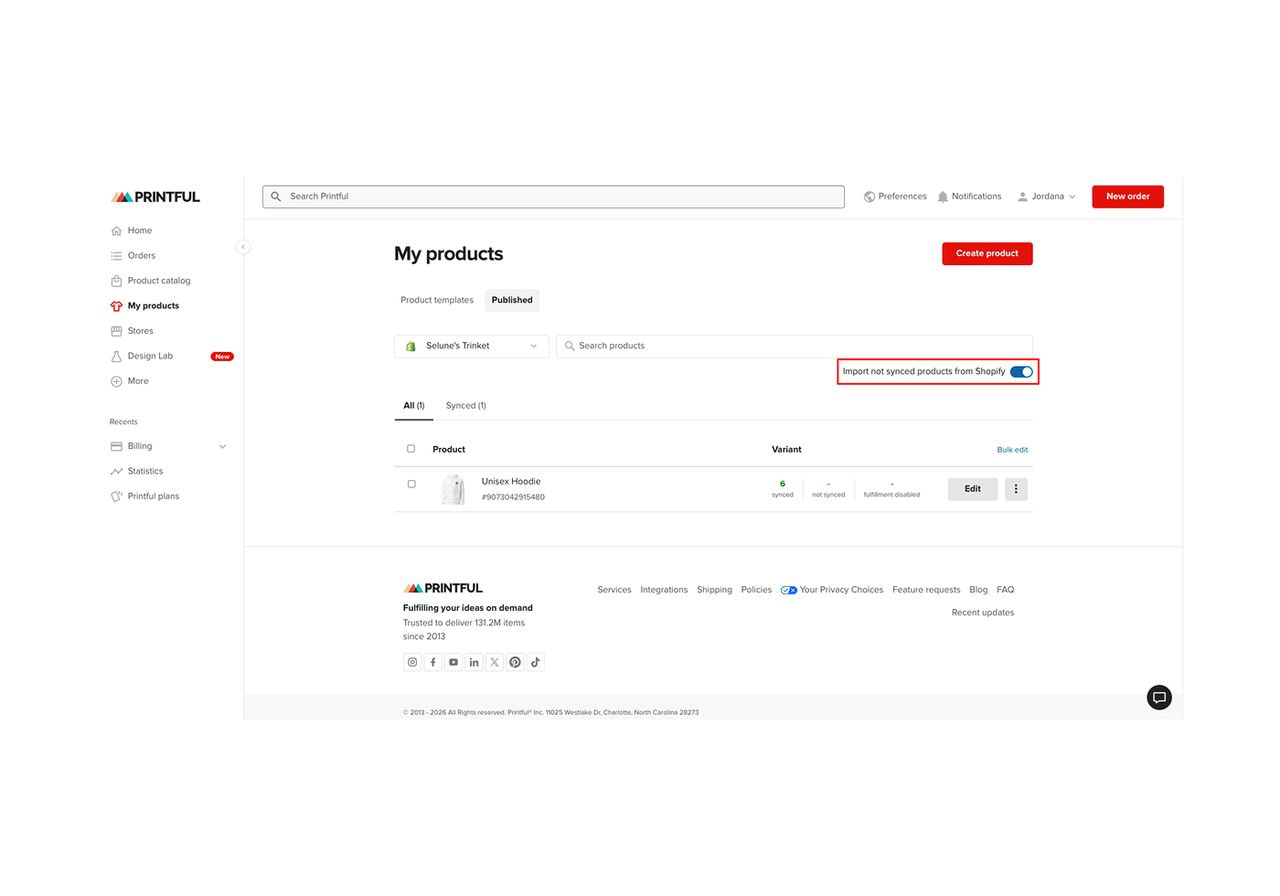
Next, go to your Printful dashboard, open My Products and enable the same option. This should help reconnect unsynced listings.
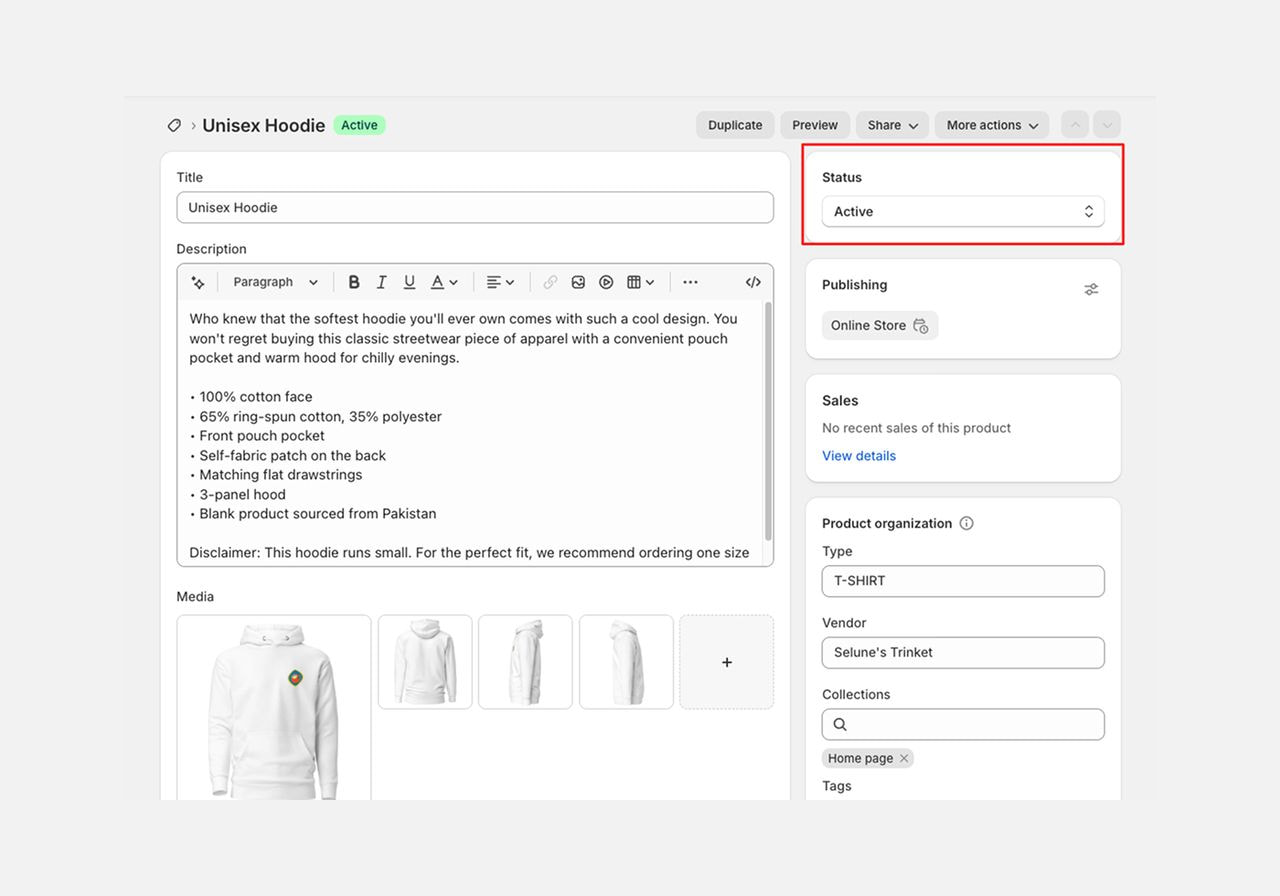
Keep in mind that this only applies to published products. To sync draft products, click on the Shopify listing and change the status to Active.
Out-of-stock notifications aren’t updating
Printful stock sync is usually enabled by default for Shopify stores, but it’s worth checking if products show the wrong availability or stay listed after going out of stock.
To review your settings, open your Printful dashboard and go to Settings → Orders. Make sure Automatic stock update is enabled. If it’s turned off, switch it on and click Save.
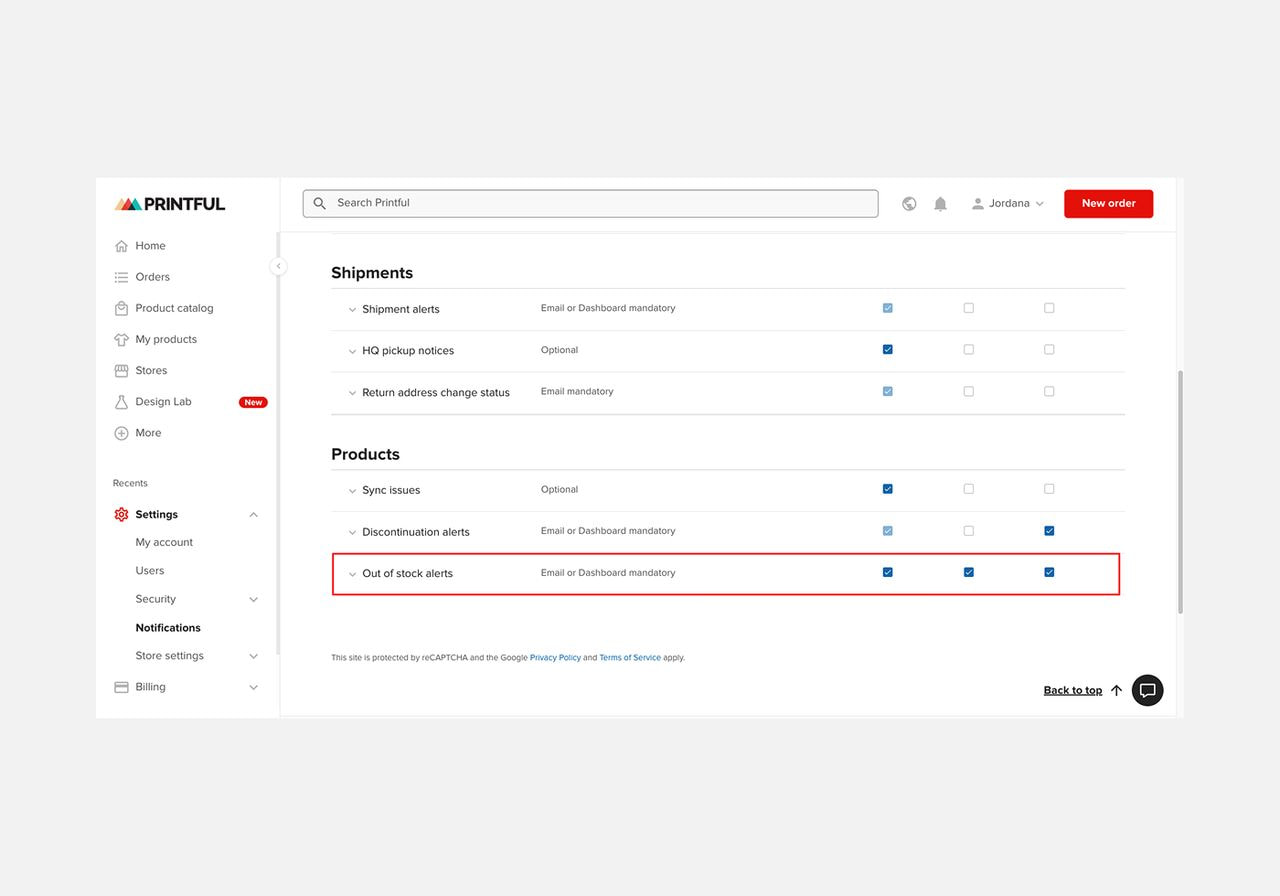
You can also enable dashboard notifications for out-of-stock variants in Settings → Notifications to stay updated.
Permission-related issues
Shopify usually requests the permissions needed to connect with Printful during app installation, so most stores won’t need to change anything manually.
If you want to review access settings, open your Shopify admin and go to Settings → Apps. Find the Printful app, click the three-dot menu, then select View details.
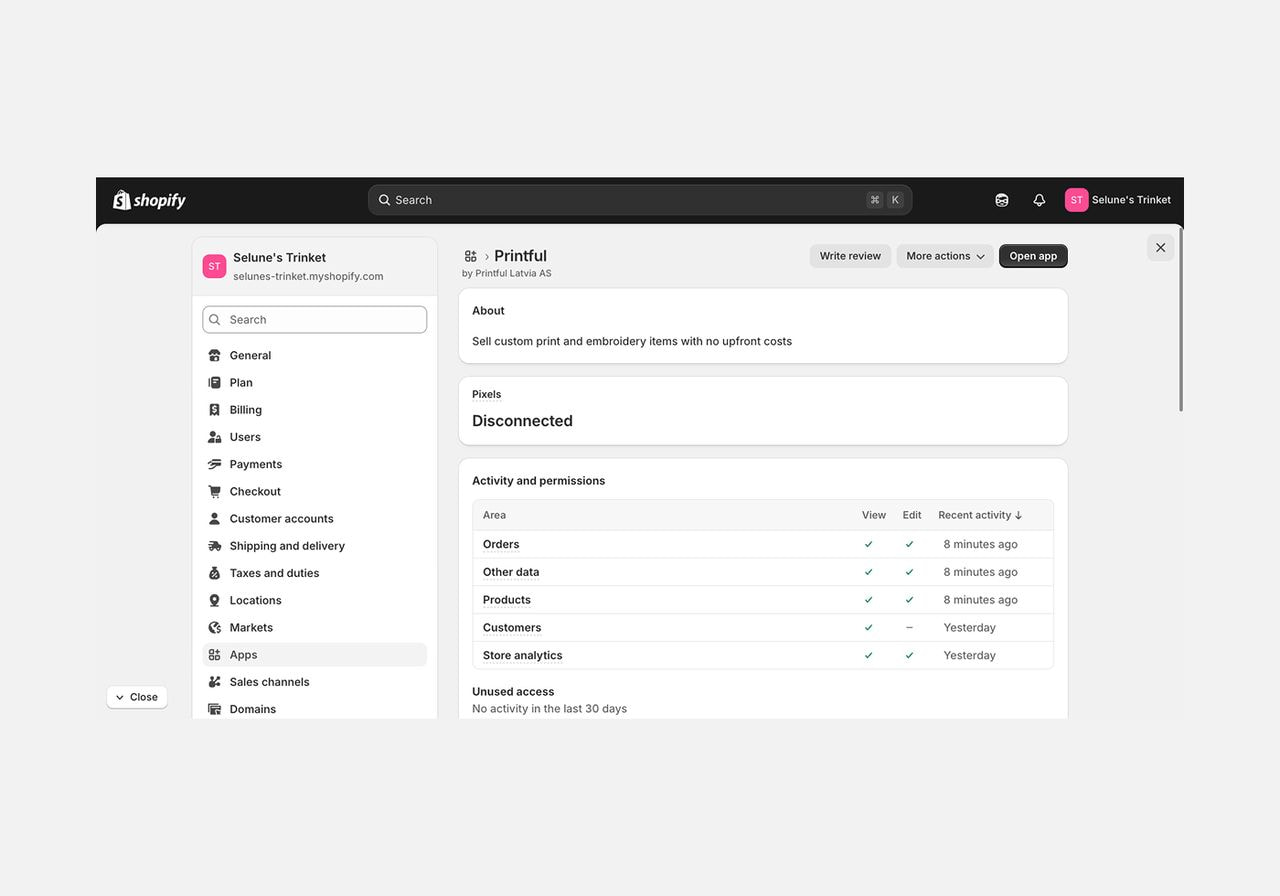
If permissions look incomplete or the integration isn’t working properly, reinstall the Printful app to resolve the issue and refresh the connection.
Still having issues?
If the problem continues, contact Printful or Shopify for 24/7 support. You can also check our Help Center guides for quick fixes and step-by-step solutions.
How much it costs to use Printful with Shopify
With Printful, there are no monthly or setup fees to get started. You only pay when a customer places an order. If you want better margins, Printful Growth costs $24.99/month and includes discounts on product pricing, branding options, and sample orders.
Shopify plans range from $19/month for solo sellers to $2,300/month for enterprise businesses. New users also get a 3-day free trial, followed by $1/month for the first 3 months.
Other potential Shopify costs include:
-
Transaction fees starting from 2.4% + $0.30 per online sale, depending on your plan
-
A custom domain for your store
-
Premium apps for extra features and automation
Grow your Shopify sales with Printful
From creating your first product to managing sales as you grow, Shopify offers different ways to make money online. Pair it with Printful’s automated order production and fulfillment, and you get a simple Print on Demand Shopify setup that helps you sell custom products without handling inventory yourself.
Together, both platforms give beginners and growing brands an easy way to build a store, reach customers, and run day-to-day operations with less manual work.
Frequently asked questions
Yes. You can connect multiple Shopify stores to one Printful account by adding each store as a separate connection in your Printful dashboard. Each store is managed separately, so products, syncing, and orders stay independent.
If your stores use the same email, you can switch between them anytime with the store switcher in your Shopify admin.
On average, Printful orders are fulfilled within 2-5 business days across all production techniques. This covers the time needed to print, prepare, and pack your order before shipping.
Fulfillment times can change based on product type and order volume. Check the updates page for the latest averages.
If a customer reports a damaged, defective, or misprinted item, ask for photos and order details, then submit a claim to Printful. Claims for delivered orders should usually be submitted within 30 days of delivery.
If Printful approves a reprint, they produce and ship the replacement order. Process refunds through your Shopify admin. For exchanges, such as a customer ordering the wrong size, you’ll usually place a new order manually.
You can check Printful’s return policy for details.
The main difference between Print on Demand and dropshipping is customization. POD lets you sell custom products with your own designs, while traditional dropshipping usually sells ready-made products as-is.
Manage your Printful Wallet from your Printful dashboard, not inside Shopify. Open your billing settings to add funds, review transactions, or update payment methods used for fulfillment costs.
Both Printful and Shopify offer 24/7 support if you need help with setup, syncing, billing, or store settings. You can also refer to Help Center articles and documentation on both platforms for step-by-step guides and common troubleshooting fixes.

Jordana is a content writer with over 6 years of experience in content writing and technical writing. Her not-so-secret passion is breaking down complex ideas into clear, straightforward content, whether it's explaining tech concepts or crafting stories that connect. When she's not writing, you'll find her enjoying good sushi or falling down movie trivia rabbit holes.

