



Table of contents
Getting Print on Demand right from the start means doing a few things really well: picking a clear niche, creating designs with intent, ordering samples to check quality, pricing products smartly, and showing up where your audience already hangs out. These are just a few print-on-demand tips for new eCommerce stores.
Keep reading to learn how to turn these tips into repeatable systems that help your store grow efficiently and avoid costly mistakes.
How can you set realistic expectations for print-on-demand success?


Print on Demand (POD) works best when you treat it as a long game, not a quick win. Most new stores don’t see consistent sales in their first weeks – that’s normal. Designs need feedback, listings require refinement, and traffic takes time to generate.
A healthy expectation looks like this:
-
Your first designs are experiments, not final products.
-
Sales usually follow improvement, not launch day.
-
Progress comes from small optimizations applied consistently.
The print-on-demand model keeps risk low, but success still requires effort and patience. Printful sees the strongest stores focus on learning what customers respond to, improving quality, and building momentum gradually. That mindset turns early trial and error into long-term growth.
Valuable read: Tips for new business owners from Dogecore


11 Print-on-demand success tips for new eCommerce stores
Starting a business gets easier when you know what to focus on – and what to skip. So here are 11 tips and common mistakes to avoid when launching a print-on-demand store, from choosing the right niche to setting up products that actually sell.
1. Define your niche and understand your target audience
A niche gives your business direction. Without niche markets, your online store turns into a random product dump with no clear message. Instead of broad ideas like “pet owners,” narrow it down to real lifestyles and daily needs.
-
Start by writing down who your target customers are, what matters to them daily, and which problem, joke, or aspect of their identity your design speaks to.
Want some profitable niche examples?
-
Instead of all pet owners, think “people into rescue dogs.”
-
Instead of medicine, think “night-shift nurses who love sarcastic humor.”
-
Instead of gamers, think “online dungeon masters with a flair for dragons.”
Use search engines, Reddit, TikTok comments, and reviews to see what people complain about or celebrate. A focused niche helps you speak clearly to potential customers and sell products while building a recognizable brand.
2. Strategically choose a POD partner
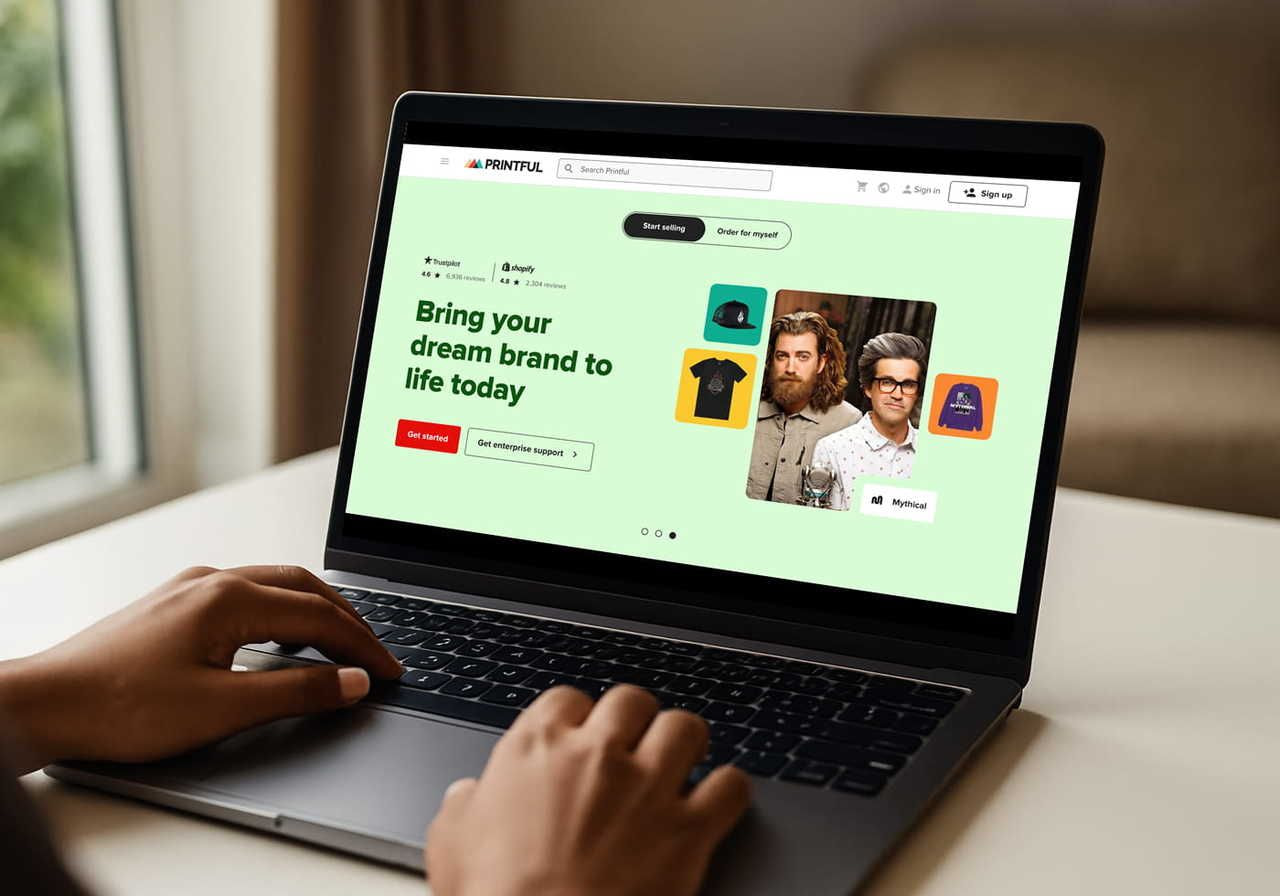
Your partner shapes how smoothly your print-on-demand model runs. Look beyond base prices. A strong print-on-demand provider offers consistent product quality, reliable fulfillment, and integrations that sync orders automatically with your eCommerce store.
What to check in a print provider:
-
In-house vs outsourced production.
-
Global fulfillment options to manage shipping costs.
-
Product range and print methods.
-
Competitive pricing and minimal upfront costs.
-
Integrations with your eCommerce platform and marketplaces.
-
Custom print-on-demand app for easy inventory management.
-
Support availability when issues come up.
Printful leads here with in-house printing, strict quality control, and global fulfillment. Printify is a solid alternative if you want access to multiple print providers and quality print-on-demand services. The right partner keeps the business model predictable as orders scale.
3. Order print-on-demand samples before selling
Ordering samples is not optional if you want a serious print-on-demand business. Samples let you test your business idea and check product quality, sizing, materials, and how your designs actually print. This step prevents refunds and unhappy customers later.
There’s another upside many founders miss. Sample orders give you original product photos.
Shoot them in real-life settings, on real people, or styled for social ads. These images improve trust on product pages and give you better assets for campaigns than generic mockups. Always test your product ideas and print-on-demand companies before you start selling.
4. Diversify your product range and designs

Start small, then expand with intention. Launch with around ten print-on-demand products to keep your online store focused and easy to manage. Bestsellers include t-shirts, hoodies, sweatshirts, stickers, mugs, caps, and more.
Once you have sales data, reuse your winning designs across new formats.
For example:
-
A popular design on t-shirts can move to hoodies or wall art.
-
A strong slogan can evolve into multiple colorways or styles.
This flexibility is one of the biggest strengths of Print on Demand. You can test new ideas without buying stock upfront, manage inventory automatically, and refine your product line based on what customers actually buy, not guesses.
5. Leverage social media for print-on-demand marketing
Social media is one of the fastest ways to learn what works in a print-on-demand business, yet many founders treat it like a billboard. Posting only product images and discounts rarely builds traction.
Instead, use social platforms to observe, test, and refine before pushing people to your online store.
Focus on showing process and context. Share how your print-on-demand products are created, why a design exists, or how customers use it in daily life. Short-form video works especially well because people can instantly picture themselves in them.
A simple rhythm works best:
-
Pick one platform where your audience already spends time.
-
Post consistently, not perfectly.
-
Let engagement guide what you promote.
That’s how a demand business grows without guessing.
6. Master email marketing strategies
Email adds stability to a print-on-demand business because it isn’t controlled by algorithms. A common mistake is delaying email collection until the store feels “ready.” Start early, even if traffic is low.
Add a simple signup form to your online store and give people a reason to join, early access, limited drops, or progress updates. Email works especially well for announcing new drops, seasonal releases, or restocks.
Keep it manageable:
-
One short email per week is enough.
-
Focus on clarity, not cleverness.
-
Tie each email to one action.
This fits the online business model perfectly by turning casual visitors into repeat buyers over time.
7. Build trust with social proof for your print-on-demand store

Trust is often the deciding factor for a successful POD business, especially when buyers are unfamiliar with your brand. New stores sometimes hide reviews or wait too long to show proof, which slows conversions.
Social proof doesn’t have to be complex. Start with customer reviews, photos from sample orders, and clear explanations of production and shipping costs. Place these elements directly on product pages and near checkout inside your own eCommerce store.
Even early on, transparency builds confidence. Showing real products, honest timelines, and authentic feedback helps print-on-demand sites feel reliable, not risky, which directly impacts conversion rates.
8. Harness SEO for your POD products
SEO is one of the most overlooked eCommerce tips for a successful POD business strategy, yet it supports long-term growth better than almost any other channel.
A common mistake is guessing keywords or copying titles from other listings and calling it a day. Instead, start with real search data.
First, type your product idea into Google and note autocomplete suggestions and “People also ask” questions. Then check Etsy and Amazon for recurring phrases in top listings. These become the backbone of your product titles and descriptions. For professional research, use tools like eRank and Semrush.
Apply SEO like this:
-
Use the main keyword in the product title and first paragraph.
-
Explain who the product is for, when it’s used, and why it’s different.
-
Add secondary phrases naturally in bullet points or specs.
-
Create clear category pages around themes, not single items.
This approach supports a scalable print-on-demand model and brings steady traffic without relying on ads.
9. Implement strategic product pricing for profitability

Pricing is where many beginners quietly lose money. A profitable print-on-demand business doesn’t price products based on feelings or what “sounds fair.” Unlike traditional retail models, POD pricing must cover production, shipping, taxes, platform fees, and still leave room for growth.
Start with a simple POD pricing strategy:
-
Calculate total cost per item, including fulfillment and shipping.
-
Add a margin that supports ads, tools, and reinvestment.
-
Test prices in small increments instead of making a single guess.
One of the most overlooked beginner POD tips is this: higher prices often convert better when paired with clear value and strong presentation. Cheap doesn’t build trust, and sustainable profit rarely comes from racing to the bottom.
10. Stay ahead with competitor research in the POD market
Ignoring competitors won't make them disappear. Smart founders use competitor research for print-on-demand products to spot gaps in their target market, not to copy designs. The goal is to understand what works in your market segment and then do it differently.
Here’s how to research without spiraling:
-
Look at the top products on major print-on-demand sites.
-
Note pricing ranges, product types, and messaging patterns.
-
Read negative reviews to find what buyers feel is missing.
Pay attention to what competitors don’t explain. That’s often your opportunity. This approach helps a print-on-demand business sharpen positioning, avoid saturated ideas, and build offers that feel intentional instead of reactive.
11. Prevent burnout and ensure sustainable growth
Burnout kills more stores than poor designs. A healthy print-on-demand business grows because the founder can keep going, not because they work nonstop. The flexibility of Print on Demand supports a smarter business model, but only if you use it that way.
Protect your energy by:
-
Limiting product launches instead of chasing every idea.
-
Setting realistic posting and marketing schedules.
-
Automating fulfillment through reliable print-on-demand services.
Treat this as a long-term online business, not a sprint. Consistency, rest, and focus lead to better decisions, stronger products, and growth that actually lasts.
Start a print-on-demand business with Printful

Print on Demand works like this: you create designs, list products, and only print items after a customer orders. No warehouses, no guessing demand, no buying stock upfront. That’s why the print-on-demand business model works so well for beginners and growing brands alike.
With Printful, you can use free tools, upload your own designs, and launch with no design skills or prior experience.
-
Choose from products like custom t-shirts, connect to your eCommerce platform or an online marketplace, and let production and shipping run in the background.
Orders are fulfilled close to where the customer is, which keeps delivery reliable and efficient. With no upfront costs, Printful makes it simple to sell custom products without overcomplicating the process.
Ready to launch your print-on-demand empire?
Starting strong means following proven print-on-demand tips, choosing the right tools, and building systems that support growth. From picking a clear niche to pricing, marketing, and testing, every step in this guide is designed to help you start a print-on-demand business the smart way.
Printful gives you everything you need to create custom products, manage fulfillment, and grow a real online business at your own pace. If you’re ready to turn ideas into products people actually buy, now’s the time to start building with Printful and put these print-on-demand tips for new eCommerce stores into action.
Print-on-demand business tips: FAQ
The biggest mistake is treating a print-on-demand business like a lottery ticket. New sellers skip market research, never order samples, rush creating designs, and launch too many print-on-demand products at once. Start small, test one product line, check print quality, and improve based on real data, not assumptions.
Profit comes from clarity and iteration. Choose one target audience, price products based on retail price and shipping costs, and focus marketing efforts on one or two advertising platforms. Use analytics from your eCommerce store, test offers weekly, and double down on what sells instead of constantly launching new items.
Pick one interest you already understand, then validate it fast. Search related keywords on Google, Etsy, and Amazon, check top-selling designs, and read customer reviews to spot unmet needs. Join Reddit, TikTok, or Facebook groups to confirm demand. A strong niche has clear buyers, not just trends.
Customer feedback shapes your online store's success. Reviews highlight design quality issues, sizing problems, or shipping delays. Use feedback to improve product quality, descriptions, and the fulfillment process. Respond quickly, fix mistakes publicly, and turn complaints into upgrades. High customer satisfaction builds trust and repeat sales.
Printful removes operational friction for new stores. With in-house printing, we control print quality. Global fulfillment centers reduce shipping times and costs. Native eCommerce integrations automate orders and inventory, while sample orders let you test before selling. Exclusive techniques like DTFlex and 24/7 support help stores scale with confidence.
Focus on fewer, better products. Build a strong brand identity, invest time in creating designs, and prioritize high-quality products over volume. Combine SEO with short-form social content, use email marketing campaigns early, and continuously test pricing. Long-term success for the POD business model comes from consistency, not hype.

By Baiba Blain
With 7+ years of experience in translation and creative writing, Baiba now leads a squad of talented writers, balancing research-backed storytelling with team guidance, quality assurance, and SEO processes. Outside of work, she enjoys exploring old castles, spontaneous road trips, and talking back to her cats. 10/10 arguments won so far.

